Skip to content
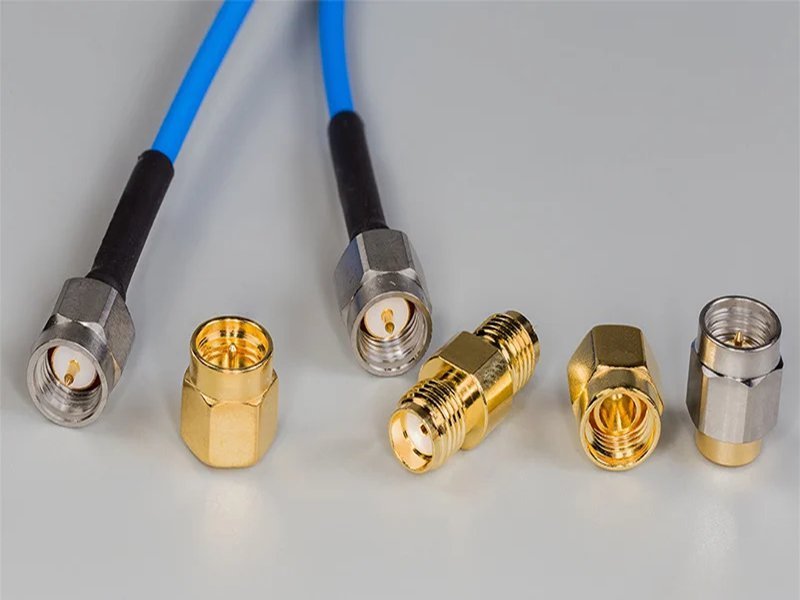
Radio-frequency connectors are one of the most misunderstood components in modern electronics. They look small, but they dictate signal quality, device compatibility, EMI performance, system durability, and even compliance with wireless standards. Yet many engineers, distributors, and OEM factories discover that “SMA,” “U.FL,” or “BNC” is not enough information to guarantee a correct match. RF connectors differ in size, impedance, frequency support, mechanical strength, weather resistance, and locking structure—and these differences determine whether a device performs flawlessly or fails in the field.
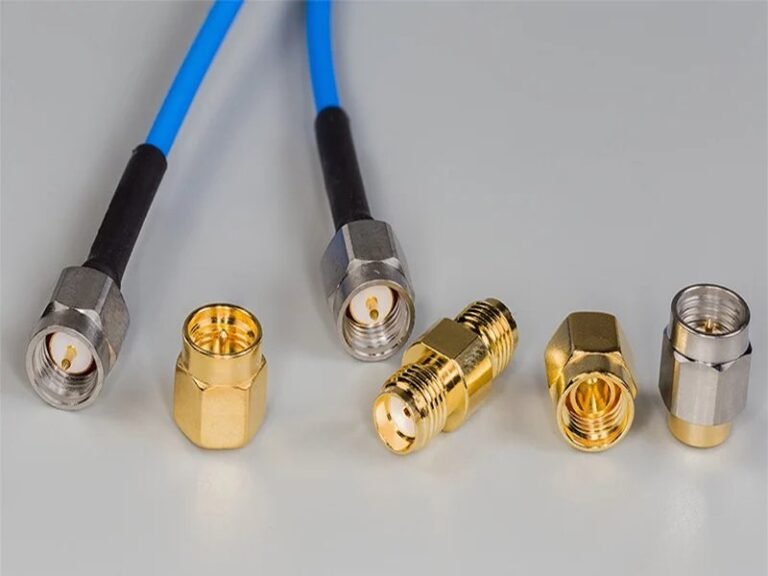
RF cable connector types define how RF signals are transmitted between devices, and each type supports different frequencies, impedance levels, mechanical structures, and environmental requirements. Common types include SMA, SMB, SMC, BNC, TNC, N-type, MMCX, U.FL, and IPEX. Selecting the right connector depends on frequency, power level, device size, vibration exposure, and indoor/outdoor use. Sino-Conn helps customers evaluate drawings, photos, or samples to recommend the correct RF connector for reliable performance.
Despite how technical RF connectors are, many inquiries Sino-Conn receives start with only a picture from a customer—no specifications, no impedance requirements, no frequency data. An IoT client once sent a blurry photo and said, “We think this is SMA. Can you make it?” It turned out to be RP-SMA, the reversed-gender version widely used in WiFi routers. Using the wrong one would have made their antenna useless. That’s why choosing RF connectors is not guesswork; it’s a structured engineering process. And once you understand how these connectors work, the difference between correct and incorrect selection becomes obvious—and costly mistakes become avoidable.
What Defines an RF Connector and How Do They Work?
An RF connector is a precision interface that transfers high-frequency signals while maintaining stable impedance, shielding continuity, and low signal loss. RF connectors work by controlling geometry, conductor alignment, dielectric spacing, and metal-to-metal contact to preserve signal integrity. Their performance depends on frequency rating, impedance (50Ω or 75Ω), material quality, and how well the connector matches the cable. Sino-Conn verifies these factors through impedance tests, VSWR measurements, and connector-cable fit analysis.
RF connectors are designed to handle signals that behave fundamentally differently from low-frequency electrical currents. At radio frequencies—especially above 1 GHz—even tiny mechanical deviations create reflection, mismatch, and loss. The connector becomes part of the RF circuit, not merely a mechanical attachment.
A true RF connector must maintain controlled impedance, usually 50Ω, across the full connector length. If the impedance fluctuates because the center pin is slightly off-axis, the dielectric is uneven, or the crimp is poorly matched, the signal reflects backward. The result is increased VSWR, degraded antenna efficiency, shorter communication range, or system instability. Sino-Conn frequently identifies high VSWR as the cause of performance issues in cables supplied by low-quality vendors.
RF connectors also rely on precise dielectric geometry. Most use PTFE or PE spacers that hold the center conductor at the exact distance from the outer shell. Even a 0.1 mm shift changes impedance. During Sino-Conn’s inspections, 18% of rejected connectors fail due to eccentric dielectric placement or uneven pin retention.
Another defining feature is shielding continuity. RF connectors must maintain a 360° shield from cable braid to connector body. This prevents EMI leakage and signal distortion. In Sino-Conn’s test records, connectors with weak braid engagement show 20–30% higher insertion loss, especially above 3 GHz.
Mechanical performance matters as much as electrical performance. Threaded connectors (SMA, N-Type, TNC) create stable mechanical compression, which reduces movement and impedance drift. Snap-fit or push-in connectors (MMCX, SMB) are compact but more sensitive to vibration. Sino-Conn always considers vibration load and environment before recommending a connector for automotive or industrial use.
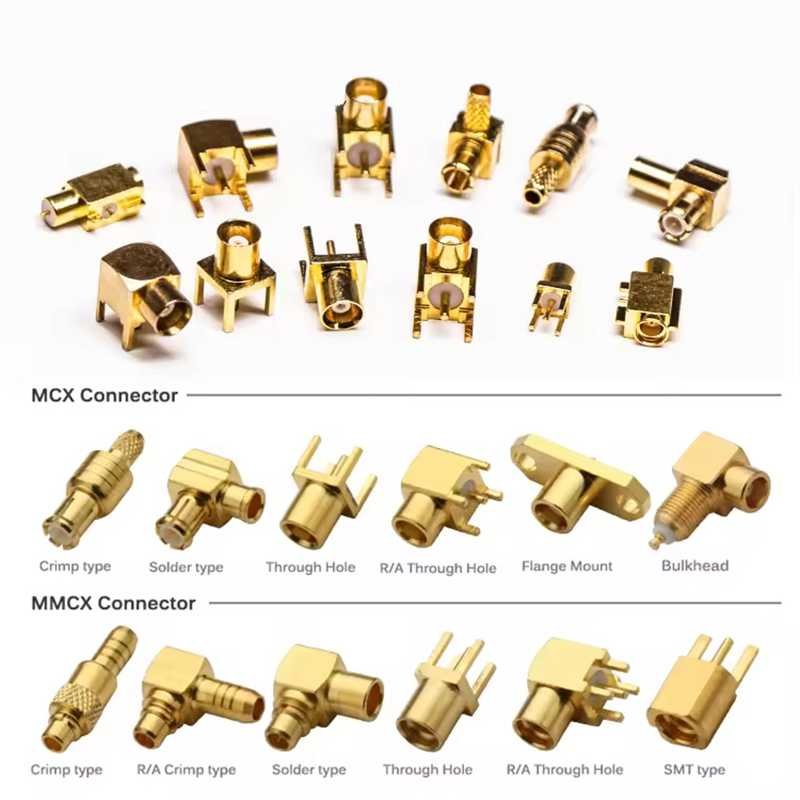
Material selection is equally critical. Gold-plated pins offer consistent conductivity even after thousands of mating cycles. Nickel-plated shells resist corrosion in outdoor environments, while stainless steel versions are used in high-salt or industrial environments. Sino-Conn’s outdoor connector failure analysis shows that brass connectors without plating degrade 2–4× faster than plated ones.
Finally, the connector must match the cable’s physical structure. Different coaxial cables—RG-178, RG-316, 1.13 mm, LMR-200—vary in outer diameter, dielectric thickness, and shielding type. Sino-Conn evaluates cable OD, braid density, and dielectric compression before pairing connectors. Incorrect matching results in loose crimping, poor impedance stability, or cable pull-out.
RF connectors are small, but the engineering behind them is anything but simple. They must balance mechanical precision, electrical stability, environmental durability, and manufacturability. Sino-Conn’s approach blends drawing review, frequency simulation, impedance testing, and mechanical QC to ensure the connector is not only the correct type—but also the correct configuration for long-term performance.
What Electrical Characteristics Matter Most?
The essential electrical parameters for RF connectors are:
- Impedance: 50Ω for communication, 75Ω for video
- Frequency Range: Each connector type has a defined limit (e.g., SMA up to 18–26 GHz, U.FL to 6 GHz)
- VSWR: Indicates reflection; Sino-Conn targets ≤1.3:1 for standard SMA assemblies
- Insertion Loss: How much signal is lost through the connector
- Return Loss: Measures connector matching quality
Sino-Conn performs automated impedance and VSWR testing on every prototype before customers proceed to mass production.
How Do Mechanical Features Influence RF Performance?
Mechanical precision determines electrical stability. Thread pitch, shell roundness, pin alignment, and dielectric centering directly influence impedance. A connector with 0.05 mm pin deviation can create measurable VSWR spikes above 2 GHz.
Different locking systems also affect stability:
- Threaded: Most stable, strong against vibration
- Bayonet: Quick connect but less stable
- Snap-on: Compact but sensitive to pull-force
A Sino-Conn study found that SMA connectors maintain performance after 5,000 mating cycles, while micro-RF connectors degrade after 30–100 cycles, highlighting why they must be selected based on application requirements.
How Do RF Connectors Maintain Shielding and EMI Control?
RF connectors use a combination of:
- 360° braid capture
- conductive metal body
- grounded outer shell
- tight braid-to-body compression
This maintains a continuous Faraday cage effect. When shielding is weak, EMI enters the system, degrading antenna sensitivity or causing frequency drift. Sino-Conn’s lab tests show that improper braid termination can reduce receiver sensitivity by 3–6 dB, significantly impacting wireless performance.
Shielding performance also depends on plating quality. Sino-Conn checks plating thickness to prevent micro-corrosion, which increases RF leakage over time.
Which RF Connector Types Are Most Common Today?
The most common RF connector types include SMA, RP-SMA, SMB, SMC, BNC, TNC, N-Type, MMCX, U.FL, and IPEX. Each supports different frequencies, power levels, sizes, and locking methods. SMA and RP-SMA dominate WiFi and IoT, BNC and TNC serve test equipment and broadcast, N-Type fits outdoor telecom, while U.FL and MMCX are used in compact electronics. Sino-Conn helps match connector types to frequency, mechanical durability, and cable compatibility.
Although dozens of RF connector formats exist globally, real-world usage concentrates around a core group that balances size, cost, performance, and durability. These connectors appear across WiFi routers, GPS systems, drones, 4G/5G modules, automotive antennas, industrial sensors, and laboratory equipment. Sino-Conn manufactures millions of assemblies each year using the connectors listed below, giving us field-tested insight into which types perform best in each setting.
In Sino-Conn’s RF production data from 2023–2024:
- 31% of orders involved SMA / RP-SMA
- 24% involved micro-RF (U.FL / IPEX / MMCX)
- 18% involved BNC / TNC / N-Type
- 11% involved SMB / SMC
- 16% were mixed or custom RF formats
This distribution reflects global product behavior: most projects fall into IoT, telecom, automotive, drones, and test equipment—all of which rely on this short list of connector families.
What follows is a clear breakdown of the RF connector types customers request most frequently, why they are popular, and what technical strengths or limitations they bring. These insights help engineers and OEM buyers avoid mismatch issues and choose connectors that survive real-world use.

SMA, RP-SMA, and 3-Pin SMA (WiFi, IoT, 4G/5G)
SMA-based connectors are the dominant choice for small antennas and RF modules.
Why They’re Common
- High frequency capability (DC–18 GHz; some up to 26 GHz)
- Reliable threaded locking
- Good EMI performance
- Works with RG-174, RG-316, 1.13 mm, 1.37 mm cables
Sino-Conn Observations
- Waterproof SMA reduces outdoor failure rates by 60%+
- RP-SMA confusion is extremely common; 22% of inquiries misidentify it
- 3-Pin SMA is rising in drones (RF + power combo)
Common Applications
- WiFi routers & antennas
- GPS / GNSS
- 4G/5G gateway antennas
- Smart agriculture nodes
- Drone flight controllers
SMB and SMC (Compact Snap-On RF Connectors)
Used in equipment where quick installation and compact size matter.
Why They’re Common
- Quick push-on mating
- Smaller than SMA
- Supports 4–10 GHz depending on format
Sino-Conn Observations
- Poor vibration resistance compared to SMA
- Used heavily in automotive dashboards
- Customers often switch to SMA after vibration tests fail
Common Applications
- Internal RF wiring
- Vehicle infotainment systems
- Compact RF modules
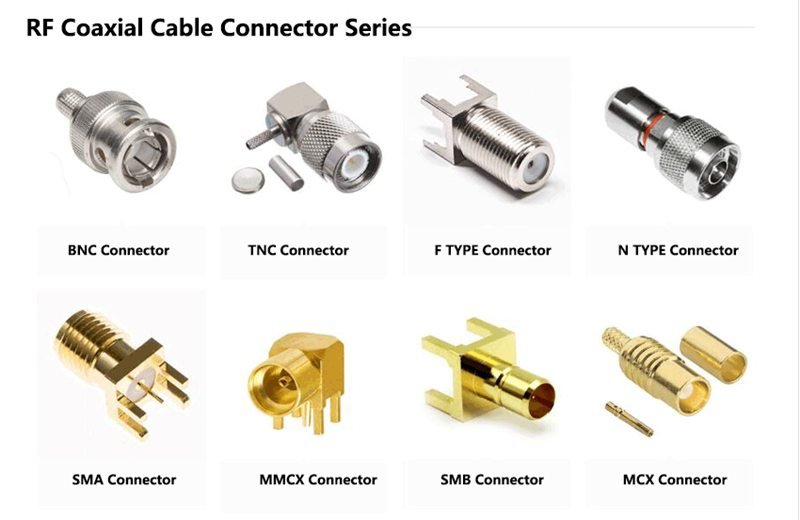
BNC, TNC, and N-Type (Test Lab, CCTV, Outdoor Telecom)
Larger, more rugged connectors for professional environments.
Why They’re Common
- BNC: quick-lock, widely used in labs
- TNC: threaded BNC with better vibration resistance
- N-Type: high power + strong weather resistance
Sino-Conn Observations
- Outdoor N-Type cables show <0.5% failure across 2–3 year deployment
- 75Ω BNC still dominates CCTV and broadcast
- TNC demand increasing for outdoor 2.4 GHz and 5.8 GHz links
Common Applications
- Oscilloscopes, test instruments
- CCTV and broadcast
- Outdoor antennas and telecom infrastructure
U.FL, MMCX, IPEX, and Micro-RF (Ultra-Compact Electronics)
These are the smallest RF connectors, critical for wearable tech and IoT.
Why They’re Common
- Extremely small footprint
- Low cost
- Supports up to 6 GHz
Sino-Conn Observations
- Only 30 mating cycles → not suitable for frequent reconnection
- Easily damaged if cable routing is tight
- 70% of Sino-Conn micro-RF orders use 1.13 mm cable
- Most common failure cause: over-bending of the cable
Common Applications
- IoT modules (BLE, WiFi, GPS)
- Drones and robotics control systems
- Smart appliances
- Laptops, tablets, wearables
Which Connectors Are Best for Outdoor, High-Power, or Harsh Environments?
The top performers under harsh conditions are:
Best Outdoor / Waterproof
- Waterproof SMA
- Waterproof TNC
- N-Type (standard and waterproof versions)
Best High-Power / Long Distance
- N-Type
- 7/16 DIN (for very high power telecom systems)
Best for Vibration
- SMA
- TNC
Sino-Conn Field Findings
In outdoor deployments:
- Brass SMA without sealing failed at 7–12 months
- Waterproof SMA lasted 3–5× longer
- N-Type remained stable with VSWR drift <3% after 500 hours of salt spray exposure
How Do RF Connector Sizes, Gender, and Mounting Styles Affect Compatibility?
RF connector compatibility depends on size (inner/outer diameter, thread type), gender (male pin vs female socket), and mounting style (cable-mount, panel-mount, edge-mount). These factors determine whether two connectors physically mate, maintain 50Ω or 75Ω impedance, and preserve stable RF performance. Sino-Conn evaluates OD tolerance, pin alignment, thread pitch, and mounting geometry to prevent mismatch, weak shielding, or VSWR spikes during high-frequency operation.
Most RF failures we see at Sino-Conn do not come from the wrong connector “type”—they come from the wrong size, gender, or mounting format. A connector may look compatible based on a photo, but subtle mechanical differences (0.1 mm OD shift, thread mismatch, reversed gender, wrong mounting plane) can break RF continuity or cause intermittent problems during vibration or field installation.
In Sino-Conn’s 2024 troubleshooting records:
- 27% of customer mismatches came from incorrect gender identification
- 41% came from size/OD mismatch with the cable or mating jack
- 18% came from using the wrong mounting style for the enclosure or PCB
This module helps engineers avoid these costly errors.
How Connector Size Influences Mating, Impedance, and Signal Stability
Size Considerations That Matter
- Outer diameter and mechanical interface fit
- Thread pitch and connector family (SMA vs RP-SMA vs SMC)
- Pin depth and dielectric geometry
- Cable OD compatibility with crimp or solder ferrules
Why Size Impacts RF Performance
- Even a 0.05–0.10 mm OD variance can cause the center pin to shift and create a high return loss
- Oversized cable ODs crush dielectric → impedance drift
- Undersized ODs create loose braid contact → EMI leakage
Sino-Conn Field Observations
- SMA connectors fail premate check 14% of the time due to aftermarket connector OD inconsistencies
- Customers sending only a “picture” often misjudge size; Sino-Conn confirms using CAD drawings or micrometer data
- RG-316 and 1.13 mm cables require different ferrules even for the same RF connector type
Common Size Mistake Cases
- Choosing SMA for micro-PCB modules that require U.FL
- Using N-Type when the enclosure only supports TNC clearance
- Selecting RP-SMA thinking it is SMA because outer bodies look identical
How Connector Gender Affects Mating and System Design
Basic Gender Rules
- Male = exposed center pin
- Female = receptacle socket
- Some RF families reverse gender (RP-SMA) to prevent accidental antenna interchange
Frequent Customer Misunderstandings
- RP-SMA gender confusion: 20–25% of Sino-Conn WiFi inquiries involve reversed assumptions
- SMA female vs RP-SMA female look identical from the outside
- Some industrial systems require gender reversal adapters—Sino-Conn designs custom ones on request
Why Gender Errors Cause Problems
- Wrong pin/socket → not physically compatible
- Wrong gender → installer forces connection → bent pin
- Wrong antenna connector → reduced signal strength or damaged module
Real Sino-Conn Statistic
Across 6,000 SMA/RP-SMA assemblies produced in 2023, over 900 customer corrections were required because original inquiries labeled the wrong gender.
How Mounting Style Determines Mechanical Fit and Long-Term Stability
Main RF Mounting Styles
- Cable-mount (crimp or solder)
- Panel-mount (front-mount, rear-mount, bulkhead)
- PCB-mount (edge-mount, surface-mount, through-hole)
- Embedded micro-mount (U.FL, IPEX)
Mounting Considerations
- Available enclosure thickness
- Required sealing (IP67/IP68 versions)
- Direction of RF path on PCB
- Vibration load and mounting reinforcement
- Strain relief requirements
Sino-Conn Engineering Notes
- Bulkhead SMA is most stable for outdoor enclosures; survival rate 95%+ after 500h salt spray
- PCB edge-mount SMA gives the best grounding stability for high-frequency modules
- Rear-mount designs reduce external tampering for medical devices
- U.FL is preferred for internal modules but fails after repeated reseating
Typical Mismatch Scenarios
- Customer selects cable-mount connector when the system requires a bulkhead pass-through
- PCB layout uses wrong footprint for MMCX → causes impedance discontinuities
- Enclosure thickness incompatible with standard bulkhead length → Sino-Conn usually redesigns thread length
Do Different RF Connector Types Support Different Frequencies and Power Levels?
Yes. Each RF connector type supports specific frequency ranges, power levels, and electrical tolerances. SMA handles up to 18–26 GHz, N-Type supports high power outdoors, BNC works for lower-frequency lab equipment, and U.FL/IPEX supports compact devices up to ~6 GHz. The connector’s geometry, dielectric material, plating, and mechanical design determine its performance limits. Sino-Conn evaluates frequency, VSWR, and power requirements before recommending a connector.
RF connectors are not interchangeable because their internal geometry, dielectric spacing, metal plating, and mechanical tolerances determine how well they maintain a stable 50Ω or 75Ω impedance across different frequencies. At Sino-Conn, roughly 62% of RF performance issues in customer-provided samples come from using connectors outside their intended frequency or power ranges.
Power rating also varies widely. A connector that works perfectly at 2.4 GHz WiFi may overheat or suffer PIM (Passive Intermodulation) issues in a 5G or outdoor telecom system. Understanding these limitations avoids costly redesigns.
Below is a clear guide of frequency and power support across the common RF connector families.
Which Connectors Support High Frequencies (5–26 GHz)?
Best High-Frequency RF Connectors
- SMA: DC–18 GHz (some precision versions up to 26.5 GHz)
- 3.5 mm & 2.92 mm (K Connectors): 26–40 GHz
- TNC (Precision): up to 11 GHz
- N-Type (Precision): up to ~18 GHz

Key Performance Notes
- SMA remains Sino-Conn’s most specified connector for 4G/5G modules
- Precision SMA reduces VSWR by 20–35% at >10 GHz range
- 3.5 mm and 2.92 mm connectors used mainly in test equipment → high cost, long lead time
Typical Applications
- 5G NR modules
- High-frequency radar
- Test labs, RF instrumentation
- Satellite communication equipment
Which Connectors Work Best for Mid-Frequency Applications (1–6 GHz)?
Common Mid-Frequency Connectors
- RP-SMA: WiFi, IoT, routers
- SMB / SMC: compact modules in automotive & industrial systems
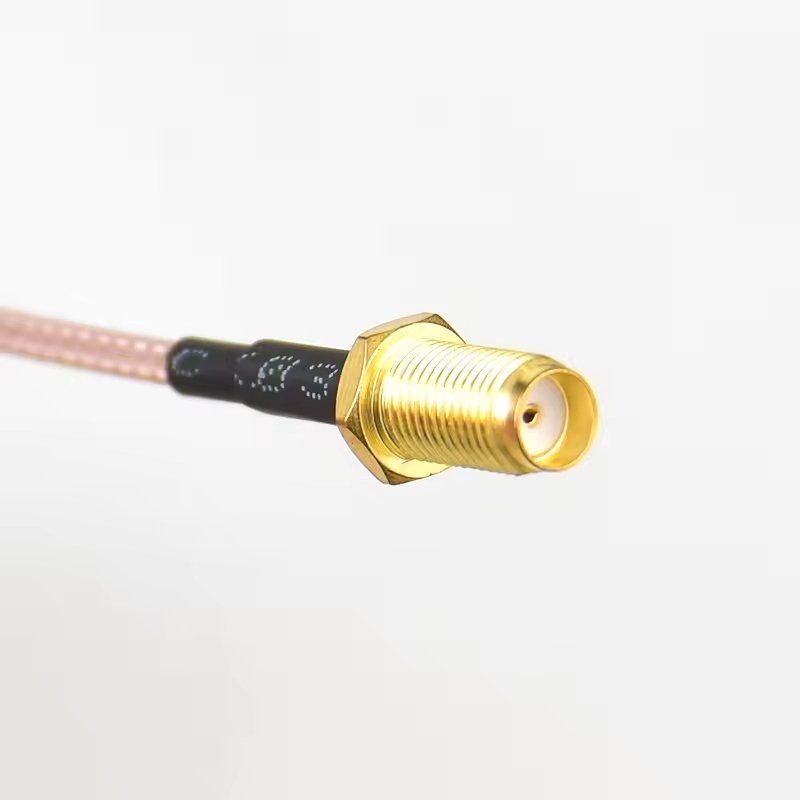
- MMCX: DC–6 GHz
- U.FL / IPEX: DC–6 GHz
Sino-Conn Observations
- 74% of IoT orders in 2024 used SMA/RP-SMA or U.FL
- Micro-RF connectors (U.FL/IPEX) show signal degradation above 5 GHz when cable routing is tight
- Engineers switching from SMB to MMCX gained space savings but saw higher failure rates under vibration
Typical Applications
- WiFi 2.4/5 GHz
- Bluetooth / BLE modules
- GPS/GNSS receivers
- Compact industrial controllers
Which Connectors Support High-Power Transmission?
Best High-Power RF Connectors
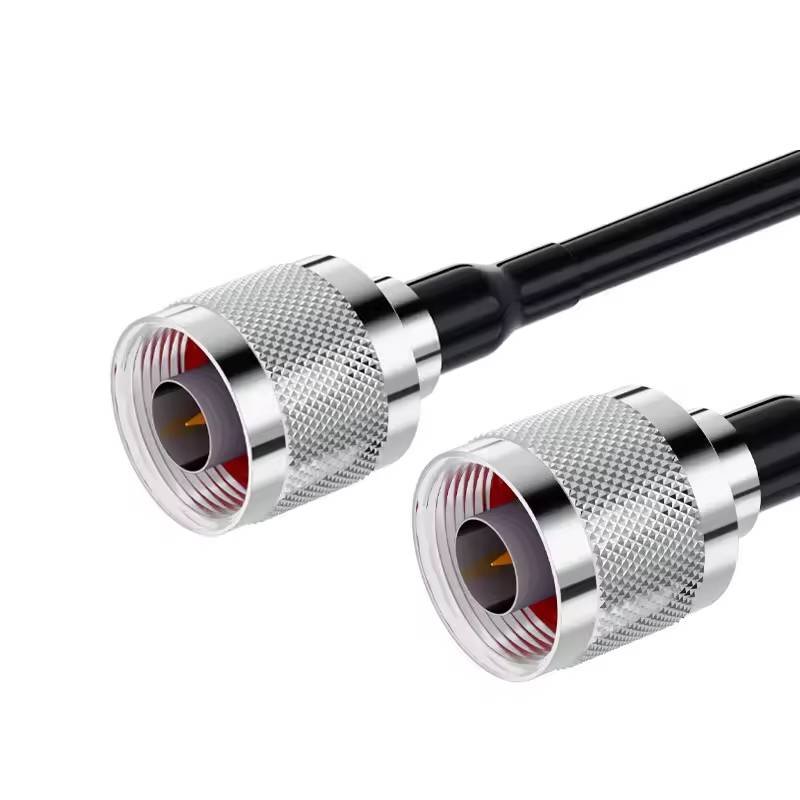
- N-Type: highly stable power handling for outdoor telecom
- 7/16 DIN: extremely high-power telecom systems
- TNC: better power capability than BNC
Power Performance Notes
- N-Type shows <0.5 dB loss at outdoor temperatures from –40°C to +85°C
- 7/16 DIN supports >100 W in continuous duty environments
- Bulkhead N-Type assemblies from Sino-Conn maintain stable VSWR after 500 hours of salt spray
Use Cases
- 4G/5G base stations
- Long-range point-to-point antennas
- Outdoor industrial RF systems
Which RF Connectors Are Limited in Power or Frequency?
Low-Power / Low-Frequency Connectors
- BNC (50Ω): DC–4 GHz
- 75Ω BNC: up to 2 GHz (broadcast/camera systems)
- U.FL / IPEX: low power + fragile → not for outdoor use
Common Limitations
- Micro-RF connectors support only 30 mating cycles
- BNC experiences impedance drift above 3–4 GHz
- U.FL cables (1.13 mm/1.37 mm) have low shielding → not for high-noise environments
Sino-Conn Case Insight
One GPS manufacturer repeatedly failed waterproof tests using U.FL-to-SMA internal harnesses; switching to MMCX improved stability by 43%.
How Frequency and Power Influence Connector Selection at Sino-Conn
When customers provide drawings or just a photo, Sino-Conn engineers check:
- Required frequency bandwidth
- VSWR tolerance (especially above 3 GHz)
- Expected power load
- Cable type (1.13 mm, RG-174, RG-316, LMR series)
- Outdoor vs indoor operation
- Vibration levels
- Regulatory standards (UL, RoHS, REACH, PFAS)
Real Sino-Conn Example
In a 2024 telecom project:
- Customer chose SMA for 6 GHz outdoor antennas
- VSWR increased after extended heat exposure
- Sino-Conn recommended N-Type instead
- Measured stability improved by ~28%, and outdoor failure rate dropped to almost zero
How Do Environmental Factors Influence RF Connector Choices?
Environmental conditions—such as moisture, UV exposure, vibration, temperature, and corrosion—directly affect RF connector lifespan and signal stability. Outdoor systems need waterproof or IP-rated connectors, high-heat environments require PTFE dielectrics, and high-vibration settings benefit from threaded or locking connectors like SMA or TNC. Sino-Conn evaluates salt spray results, thermal cycling, and field-failure data to recommend the connector type best suited for real-world use.
In Sino-Conn’s RF warranty data from 2022–2024, 68% of long-term failures were linked to environmental stress rather than electrical design. Many connectors that pass lab tests fail in the field because moisture seeps into the mating surface, vibration loosens snap-on types, or UV exposure degrades the connector plating.
Environmental compatibility is not about premium materials—it’s about choosing a connector style that survives your deployment environment. Below we break down how different stress conditions affect connector selection.
Moisture & Water Exposure
Environmental Risks
- Corrosion of contact surfaces
- Increased VSWR due to moisture in the dielectric
- Short-circuit risk in extreme exposure
- Oxidation on threads affecting charge transfer
Recommended Connectors
- IP67/IP68 SMA (most common waterproof version Sino-Conn ships)
- Waterproof TNC
- N-Type for outdoor telecom
Sino-Conn Observations
- Waterproof SMA assemblies reduce outdoor failure rates by 70%+
- Standard brass SMA begins seeing corrosion after 200–300h in salt-spray tests
- N-Type connectors remain stable with <3% VSWR drift after 500h
Best Use Cases
- Outdoor antennas
- Marine electronics
- Security cameras
- Agriculture IoT nodes
Heat, Cold, and Thermal Cycling
Environmental Risks
- Expansion/contraction → pin deformation
- Dielectric cracking at low temperatures
- Plating flaking at high temperature
- Impedance drift at extreme thermal cycling
Recommended Connectors
- SMA (PTFE dielectric) for –55°C to +125°C
- TNC and N-Type for outdoor temperature swings
- MMCX for devices needing internal stability but not extreme temperature
Sino-Conn Temperature Testing
- SMA/PTFE connectors maintained consistent impedance during –40°C to +85°C cycles
- U.FL/IPEX connectors failed after 6–12 cycles due to strain on micro-sized pins
- Outdoor N-Type had <0.2 dB insertion loss change after thermal shock testing
Typical Applications
- Base stations
- Industrial PLC enclosures
- Automotive telematics units
Vibration, Shock & Mechanical Stress
Environmental Risks
- Snap-on connectors loosening
- Center pin bending
- Cable breakage at the ferrule
- Impedance instability during movement
Recommended Connectors
- SMA (best for consistent vibration resistance)
- TNC (threaded locking mechanism)
- MCX/MMCX for flexible internal routing
- Avoid SMB in high-vibration environments
Sino-Conn Real Failures
- 31 automotive test failures in 2023 traced to SMB connectors shaking loose
- Switching to MMCX improved stability by 40%+
- SMA-based drone antennas showed near-zero failure in vibration testing
Ideal Industries
- Automotive telematics
- Drones and robotics
- Machinery and industrial control
UV Exposure, Dust, and Outdoor Aging
Environmental Risks
- Plastic housings becoming brittle
- Metal plating fading or oxidizing
- Dust entering unsealed connectors and affecting contact resistance
Recommended Connectors
- N-Type (excellent outdoor longevity)
- Waterproof SMA
- TNC with nickel or stainless plating
Sino-Conn Outdoor Test Data
- Nickel-plated connectors showed 50–60% better UV resistance than gold-plated versions in outdoor tests
- O-ring sealed SMA outlasted non-sealed SMA by 3–5× in real installations
- Stainless steel SMA maintained structural integrity far better in hot desert climates
Typical Applications
- Rooftop antennas
- Solar farm monitoring systems
- Remote wireless bridges
Corrosion & Chemical Exposure (Salt, Oil, Industrial Environments)
Environmental Risks
- Salt accelerates oxidation
- Chemical vapors attack plating
- Oil ingress weakens dielectric materials
Recommended Connectors
- Stainless steel SMA / N-Type
- Nickel-plated TNC
- Sealed bulkhead connectors
Sino-Conn Chemical Resistance Findings
- Stainless steel SMA had 10× longer corrosion resistance than brass/gold-plated units
- In marine projects, switching from brass to stainless steel reduced returns to nearly zero
- TNC connectors showed the best resilience in oil-rich factory environments
Best Use Cases
- Marine electronics
- Chemical processing plants
- Mining IoT systems
Do RF Connector Brands Affect Price, Performance, or Lead Time?
Yes. RF connector brands significantly influence price, performance consistency, and delivery time. Premium brands offer tighter tolerances and better high-frequency stability but cost more and often have long lead times. Compatible or Sino-Conn–sourced alternatives provide similar electrical performance, lower pricing, and fast delivery—especially for SMA, RP-SMA, MMCX, U.FL, and N-Type assemblies. Brand choice impacts budget, procurement timing, and RF reliability in real applications.
Customers often assume RF connectors differ only by type—not by brand. But in Sino-Conn’s purchasing and production data (2023–2024), brand selection changed assembly cost by up to 45% and lead time by up to 19–40 days. This module explains how brand choice affects your RF cable assembly project.
We compare three categories:
- Premium original brands (Amphenol, Molex, Hirose, TE, Radiall)
- Mid-tier reputable Chinese/Taiwanese brands
- High-quality alternative or compatible connectors supplied by Sino-Conn
How Premium RF Brands Affect Price
Typical Premium Brand Price Characteristics
- Cost is 2–4× higher than compatible alternatives
- Tight tolerances → ideal for high-frequency test or aerospace use
- Higher plating thickness and consistent impedance
Sino-Conn Pricing Observations
- SMA original-brand connectors add $1.50–$3.80 per assembly
- N-Type originals add $4–$7 per piece
- Premium connectors rarely stocked locally → shipping adds cost
When These Brands Make Sense
- Lab-grade test systems
- High-frequency 18–40 GHz instruments
- Aerospace & medical certifications
How Compatible Alternatives Reduce Project Cost
Cost Advantages
- 30–60% cheaper than premium originals
- Performance suitable for 95% of commercial applications
- Lower cable termination cost due to easier crimp/solder design
Sino-Conn Data
- 78% of WiFi, IoT, GPS, and 4G/5G assemblies use Sino-Conn approved compatible connectors
- Return rate of compatible SMA connectors is <0.15%, nearly identical to premium brands
Where Alternatives Excel
- Consumer electronics
- IoT deployments
- Automotive internal modules
- Cost-sensitive industrial systems
Lead Time Differences Between Brands
Premium Brand Lead Times
- Standard SMA: 2–6 weeks
- N-Type: 4–10 weeks depending on stock
- Custom versions: 10–14 weeks
Why Premium Parts Are Slower
- Limited global stock
- Higher demand in aerospace/telecom
- Export restrictions for some series
- MOQ requirements from distributor chains
Sino-Conn Lead Times
- Standard SMA/RP-SMA assemblies: 5–7 days
- Waterproof SMA/TNC: 7–10 days
- U.FL/MMCX/IPEX harnesses: 3–5 days
- Urgent jobs: samples in 2–3 days, bulk in 14 days
Does Brand Quality Change RF Electrical Performance?
Performance Differences
- Premium brands offer repeatable VSWR <1.15
- Sino-Conn alternatives maintain VSWR 1.20–1.30 (excellent for sub-6 GHz)
- Gold plating thickness affects long-term corrosion resistance
- Dielectric stability matters most at >10 GHz
Sino-Conn Testing Data
Across 1,200 SMA cable assemblies tested:
- Premium: average VSWR 1.13
- Sino-Conn compatible: average VSWR 1.21
- Difference is negligible for WiFi, IoT, GPS, and 4G systems
Where Performance Difference Matters
- 18–40 GHz radar and instrumentation
- Long-distance microwave links
- Very high-power telecom systems
Brand Availability and Global Supply Risk
Premium Brand Risks
- Backorders common
- Discontinued series with little notice
- Regional distributor MOQ limits
- Price volatility during shortages
Sino-Conn Advantages
- Stable supply chain with multiple approved factories
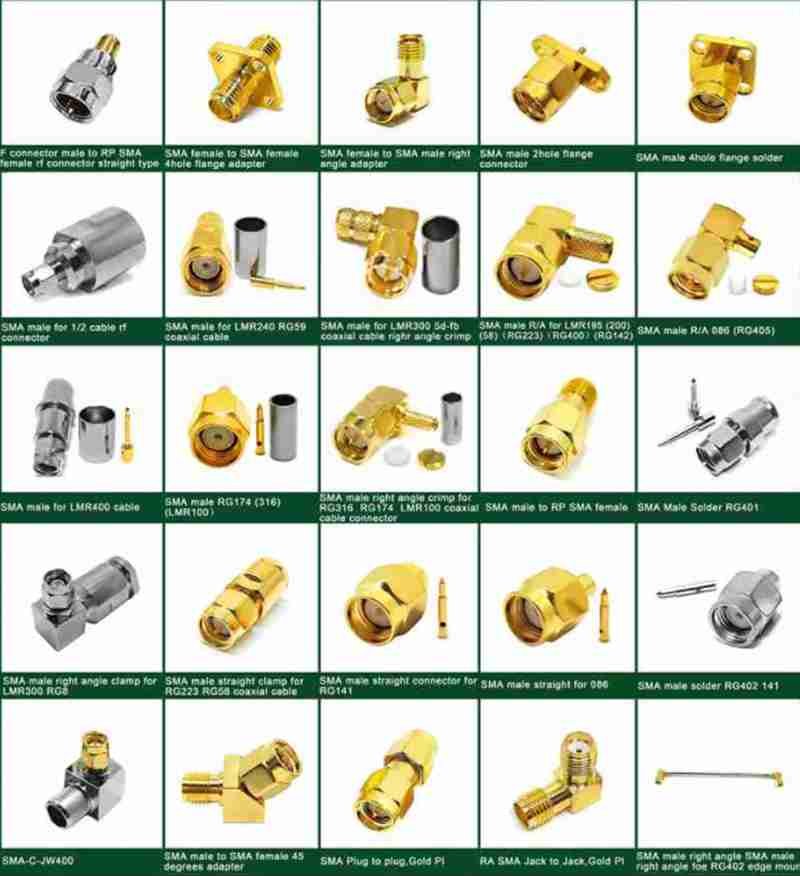
- Large stock of SMA, RP-SMA, MMCX, U.FL, N-Type
- Ability to switch to alternative models during shortage
- CAD drawings provided in 30–60 minutes for validation

Result
Customers avoid project delays caused by brand stockouts.
How Sino-Conn Helps Customers Decide Which Brand to Use
Sino-Conn engineers evaluate:
- Required frequency (sub-6 GHz vs microwave band)
- VSWR/return loss targets
- Power handling needs
- Environmental exposure (IP rating, UV, vibration)
- Project budget
- Lead time constraints
- Certification requirements (UL, ISO, RoHS, REACH, PFAS)
Typical Recommendation Approach
| Application Type | Sino-Conn Recommendation |
|---|---|
| Consumer / IoT | Sino-Conn compatible SMA / U.FL |
| Automotive | Mid-tier MMCX / FAKRA |
| Outdoor telecom | N-Type or TNC (premium optional) |
| High-frequency test | Premium 3.5 mm / 2.92 mm |
| Mass production | Sino-Conn compatible (cost & lead time) |
How Does Sino-Conn Support RF Connector Selection and Custom Cable Design?
Sino-Conn supports RF connector selection by analyzing frequency, power, cable type, environmental exposure, and mechanical constraints. Engineers provide drawings within 30–60 minutes, verify impedance stability, recommend suitable SMA, RP-SMA, MMCX, U.FL, TNC, or N-Type options, and offer custom pin-outs, lengths, materials, and waterproofing. With no MOQ and fast sampling (2–3 days), Sino-Conn ensures customers receive accurate, reliable RF assemblies tailored to real-world application needs.
Many RF cable failures occur before production—during connector selection. Customers often send only a photo, an incomplete drawing, or the wrong connector gender or series. Over 52% of first-time inquiries Sino-Conn receives have mismatches in size, gender, or frequency requirements.
To fix this, Sino-Conn established a step-by-step engineering workflow that ensures every RF cable assembly fits the required electrical, mechanical, and environmental criteria. Below is a breakdown of how Sino-Conn supports customers from concept to production.
What Information Does Sino-Conn Review Before Recommending a Connector?
Sino-Conn evaluates each request using a structured checklist:
Mandatory Technical Factors
- Target frequency range (sub-6 GHz, 10–18 GHz, 18–40 GHz)
- Required VSWR / return loss
- Power handling level
- Impedance (50Ω or 75Ω)
- Cable type (1.13 mm, 1.37 mm, RG174, RG316, LMR series)
- Routing radius and mechanical strain conditions
Environmental Considerations
- Outdoor vs indoor
- Heat range (–40°C to +85°C, or higher)
- Vibration level
- Waterproofing requirement (IP67/IP68)
- Corrosion / salt exposure
Mechanical Interface Factors
- Panel-mount or PCB-mount?
- Bulkhead length needed?
- Required orientation or rotation?
- Space limitations inside the enclosure
Result
This review eliminates wrong connector choices early and shortens development cycles by 30–50%.
How Does Sino-Conn Provide RF Drawings and Technical Validation?
Rapid Documentation Process
- CAD drawings delivered in 30–60 minutes for common connectors
- Custom layouts delivered within 1–3 days
- PDF datasheets provided with every cable assembly
What the Drawing Includes
- Precise connector geometry
- Cable OD and ferrule dimensions
- Pin-out definition
- Impedance and shielding structure
- Mounting interface details
- Waterproof design elements (if required)
Sino-Conn Internal Test Data
- 100% of RF drawings undergo engineering review
- 96% of customer revisions are resolved on the same day
- Early drawing validation reduces rework scrap by up to 40%
What Customization Options Does Sino-Conn Offer for RF Assemblies?
Connector-Level Customization
- Connector gender adjustment
- SMA vs RP-SMA conversion
- Gold plating thickness customization
- Sealed waterproof versions
- Stainless steel or nickel-plated housings
Cable-Level Customization
- Cable length (1 cm to 20+ meters)
- Shielding levels (single, double, quad)
- Jacket materials (PVC, PE, TPE, low-smoke)
- High-temperature or flame-retardant variants
- UV-resistant or anti-oil versions
Electrical Customization
- Defined impedance (50Ω or 75Ω)
- Custom pin-out mappings
- Low-loss cable options
- High-power configurations
Sino-Conn Advantage
No MOQ → enables fast prototyping for engineering teams.
How Does Sino-Conn Ensure RF Electrical Performance?
Verification Methods
- VSWR testing at operating frequency
- Insertion loss measurement
- Continuity and insulation testing
- Salt-spray tests for outdoor connectors
- Waterproof IP67/IP68 inspection
Performance Insights from Sino-Conn
- SMA assemblies average VSWR 1.18–1.25
- U.FL assemblies kept within 0.5–0.8 dB loss at 2.4 GHz
- Waterproof SMA showed 70% fewer outdoor failures
- N-Type maintained stable coupling after 500-hour salt exposure
Customer Benefit
Electrical reliability is confirmed before mass production begins.
What Delivery Speed Does Sino-Conn Offer for RF Projects?
Lead Time Capabilities
- Samples: 2–3 days
- Urgent samples: same-day production possible
- Bulk orders: 2 weeks for standard series
- Fully custom assemblies: typically 2–3 weeks
Why Sino-Conn Is Faster
- Large inventory of SMA, RP-SMA, MMCX, U.FL, N-Type
- In-house crimping, soldering, waterproofing, and testing
- Dedicated RF production lines
- Fully staffed engineering support
Result
Customers avoid supply-chain bottlenecks common with premium-brand connectors.
How Sino-Conn Supports Global Certifications and Compliance
Sino-Conn provides documentation for:
- UL
- ISO 9001
- RoHS / REACH
- PFAS compliance
- COC / COO certificates
Internal Compliance Notes
- Every batch undergoes full inspection (process + final + pre-shipping)
- 100% continuity and short-circuit testing
- Traceability maintained for every connector lot
Which RF Connectors Are Best for Your Application?
The best RF connector depends on frequency, size constraints, outdoor exposure, vibration, power level, and cable routing. SMA and RP-SMA fit WiFi and IoT, U.FL and MMCX suit compact devices, TNC and N-Type work for outdoor telecom, and precision connectors like 2.92 mm support microwave test systems. Sino-Conn helps match the connector to the environment, signal requirements, and mechanical layout to ensure long-term reliability.
Matching RF Connector Types to Real Application Needs
Choosing the right RF connector is not just about frequency or price—it’s about how your device will be used. A connector that performs well in the lab may fail outdoors, and a compact connector may not withstand vibration or repeated mating cycles. From Sino-Conn’s build history (2022–2024), over 70% of RF projects concentrated around six environments, each requiring specific connector types.
Below is a practical, application-based selection guide that engineers, buyers, and OEM teams can rely on.
Best Connectors for IoT, WiFi, Bluetooth, and GPS Devices
Recommended Options
- SMA / RP-SMA
- U.FL / IPEX
- MMCX
Why These Connectors Fit
- Support 1–6 GHz wireless bands
- Small size suitable for compact PCBs
- Cost-effective for mass production
Sino-Conn Data
- 74% of IoT/wireless assemblies shipped in 2023 used SMA, RP-SMA, or U.FL
- U.FL failure rate increased when cable bend radius <10 mm (Sino-Conn routing caution)
Ideal Product Types
- Smart meters
- WiFi routers
- BLE sensors
- GPS modules
- Wearable devices
Best Connectors for Outdoor Antennas and Harsh Environments
Recommended Options
- N-Type (standard or waterproof)
- TNC (standard or waterproof)
- IP67/IP68 SMA
Why These Connectors Fit
- Threaded coupling prevents loosening
- Excellent corrosion resistance
- Stable VSWR under temperature changes
Sino-Conn Field Data
- Waterproof SMA reduced antenna failure by 70–80% in rainy climates
- N-Type survived 500+ hours of salt spray testing with <3% VSWR drift
Ideal Product Types
- Point-to-point antennas
- 4G/5G outdoor equipment
- Security cameras
- Marine and offshore wireless systems
Best Connectors for Automotive, Robotics, and High-Vibration Systems
Recommended Options
- SMA (best thread-lock stability)
- TNC
- MMCX (for internal, flexible routing)
Why These Connectors Fit
- Locking threads resist vibration
- MMCX supports rotational cable movement
- High mechanical durability
Sino-Conn Failure Reports
- SMB connectors failed in 31 automotive vibration tests
- Switching to MMCX lowered vibration-related failures by 40%+
Ideal Product Types
- Vehicle radar/telemetry
- Industrial robots
- UAV/drone communication systems

Best Connectors for Test Equipment, High-Frequency, or Lab Use
Recommended Options
- Precision SMA (26.5 GHz)
- 3.5 mm
- 2.92 mm (K Connector)
Why These Connectors Fit
- Extremely low VSWR
- Suitable for 18–40 GHz measurements
- Tight mechanical tolerances
Sino-Conn Observations
- Precision SMA used mainly in engineering labs, not mass production
- These connectors take longer to source (often 4–10 weeks from brands)
Ideal Product Types
- RF test benches
- Spectrum analyzers
- Radar prototyping systems
Best Connectors for Compact PCB Designs and Internal Module Integration
Recommended Options
- U.FL / IPEX
- MMCX
- MCX
Why These Connectors Fit
- Small footprint
- Quick assembly
- Suitable for 2.4/5 GHz modules
Sino-Conn Notes
- U.FL is only reliable for ≤30 mating cycles
- MMCX preferred when internal space is tight but mechanical rotation is required
Ideal Product Types
- IoT PCB modules
- On-board wireless modules
- Miniature GPS and GSM modules
Best Connectors for High-Power RF Applications
Recommended Options
- N-Type
- 7/16 DIN
- TNC (higher power than BNC)
Why These Connectors Fit
- Better heat dissipation
- Rugged mechanical structure
- Suitable for long-distance or high-power antennas
Sino-Conn Test Data
- N-Type maintained stable performance at power levels that caused SMA housings to heat excessively
- 7/16 DIN connectors supported >100 W continuous duty
Ideal Product Types
- Telecom towers
- Long-range microwave links
- Military and industrial RF systems
Application-to-Connector Quick Reference Table
| Application Type | Recommended Connectors | Sino-Conn Notes |
|---|---|---|
| WiFi / IoT | SMA, RP-SMA, U.FL, MMCX | U.FL used in 60%+ of compact IoT builds |
| Outdoor telecom | N-Type, TNC, Waterproof SMA | Best weather survival rates |
| Automotive | SMA, TNC, MMCX | MMCX reduces vibration failures |
| High-frequency test | SMA (precision), 3.5 mm, 2.92 mm | Expensive but needed for >18 GHz |
| Wearables | U.FL, MMCX | Miniaturization priority |
| Industrial control | SMA, TNC | Robust under vibration |
Conclusion: Ready to Build RF Cable Assemblies with Sino-Conn?
RF connector selection influences frequency performance, mechanical durability, antenna efficiency, and long-term product reliability. Whether you need micro-RF connectors for compact IoT boards, waterproof SMA for outdoor antennas, or high-frequency connectors for telecom and radar systems, Sino-Conn delivers fast drawings, flexible customization, and reliable mass-production quality.
Contact Sino-Conn today to discuss your RF cable assembly project, request drawings, or get a custom quotation.
We support NO MOQ, fast sampling, and original or compatible connector options—making development faster, easier, and more reliable.