Skip to content

Medical devices rely on precise, reliable, and safe signal transmission—whether it’s a heart-rate monitor, surgical robot, imaging probe, infusion pump, or a wearable diagnostic device. Inside every modern system is a network of custom cables engineered to deliver accurate data, stable power, biocompatibility, and long-term durability under demanding clinical conditions. Yet, most buyers, engineers, and sourcing teams only see the outer insulation—they rarely see the design, materials, engineering drawings, regulatory constraints, or strict quality controls behind each medical cable.
Medical device cable manufacturers design and build specialized cables and assemblies using medical-grade materials, shielded structures, precision connectors, and validated manufacturing processes. They ensure electrical performance, biocompatibility, sterilization resistance, and long-term reliability required for clinical and diagnostic equipment. These manufacturers work closely with engineers to define custom specifications—lengths, pinouts, shielding, flexibility, overmolding, materials, and connectors—then produce prototypes and high-volume assemblies that meet regulatory standards.
Behind every medical cable is a process of careful engineering, regulatory compliance, and fast-paced development. For example, when a customer sends only a blurry image of a cable used in a diagnostic probe and needs samples within three days, manufacturers must reverse-engineer, produce drawings, select connectors, and build prototypes at remarkable speed. Understanding this process helps buyers, engineers, and OEMs evaluate suppliers more accurately and avoid costly mistakes.
What Is a Medical Device Cable?
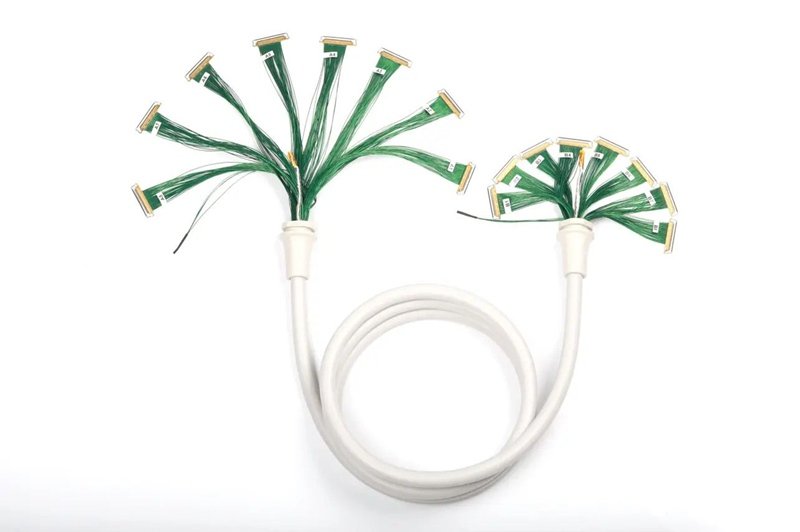
A medical device cable is a specialized electrical or signal cable designed to operate reliably within diagnostic, therapeutic, surgical, and patient-monitoring equipment. Unlike general-purpose cables, medical cables must meet strict requirements for safety, accuracy, flexibility, and durability in environments where both electrical noise and mechanical stress are common. Their primary function is to ensure stable transmission of signals or power while maintaining biocompatibility, sterility, and long-term reliability.
Medical cables typically combine multiple layers—conductors, insulation, shielding, fillers, strain-relief features, and outer jackets—each selected carefully to handle repeated bending, cleaning, sterilization, and exposure to bodily fluids or disinfectants. Many cables also integrate micro-coax lines, multi-lumen structures, or custom overmolding to support high-density connectors or miniaturized medical sensors. Because these cables often interface directly with patients or precision instruments, material selection and manufacturing tolerances are far more critical than in ordinary electronics.
What Makes Medical Cables Different from Standard Cables?
Medical cables must meet demanding functional and environmental requirements:
- Biocompatibility for patient-contact applications
- High flex-life for handheld probes, wearable sensors, and imaging equipment
- EMI protection to ensure stable and noise-free signal transmission
- Tolerance to sterilization such as autoclave, ETO, gamma, or hydrogen peroxide
- Chemical and fluid resistance to withstand disinfectants and clinical cleaning agents
- Low toxicity and safety standards including RoHS, REACH, PFAS restrictions
- Precision connectors that prevent accidental unplugging or signal loss
These factors make medical cables closer to engineered components than simple wires.
Which Cable Structures Are Common in Medical Devices?
Depending on the device and its function, medical cables may use:
- Micro-coax bundles for high-frequency imaging and ultrasound probes
- Multi-lumen cables to route multiple conductors or fluid channels in one assembly
- Shielded twisted pairs for low-voltage bio-signal measurement
- Single or double-shielded constructions for ECG, EEG, EMG and sensitive sensors
- Overmolded assemblies that offer strain relief and improved durability
- Flat or ribbon-style cable groups for compact, internal device wiring
These designs help manufacturers minimize noise, reduce cable bulk, and improve mechanical stability.
What Materials Are Used in Medical Device Cables?
Material selection directly affects safety, flexibility, and lifespan. Common materials include:
- Outer Jackets: TPU, TPE, silicone, medical PVC, LSZH compounds
- Provide flexibility, abrasion resistance, and patient-safe surfaces
- Insulation/Dielectric: PTFE, FEP, PE
- Maintain electrical stability and withstand heat or sterilization
- Shielding: Aluminum foil, copper braid, or foil-braid combinations
- Reduce noise and ensure consistent signal quality
- Fillers & Reinforcements: Kevlar, cotton, or polymer fibers
- Increase tensile strength and improve bending durability
Each material is chosen based on required bend cycles, sterilization method, chemical resistance, temperature rating, and overall durability.
To better visualize how different materials are used, here is a simple comparison of common medical cable materials and their strengths:
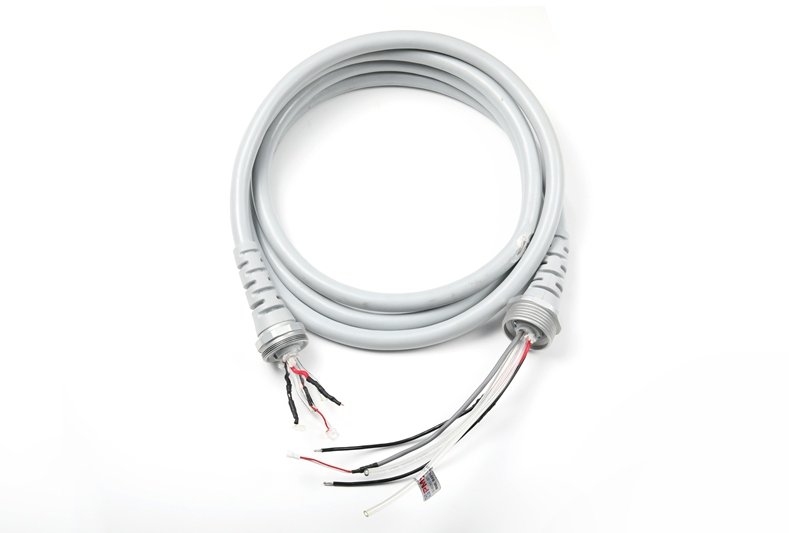
Table: Common Materials Used in Medical Device Cables
| Material Type | Typical Materials | Key Properties | Typical Use in Medical Cables |
|---|---|---|---|
| Outer Jacket | TPU, TPE | Flexible, abrasion-resistant, good for coiled or handheld cables | Patient monitors, handheld probes, wearable devices |
| Outer Jacket | Silicone | Very soft, skin-friendly, high flex-life, good at low and high temperatures | Patient-contact leads, ECG/EEG cables, wearable sensors |
| Outer Jacket | FEP, PTFE | High temperature resistance, chemical resistance, low friction | Surgical tools, sterilizable instruments, lab equipment |
| Insulation / Dielectric | PTFE, FEP | Stable dielectric, low loss, high heat resistance | High-frequency signals, micro-coax in imaging systems |
| Insulation / Dielectric | PE, XLPE | Good electrical performance, lower cost | Internal device wiring, sensor cables |
| Shielding | Aluminum foil, copper braid | EMI protection, noise reduction | ECG/EEG/EMG cables, communication lines, control signals |
| Reinforcement | Kevlar, aramid fibers | High tensile strength, pull resistance | Cables exposed to pulling, frequent movement, long runs |
| Fillers | Cotton, polymer fillers | Shape stability, comfort, improved feel | Patient-contact cables, handheld cable bundles |
Medical device cables are engineered components designed to meet stringent requirements for clinical performance, safety, and reliability. Their structure, materials, and construction methods are optimized to ensure stable signal transmission and mechanical endurance in demanding medical environments. Compared to standard cables, medical cables require far more precise engineering and careful material selection due to their critical role in diagnostic, monitoring, and surgical systems.
What Types of Medical Device Cables Are Common?
Medical cables vary widely depending on the device—ranging from micro-coax imaging lines to durable surgical cables to disposable sensor leads. Each application requires specific insulation, shielding, connectors, and bending characteristics.
Below are the most common categories found in clinical and diagnostic equipment.

Which Coaxial and Micro-Coax Cables Are Used in Medicine?
Ultrasound probes, imaging modules, endoscopes, and wearable sensors often use 1.37mm, 1.13mm, or ultra-fine coax. These allow low-loss, high-frequency signal transmission in compact spaces.
What Are Diagnostic Signal Cables? (ECG, EEG, EMG)
These cables are designed for precise low-voltage biopotential measurements. They use soft jackets, excellent flex-life, strong EMI shielding, and medical snap connectors.
What Are Multi-Lumen and Overmolded Cables?
Multi-lumen designs route multiple conductors, sensors, or fluid channels in one cable, commonly used in catheters or surgical devices. Overmolding provides strain relief, sealing, and durability.
What Is the Difference Between Disposable and Reusable Medical Cables?
Disposable cables prioritize cost and hygiene, while reusable ones require high flex-life, chemical resistance, and sterilization durability (autoclave, ETO, gamma, etc.).
How Do Medical Device Cable Manufacturers Build Custom Assemblies?
Manufacturers follow a structured engineering and production process: defining specifications, creating drawings, selecting materials, building prototypes, verifying electrical performance, and performing reliability and compliance testing.
Medical cable production requires precision because small changes in diameter, shielding, or pin-out can impact device performance.
How Do Engineers Define Pinouts and Connectivity?
Pin assignments, grounding strategy, shielding, and connector compatibility are determined during early design. OEMs often provide schematics or diagrams.
What Is the Drawing & Prototyping Process?
Manufacturers produce CAD drawings (PDF for customer approval) defining structure, OD, bend radius, shielding, and connector orientation. Fast manufacturers deliver drawings within 30 minutes–3 days.
How Are Cables Assembled? (Crimping, Soldering, Overmolding)
Assembly includes conductor prep, crimping or soldering, braiding, shielding, overmolding, ultrasonic welding, and strain-relief building.
What Testing Ensures Reliability?
Medical cables require continuity testing, insulation resistance, impedance control, pull-force tests, flex testing, and appearance inspection.
Which Specifications Matter When Choosing a Medical Cable?
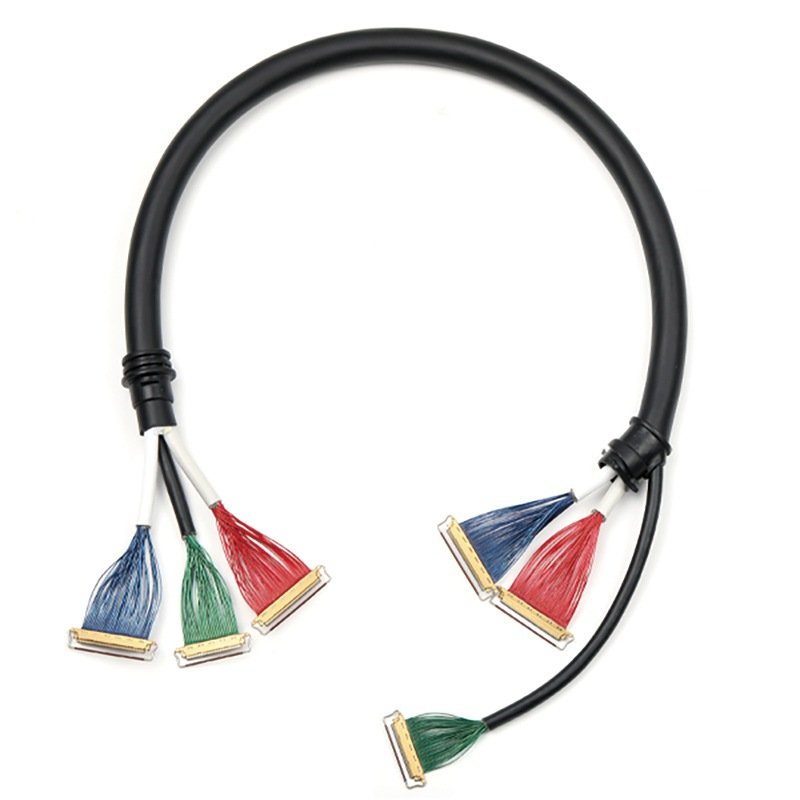
Selecting a medical cable requires evaluating electrical performance, mechanical durability, flexibility, environmental resistance, sterilization compatibility, and the connector interface. Small changes in shielding, jacket material, or OD tolerance can affect device accuracy and clinical reliability.
Because medical devices involve sensitive signals—from microvolt-level ECG measurements to high-frequency imaging—cable specifications determine the overall system stability.
What Electrical Specs Are Critical?
Electrical parameters define whether a cable can transmit signals accurately:
- Impedance (50Ω, 75Ω, 100Ω depending on function)
- Shielding effectiveness
- Insertion loss / attenuation
- Capacitance and resistance per meter
- Crosstalk control for multi-conductor cables
Medical signal cables require stable impedance and strong EMI protection.
What Environmental Ratings Do Medical Cables Need?
Medical environments require cables that can withstand:
- Repeated bending cycles
- Skin contact and body fluids
- Chemical disinfection
- Sterilization (autoclave, ETO, gamma, H₂O₂)
- UV and heat exposure
- Oil and solvent resistance for hospital equipment
Material selection (TPU, silicone, TPE, FEP, PTFE) depends on durability and sterilization needs.
Do Medical Cables Require Certification?
Yes—many medical device manufacturers require documentation to ensure compliance:
- UL for insulation safety
- ISO9001 / ISO13485 for manufacturing quality
- RoHS / REACH / PFAS for material safety
- COC / COO for traceability
These ensure the cable can be used in regulated markets.
How Do Connectors Affect Performance and Lead Time?
Medical connectors vary widely:
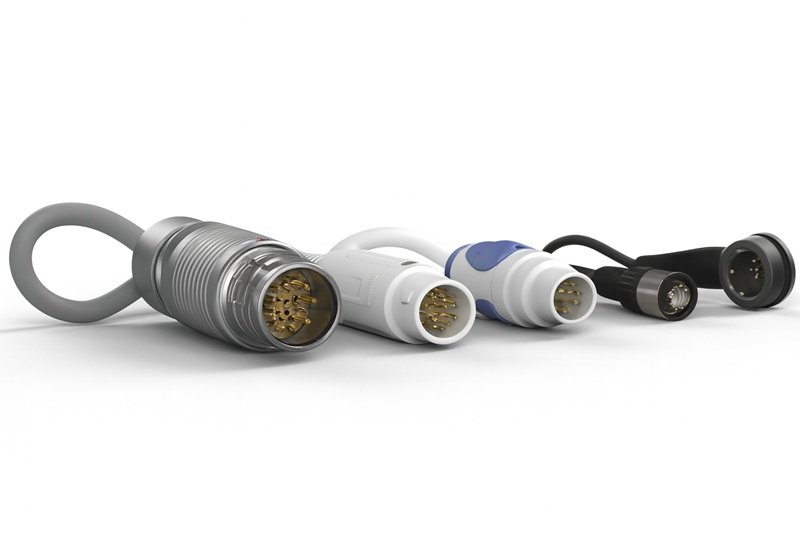
- Circular medical connectors
- LEMO-style push-pull connectors
- ECG snap connectors
- Micro-coax RF connectors (U.FL, MMCX, SMPM)
- DIN/ISO standard connectors
Connector decisions influence:
- Signal quality
- Sealing (IP rating)
- Sterilization compatibility
- Availability (original vs equivalent part)
- Lead time and overall cost
Original connectors may have long lead times, while compatible equivalents offer faster supply.
How to Choose the Right Medical Cable Manufacturer?
Choosing the right medical cable manufacturer is a critical decision for OEMs, engineering teams, and purchasing departments. Medical cables are not standard commercial components—they affect device accuracy, patient safety, long-term reliability, and regulatory compliance. A suitable manufacturer must have the engineering capability, material knowledge, production precision, and documentation standards required for medical devices.
Selecting a partner goes far beyond comparing prices. It requires evaluating technical competency, process control, testing ability, prototyping speed, and the manufacturer’s familiarity with medical industry expectations. Below is a more structured approach to making the right choice.
What Capabilities Should a Manufacturer Have?
A qualified manufacturer should demonstrate strong engineering and operational capabilities:
- Engineering consultation for cable structure, shielding methods, materials, and connector selection
- Ability to produce detailed drawings (CAD → PDF) with precise pin-out definitions
- Experience with micro-coax, fine-pitch wires, and high-density connectors
- Overmolding and strain-relief manufacturing capabilities
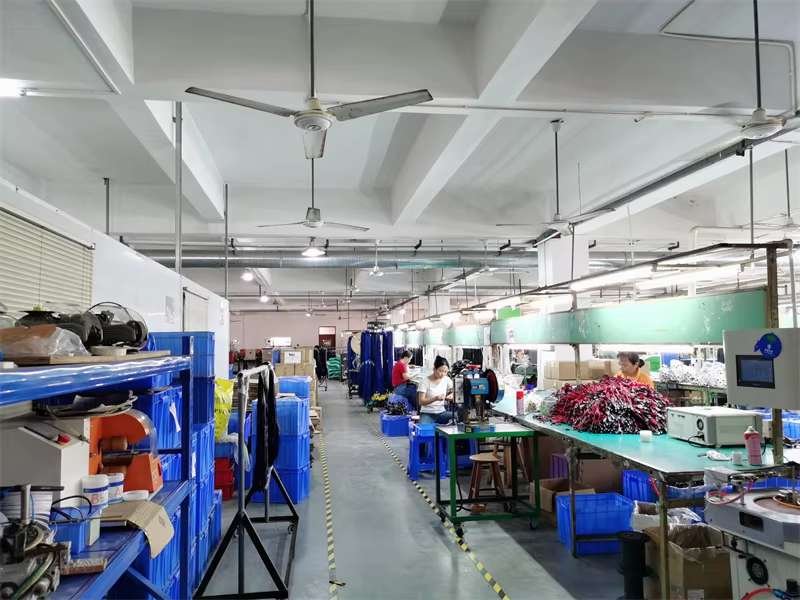
- Controlled production processes including crimping, soldering, overmolding, and ultrasonic welding
- Full testing capabilities: electrical, mechanical, environmental, and visual inspection
- Flexibility to support low-volume prototypes and scalable mass production
These capabilities ensure that the final cable is not only functional but also aligned with medical device engineering requirements.
How Important Is Fast Drawing and Prototyping?
Development timelines for medical devices are often tight, especially when projects move from R&D to verification or clinical trials. Delays in cable samples can slow the entire program.
A reliable manufacturer should offer:
- Fast drawing turnaround (from 30 minutes to a few days depending on complexity)
- Rapid sample builds (2–14 days)
- Clear communication during revisions and approval
- Prototype consistency that reflects mass-production capability
Fast iteration reduces technical risk and helps teams validate mechanical fit, pin mappings, electromagnetic performance, and durability early in the process.
Are Customization Options Essential?
Yes. Most medical device cables cannot be purchased off the shelf. They require customization to fit device architecture, patient-contact requirements, or sterilization constraints.
Key customization parameters include:
- Cable length, outer diameter, and bending radius
- Pin configuration and interconnection between ends
- Jacket material (TPU, silicone, TPE, PVC medical grade, FEP, PTFE)
- Shielding design (foil, braid, spiral, or combined)
- Strain-relief/overmold shape
- Connector choice (LEMO-style, circular medical, micro-coax RF, disposable connectors)
- Sterilization method compatibility
- Color-coding and labeling for multi-channel systems
Customization ensures that the cable integrates seamlessly into the device and performs reliably under real-world usage conditions.
What Questions Should Buyers Ask Suppliers?
Asking the right questions helps filter out manufacturers who lack medical experience. Key questions include:
- Can you provide detailed drawings before production?
- Do you support medical-grade materials and sterilization-resistant options?
- What electrical and mechanical tests do you perform on every assembly?
- Can you meet compliance requirements (UL, ISO, RoHS, REACH, PFAS)?
- What is the lead time for prototypes and mass production?
- Do you support original and equivalent connectors?
- Can you reverse-engineer from a sample or photo?
- Is there a minimum order quantity?
These questions help confirm the manufacturer’s technical depth and production capability.
Table: Manufacturer Evaluation Criteria Overview
| Evaluation Category | What to Look For | Why It Matters |
|---|---|---|
| Engineering Capability | Drawings, pin-out design, material guidance, micro-coax ability | Ensures cable meets medical electrical & mechanical needs |
| Material Expertise | TPU, silicone, PTFE, FEP, medical-grade PVC | Affects durability, safety, and sterilization compatibility |
| Testing & QC | Electrical, mechanical, visual, continuity, impedance | Ensures reliability and reduces risk of device malfunction |
| Prototyping Speed | 2–14 day sample turnaround | Speeds product development cycles |
| Connector Knowledge | Medical circular, LEMO-style, micro coax, ECG snaps | Prevents mismatch issues and improves reliability |
| Certifications | UL, ISO, RoHS, REACH, PFAS documentation | Required for compliance and regulatory audits |
| Customization Range | Length, shielding, overmold, materials, pinouts | Ensures fit for specific medical devices |
| Scalability | Support for low-volume prototypes and mass production | Avoids supply issues during device lifecycle |
Choosing the right medical cable manufacturer requires evaluating engineering strength, material expertise, customization ability, testing rigor, and documentation quality. A competent manufacturer provides fast drawings, rapid prototypes, strong process control, and full compliance support—ensuring the cable works reliably inside the medical device and meets regulatory expectations.
Why Do Engineers, OEMs, and Traders Work With Sino-Conn?
Sino-Conn is known for engineering capability, rapid response, customization flexibility, and full certification support—important factors for medical device cables.
What Customization Does Sino-Conn Support?
Sino-Conn can customize:
- Cable length and OD
- Pin-outs and wiring definitions
- Jacket materials (TPU, silicone, TPE, FEP, halogen-free)
- EMI shielding structure
- Overmolding and strain relief
- Connector selection (original or equivalent)
How Fast Does Sino-Conn Deliver Drawings and Samples?
- Drawings: 30 minutes–3 days
- Urgent samples: 2–3 days
- Standard samples: 2 weeks
- Mass production: 2–4 weeks
Fast engineering response is crucial for medical device development cycles.
Why Does Sino-Conn Offer Flexible Pricing?
Pricing varies based on:
- Country/market (US/Japan higher; Korea/India/Eastern Europe lower)
- Industry (medical/military higher; commercial moderate)
- Connector type (original vs equivalent)
- Volume (OEM bulk orders get better pricing)
How Does Sino-Conn Ensure Quality & Compliance?
Sino-Conn performs:
- 100% testing (process inspection + final inspection + pre-shipment)
- Electrical testing (continuity, insulation, resistance, impedance)
- Mechanical checks (pull-force, appearance, alignment)
- Documentation: UL, ISO, RoHS, REACH, PFAS, COC, COO
These are essential for medical device integration.
FAQs About Medical Device Cable Manufacturers
Are All Medical Cables Medical-Grade?
No—materials and insulation must meet specific safety and performance standards to be considered medical-grade.
Do Manufacturers Keep Inventory?
Typically no. Medical cables are almost always custom-built, so manufacturers produce them on demand.
Is There a Minimum Order Quantity?
Many manufacturers require MOQs, but some (like Sino-Conn) support 1-piece prototypes.
How Long Does Production Take?
- Samples: 2–14 days
- Mass production: 2–4 weeks
Connector availability may affect timelines.
Conclusion
Medical device cable manufacturers play a critical role in ensuring safe, accurate, and reliable performance in clinical equipment. They design and build customized cables—using medical-grade materials, EMI shielding, high-flex structures, and precise connectors—to meet the strict demands of diagnostic, therapeutic, imaging, and monitoring systems.
Choosing the right supplier requires understanding specifications, materials, mechanical constraints, sterilization requirements, testing procedures, and documentation standards. A capable manufacturer accelerates development, provides accurate drawings, offers fast prototypes, and delivers consistent production quality.
If you need custom medical device cables—sensor leads, micro-coax imaging cables, overmolded assemblies, or full medical-grade wiring—contact Sino-Conn to start your custom design or quotation today.