Skip to content
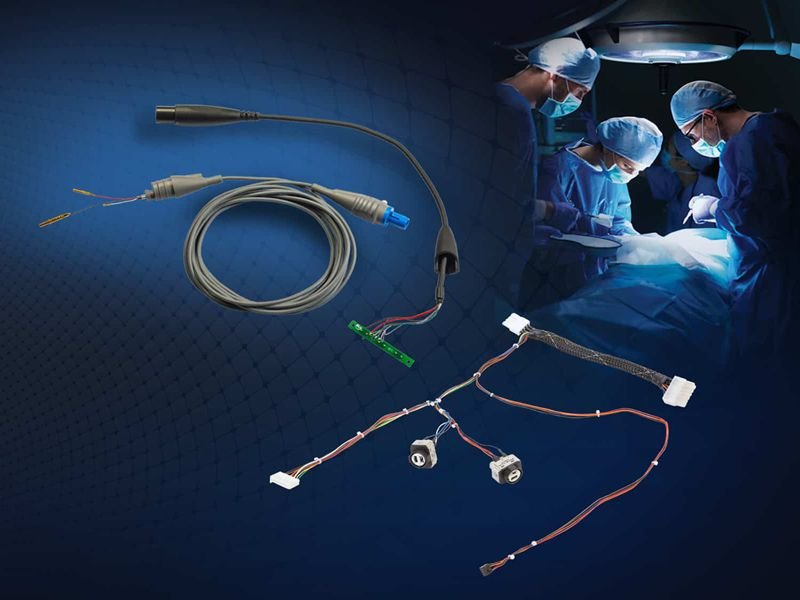
In the medical device industry, cable assemblies are rarely discussed in marketing brochures—but they are quietly critical to whether a device works reliably, passes compliance, and survives real clinical use. Imaging systems, patient monitors, diagnostic analyzers, and surgical equipment all depend on cables to deliver power, signals, and data without interruption. When a medical device fails in the field, the root cause is often traced not to software or electronics, but to connectors, wires, or assembly details hidden inside the cable.
Many buyers assume that selecting a medical cable assembly manufacturer is simply a matter of finding a supplier with “medical experience” or the right certificates. In reality, the difference between a supplier and a true manufacturing partner shows up much earlier—during specification review, drawing preparation, material selection, and communication speed. Medical projects rarely start with perfect information. Engineers revise designs, procurement teams face lead-time pressure, and OEMs need flexibility without compromising compliance.
Medical cable assembly manufacturers specialize in designing and producing custom cable assemblies for medical devices, ensuring compliance, reliability, and traceability. The right manufacturer provides detailed specifications, engineering drawings, material customization, certified processes, and consistent quality control. Choosing the right partner reduces development risk, shortens lead time, and ensures cables meet medical, regulatory, and real-world usage requirements.
Behind every successful medical device launch is usually a cable manufacturer who helped translate incomplete requirements into a manufacturable, testable, and repeatable solution. Understanding how these manufacturers work—and how to evaluate them—can save months of redesign and costly delays later. Let’s start by defining what medical cable assembly manufacturers actually do.
What Are Medical Cable Assembly Manufacturers?
Medical cable assembly manufacturers design and produce custom cable assemblies used in medical devices, focusing on reliability, compliance, and traceability. Unlike general cable suppliers, they support medical-grade materials, detailed specifications, engineering drawings, and regulated production processes. Their role extends beyond assembly to include design validation, documentation, testing, and ongoing production support for medical applications.
Medical cable assembly manufacturers sit at the intersection of engineering, manufacturing, and regulatory awareness. Their responsibility goes far beyond cutting wires and crimping connectors. In most medical projects, they act as a technical translator—turning functional requirements into physical cable designs that can survive real-world use.
What Makes a Cable Assembly “Medical-Grade”?
A cable becomes “medical-grade” not because of a single material or label, but because of how it is designed, documented, and controlled. Medical cable assemblies typically require:
- Stable electrical performance over long service life
- Materials suitable for medical environments (heat, chemicals, cleaning agents)
- Mechanical durability under repeated movement or handling
- Clear documentation for traceability and compliance
Unlike consumer cables, medical cables must behave predictably over time. A connector that loosens slightly, or insulation that hardens after repeated cleaning, can introduce safety risks. Medical cable manufacturers focus on minimizing these long-term uncertainties during the design stage.

How Are Medical Cable Manufacturers Different From General Cable Suppliers?
General cable suppliers often sell standardized products with fixed specifications. Medical cable assembly manufacturers, by contrast, are structured around customization and engineering support.
Key differences include:
| Aspect | General Cable Supplier | Medical Cable Assembly Manufacturer |
|---|---|---|
| Product type | Standard catalog items | Custom, application-specific |
| Documentation | Limited | Full specs, drawings, revisions |
| Engineering support | Minimal | Active design participation |
| Compliance awareness | Basic | Medical-focused |
| Change handling | Rigid | Flexible, controlled |
This distinction becomes critical when requirements are incomplete—such as when a customer provides only a sample or photo.
Which Medical Devices Commonly Use Custom Cable Assemblies?
Medical cable assemblies appear in nearly every category of medical equipment, including:
- Diagnostic imaging systems (CT, ultrasound, X-ray)
- Patient monitoring and life-support devices
- Laboratory and analytical instruments
- Surgical and therapeutic equipment
In these applications, cables may carry power, analog signals, digital data, or a combination of all three. Each function imposes different constraints on shielding, impedance, flexibility, and materials. Medical cable manufacturers must understand these differences to avoid overdesign—or worse, underdesign.
Why Customization Is the Norm, Not the Exception
In practice, very few medical cable assemblies are truly off-the-shelf. Even when a known connector model is specified, other variables usually need adjustment:
- Exact cable length
- Pin-to-pin definition
- Jacket material or diameter
- Strain relief or overmold shape
Medical cable assembly manufacturers expect these variations. Their production processes, drawing systems, and quality controls are built to handle frequent customization without losing consistency.
How Manufacturers Support Customers With Incomplete Information
Many projects begin with imperfect inputs. Customers may provide a part number, a photo, or a brief description without full specifications. A qualified medical cable manufacturer responds by:
- Requesting clarification through targeted technical questions
- Creating preliminary drawings based on assumptions
- Proposing alternative materials or connector options
- Updating documents as requirements become clearer
This collaborative approach is often what separates experienced medical cable assembly manufacturers from suppliers who simply wait for complete instructions.
Which Capabilities Define a Qualified Medical Cable Assembly Manufacturer?
A qualified medical cable assembly manufacturer must offer more than assembly capacity. Core capabilities include deep understanding of cable and connector specifications, fast and accurate drawing support, flexible customization, controlled lead times, and consistent quality inspection. These capabilities reduce development risk, support engineering changes, and ensure medical cables perform reliably across prototypes and mass production.
In medical cable projects, capability is not measured by how many machines a factory owns, but by how effectively it reduces uncertainty for the customer. Below are the capabilities that consistently separate reliable medical cable assembly manufacturers from ordinary suppliers.
How Important Is Specification Understanding in Medical Cable Assemblies?
Specification literacy is foundational—and frequently underestimated.
Medical customers often request detailed specifications covering:
- Connector models and mating interfaces
- Cable construction (conductors, shielding, insulation)
- Electrical parameters (voltage, current, impedance)
- Mechanical properties (OD, bend radius, flexibility)
- Environmental resistance (heat, oil, UV, corrosion)
A qualified manufacturer does not simply “accept” these specs. They review them critically.
Common real-world issues include:
- Overly wide tolerances that cause OD variation
- Mismatched connector current ratings
- Shielding structures unsuitable for the signal type
- Materials incompatible with cleaning or sterilization
Manufacturers who actively question and validate specifications help prevent downstream failures—especially when cables are integrated into non-serviceable medical devices.
Why Drawing Capability (CAD to PDF) Is Non-Negotiable
In medical projects, drawings are not optional. They are the control point between engineering intent and production reality.
A capable medical cable manufacturer should be able to:
- Generate assembly drawings based on samples, photos, or descriptions
- Convert CAD designs into customer-friendly PDF formats
- Clearly define pinouts, wire routing, and connector orientation
- Revise drawings quickly when requirements change
Speed matters here—not just quality.

In real development cycles:
- Engineers may need drawings within days, not weeks
- Procurement may need drawings for internal approval
- Production cannot start without confirmed documentation
Manufacturers who can deliver drawings in hours or days significantly reduce iteration cycles. Just as importantly, they ensure that no production begins without customer approval, protecting both sides from costly misunderstandings.
How Does Customization Capability Affect Medical Cable Success?
Customization is not a “nice to have” in medical cable assembly—it is the default condition.
Typical customization requirements include:
- Exact cable length (not standard increments)
- Custom pin definitions and cross-connections
- Special jacket materials (low-halogen, high-temp, flexible)
- Unique overmold shapes or strain reliefs
The challenge is not whether customization is possible, but whether it can be done without destabilizing quality or lead time.
A qualified manufacturer treats customization as part of a controlled process:
| Custom Element | Risk Without Control | Controlled Approach |
|---|---|---|
| Length | OD inconsistency | Defined cut & strip process |
| Pinout | Wiring errors | Drawing + verification |
| Materials | Compliance risk | Approved material list |
| Shape | Mechanical failure | Prototype validation |
This structured approach allows even one-piece or low-volume orders to be handled with the same discipline as larger runs.
Why Lead Time Flexibility Matters More Than Advertised Speed
Medical projects rarely follow ideal schedules.
Urgent samples, delayed approvals, and last-minute design changes are common. What customers need is not just fast lead time, but flexible lead time.
Qualified medical cable assembly manufacturers typically support:
- Standard samples in ~2 weeks
- Urgent samples in days when feasible
- Small-batch production without MOQ barriers
- Accelerated mass production when designs are frozen
This flexibility is especially important for R&D teams, where iteration speed often matters more than unit cost. A manufacturer that can adjust timelines without compromising quality becomes a long-term partner rather than a transactional supplier.
How Does Quality Control Go Beyond “100% Inspection”?
Many suppliers claim “100% inspection.” In medical cable manufacturing, this statement only has value if the inspection is meaningful.
Effective quality control typically includes:
- Process inspection during assembly
- Final visual and electrical inspection
- Verification against approved drawings
- Traceability by batch or order
A robust approach often looks like this:
| Inspection Stage | Purpose |
|---|---|
| In-process check | Catch errors early |
| Final inspection | Confirm finished quality |
| Pre-shipment check | Ensure order accuracy |
This layered inspection approach is especially important when cables are customized and cannot be easily replaced once installed in medical equipment.
What Certifications and Compliance Do Medical Cable Manufacturers Need?
Medical cable assembly manufacturers typically need certifications such as ISO, UL, RoHS, REACH, and documentation like COC and COO. These certifications support regulatory compliance, material safety, and traceability. While certifications alone do not guarantee quality, they provide essential frameworks for controlled manufacturing and customer qualification in medical applications.
Certifications are necessary—but they are not sufficient on their own.
Which Certifications Are Commonly Required for Medical Cable Assemblies?
Depending on the customer and region, common requirements include:
- ISO: Manufacturing process control
- UL: Electrical safety recognition
- RoHS / REACH: Material compliance
- PFAS documentation: Increasingly requested
- COC / COO: Shipment and origin documentation
Each serves a different purpose. For example, UL relates to safety recognition, while RoHS and REACH focus on material restrictions.
A qualified manufacturer understands when each document is needed, rather than offering certificates indiscriminately.
Why Certifications Do Not Replace Engineering Judgment
One of the most common mistakes buyers make is assuming that certificates guarantee suitability.
In reality:
- A RoHS-compliant cable can still be mechanically unsuitable
- A UL-recognized wire can still fail under repeated bending
- An ISO-certified factory can still misinterpret specifications
This is why experienced medical cable manufacturers combine compliance with engineering review and real-world validation.
How Documentation Supports Customer Qualification and Audits
For many customers—especially in medical and OEM environments—documentation is as important as the product itself.
Qualified manufacturers support customers by providing:
- Approved drawings linked to production
- Material declarations upon request
- Batch-level documentation
- Consistent revision control
This documentation reduces friction during audits, internal approvals, and regulatory reviews—often saving customers more time than the physical product itself.
How Do Medical Cable Assembly Manufacturers Support Different Customer Types?
Medical cable assembly manufacturers support different customer types by adapting communication style, documentation depth, pricing logic, and production flow. Engineers prioritize feasibility and technical discussion, OEMs focus on cost, capacity, and lead time, while traders and procurement teams value responsiveness, clarity, and documentation. A qualified manufacturer adjusts its approach to each role without compromising quality or process control.
Medical cable projects involve multiple decision-makers, each with different priorities. Manufacturers that treat all customers the same often struggle to convert inquiries into stable orders.
How Do R&D Engineers Evaluate Medical Cable Manufacturers?
Engineers are usually the entry point of medical cable projects—and often the most valuable long-term partners.
They care less about unit price and more about:
- Whether the cable can actually be built
- Whether the manufacturer understands the application
- Whether design risks are identified early
- Whether feedback is technically meaningful

Typical engineer-driven interactions include:
- Sharing drawings, sketches, or partial specs
- Discussing shielding, flexibility, EMI, or routing constraints
- Requesting quick drawings or feasibility confirmation
Manufacturers who can speak engineering language, propose alternatives, and explain trade-offs earn trust quickly. Once engineers confirm feasibility, supplier status often becomes sticky—especially in Europe and North America.
How Do OEM Factories Assess Medical Cable Assembly Suppliers?
OEM customers approach medical cable assembly from a different angle.
Their priorities usually include:
- Stable pricing at volume
- Predictable lead times
- Manufacturing capacity and consistency
- Ability to support 30–90 day payment terms
OEMs are often less interested in deep technical discussion unless something goes wrong. For them, reliability and execution matter more than innovation.
This is where process discipline becomes visible:
| OEM Concern | Manufacturer Capability |
|---|---|
| Cost control | Flexible material sourcing |
| Delivery | Stable production planning |
| Quality | Repeatable inspection process |
| Scale | Capacity without shortcuts |
Manufacturers who over-promise on price but cannot sustain quality often lose OEM customers quietly—after one or two batches.
How Do Traders and Distributors Interact Differently?
Traders frequently approach medical cable manufacturers with:
- A connector model number
- A photo
- Minimal technical context
- An urgent request for price and lead time
Some traders are highly professional; others are not. A capable manufacturer handles both without friction by:
- Asking the minimum required clarification questions
- Offering drawings and specs proactively
- Avoiding assumptions based on incomplete information
For traders, speed and clarity often matter more than depth. However, errors caused by incomplete understanding can still damage the manufacturer’s reputation—so internal validation remains essential.
How Do Procurement Teams Make Final Decisions?
Procurement teams typically enter after engineering approval.
Their focus includes:
- Price benchmarking
- Documentation completeness
- Supplier credibility
- Risk reduction
At this stage, responsiveness, consistency, and transparency become decisive. Manufacturers who already provided clean drawings, specs, and stable communication earlier face far fewer obstacles here.
How Do Price, Region, and Industry Affect Medical Cable Assembly Projects?
Medical cable assembly pricing and expectations vary significantly by region and industry. The U.S. and Japan typically accept higher prices for reliability and speed, while Southeast Asia and India are more price-sensitive. Medical and military sectors demand higher quality and compliance, while commercial applications prioritize cost efficiency. Understanding these differences helps manufacturers align solutions with customer expectations.
Dive Deeper: Why “Price” Is Never Just About Cost
Medical cable pricing is shaped by context, not just materials and labor.
How Do Regional Expectations Influence Pricing?
Different regions evaluate suppliers differently:
| Region | Typical Focus |
|---|---|
| United States | Speed, documentation, reliability |
| Japan | Consistency, quality, long-term stability |
| Germany / France | Engineering rigor, compliance |
| Italy / Poland | Cost-performance balance |
| Southeast Asia | Price sensitivity |
| India | Cost-first, flexible sourcing |
Manufacturers who apply a single pricing logic globally often miss opportunities—or lose credibility.
How Does Industry Segment Change Expectations?
Not all “medical” cables are equal.
| Industry Segment | Price Level | Key Concern |
|---|---|---|
| Medical devices | High | Reliability, compliance |
| Military medical | Very high | Traceability, durability |
| Commercial equipment | Medium | Cost-performance balance |
| Consumer healthcare | Lower | Cost, appearance |
Understanding where a project sits on this spectrum allows manufacturers to propose appropriate solutions, rather than defaulting to over-engineering or under-delivering.
Why Flexible Sourcing (Original vs Alternative Connectors) Matters
Many medical projects face a trade-off:
- Original branded connectors: stable, expensive, long lead time
- Qualified alternatives: flexible, faster, more affordable
Experienced manufacturers explain this trade-off clearly, rather than pushing one option. This transparency helps customers make informed decisions aligned with timeline and budget.
How Do You Choose the Right Medical Cable Assembly Manufacturer?
The right medical cable assembly manufacturer demonstrates technical understanding, fast and accurate drawing support, flexible customization, controlled quality processes, and transparent communication. Rather than focusing only on price or certifications, buyers should evaluate how the manufacturer reduces design risk, responds to changes, and supports long-term production stability.
Instead of abstract criteria, buyers benefit from concrete questions.
Can the Manufacturer Understand Incomplete Information?
Real projects rarely start with perfect specs.
A strong manufacturer can:
- Work from photos or samples
- Ask the right clarification questions
- Avoid assumptions
- Translate vague requirements into drawings
This capability alone prevents many costly mistakes.

How Fast and Accurate Is Their Drawing Process?
Ask:
- How long to provide a first drawing?
- How many revision cycles are typical?
- Is production blocked without drawing approval?
Fast drawing without accuracy is useless. Accuracy without speed slows development. You need both.
Is Customization Treated as a Process or an Exception?
Customization should feel routine, not risky.
Look for:
- Clear handling of pin definitions
- Controlled material selection
- Documented changes
- No minimum order barrier for prototypes
How Is Quality Actually Controlled?
Ask beyond “100% inspection”:
- At which stages is inspection performed?
- How are drawings linked to production?
- How are errors detected and corrected?
Consistency matters more than slogans.
Is Communication Predictable and Professional?
In medical projects, silence is risk.
Reliable manufacturers:
- Respond clearly
- Set realistic expectations
- Explain constraints
- Escalate issues early
Final Thoughts: Medical Cable Assembly Is About Risk Reduction
Medical cable assembly manufacturing is not just about connecting wires. It is about reducing uncertainty—for engineers, OEMs, and procurement teams alike.
The best manufacturers are not those who claim the lowest price or the most certificates. They are the ones who:
- Understand applications
- Control processes
- Communicate clearly
- Adapt to real-world constraints
If your medical project involves custom cables, limited information, tight timelines, or long-term production planning, early technical discussion matters more than late-stage negotiation.
Sino-Conn supports custom medical cable assemblies with fast drawings, flexible quantities, controlled quality, and engineering-driven communication—helping customers move from concept to production with fewer surprises.