Skip to content
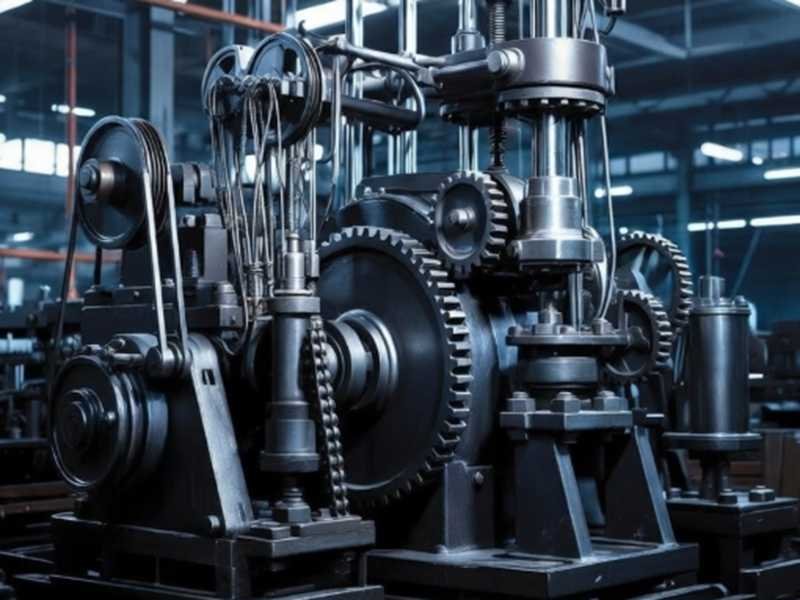
In many industrial systems, the most critical components are often the least visible. Motors, PLCs, and sensors tend to get the attention, while mechanical traction cables quietly do the physical work of translating motion, force, and control from one point to another. When these cables perform well, no one notices. When they fail, machines stop, safety risks rise, and downtime becomes expensive.
Industrial traction mechanical cables are not simple “wires.” They are engineered mechanical systems designed to transmit push, pull, or combined motion reliably under load, over distance, and through complex routing paths. They operate in harsh environments—exposed to vibration, oil, dust, heat, moisture, and repeated mechanical stress. Their failure modes are mechanical, not electrical, and they often appear gradually rather than catastrophically.
Many buyers underestimate this complexity. Traction cables are frequently sourced as standard catalog items, chosen by appearance or nominal size. Over time, this approach leads to problems: excessive friction, inaccurate motion, premature wear, or inconsistent control response. These issues rarely show up in early testing but surface after months of operation, when systems are already deployed.
Industrial traction mechanical cable manufacturers design and produce mechanical control cables that transmit push or pull motion in industrial equipment. These cables are used in machinery, automation systems, valves, brakes, and actuators where reliable mechanical movement is required. Unlike electrical cables, traction cables are defined by mechanical load, stroke length, bend radius, and durability. Choosing the right manufacturer ensures performance, safety, and long service life.
To understand why experienced engineers treat traction cables as engineered components rather than commodities, we need to start with the fundamentals—what these cables are, how they work, and where they are used in real industrial systems.
What Is an Industrial Traction Mechanical Cable?
An industrial traction mechanical cable is a mechanical control cable designed to transmit push, pull, or combined linear motion between two points. It is commonly used in industrial machinery, automation equipment, and control systems where mechanical force must be delivered reliably over distance. Unlike electrical cables, traction cables are defined by load capacity, stroke length, bend radius, friction, and mechanical durability.
What Does “Traction Mechanical Cable” Mean in Industrial Systems?
In industrial contexts, traction refers to the controlled transmission of mechanical force. A traction mechanical cable typically consists of an inner wire or core that moves inside a flexible conduit or housing. When force is applied at one end, the inner element translates that force to the other end, either by pulling, pushing, or both.
This design allows machines to place control points—levers, pedals, knobs, or actuators—away from the actual mechanical load. The result is cleaner layouts, safer operation, and greater flexibility in machine design.
Unlike electrical cables, which primarily transmit signals or power, traction cables transmit physical motion. Their performance is measured not in volts or amperes, but in friction, backlash, response accuracy, and mechanical life.
How Traction Cables Differ from Electrical Cables and Wire Harnesses
A common sourcing mistake is treating traction cables as a variation of electrical cables or wire harnesses. In reality, the design priorities are entirely different.
| Aspect | Traction Mechanical Cable | Electrical Cable / Harness |
|---|---|---|
| Primary function | Transmit mechanical force | Transmit power or signals |
| Key performance factors | Load, friction, stroke, durability | Voltage, current, EMI |
| Failure mode | Wear, binding, elongation | Short, open, interference |
| Customization focus | Length, ends, routing, materials | Pinout, shielding, gauge |
This distinction matters because suppliers experienced only in electrical assemblies often lack the tooling, materials knowledge, and testing methods required for mechanical cable systems.
What Forces and Movements Are Traction Cables Designed to Handle?
Industrial traction cables are engineered around real mechanical demands. These include:
- Tensile and compressive loads over repeated cycles
- Linear motion accuracy, especially in control systems
- Bending and routing constraints inside machines
- Vibration and shock resistance
- Environmental exposure such as oil, dust, moisture, or temperature extremes
Designing a traction cable is a balancing act. Increasing strength may reduce flexibility. Reducing friction may increase cost. A capable manufacturer understands these trade-offs and designs for the actual application rather than a generic specification.
What Are Industrial Traction Mechanical Cables Used For?
Industrial traction mechanical cables are used to control motion in machinery, automation systems, valves, brakes, throttles, and actuators. They allow operators or control units to apply mechanical force remotely and accurately. These cables are widely used in industrial equipment, manufacturing systems, material handling, agricultural machinery, and heavy-duty automation where electrical actuation alone is insufficient or impractical.
Which Industrial Machines Rely on Traction and Push-Pull Cables?
Traction mechanical cables appear across a wide range of industrial equipment, often hidden inside housings or frames:
- Packaging and processing machines
- CNC and semi-automated equipment
- Material handling systems
- Industrial valves and dampers
- Braking and locking mechanisms
- Manual override systems for automation

In many cases, these cables provide a fail-safe mechanical control path—allowing operation or shutdown even when electrical systems are inactive.
How Traction Cables Are Used in Valves, Brakes, and Actuators
In valve and brake systems, traction cables convert human or actuator input into controlled mechanical movement. For example:
- A pull cable opens or closes a valve
- A push-pull cable modulates brake pressure
- A combined system allows precise positioning
The key requirement here is predictable response. Excessive friction, backlash, or elastic deformation can lead to inconsistent control, which is unacceptable in industrial environments.
Industries That Most Commonly Specify Mechanical Traction Cables
| Industry | Typical Applications |
|---|---|
| Industrial automation | Control panels, manual overrides |
| Material handling | Brakes, diverters, positioning |
| Agriculture equipment | Throttle, clutch, valve control |
| Construction machinery | Mechanical control systems |
| Energy & utilities | Valve actuation, dampers |
These industries value traction cables because they are robust, intuitive, and reliable—especially where environmental conditions challenge electronic solutions.
Why Mechanical Control Is Still Relevant in Modern Systems
With advances in electronics, it’s natural to ask why mechanical traction cables are still used. The answer is simple: mechanical systems are predictable. They do not require power, software, or signal conditioning to function. In many safety-critical or harsh environments, mechanical control remains the most dependable option.
This is why experienced system designers often combine electrical automation with mechanical traction cables rather than replacing them entirely.
How Are Industrial Traction Mechanical Cables Designed and Built?
Industrial traction mechanical cables are designed as mechanical systems rather than simple components. Their performance depends on inner core construction, conduit structure, liner materials, lubrication, end fittings, and assembly precision. A qualified manufacturer balances load capacity, flexibility, friction, and service life based on real application conditions. Design quality directly determines whether a traction cable operates smoothly for years or fails prematurely.

What Are the Core Structural Components of a Traction Mechanical Cable?
An industrial traction mechanical cable typically consists of five critical elements, each contributing to performance and longevity:
| Component | Function | Why It Matters |
|---|---|---|
| Inner core (wire/rod) | Transmits force | Determines load & fatigue life |
| Conduit / housing | Guides motion | Controls routing & protection |
| Liner | Reduces friction | Affects smoothness & accuracy |
| Lubrication | Minimizes wear | Extends service life |
| End fittings | Connect to system | Ensures load transfer |
Unlike electrical cables, no single layer can compensate for poor design elsewhere. A strong core with a high-friction liner still performs poorly. Likewise, excellent materials assembled inaccurately will fail early.
How Inner Core Design Affects Load, Stroke, and Fatigue Life
The inner core is the mechanical heart of a traction cable. It may be a solid wire, stranded wire, or specially formed rod, depending on application demands.
Key design considerations include:
- Tensile strength (maximum pull force)
- Compression stability (for push or push-pull cables)
- Fatigue resistance under repeated cycles
- Elastic elongation (affects control accuracy)
In high-duty applications, manufacturers often select pre-stressed, multi-strand steel cores or custom alloy constructions to balance strength with flexibility. Poorly matched cores may pass static load tests but fail rapidly in dynamic use.
Why Conduit and Liner Materials Define Real Performance
The conduit is not just a protective sheath—it is the mechanical pathway for motion.
Common conduit constructions include:
- Spiral-wound steel
- Interlocked metal housings
- Reinforced polymer conduits
Inside the conduit, a liner (often PTFE, nylon, or engineered polymer) reduces friction between the core and housing.
| Liner Material | Advantage | Limitation |
|---|---|---|
| PTFE | Lowest friction | Higher cost |
| Nylon | Good balance | Wear under high load |
| Polymer blends | Tunable properties | Application-specific |
This is where many low-cost cables fail: inconsistent liner thickness or poor bonding leads to localized friction points, causing uneven motion, stick-slip behavior, and premature wear.
How Bend Radius and Routing Constraints Are Engineered
One of the most underestimated design factors is bend radius.
Traction cables must maintain smooth motion even when routed through curves. Exceeding minimum bend radius causes:
- Increased friction
- Core abrasion
- Permanent deformation
- Early failure
Qualified manufacturers design traction cables for the actual routing path, not just nominal dimensions. This often requires:
- Adjusting conduit stiffness
- Selecting liner materials strategically
- Controlling lubrication quantity and distribution
A cable that works perfectly on a test bench may fail quickly once installed if routing constraints are ignored.
Why End Fittings Are Not “Accessories”
End fittings—clevises, threaded ends, ball joints, custom terminations—are often treated as secondary details. In reality, they are primary load transfer points.
Poorly designed or mismatched fittings cause:
- Load concentration
- Misalignment
- Accelerated wear
- Safety risks
Experienced traction cable manufacturers treat end fittings as integrated mechanical interfaces, often customizing geometry, materials, and attachment methods to match the mating system precisely.
Where Manufacturing Precision Makes the Difference
Even with perfect design, execution matters.
Critical manufacturing controls include:
- Core-to-liner concentricity
- Lubrication consistency
- Crimping or swaging accuracy
- Final stroke calibration
This is why traction cable production is not easily automated at scale. Skilled assembly, inspection, and validation remain essential.
Which Specifications Matter Most When Sourcing Traction Mechanical Cables?
When sourcing industrial traction mechanical cables, the most critical specifications include load capacity, stroke length, bend radius, operating environment, friction characteristics, and cycle life. These parameters directly impact reliability and control accuracy. Buyers should prioritize application-specific specifications over generic size or appearance to avoid premature failure and performance issues.
Why “Looks Similar” Is Not a Specification
Many sourcing conversations start with a photo or sample. While visual reference is useful, mechanical performance cannot be judged by appearance.
Two cables with the same outer diameter may differ dramatically in:
- Load rating
- Internal friction
- Fatigue life
- Environmental resistance
This is why professional manufacturers insist on clear specifications or engineering clarification before quoting or production.
Key Specifications Engineers Actually Evaluate
Below is a simplified view of the most important traction cable specifications:
| Specification | What It Controls | Common Mistake |
|---|---|---|
| Max load (push/pull) | Safety & durability | Ignoring dynamic load |
| Stroke length | Functional range | Underestimating margin |
| Min bend radius | Routing feasibility | Over-tight routing |
| Operating temp | Material stability | Assuming room temp |
| Cycle life | Longevity | No lifecycle estimate |
These parameters must be evaluated together, not individually.
How Environmental Conditions Change Specification Priorities
Industrial traction cables rarely operate in clean environments.
Typical exposures include:
- Oil and grease
- Dust and abrasive particles
- Moisture or condensation
- UV or outdoor conditions
- Temperature extremes
Each factor influences material selection for conduit, liner, lubrication, and fittings. A cable that performs well indoors may degrade rapidly outdoors if the jacket or liner is not appropriate.
Why OEMs and Engineers Specify More Than Traders
Experienced engineers often provide:
- Application drawings
- Load calculations
- Motion profiles
- Installation constraints
This allows manufacturers to optimize the design, not just replicate a sample.
In contrast, traders often focus on part numbers or photos. While this is workable, it requires the manufacturer to actively identify risks and request missing data—something not all suppliers are willing or able to do.
Specification Validation Before Production
Qualified manufacturers do not rely on assumptions. They typically provide:
- CAD-to-PDF drawings
- Specification confirmation
- Revision control
- Customer approval before production
This step is critical. Many traction cable failures originate not from poor manufacturing, but from unverified assumptions made early in the project.
Engineering Insight: Why Over-Specifying Can Be as Risky as Under-Specifying
Over-specification increases cost, stiffness, and installation difficulty. Under-specification risks failure.
The role of a true traction cable manufacturer is to balance performance, durability, and practicality, not simply maximize numbers on a datasheet.
How Do You Evaluate Industrial Traction Mechanical Cable Manufacturers?
Evaluating industrial traction mechanical cable manufacturers requires assessing engineering capability, specification handling, customization process, quality control discipline, communication speed, and long-term consistency. Price alone is not a reliable indicator. The right manufacturer reduces mechanical risk early, validates assumptions through drawings, and delivers repeatable performance across prototypes and production.
Can the Manufacturer Work With Incomplete or Ambiguous Information?
In real industrial projects, requirements are rarely complete at the start.
Common inputs include:
- A photo of an existing cable
- A worn or modified sample
- A short description like “used for throttle” or “traction control”
- No load calculation, no drawing
A capable traction cable manufacturer does not simply say “yes” and quote.
Instead, they:
- Ask targeted technical questions
- Identify missing parameters (load, stroke, routing)
- Propose assumptions explicitly
- Create preliminary drawings for confirmation
This ability to structure ambiguity is one of the strongest indicators of engineering maturity.
How Fast and Accurate Is Their Drawing Process?
For traction mechanical cables, drawings are not optional. They define:
- Core construction
- Conduit type
- End fitting geometry
- Effective stroke length
- Installation orientation
A professional manufacturer should be able to:
| Capability | Why It Matters |
|---|---|
| CAD → PDF drawings | Customer approval & control |
| Fast revision cycles | Supports iteration |
| Clear dimensions | Prevents mis-installation |
| Drawing approval before build | Eliminates assumptions |
Speed alone is meaningless if drawings are inaccurate. Accuracy alone slows projects if revisions take weeks. You need both.
Does Customization Feel Routine or Risky?
Customization is normal in traction cable projects. The real question is how the manufacturer handles it.
Typical customization items include:
- Exact cable length
- Stroke adjustment
- End fitting geometry
- Jacket or conduit material
- Load class optimization
A weak supplier treats each customization as an exception.
A strong manufacturer has internal rules and controls for handling variation without chaos.
| Custom Element | Poor Handling Result | Controlled Handling Result |
|---|---|---|
| Length | Inconsistent stroke | Calibrated assemblies |
| Ends | Misalignment | Proper load transfer |
| Materials | Premature wear | Environment-ready |
| Routing | High friction | Smooth operation |
How Is Quality Actually Controlled—Not Claimed?
“100% inspection” is a phrase. Process control is reality.
Effective quality systems for traction mechanical cables usually include:
- In-process inspection during assembly
- Final functional checks (smooth travel, resistance)
- Dimensional verification vs drawings
- Pre-shipment inspection
| Inspection Stage | Purpose |
|---|---|
| Process check | Catch assembly errors early |
| Final check | Verify mechanical performance |
| Shipment check | Confirm order accuracy |
This matters because traction cables often cannot be reworked once installed.
Is Communication Predictable Under Pressure?
Industrial projects rarely fail because of a single technical issue.
They fail because issues are discovered too late.
Reliable manufacturers:
- Respond clearly and consistently
- Escalate risks early
- Explain trade-offs honestly
- Avoid silent assumptions
Predictable communication is a risk-reduction feature, not a soft skill.
What Customization Capabilities Matter Most in Traction Mechanical Cables?
The most important customization capabilities in traction mechanical cables include precise length and stroke control, application-specific end fittings, material selection for environment, and routing optimization. These factors directly affect performance, safety, and lifespan. Customization should be engineered, documented, and repeatable—not improvised.
Why Exact Length and Stroke Matter More Than Buyers Expect
Standard cable lengths almost always create compromises:
- Excess slack
- Tight bends
- Inconsistent control feel
Exact-length customization improves:
- Installation cleanliness
- Motion consistency
- Service life
| Length Strategy | Long-Term Outcome |
|---|---|
| Standard lengths | Stress & friction |
| Custom length | Stable operation |
In systems with dozens or hundreds of cables, this difference compounds quickly.
End Fitting Customization: Matching the Machine, Not the Catalog
Traction cables interface with mechanical systems, not abstract specs.
End fittings often need to match:
- Lever geometry
- Mounting angle
- Load direction
- Space constraints
Catalog fittings are starting points—not final solutions.
Experienced manufacturers modify or design fittings so that force flows naturally, reducing side load and wear.
Material Customization for Environment and Duty Cycle
Material choice determines whether a cable lasts months or years.
| Environment | Key Material Focus |
|---|---|
| Oily / greasy | Jacket & liner compatibility |
| Outdoor | UV & corrosion resistance |
| High temp | Core & liner stability |
| Dusty | Sealing & wear resistance |
Using the wrong material rarely fails immediately—it fails quietly over time.
Low Volume, High Variation Is Normal—If the Process Supports It
Many traction cable projects start with:
- 1–10 pcs prototypes
- Multiple revisions
- Uncertain future volume
Manufacturers who impose high MOQs or rigid processes slow development.
Manufacturers who support low-volume customization earn long-term partnerships.
How Do Quality, Certifications, and Testing Fit Into Mechanical Cable Projects?
Certifications and testing support consistency and customer qualification, but they do not replace mechanical validation. Industrial traction mechanical cable quality depends on process control, functional testing, and documentation accuracy. Certifications provide structure; engineering judgment ensures suitability.
Which Certifications Are Commonly Requested?
Depending on customer and market, requests may include:
- ISO quality systems
- Material compliance (RoHS, REACH, PFAS)
- COO / COC documentation
These documents matter most for procurement and audits, not mechanical behavior.
Why Functional Testing Matters More Than Certificates
Traction cables fail mechanically, not chemically.
Meaningful tests include:
- Smooth travel verification
- Load simulation
- Repeated motion checks
- End fitting security
Manufacturers who rely only on paperwork miss the real risk.
Documentation as a Control Tool
Drawings, revision records, and test logs are not bureaucracy—they are memory.
They ensure that:
- Today’s cable matches last month’s
- Changes are intentional
- Production remains repeatable

How Do Price, Region, and Industry Affect Traction Cable Projects?
Pricing for industrial traction mechanical cables varies by region, industry, volume, and performance requirements. High-reliability sectors accept higher cost for risk reduction, while cost-sensitive markets prioritize price. Understanding these dynamics helps buyers select appropriate solutions rather than defaulting to extremes.
Regional Expectations Shape Pricing Logic
| Region | Typical Priority |
|---|---|
| USA | Reliability, response speed |
| Japan | Consistency, long-term quality |
| Germany / France | Engineering rigor |
| Italy / Poland | Cost-performance balance |
| India / SEA | Price sensitivity |
Industry Segment Changes Everything
| Industry | Typical Price Level | Core Concern |
|---|---|---|
| Medical / Military | High | Safety & traceability |
| Industrial equipment | Medium | Durability |
| Commercial | Medium-low | Cost control |
| Consumer | Low | Price |
Over-engineering wastes money. Under-engineering creates liability.
Original vs Alternative Components
Where applicable, experienced manufacturers explain:
- Performance equivalence
- Cost difference
- Lead time impact
Transparency builds trust faster than brand pushing.
Final Thoughts: Industrial Traction Mechanical Cables Are Risk-Management Products
Industrial traction mechanical cables look simple because they are familiar.
They become complex when:
- Loads increase
- Routing tightens
- Cycles accumulate
- Environments degrade materials
At that point, success depends on design discipline, manufacturing control, and communication, not catalog selection.
The best manufacturers are not those who promise the lowest price—but those who help you avoid silent failures months later.
Sino-Conn supports custom industrial traction mechanical cable projects by:
- Translating incomplete inputs into manufacturable designs
- Providing fast, accurate drawings
- Supporting low-volume customization
- Controlling quality through process, not slogans
If your project involves mechanical motion, load transfer, or long-term reliability, early technical discussion matters more than late negotiation.