Skip to content
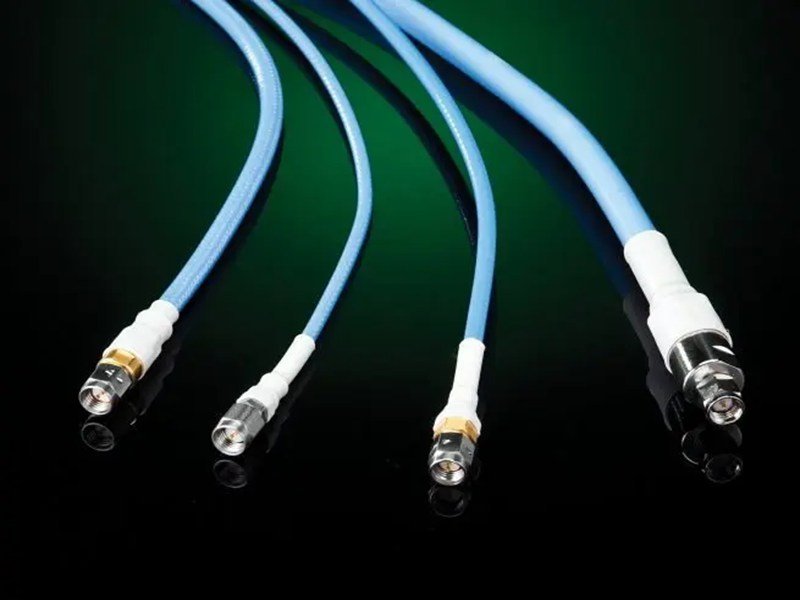
RF cable assemblies are essential components in high-frequency applications, carrying critical signals for telecommunications, aerospace, defense, and medical equipment. The performance of these cables can significantly impact signal integrity, data accuracy, and device reliability. Testing RF cable assemblies ensures that electrical, mechanical, and environmental parameters meet stringent requirements. From impedance and VSWR to insertion loss and shielding effectiveness, each parameter affects performance at different frequencies.
RF cable assemblies are tested for electrical continuity, impedance, VSWR, insertion loss, shielding effectiveness, and mechanical durability to ensure reliable high-frequency signal transmission and long-term performance.
For example, in a telecom lab, engineers discovered signal degradation in a batch of high-frequency coaxial cables due to minor connector misalignment. Testing with a vector network analyzer (VNA) and bending cycles revealed that even a 0.2 mm misalignment could increase VSWR beyond acceptable limits, causing dropped signals. This case illustrates why systematic RF testing is critical. In this article, we explore testing methods, standards, and best practices, giving engineers and procurement specialists actionable insights to select, validate, and deploy RF cable assemblies with confidence.
What Are RF Cable Assemblies?
RF cable assemblies are precision coaxial cables with integrated connectors, designed to transmit high-frequency signals reliably. They combine conductor, dielectric, shielding, and connector components to meet strict electrical, mechanical, and environmental requirements.

Definition of RF cable assemblies
RF cable assemblies are specialized coaxial cables engineered for transmitting high-frequency signals with minimal loss and consistent impedance. Unlike general-purpose cables, they include precision connectors and shielding designed to handle signal reflections, EMI, and high-frequency attenuation. The assemblies consist of a central conductor (typically copper or silver-plated copper), dielectric insulation to maintain impedance, a shielding layer (foil, braid, or both), and one or more connectors.

Key specifications such as impedance (50 Ω or 75 Ω), frequency range, insertion loss, and VSWR are measured and verified during production. For example, a Sino-Conn 1-meter 50 Ω assembly may have an insertion loss of 0.30 dB at 1 GHz and VSWR below 1.2, ensuring high-fidelity signal transmission for telecom or medical applications.
Typical applications
RF cable assemblies are used across industries where high-frequency signal integrity is critical:
- Telecommunications: Connecting base stations, antennas, and network repeaters for 4G/5G systems.
- Aerospace and Defense: Radar systems, avionics, and satellite communication rely on low-loss, EMI-protected cable assemblies.
- Medical Equipment: MRI, ultrasound, and surgical imaging devices require precise, low-loss signal pathways.
- Industrial Electronics: High-speed data measurement, test equipment, and instrumentation systems.

Each application imposes different requirements for cable length, bend radius, shielding, and connector type. Sino-Conn customizes assemblies to meet these unique environmental and frequency specifications.
Core parameters to monitor
Clients need to understand the key electrical and mechanical parameters that define RF cable assembly performance:
| Parameter | Typical Value / Specification | Importance |
|---|---|---|
| Impedance | 50 Ω or 75 Ω | Ensures signal integrity, minimizes reflection |
| Frequency Range | DC – 6 GHz (customizable) | Defines operational capability |
| VSWR | ≤1.2 | Limits signal reflection and power loss |
| Insertion Loss | 0.3 – 1.2 dB/m depending on frequency | Measures signal attenuation over length |
| Shielding | Foil + 90–95% braided copper | Protects from EMI, crosstalk, and noise |
| Bend Radius | 5–10 × cable OD | Ensures mechanical durability and prevents microfractures |
| Connector Type | SMA, N-type, MMCX, custom | Determines compatibility and signal retention |
| Jacket Material | TPE, PVC, Silicone | Provides chemical, temperature, and abrasion resistance |
Sino-Conn provides full specifications for each assembly, allowing clients to select cables that match their system requirements and environmental constraints.
Real-world client considerations
When choosing RF cable assemblies, clients often prioritize:
- Connector reliability: OEM vs. alternative connectors, number of mating cycles, and contact resistance.
- Mechanical durability: Bending, twisting, and torsion tolerance during installation and use.
- Environmental resistance: Temperature extremes, humidity, chemical exposure, UV, and oil resistance.
- Electrical performance: Insertion loss, VSWR, and shielding effectiveness across the operating frequency.
- Customizability: Length, jacket color, connector orientation, and shielding type for device-specific routing.
For example, in a 5G telecom installation, the cable assembly must maintain VSWR ≤1.2 across the full frequency range, survive 1,000 bending cycles at a 2 cm radius, and provide >90 dB shielding to prevent interference from nearby antennas. Sino-Conn engineers tailor assemblies to meet these strict requirements, producing CAD drawings and test reports for client verification before production.
Understanding RF Cable Assemblies in Practice
- Conductor and dielectric selection High-strand-count copper or silver-plated conductors are chosen to reduce insertion loss and improve bending life. Dielectrics like PTFE, foam PTFE, or polyethylene maintain impedance and reduce high-frequency losses. Minor variations in diameter or dielectric density can lead to measurable signal reflection, so precise material control is essential.
- Connector integration Connectors are not just mechanical fittings—they influence impedance, signal reflection, and durability. Gold or nickel plating ensures low contact resistance (<50 mΩ) and prevents corrosion over thousands of cycles. Connector angles and latches reduce stress on the cable during installation.
- Shielding and EMI protection Foil shields provide full coverage, while braided copper adds mechanical strength and additional EMI suppression. Effective shielding prevents crosstalk in multi-cable environments and maintains signal integrity in sensitive applications like radar or MRI machines.
- Mechanical and environmental durability Cables are tested for bending, torsion, thermal cycling, and humidity. For instance, a Sino-Conn assembly designed for aerospace may survive -40°C to +125°C temperature cycles while maintaining VSWR <1.2, ensuring reliable operation in extreme conditions.
- Performance documentation Sino-Conn provides full test reports including VSWR curves, insertion loss measurements, shielding effectiveness, and environmental test results. Clients use these reports to verify performance, compare designs, and approve customized assemblies for production.
Which Performance Metrics Are Most Critical?
The most important RF cable performance metrics include VSWR, insertion loss, and shielding effectiveness. Measuring these ensures reliable high-frequency signal transmission, minimizes reflection, and protects against electromagnetic interference for critical applications.
VSWR (Voltage Standing Wave Ratio)
VSWR measures the match between the cable’s impedance and the connected device. A low VSWR indicates minimal signal reflection and efficient power transfer. For high-frequency RF systems, a VSWR below 1.2 is typically required to avoid power loss and prevent potential equipment damage.

Sino-Conn tests VSWR on each assembly using a Vector Network Analyzer (VNA). Measurements are taken across the full operating frequency range, including after mechanical stress tests like repeated bending and twisting. For example, a 1-meter 50 Ω coaxial assembly may maintain a VSWR of 1.15 at 3 GHz even after 1,000 bend cycles.
Insertion loss and attenuation
Insertion loss quantifies the signal energy lost along the cable. It is expressed in dB and increases with frequency and length. For instance, a 50 Ω cable might have an insertion loss of 0.3 dB/m at 1 GHz, 0.55 dB/m at 3 GHz, and 1.2 dB/m at 6 GHz.

Sino-Conn measures insertion loss using calibrated VNA equipment, ensuring assemblies meet client specifications. These measurements help select materials, adjust conductor geometry, and optimize shielding to minimize loss while maintaining flexibility and bend tolerance.
Shielding effectiveness and EMI protection
Shielding prevents external electromagnetic interference from disrupting signals and protects other systems from leakage. High-quality assemblies use a combination of foil and braided copper shields, achieving >90 dB shielding effectiveness across target frequency ranges.
Shielding performance is verified using standardized EMI testing, and additional braid coverage or foil overlap is applied when results indicate potential vulnerability. For example, in telecom base stations, shielding must maintain >90 dB SE from 10 MHz to 3 GHz to avoid interference from adjacent antennas.
Evaluating Critical RF Cable Metrics
- VSWR testing in practice Testing VSWR involves sending a signal through the cable and measuring reflected power. S11 parameters are recorded using a VNA. Maintaining VSWR <1.2 ensures that over 98% of the signal is transmitted efficiently. Sino-Conn conducts these tests post-assembly to include connector influence and mechanical stress.
- Insertion loss validation Insertion loss is measured across the cable’s operating frequency range. Loss at higher frequencies is more pronounced due to dielectric heating and conductor skin effects. Sino-Conn compares measured loss to specified limits, adjusting conductor diameter, dielectric type, and cable geometry as needed. A sample 1-meter 50 Ω cable exhibits:
| Frequency (GHz) | Measured Insertion Loss (dB) | Spec Limit (dB) |
|---|---|---|
| 1 | 0.30 | 0.35 |
| 3 | 0.55 | 0.60 |
| 6 | 1.20 | 1.25 |
- Shielding and EMI evaluation EMI testing measures induced voltage when the cable is exposed to controlled electromagnetic fields. Foil provides full coverage, while the braided layer adds durability and improves EMI performance. Sino-Conn evaluates SE before and after bending tests to ensure real-world robustness.
- Mechanical stress and environmental testing Repeated bending, torsion, and connector torque can affect electrical performance. Bending tests at minimum bend radius simulate installation and repeated use. Thermal cycling (-40°C to +125°C) and humidity tests verify jacket and conductor stability. A Sino-Conn assembly subjected to 1,000 bends at 2× cable OD maintains VSWR change within 0.02 and insertion loss increase <0.02 dB—well within specifications.
- Data-driven quality assurance Every RF assembly includes a detailed test report documenting VSWR curves, insertion loss measurements, and shielding effectiveness. Defective assemblies are rejected or reworked before shipment. This ensures all delivered assemblies meet electrical, mechanical, and environmental specifications.
- Client-specific adjustments Based on test results, Sino-Conn customizes assemblies. For example, VSWR readings slightly above target may prompt connector realignment, increased braid coverage, or dielectric adjustments. These improvements maintain performance without increasing cable diameter unnecessarily, ensuring compatibility with device routing constraints.
How Are RF Cable Assemblies Tested?
RF cable assemblies are tested for electrical continuity, high-frequency performance, and mechanical/environmental durability. These tests ensure reliable signal transmission, long-term performance, and compliance with application-specific requirements.

Continuity and conductor resistance tests
Continuity testing confirms that each conductor and shield within the cable is intact and free from breaks or shorts. Using multimeters or automated test systems, resistance is measured across each conductor. For a 50 Ω coaxial assembly, resistance is typically <0.05 Ω/m. Sino-Conn also checks uniformity across multiple units in a batch to prevent manufacturing inconsistencies.
Regular testing detects issues such as conductor microfractures, strand misalignment, or shield continuity problems before the cables reach the client. Continuity tests are particularly critical for long cables used in telecom or radar applications, where even small resistance variations can reduce signal fidelity.
High-frequency performance tests
High-frequency testing evaluates the cable’s performance under actual operating conditions. Using Vector Network Analyzers (VNA), engineers measure:
- S-parameters (S11 for reflection, S21 for transmission)
- VSWR across frequency range
- Insertion loss in decibels (dB)
- Return loss
These measurements confirm that the cable assembly maintains signal integrity over its specified frequency range. For example, a 1-meter 50 Ω cable might show an insertion loss of 0.30 dB at 1 GHz, 0.55 dB at 3 GHz, and 1.20 dB at 6 GHz. Measurements are conducted both on straight cables and after bending cycles to simulate real-world installation stress.
Environmental and mechanical tests
RF cable assemblies are subject to physical stresses and environmental conditions that can degrade performance. Typical tests include:
- Bending and torsion cycles: Repeated 90° bends or twisting to test conductor strain and connector stability.
- Thermal cycling: Exposing cables to -40°C to +125°C to validate insulation and conductor stability.
- Humidity exposure: Testing jacket and shield integrity under moisture.
- Connector stress: Insertion/extraction cycles, torque, and vibration to ensure connector durability.
These tests simulate real-world scenarios like telecom tower installations, aerospace routing, and medical equipment manipulation, ensuring that assemblies remain reliable over thousands of use cycles.
Practical Testing Approaches
- Automated continuity and resistance validation Sino-Conn uses automated test jigs that verify continuity and resistance for every conductor and shield. Resistance uniformity is critical for high-frequency signal integrity. For a 2-meter 50 Ω assembly, typical resistance is <0.05 Ω/m, with variation <0.02 Ω. Assemblies exceeding tolerance are flagged for inspection, preventing defective units from reaching the client.
- High-frequency verification using VNA VNA testing involves sweeping the cable across its frequency range and capturing S11 and S21 parameters. S11 indicates reflection, while S21 measures forward transmission. Acceptable VSWR values are typically ≤1.2, ensuring minimal signal reflection. Testing includes both straight and bent cable configurations to evaluate performance under installation stress.
| Frequency (GHz) | VSWR | Insertion Loss (dB) | Return Loss (dB) |
|---|---|---|---|
| 1 | 1.15 | 0.30 | 25 |
| 3 | 1.18 | 0.55 | 22 |
| 6 | 1.22 | 1.10 | 20 |
- Mechanical durability assessment Cables are subjected to controlled bending and torsion cycles. For example, a cable may endure 1,000 bends at 2× cable outer diameter without a measurable increase in VSWR or insertion loss. Connector durability is assessed with 1,000+ insertion/extraction cycles, ensuring stable electrical contact over repeated use.
- Environmental endurance testing Thermal cycling and humidity tests simulate extreme operational conditions. Jackets and insulation materials are validated for expansion/contraction, moisture resistance, and chemical exposure. In aerospace or outdoor telecom installations, these tests ensure that cables maintain performance across temperature extremes and environmental stressors.
- Shielding and EMI testing Shielding effectiveness is evaluated by exposing the cable to electromagnetic fields and measuring leakage or induced voltage. A combination of foil and braided shields achieves >90 dB shielding effectiveness across target frequencies. Tests are conducted before and after bending cycles to verify durability.
- Data-driven reporting and traceability Every test result is documented, creating a traceable record for each assembly. Test reports include:
- VSWR curves
- Insertion loss graphs
- Shielding effectiveness readings
- Environmental and mechanical stress outcomes
Clients receive these reports with CAD drawings and specifications, enabling review and approval before bulk production. This ensures assemblies meet performance expectations, reduce field failures, and support regulatory compliance.
Do Certifications and Standards Affect Test Requirements?
Yes, certifications and industry standards guide RF cable testing by defining minimum requirements for electrical performance, mechanical durability, and environmental resistance. Compliance ensures safety, reliability, and acceptance in regulated industries.
Industry standards for RF cables
RF cable assemblies are subject to international standards that dictate testing methods and performance criteria. Key standards include:
- UL 444: Specifies electrical insulation, conductor safety, and flame resistance.
- ISO 9001 / ISO 13485: Ensures quality management processes for consistent manufacturing.
- RoHS / REACH: Limits restricted substances in cable jackets and plating.
- MIL-STD-202: Defines mechanical and environmental testing for military and aerospace applications.
- IEC 61169: Governs connector performance, including VSWR, insertion loss, and mechanical durability.

These standards ensure that cables perform reliably in critical applications, from telecom and aerospace to medical and industrial electronics.
Testing documentation and traceability
Standards require detailed documentation for every assembly. This includes:
- Test setup and environmental conditions
- VSWR and insertion loss measurements
- Shielding effectiveness readings
- Mechanical stress and bending cycles
- Batch numbers and material certificates
Sino-Conn provides full traceable reports for each batch, including CAD drawings, test data, and QC approvals. This transparency allows clients to verify compliance and supports audits, regulatory submissions, and warranty claims.
Regional and client-specific requirements
Testing requirements vary depending on industry and geography:
- US telecom and aerospace: Require UL certification, MIL-STD environmental testing, and documented traceability.
- Europe: CE marking, RoHS, and IEC 61169 compliance are essential.
- Medical equipment: ISO 13485 documentation and chemical resistance verification are required.
- Custom OEM applications: May include higher temperature cycling, tighter VSWR tolerances, or specialized shielding requirements.
Sino-Conn adapts test protocols to satisfy these client-specific and regional requirements while maintaining production efficiency.
How Certifications and Standards Drive Testing
- UL and ISO compliance UL 444 ensures insulation prevents shorts and maintains dielectric integrity under rated voltage and temperature. ISO 9001/13485 requires consistent manufacturing processes, documented testing, and traceability. Together, these standards reduce defect rates and provide confidence in batch-to-batch consistency.
- RoHS and REACH compliance Restricted substances, such as lead, cadmium, or brominated flame retardants, are monitored in cable jackets and connector plating. Testing verifies compliance, ensuring safe use in telecom, aerospace, and medical devices while avoiding regulatory penalties.
- MIL-STD and IEC standards for mechanical and environmental durability MIL-STD-202 tests include vibration, shock, thermal cycling, and humidity exposure. IEC 61169 defines electrical and mechanical performance for connectors. Sino-Conn integrates these tests into their QC process, simulating field conditions to guarantee long-term reliability.
- Traceable reporting for clients Each assembly is accompanied by a test report showing VSWR, insertion loss, shielding effectiveness, and mechanical/environmental test outcomes. For example:
| Test | Standard | Result |
|---|---|---|
| VSWR | IEC 61169 | 1.18 max |
| Insertion Loss | UL 444 | 0.55 dB @ 3 GHz |
| Shielding Effectiveness | MIL-STD-202 | >90 dB |
| Thermal Cycling | MIL-STD-202 | No insulation cracking |
This level of traceability ensures clients can verify compliance and approve assemblies for regulated applications.
- Custom protocols for specialized client needs Some clients require tests beyond standard specifications, such as high-temperature operation >150°C, extreme humidity, chemical immersion, or additional bending cycles. Sino-Conn adapts testing procedures to replicate real-world conditions, ensuring assemblies perform reliably in their intended application.
- Client benefits of certification-driven testing Certifications and standards provide peace of mind, reduce field failures, and support regulatory compliance. Clients receive complete documentation that demonstrates adherence to industry norms, assists with device approvals, and enables easier integration into larger systems such as telecom networks, medical devices, or aerospace instrumentation.
Are Test Results Useful for Customization and Quality Assurance?
Test results guide RF cable customization and quality assurance, allowing adjustments to length, connectors, shielding, and materials to achieve optimal performance, durability, and compliance in each assembly.
How test results guide custom RF assemblies
Test results provide actionable insights into cable performance. For example, a VSWR reading higher than expected may indicate connector misalignment, prompting a redesign. Insertion loss data can inform material or dielectric changes. Sino-Conn uses these results to refine cable length, bend radius, shielding coverage, and connector orientation to meet specific client requirements.
Ensuring reliability in production batches
Batch testing ensures that every production lot meets electrical and mechanical specifications. Sino-Conn applies a combination of full inspection and sample testing:
- 100% continuity and conductor resistance check
- Random high-frequency testing using VNAs
- Mechanical stress and environmental simulations on representative samples
This approach prevents defective assemblies from reaching the client while maintaining scalable production efficiency.
Communicating performance to clients
Sino-Conn delivers detailed test reports, CAD drawings, and compliance documentation to clients. Reports include VSWR curves, insertion loss graphs, shielding effectiveness, and environmental stress results. These documents provide full transparency and allow clients to approve or request adjustments before production, reducing the risk of installation issues and improving confidence in the assembly’s performance.
Using Test Results for Optimization and QA
- Adjusting cable geometry based on test outcomes Cable length, conductor stranding, and bend radius are modified based on mechanical and electrical testing. For instance, repeated bending tests may reveal micro-stress on certain conductor strands. Sino-Conn addresses this by increasing strand count or adding central fillers, improving flexibility without affecting impedance.
- Shielding and EMI optimization Shielding test results indicate whether the foil and braid combination is sufficient to block EMI. If SE (shielding effectiveness) is below 90 dB in certain frequency bands, additional braid coverage or improved foil overlap is applied. This prevents interference in sensitive applications like radar, medical imaging, or high-speed data systems.
- Connector refinements Insertion/extraction cycle tests highlight potential wear points. If gold-plated contacts show higher resistance after repeated cycles, plating thickness or connector material is adjusted. Connector angles or strain reliefs may be modified to reduce stress during installation. For example, a 12-pin connector for telecom applications may receive a 15° angled orientation to prevent bending stress on the first pin, extending lifecycle by over 20%.
- Material and dielectric adjustments Insertion loss and frequency sweep data may reveal that dielectric losses are higher than desired at certain frequencies. Sino-Conn selects alternate dielectric materials (e.g., foam PTFE vs. solid PTFE) or adjusts conductor-dielectric ratios to reduce loss without increasing OD or weight. For example, replacing a 0.8 mm solid PTFE with 0.6 mm foam PTFE reduced insertion loss by 0.05 dB at 6 GHz while maintaining flexibility.
- Batch-level quality assurance Test results are applied not just to prototypes but across full production batches. A sampling plan ensures that each lot undergoes representative testing: 10–15% of units per batch are tested for VSWR, insertion loss, and shielding, with full continuity checks on all units. Defective units trigger rework or rejection, ensuring only compliant assemblies are shipped.
- Client collaboration and approval Sino-Conn provides clients with comprehensive test documentation, enabling engineers and procurement teams to review and approve assemblies before mass production. CAD drawings, connector pinouts, and performance reports ensure the assembly fits device specifications perfectly. Real-world examples include adjustments for radar test systems, where VSWR tolerance was tightened to 1.15 and braid coverage increased to reduce EMI.
Conclusion
RF cable testing is not just a verification step—it is central to designing high-performance, reliable, and customized cable assemblies. Test results inform improvements in cable geometry, shielding, dielectric materials, and connector design, ensuring assemblies meet electrical and mechanical specifications for their intended applications.
Sino-Conn integrates advanced testing protocols, including continuity, VSWR, insertion loss, shielding effectiveness, and mechanical/environmental stress tests, to deliver high-quality, fully traceable RF assemblies. Clients benefit from rapid CAD verification, detailed test reports, and full batch-level quality assurance, enabling confident deployment in telecom, aerospace, medical, and industrial systems.
Contact Sino-Conn today to discuss your RF cable assembly requirements. Our engineering team can provide custom designs, CAD drawings, and performance-verified prototypes within days. Whether you need urgent samples, large-scale production, or specialized connectors and shielding, Sino-Conn ensures your RF cables achieve optimal performance and long-term reliability.