Skip to content
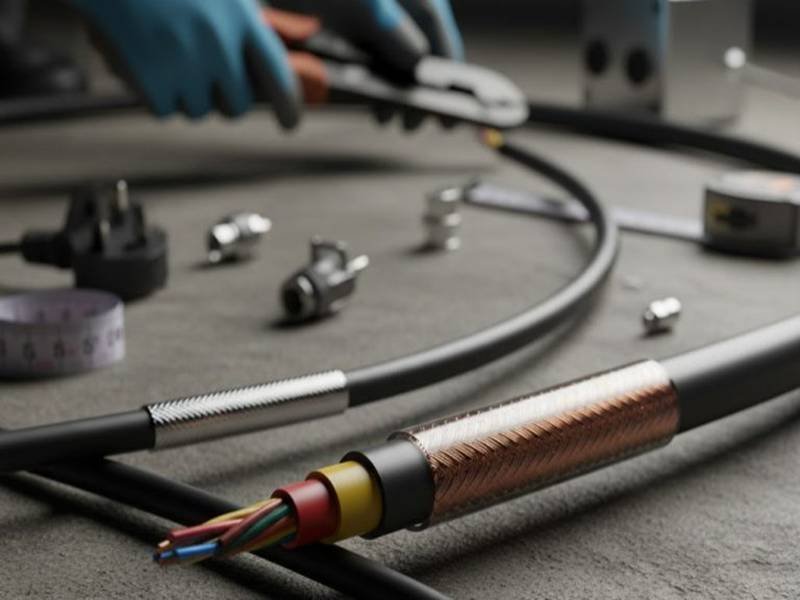
Modern cables are everywhere—inside industrial machines, medical devices, vehicles, data centers, and consumer electronics. Yet very few people truly understand how a cable is manufactured, or why cables that look similar on the outside can perform very differently in real-world applications.
For OEM buyers and engineers, cable manufacturing is not just a factory process—it is a chain of technical decisions that directly affect electrical performance, mechanical reliability, compliance, cost, and delivery time. A poorly manufactured cable may pass initial inspection but fail after months of bending, heat exposure, or chemical contact. A well-manufactured cable, by contrast, quietly performs for years without attention.

Cable manufacturing is the industrial process of converting raw conductive and insulating materials into finished cables through conductor drawing, stranding, insulation extrusion, shielding, jacketing, and quality testing. The process varies by cable type, application, and performance requirements. Proper manufacturing ensures electrical safety, mechanical durability, regulatory compliance, and long-term reliability in OEM and industrial applications.
Behind every reliable cable is a carefully controlled manufacturing workflow—one that balances materials science, mechanical engineering, and quality control. To understand why professional manufacturers matter, we need to start at the very beginning.
What Does Cable Manufacturing Mean?
Cable manufacturing is the industrial process of building complete cables by combining conductors, insulation, shielding, fillers, and outer jackets into a single, reliable product. It involves multiple controlled steps—not just adding insulation—to ensure electrical performance, mechanical strength, safety, and long-term durability for specific applications.
What is the difference between wire manufacturing and cable manufacturing?
Wire manufacturing produces a single electrical conductor—usually copper or aluminum—drawn to a specific diameter. This wire may be solid or stranded, but it remains only one functional element.
Cable manufacturing starts where wire manufacturing ends.

A cable is made by assembling multiple functional layers around one or more conductors. These layers may include individual insulation, shielding for EMI protection, fillers to maintain shape, strength members, and an outer jacket. Each layer serves a purpose, and each must work together without interfering with the others.
In real manufacturing terms, wire is a material; a cable is a finished system.
Why is cable manufacturing more than just insulation extrusion?
It’s common for non-specialists to think cable manufacturing simply means “coating wire with plastic.” In practice, insulation extrusion is only one step—and often not the most difficult one.
True cable manufacturing requires:
- Keeping conductor geometry stable so electrical characteristics don’t drift
- Applying insulation evenly to prevent weak points or breakdown
- Designing shielding that blocks noise without reducing flexibility
- Selecting jacket materials that survive heat, motion, chemicals, or UV
- Controlling overall diameter so connectors and strain reliefs fit correctly
If any one step is poorly controlled, the cable may look fine but fail in the field. That’s why experienced manufacturers focus on process control, not just output.
Why does cable manufacturing depend so much on application?
A cable used inside a control cabinet, a robotic arm, a medical device, or outdoor equipment may look similar—but the way it’s manufactured is very different.
For example:
- A static indoor cable may tolerate stiff insulation and simple jackets
- A moving industrial cable needs fine stranding and abrasion-resistant materials
- A medical cable must stay flexible, clean, and stable after repeated disinfection
Cable manufacturing is therefore always application-driven. The process is adjusted based on where and how the cable will actually be used, not just on electrical ratings.
What does professional cable manufacturing focus on?
In a professional factory, cable manufacturing is about consistency and risk control. That means:
- Repeatable conductor stranding
- Stable extrusion parameters
- Continuous in-process inspection
- Clear drawings and approved specifications before production
- Testing that reflects real-world conditions
The goal is not just to make a cable that passes today’s test, but one that still performs after years of use.
What Raw Materials Are Used in Cable Manufacturing?
Cable manufacturing uses conductive metals, insulation compounds, shielding materials, fillers, and outer jacket polymers. Each material is selected based on electrical performance, mechanical durability, environment, and compliance requirements. At Sino-conn, raw materials are chosen not only by datasheet values, but also by processing stability, application history, and long-term reliability in real OEM projects.

Which conductors are used in cable manufacturing?
At the core of every cable is the conductor, and in real production, material choice is far more practical than theoretical.
At Sino-conn, over 90% of cable assemblies use copper-based conductors, mainly because copper offers the best balance of conductivity, flexibility, and long-term stability.
Common conductor options include:
- Bare copper – used for standard industrial and control cables
- Tinned copper – preferred when corrosion resistance or long shelf life is required
- Fine-stranded copper – widely used in flexible, moving, or medical cables
- Aluminum conductors – mainly for large cross-section power cables where weight and cost matter
In practice, strand count and lay length are just as important as material. For example, a 0.14 mm × 105-strand conductor behaves very differently from a 0.25 mm × 30-strand conductor, even if the cross-sectional area is similar.
What insulation materials are commonly used in real cable production?
Insulation is the first protective layer around the conductor, and it directly affects voltage rating, flexibility, and heat resistance.
At Sino-conn, commonly used insulation materials include:
- PVC – for cost-sensitive, indoor, and low-voltage applications
- PE / XLPE – for better dielectric strength and temperature stability
- TPU / TPE – for flexible and handheld devices
- Silicone – for high-temperature or medical environments
- Fluoropolymers (PTFE, FEP) – for RF, high-frequency, or harsh chemical exposure
In real production, insulation thickness tolerance is tightly controlled. A deviation of even ±0.05 mm can affect breakdown voltage or impedance stability, especially in signal and communication cables.
Which shielding materials are used, and why do they matter?
Shielding materials are often invisible to buyers—but they are critical for signal integrity.
Depending on the application, Sino-conn typically uses:
- Aluminum foil shields for 100% coverage and compact size
- Copper braid shields for flexibility and mechanical strength
- Foil + braid combinations for industrial EMI environments

Shielding effectiveness depends on coverage percentage, braid angle, and contact continuity, not just material type. In OEM troubleshooting cases, signal noise issues are often traced back to poor shielding design rather than electronics.
What role do fillers and strength members play?
Fillers are sometimes overlooked, but in manufacturing they are essential for:
- Maintaining round cable geometry
- Preventing internal conductor movement
- Improving tensile strength and crush resistance
Common filler materials include PP yarns, cotton fillers, or specialized fibers. For longer cables or pull-through installations, proper filler selection reduces internal stress and improves assembly yield.
Which jacket materials are actually used in production?
The outer jacket is the most visible layer—and often the first to fail if chosen incorrectly.
At Sino-conn, jacket material selection is driven by application history, not marketing claims:
- PVC – stable processing, wide certification support
- PUR – excellent abrasion and oil resistance for industrial use
- TPU – softer touch and flexibility for medical and handheld devices
- LSZH compounds – required for public infrastructure and Europe-focused projects
- Fluoropolymer jackets – used only where performance justifies cost
Jacket thickness, hardness (Shore A/D), and extrusion stability are all verified during trial runs before mass production.
How does material selection affect manufacturing consistency?
From a factory perspective, not all “approved” materials behave the same in production.
Sino-conn evaluates materials based on:
- Extrusion stability across long runs
- Scrap rate and rework risk
- Supplier batch consistency
- Historical performance in similar projects
This is why two cables with identical datasheets can have very different real-world reliability. Material selection is as much about manufacturing experience as it is about specifications.
How Is the Cable Manufacturing Process Performed Step by Step?
Cable manufacturing is a controlled build process that turns raw copper/aluminum and polymer compounds into finished cable through conductor drawing/stranding, insulation extrusion, shielding, cabling, jacketing, and finishing—followed by inspection and testing. At Sino-conn, the process starts with confirmed drawings and specs, then runs with in-process checks on OD, concentricity, shield coverage, and electrical safety so the finished cable matches the approved build sheet—batch after batch.
How does the process start in a real OEM project?
Most OEM projects don’t start with perfect data. Quite often, customers send a part number, a photo, or a sample cable—and the technical details are incomplete.
At Sino-conn, step one is always to lock the “manufacturing target” before any material is cut:
- Collect specs: voltage/current, OD, bend needs, shielding/EMI, temperature, oil/UV, halogen-free, PFAS/REACH/RoHS
- Convert requirements into a drawing and build sheet (CAD → PDF)
- Send drawing for approval before production (typical drawing turnaround: within ~3 days, and for urgent projects we can move much faster)
This is where many cable failures are prevented. If the OD tolerance, shield structure, or jacket compound is unclear at this stage, the cable may “work today” but fail later in assembly or in the field.
How are conductors prepared (drawing, annealing, stranding)?
Conductor preparation sets the cable’s flexibility and long-term fatigue life.
Typical steps include:
- Drawing copper/aluminum to the required wire diameter
- Annealing (as needed) to reach the right balance of strength vs flexibility
- Stranding (bunch / concentric / rope-lay) to match the application
Practical factory reality: stranding is not just “twisting wires.” Stranding tension and lay length affect:
- Bend life (especially in moving equipment)
- DC resistance stability
- Termination quality (crimp/solder consistency)
In flexible cables, fine stranding is often the difference between “survives 1 month” and “survives years.”

How is insulation applied ?
Insulation extrusion is where electrical safety and consistency are built in.
Key control points we focus on during insulation:
- Wall thickness & concentricity (prevents weak spots)
- Surface finish (affects later shielding/jacketing adhesion)
- Diameter stability (affects final OD and connector fit)
In many OEM builds, even small insulation variations can create big downstream issues:
- OD drifting → overmold/strain relief doesn’t fit
- Uneven insulation → hi-pot instability or early breakdown
- In signal cables → geometry shift that impacts electrical behavior
That’s why insulation is treated as a controlled engineering step, not “just coating.”
How are shielding layers added (foil, braid, drain wire)?
Shielding is not only about adding metal—it’s about making a stable EMI structure that still bends well.
Common shielding builds we manufacture include:
- Foil shield (full coverage, compact)
- Copper braid (flex + mechanical strength)
- Foil + braid (better EMI suppression in noisy environments)
- Optional drain wire for grounding continuity
Key production controls include:
- Shield wrap overlap consistency
- Braid tension and coverage stability
- Clean termination design so shielding remains continuous after connector assembly
A lot of EMI complaints in the market are not “electronics problems”—they’re shield design or shield termination problems.
How is the cable cabled (twisting, fillers, roundness, OD control)?
For multi-core cables, we twist/cable insulated conductors together and manage geometry with fillers.
This stage is where you control:
- Cable roundness (important for overmolding and routing)
- Core stability (prevents internal movement during bending)
- OD control (critical for connectors, glands, clamps)
A practical OEM point: the cable may meet electrical specs but still fail assembly if OD and roundness are inconsistent. That’s why OD control isn’t just cosmetic—it’s functional.
How is the outer jacket extruded and finished?
Jacket extrusion is the final protective step, and it must match the real environment:
- PVC: cost-effective, common
- PUR/TPU: abrasion/oil resistance and better flex behavior
- LSZH: fire/smoke requirements for many markets
- Fluoropolymers: harsh chemical/high-frequency environments
During jacketing, the factory controls:
- Final outer diameter (OD) to match customer’s assembly constraints
- Jacket thickness and surface integrity
- Print/marking (if required) and traceability marking style
A jacket choice that’s “almost right” often becomes the reason cables crack, get sticky, harden, or fail after chemical exposure.
Step-by-step manufacturing flow
| Stage | What’s built | What can go wrong if not controlled |
|---|---|---|
| Specs & drawing | Build target is defined | Wrong OD / wrong material / wrong shield |
| Conductor prep | Flex + resistance baseline | Early conductor break / unstable resistance |
| Insulation extrusion | Electrical safety + geometry | Weak points, OD drift, poor adhesion |
| Shielding | EMI suppression | Noise, intermittent grounding, compliance failure |
| Cabling/fillers | Roundness + stability | Assembly fit issues, internal movement |
| Jacket extrusion | Environment protection | Cracking, abrasion failure, chemical damage |
| Finishing | Packaging for next step | Mixed lengths, wrong labeling, cosmetic defects |
How Is Quality Controlled During Cable Manufacturing?
Quality control in cable manufacturing is not a single final test—it is a continuous system that monitors materials, dimensions, structure, and electrical performance at every stage. At Sino-conn, cables are checked three times: during production, after completion, and before shipment. This approach prevents hidden defects such as OD drift, weak insulation, or unstable shielding from reaching customers.
Why final inspection alone is not enough
Many cable issues are not visible at the end of production. Problems like uneven insulation thickness, unstable shielding tension, or conductor damage often pass basic continuity tests—but show up later as intermittent failures, EMI noise, or early fatigue.
That’s why Sino-conn does not rely on end-of-line inspection only. Quality is controlled as a process, not an event. Every critical manufacturing stage has defined checkpoints, tolerance limits, and release rules.
In practical terms, this reduces:
- Field failure rates
- Assembly rework at customer sites
- Disputes caused by “sample passed, mass production failed”
How are raw materials verified before production starts?
Quality control begins before machines are turned on.
For every project, Sino-conn verifies incoming materials against the approved build sheet:
- Conductor material (copper/aluminum type, stranding spec)
- Insulation and jacket compounds (PVC, TPU, PUR, LSZH, fluoropolymers, etc.)
- Shielding materials (foil type, braid wire diameter, braid density)
Materials must meet:
- RoHS / REACH / PFAS requirements (when specified)
- Flame, oil, UV, or halogen-free requirements (application-based)
- Consistency with previously approved samples
If a material batch does not match the approved spec, it does not enter production—this avoids silent substitutions that cause performance drift.
How is quality controlled during the manufacturing process?
This is where most factories differ—and where Sino-conn invests the most effort.
During production, operators and QC staff check:
- Outer diameter (OD) at defined intervals
- Insulation concentricity to prevent thin-wall failures
- Shield coverage and tension (foil overlap, braid density)
- Cable roundness and core stability
- Surface defects such as bubbles, cracks, or contamination

These checks are not random. They are done:
- At machine start-up
- After material changes
- At fixed production lengths
- Whenever parameters are adjusted
If a deviation is detected, production is paused and corrected immediately—before hundreds of meters are produced incorrectly.
How are electrical properties tested and verified?
Electrical testing ensures the cable performs safely and consistently in real use.
Depending on cable type and application, Sino-conn performs:
- Continuity testing (open/short detection)
- Insulation resistance tests
- Hi-pot (withstand voltage) testing when required
- Shield continuity checks
- Application-specific electrical checks (signal or power-related)
Importantly, these tests are tied back to the drawing and customer requirement—not generic pass/fail thresholds. This is critical for medical, industrial, and high-reliability projects.

What happens after the cable is fully manufactured?
Once production is complete, cables go through full finished inspection, not sampling only.
This includes:
- Length verification
- OD and appearance inspection
- Electrical re-check (per agreed test plan)
- Labeling and traceability review
At Sino-conn, this stage acts as a second safety net—confirming that what was produced still matches what was approved.
Why does Sino-conn perform three separate quality checks?
Sino-conn follows a three-layer inspection model:
- In-process inspection – catches issues early
- Finished product inspection – confirms build accuracy
- Pre-shipment inspection – ensures shipment consistency
This approach significantly reduces:
- Batch-to-batch variation
- Customer-side incoming inspection failures
- Delays caused by rework or re-testing
From a buyer’s perspective, it means fewer surprises after delivery.
How does quality control support fast delivery and low MOQ?
Quality control is often seen as slowing production—but done correctly, it actually protects lead time.
Because Sino-conn:
- Locks drawings before production
- Controls quality during production (not after)
- Allows NO MOQ, starting from 1 pcs
- Offers urgent samples in 2–3 days for feasible builds
Customers can validate designs quickly and move to mass production without worrying that the quality standard will change.
How Does Cable Manufacturing Differ by Application?
Cable manufacturing differs by application because electrical load, environment, flexibility, compliance, and failure tolerance are never the same. A medical cable, an industrial control cable, and a consumer electronics cable may look similar, but they are built with different materials, structures, and inspection standards. At Sino-conn, every cable project starts by defining the application first—not the model number.
Why the same cable cannot be used everywhere
One of the most common misunderstandings buyers have is assuming that a cable with the same OD or connector can be used across different industries. In reality, application determines everything—from conductor choice to jacket material, shielding method, and even how many times the cable must be inspected.
At Sino-conn, projects are not grouped by “cable category,” but by use environment and risk level. This avoids overdesign (wasted cost) and underdesign (field failure).
How industrial cable manufacturing differs
Industrial cables are built for long service life and mechanical stability, not appearance.
Typical characteristics:
- Thicker insulation and jackets
- Strong resistance to oil, abrasion, and vibration
- Stable OD to fit cable glands and conduits
- EMI shielding designed for noisy environments
In real Sino-conn industrial projects, customers often prioritize:
- Operating temperature range
- Resistance to oil or coolant
- Bending radius over long cycles
Quality control focuses heavily on OD consistency, jacket integrity, and shielding continuity, because these are the most common failure points in industrial installations.

How medical cable manufacturing differs
Medical cable manufacturing is less about power and more about safety, flexibility, and compliance.
Key differences:
- Medical-grade materials (TPU, silicone, special PVC blends)
- Smooth jacket surfaces for cleaning and disinfection
- High flexibility with low rebound force
- Strict material traceability
At Sino-conn, medical cable projects typically require:
- Material declarations and compliance documents
- Tight control of jacket softness and elasticity
- Clean handling during production
- More frequent in-process inspections
Even when quantities are small, medical cables receive higher inspection density because the cost of failure is extremely high.

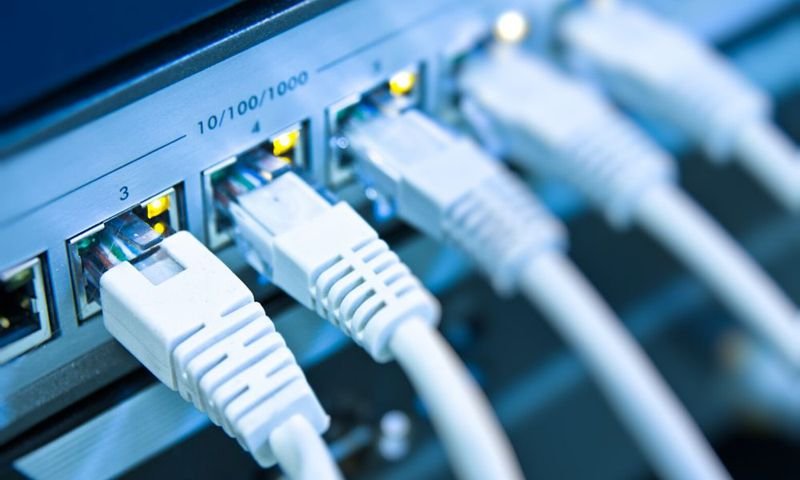
How communication and signal cable manufacturing differs
Signal and communication cables are driven by electrical performance, not mechanical strength.
Manufacturing priorities include:
- Controlled impedance
- Stable conductor geometry
- Uniform insulation thickness
- Consistent shielding structure
In these projects, Sino-conn pays close attention to:
- Dielectric material selection
- Shield coverage consistency
- Core alignment and concentricity
Small variations that are acceptable in power cables may cause signal loss or EMI problems in communication cables. As a result, electrical testing and dimensional checks are more frequent.
How consumer electronics cable manufacturing differs
Consumer cables are cost-sensitive and volume-driven.
Common requirements:
- Compact OD
- Good appearance
- Adequate electrical performance
- Fast lead times
For these projects, Sino-conn often balances:
- Material cost vs. durability
- Original connectors vs. compatible alternatives
- Automated processes vs. manual assembly
Quality control focuses on functional reliability and visual consistency, while keeping costs competitive for mass production.

How military and high-reliability cable manufacturing differs
Military and high-reliability cables represent the highest manufacturing standard.
Differences include:
- Extended temperature ranges
- Enhanced shielding
- Specialized jackets (often fluoropolymer-based)
- Extremely low tolerance for defects
These projects typically involve:
- More documentation
- Stricter inspection criteria
- Slower but more controlled production flow
At Sino-conn, these cables are usually built in smaller batches with higher inspection frequency, even if the electrical structure appears simple.

How application affects inspection intensity and cost
One practical detail buyers often overlook is that application directly affects cost through inspection, not just materials.
| Application Type | Inspection Density | Cost Impact |
|---|---|---|
| Consumer | Standard | Low |
| Industrial | Medium | Medium |
| Medical | High | High |
| Military | Very High | Highest |
This is why two cables that look similar can have very different prices.
Can Cable Manufacturing Be Customized for OEM Projects?
Yes. Cable manufacturing can be fully customized for OEM projects, including conductor type, insulation, shielding, jacket material, dimensions, performance standards, and documentation. Early engineering involvement allows manufacturers to optimize cost, performance, and compliance while reducing development risk and lead time.
Which cable parameters can be customized?
In OEM cable manufacturing, nearly every parameter can be tailored:
- Cable length and tolerances
- Conductor material and stranding
- Insulation and jacket compounds
- Shielding type and coverage
- Outer diameter and flexibility
- Flame rating and compliance standards
Customization allows OEMs to avoid overengineering while still meeting real application needs.
How do drawings and specifications guide production?
Manufacturing begins with clear drawings and specifications. At Sino-conn, engineers convert customer requirements into:
- CAD drawings
- Electrical and mechanical specifications
- Process control parameters
These documents are reviewed and approved before production starts. This step ensures alignment between design intent and manufacturing reality, preventing costly rework later.
How does fast sampling reduce OEM development risk?
Rapid sampling allows OEM customers to:
- Validate design assumptions
- Test performance in real conditions
- Identify risks early
With fast drawing turnaround and short sample lead times, manufacturers can help OEMs move from concept to validation quickly—often in days, not weeks. This agility is especially valuable when timelines are tight or requirements evolve.
Final Thoughts
Cable manufacturing is not a single process—it is a system of decisions involving materials, geometry, process control, testing, and compliance. Cables that succeed in the field are rarely accidental; they are the result of disciplined engineering and controlled manufacturing.
At Sino-conn, cable manufacturing is approached as a partnership. From early-stage engineering support and fast drawings to flexible material selection, full inspection, and rapid delivery, the goal is simple: deliver cables that work reliably in real applications.

Start Your Cable Manufacturing Project with Sino-conn
Whether you are developing a new product, replacing an existing supplier, or optimizing cost and performance, Sino-conn can support your cable manufacturing needs—from 1 piece to full production.
Share your specifications, drawings, or even reference samples.
Our engineering team will review your requirements and propose the most suitable manufacturing solution.