Skip to content
Waterproof N Type Connectors: What They Are, How They Work, and When You Need Them
- andy
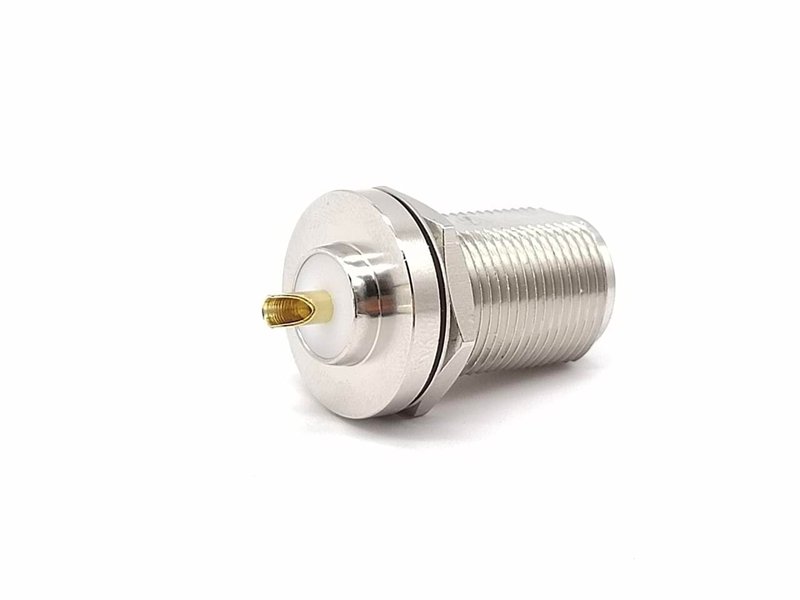
Outdoor RF systems—such as cellular base stations, antennas, radar units, and satellite communication—are built to perform in some of the harshest conditions on the planet. Rain, salt fog, temperature swings, UV exposure, dust, and vibration can quickly degrade unprotected RF connectors. Despite this, many users assume that all N type connectors are naturally waterproof because of their rugged metallic appearance. In reality, waterproof N connectors are highly engineered components with internal sealing structures, precision-machined interfaces, and carefully selected materials designed to prevent water ingress without compromising RF performance.
Waterproof N type connectors are RF connectors engineered with sealing rings, gaskets, and weatherproof structures that prevent water ingress in outdoor or harsh-environment installations. Unlike standard N connectors, waterproof variants meet IP65, IP67, or IP68 ratings and maintain stable VSWR, impedance, and signal integrity even under rain or immersion. They are essential for antennas, outdoor base stations, marine radios, and long-term exposed coaxial systems.
Many Sino-Conn customers send us photos of failed connectors soaked in water or corroded from prolonged humidity. Only after a system outage do they realize the difference between “N type connector” and “waterproof N type connector.” The appearance may be similar, but the internal design is fundamentally different. Understanding how waterproof N type connectors work—and when to use them—can prevent expensive downtime and improve RF reliability for years.
Let’s break down what these connectors are, how they achieve waterproof performance, and how to choose or customize them effectively.
What Are Waterproof N Type Connectors?
Waterproof N type connectors are rugged RF connectors designed to maintain electrical performance while preventing moisture from entering any part of the connector or cable interface. They are based on the standard N connector platform—a 50-ohm, medium-size RF connector widely used in telecommunications, wireless infrastructure, radar, and instrumentation—but enhanced with dedicated sealing structures. These additions allow the connectors to operate reliably in outdoor, humid, or high-contamination environments where standard N connectors would quickly degrade.
In simple terms:
A waterproof N type connector is a standard N connector reinforced with O-rings, gaskets, and structural seals to achieve an IP65, IP67, or IP68 rating, ensuring the connector remains watertight during rain exposure, immersion, or long-term environmental stress.
Waterproof N connectors are essential for any RF system installed outdoors or exposed to unpredictable environmental conditions—such as rooftop antennas, marine communication devices, outdoor Wi-Fi or LTE units, and industrial machinery. While they look similar to standard N connectors, the internal design is significantly more complex and optimized for environmental sealing.
Key Differences Between Standard and Waterproof N Connectors
| Feature | Standard N Type Connector | Waterproof N Type Connector |
|---|---|---|
| IP Rating | None | IP65 / IP67 / IP68 |
| Sealing Method | No seals | O-rings, gaskets, compression seals |
| Environmental Resistance | Indoor use | Outdoor, marine, industrial |
| Water Ingress Protection | Weak | Strong (rain, humidity, immersion) |
| Corrosion Resistance | Moderate | Enhanced (often stainless steel) |
| Cable Entry Protection | Basic ferrule | Overmold or weatherproof backshell |
| Longevity Outdoors | Months (risk of corrosion) | Years (stable sealing performance) |
Why Waterproof N Connectors Exist
The original N connector was created for laboratory use—completely indoors. Its threaded coupling provides mechanical strength but does not block water. As RF systems expanded outdoors, engineers needed a connector that offered:
- Weather resistance
- Corrosion protection
- Waterproof cable entry
- Long-term electrical stability
Thus, waterproof N connectors were developed to address outdoor deployment challenges.
Key Design Features of Waterproof N Type Connectors
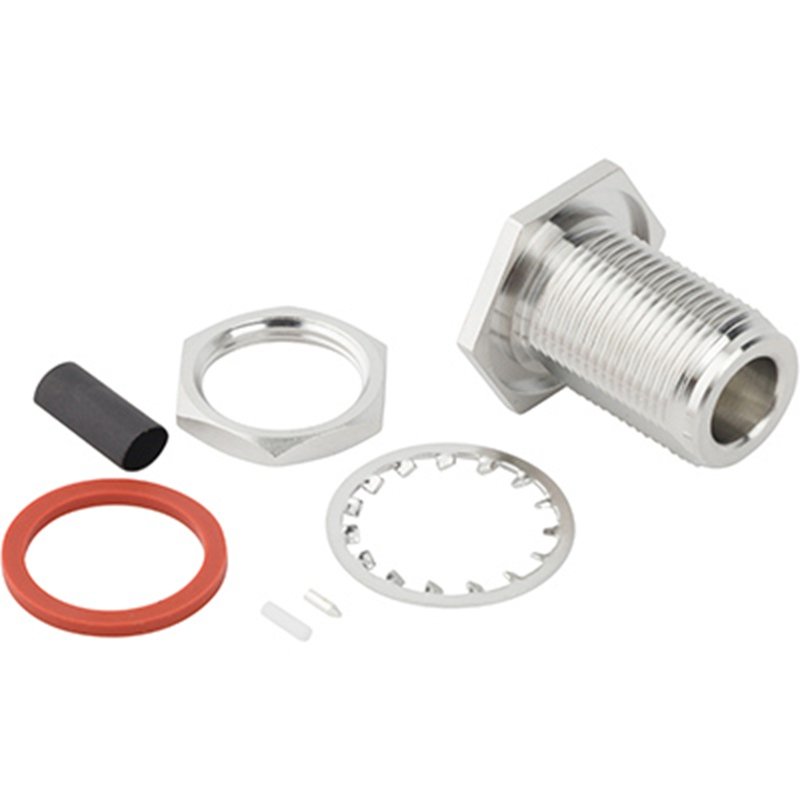
Waterproof N connectors include several upgrades at known water-entry points:
1. O-rings and radial seals
Located under the coupling nut and around internal dielectric regions.
2. Gasketed mating faces
Essential for N-type female bulkhead connectors mounted on outdoor enclosures.
3. Compression sealing structures
Prevents moisture from creeping along the cable jacket (a common failure path).
4. Precision machining
Ensures sealing surfaces match tightly enough for IP-rated performance.
5. Weatherproof backshells or overmold
Protects the cable-to-connector transition—usually the weakest point.
Electrical Performance Requirements
A waterproof N connector must still maintain:
- 50 ohm impedance
- Low VSWR (typically <1.25)
- Low insertion loss
- Stable RF performance up to 6–18 GHz, depending on design
Waterproofing must not distort the RF geometry, otherwise reflections and RF loss increase.
Why Standard N Connectors Are Not Waterproof
Despite their rugged appearance, standard N connectors allow water to penetrate through:
- Thread gaps
- Dielectric support edges
- Cable ferrule area
- Capillary action inside coaxial strands
Once moisture enters, problems escalate:
- Oxidation
- Dielectric swelling
- VSWR drift
- Intermittent connection
- Long-term failure
Which Types of N Type Connectors Are Waterproof?
Standard N type connectors are not waterproof unless specifically designed with sealing structures. Waterproof versions include N male, N female, straight, right-angle, bulkhead, and panel-mount configurations featuring O-rings, gaskets, or overmolded seals. They can be paired with cables such as RG58, RG142, or LMR-series to build reliable outdoor RF assemblies.
Waterproof N connectors come in multiple variants to support different mechanical and RF system requirements.
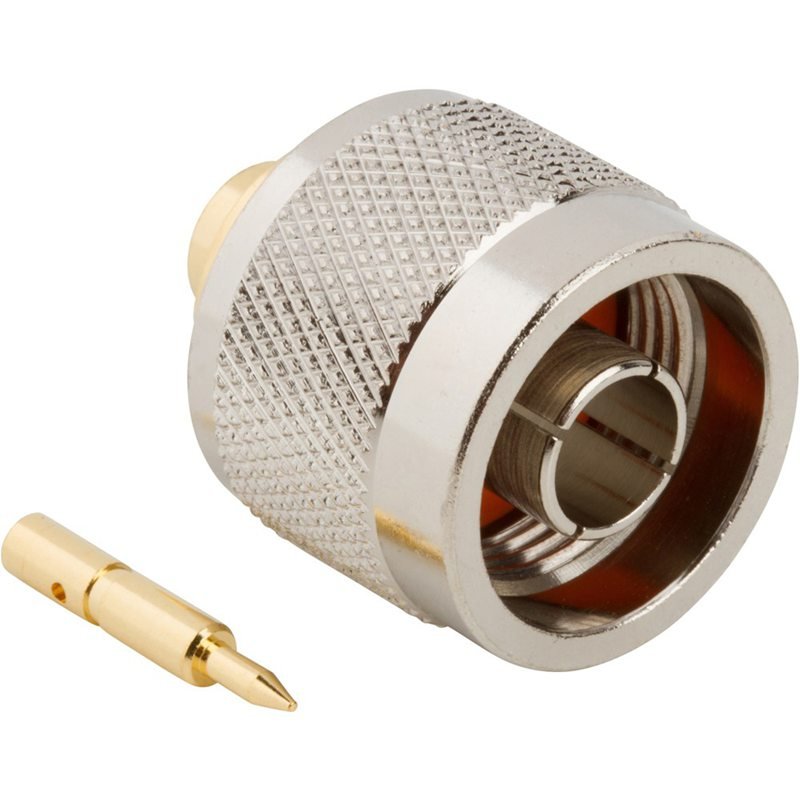
Common waterproof types
- N Male (Plug) Waterproof – usually IP67/IP68 with gasket under the coupling nut
- N Female (Jack) Waterproof – often used on antennas and enclosures
- Bulkhead Waterproof N Female – deployed on outdoor equipment housings
- Right-Angle Waterproof N Connectors – useful when space is limited
- Panel-Mount Waterproof Types – seal against devices using flange gaskets
Compatible coaxial cables
| Coax Type | Typical Use | Notes |
|---|---|---|
| RG58 | Wi-Fi antennas, GPS modules | Low-cost but moderate performance |
| RG142 | Military/industrial | PTFE dielectric, high temperature |
| LMR-200/240/400 | Outdoor base stations | Low loss, weather-resistant |
| RG316 | Compact RF devices | Flexible, small OD |
N type connectors require precise matching with outer conductor and dielectric dimensions to maintain 50-ohm impedance after waterproofing modifications.
Are standard N connectors waterproof?
No. Only connectors labeled as IP-rated or waterproof contain the required sealing structures. Users often mistakenly install standard N connectors outdoors, leading to hidden moisture ingress and degraded RF performance within months.
How Do Waterproof N Type Connectors Work in Outdoor RF Systems?
Waterproof N connectors use O-rings, gaskets, compression seals, and overmolded structures to block water from entering the connector interface or cable entry. These mechanisms protect signal integrity by preventing corrosion, impedance drift, and increased VSWR. Waterproof N connectors ensure stable RF performance in outdoor antennas, 5G radios, marine systems, and industrial environments.
Waterproof connectors must balance two opposing requirements:
- Mechanical sealing performance
- Stable RF characteristics across wide frequency bands
Below are the key sealing mechanisms and RF considerations.
Sealing rings and gaskets
Sealing rings are placed:
- Under the coupling nut
- Around the dielectric region
- At the cable entry or ferrule
- At panel interfaces for bulkhead types
Gaskets must maintain elasticity under temperature cycles, UV exposure, and mechanical vibration.
Overmolding and weatherproof boots
Overmolding adds a protective layer around the cable-connector joint. It strengthens:
- Pull resistance
- Cable bending life
- Moisture protection
Overmolded connectors are preferred for long-term outdoor installations where technicians cannot frequently perform maintenance.
Impact on RF performance
A good waterproof design must maintain:
- Impedance = 50 ohms
- VSWR < 1.2 to 1.3 across target frequencies
- Low insertion loss
- Stable contact resistance
Poor sealing or incorrect assembly distorts RF paths, increasing losses and reflections.
Do Waterproof N Type Connectors Perform Better in Harsh Environments?
Yes. Waterproof N connectors withstand rain, humidity, salt fog, UV exposure, and temperature extremes far better than standard N connectors. If a standard connector gets wet, corrosion and impedance instability occur quickly. Waterproof versions maintain long-term performance in outdoor, marine, and industrial RF systems.
Environmental resistance
Waterproof N connectors protect against:
- Rain and humidity – preventing moisture intrusion
- Salt fog – stainless-steel versions avoid corrosion
- UV exposure – essential for rooftop installations
- Temperature swings – seals maintain elasticity
- Vibration – threaded coupling ensures mechanical security
Failure caused by water ingress
If a non-waterproof N connector gets wet:
- Copper oxidizes → higher resistance
- Dielectric absorbs moisture → VSWR increases
- Water migrates inside coax → intermittent signal loss
- Long-term corrosion → complete failure
Many RF outages in the field trace back to improperly sealed connectors.
Suitability for marine, rooftop, and industrial use
Waterproof N connectors are standard in:
- Coastal communication towers
- Marine radios
- Outdoor Wi-Fi / LTE / 5G antennas
- Industrial machinery exposed to washdown environments
These systems require connector longevity measured in years—not months.
When Should You Choose Waterproof N Type Connectors?
Use waterproof N connectors when installing outdoor antennas, rooftop equipment, base stations, marine radios, or any RF system exposed to moisture, rain, or harsh environments. IP67/IP68 connectors are recommended whenever long-term reliability and stable RF performance are required.
Waterproof N connectors are necessary for:
- Cellular infrastructure (2G–5G)
- Outdoor Wi-Fi, point-to-point links
- GPS antennas and timing systems
- Industrial automation
- Defense and aerospace RF systems
- Marine and coastal installations
When selecting a connector, buyers should check:
- IP rating
- Frequency range
- VSWR
- Plating material
- Temperature range
- Cable compatibility
- Corrosion resistance
A properly selected connector prevents field failures and reduces long-term maintenance costs.
How to Customize Waterproof N Type Connector Assemblies
Customizing a waterproof N type connector assembly means selecting the correct connector variant, cable type, sealing method, materials, and mechanical configuration to achieve both environmental protection and RF performance. Because outdoor RF systems face moisture, corrosion, and temperature cycling, customization ensures that the connector and cable work together as a sealed, reliable unit rather than independent components.
What customization involves (featured-snippet style)
A waterproof N connector assembly is customized by defining the coaxial cable type, connector version, IP rating, sealing structure, materials, overmold geometry, and required electrical performance. Proper customization ensures long-term water resistance, stable VSWR, correct impedance, and mechanical durability in outdoor or harsh environments.
Key Considerations When Customizing a Waterproof N Connector Assembly
1. Selecting the Right Coaxial Cable
The cable determines loss performance, sealing compatibility, and mechanical behavior. Different cables offer different strengths:
| Cable Type | Characteristics | Typical Use |
|---|---|---|
| RG58 | Flexible, economical | Low-frequency outdoor RF |
| RG142 | PTFE dielectric, high-temp | Industrial, defense |
| LMR-200 / 240 / 400 | Low loss, UV-resistant jacket | Antennas, base stations |
| RG316 | Small OD, flexible | Compact RF modules |
Cable OD must match connector ferrule dimensions precisely to maintain both 50-ohm impedance and waterproof compression.
2. Choosing the Connector Type and Waterproof Rating
Waterproof N connectors come in:
- N Male / N Female
- Straight / Right-angle
- Bulkhead / Panel Mount
- IP65 / IP67 / IP68 versions
Bulkhead types require flange gaskets, while IP68 versions often integrate deeper sealing structures for long-term immersion.
Select IP rating based on exposure level:
| IP Rating | Level of Protection | Typical Environments |
|---|---|---|
| IP65 | Water spray | Outdoor housings |
| IP67 | Temporary immersion | Rooftops, towers |
| IP68 | Extended immersion | Marine, underground |
3. Sealing the Cable–Connector Interface
This is the most critical point in waterproof assemblies.
Common sealing methods:
Compression Seal
- Gasket or ferrule compresses around jacket
- Good for many cable sizes
Overmold Seal
- TPU or PVC molded around the connector rear
- Ensures long-term watertightness
- Adds strain relief
Adhesive-lined heat-shrink boot
- Used when overmolding is not feasible
- Offers moderate waterproofing
Correct method depends on cable material, OD, bend requirements, and environmental severity.
4. Mechanical and Electrical Requirements
Even with waterproofing, the connector must meet RF performance specifications:
- Impedance: 50 ohms
- VSWR typically <1.25
- Low insertion loss
- Corrosion-resistant plating (nickel, tri-metal, stainless steel)
- Adequate strain relief for vibration or cable movement
Mechanical reliability—especially at the backshell area—determines long-term waterproof integrity.
5. Materials and Durability Factors
Material choices influence environmental performance:
| Component | Material Options | Benefit |
|---|---|---|
| Connector Body | Brass or stainless steel | Corrosion resistance |
| O-Rings/Gaskets | Silicone, Viton | Water sealing |
| Cable Jacket | TPU, PE, PVC | UV, abrasion resistance |
| Dielectric | PTFE, PE | RF stability |
Stainless steel connectors + TPU jackets = longest lifespan in harsh conditions.
6. Documentation and Prototyping
Custom assemblies require:
- 2D drawings showing dimensions, sealing placement, orientation
- Clear pin-out or cable routing definitions
- Material and IP rating specification
Prototype samples undergo:
- IP67/IP68 water-immersion tests
- VSWR and insertion loss measurement
- Pull-force tests
- Temperature and humidity cycling
This ensures the final product meets long-term outdoor performance expectations.

Conclusion: Build Reliable Outdoor RF Systems with Waterproof N Connectors
Waterproof N type connectors are essential for protecting RF systems from moisture, corrosion, and performance degradation. Whether you’re deploying antennas, installing outdoor base stations, or designing marine RF equipment, choosing the right waterproof connector—and pairing it with the correct cable—ensures long-term reliability.
Sino-Conn provides engineering support, customization flexibility, rapid drawings, and 100% inspection to help you build durable, high-performance waterproof RF assemblies.
If you need a waterproof N-type connector assembly or want to discuss a custom RF cable solution, contact Sino-Conn to get a tailored design and quotation for your project.
Related Keywords :waterproof n type connectors, rf connectors, ip67 ip68 connectors, outdoor coaxial cable, n male n female, 5g antenna connector, custom rf cable assemblies, weatherproof connectors, coaxial assembly manufacturer, sino-conn cable assemblies

With over 18 years of OEM/ODM cable assemblies industry experience, I would be happy to share with you the valuable knowledge related to cable assemblies products from the perspective of a leading supplier in China.
manufacturer catalogue
Get A Sample Now From Factory→
Get a quote quickly
Here, developing your OEM/ODM custom cable assemblies collection is no longer a challenge—it’s an excellent opportunity to bring your creative vision to life.