Skip to content
Which OFC Cable Types Should You Choose for Your Application?
- andy
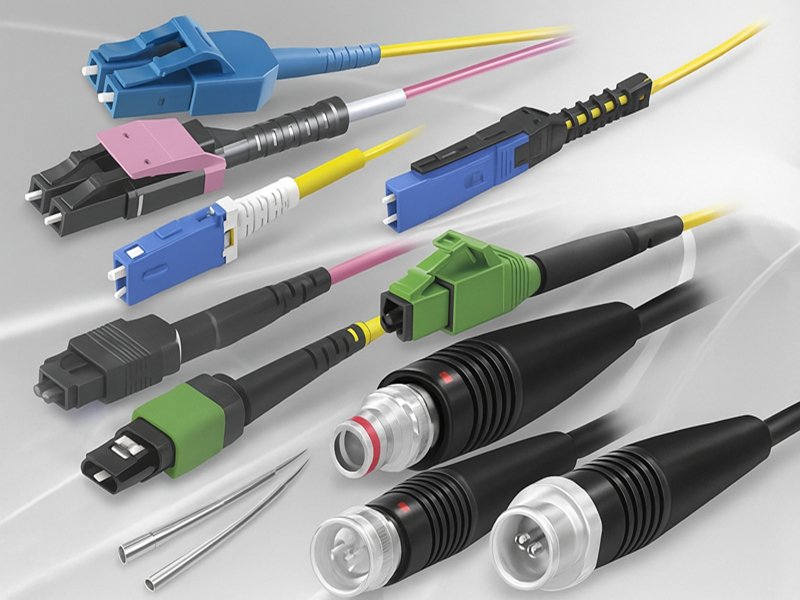
In an era defined by high-speed data and hyper-connectivity, optical fiber cables (OFC) are the invisible arteries powering our digital lives. Every 4K video stream, autonomous sensor, and cloud server connection relies on the integrity of those hair-thin glass strands. Yet, for many engineers and buyers, “OFC” remains a broad term — covering dozens of construction types, performance ratings, and standards. Understanding which one to choose can mean the difference between a reliable network and constant downtime.
OFC cable types differ by fiber mode (single-mode vs multimode), construction (loose tube, ribbon, armored), and environment rating (indoor, outdoor, OSP). Choosing the right type depends on your bandwidth, distance, and installation environment.
When Sino-Conn engineers receive inquiries, the first step isn’t price — it’s purpose. What data rate is required? How harsh is the environment? How flexible must the cable be? Let’s explore the key OFC types, their structure, and how to tailor them to your project — from data centers to defense systems.
What are OFC (Optical Fiber Cable) Types?
OFC types refer to structured categories of optical fiber cables designed to meet different transmission distances, bandwidth capacities, and environmental conditions. The most common types are single-mode (OS1/OS2) and multimode (OM1–OM5) fibers, each defined by its core size, numerical aperture, wavelength operation, and construction style such as tight-buffered, loose-tube, or armored configurations.
What is OFC and How Does It Work?
An Optical Fiber Cable (OFC) transmits digital information as pulses of light through ultra-pure glass or plastic fibers. It relies on total internal reflection, meaning light signals bounce within the fiber core, maintaining integrity over long distances with very low attenuation (signal loss). Compared to copper conductors, OFCs are immune to electromagnetic interference (EMI), allow higher data throughput, and are significantly lighter in weight.
Each fiber strand typically consists of several layers engineered for protection and performance:
| Layer | Function | Typical Material |
|---|---|---|
| Core | Guides light signals | Silica glass (8–62.5 μm) |
| Cladding | Reflects light back into the core | Doped silica |
| Coating / Primary Buffer | Mechanical protection | UV-cured acrylate |
| Strength Member | Tensile support | Aramid yarn, fiberglass, or steel wire |
| Outer Jacket | Environmental and flame protection | LSZH, PVC, PE |
Fiber count within an OFC may range from 2 to over 864 fibers, depending on application — from small patch cords to high-density data center trunk cables.
What are the Different Types of OFC?
OFCs are classified primarily by transmission mode (single-mode or multimode) and by performance standards set by ISO/IEC and TIA/EIA.
Here’s a concise comparison:
| Category | Core Diameter | Transmission Distance | Typical Bandwidth | Application |
|---|---|---|---|---|
| OS1 / OS2 | 8–10 μm | Up to 100 km or more | > 10,000 MHz·km | Long-haul telecom, backbone links |
| OM1 | 62.5 μm | ≤ 300 m (1 Gbps) | 200 MHz·km | Legacy LAN systems |
| OM2 | 50 μm | ≤ 550 m (1 Gbps) | 500 MHz·km | Campus or enterprise networks |
| OM3 | 50 μm (laser-optimized) | 300 m @ 10 Gbps | 2000 MHz·km | Data centers, SANs |
| OM4 | 50 μm (enhanced laser-optimized) | 550 m @ 10 Gbps | 4700 MHz·km | High-speed enterprise |
| OM5 | 50 μm (wideband MMF) | 400 m @ 40 Gbps | Extended WDM range | Hyperscale and cloud data centers |
- Single-mode fibers (OS1/OS2) use a small 9 µm core that allows one light mode to propagate, minimizing dispersion and enabling transmission over tens of kilometers.
- Multimode fibers (OM1–OM5) use larger cores that support multiple light paths, which simplifies coupling but limits distance due to modal dispersion.
Modern installations increasingly adopt OM4 and OM5, as they support higher speeds (40–100 Gbps) and shorter-wavelength multiplexing (SWDM) over existing infrastructure.
Are There Major Categories Like Single-Mode vs Multimode?
Yes. The core size and light propagation method are the main differences:
- Single-Mode (SM) fibers allow one propagation path, reducing modal dispersion and maintaining signal integrity over distances exceeding 100 km. They operate typically at 1310 nm and 1550 nm wavelengths.
- Multimode (MM) fibers have larger cores that carry several light modes simultaneously, ideal for shorter links under 1 km, usually operating at 850 nm.
Key decision factors include required transmission distance, optical transceiver compatibility, and budget constraints. For example, a data center interconnect under 500 m often uses OM4 multimode, while metropolitan backbones use OS2 single-mode.

What Do OM1–OM5 and OS1/OS2 Mean?
These are industry standard classifications defined in:
- ISO/IEC 11801
- TIA/EIA-568.3-D
- ITU-T G.652/G.657
OM (Optical Multimode) classes (OM1–OM5) define core diameter, modal bandwidth, and laser optimization.
OS (Optical Single-mode) classes (OS1/OS2) define attenuation, dispersion limits, and installation environment (tight-buffered for indoor, loose-tube for outdoor).
| Type | Operating Wavelength (nm) | Max Attenuation (dB/km) | Typical Use |
|---|---|---|---|
| OS1 | 1310 / 1550 | 1.0 | Indoor short links |
| OS2 | 1310 / 1550 | 0.4 | Outdoor, long-haul |
| OM3 | 850 | 3.5 | 10 Gbps / 300 m |
| OM4 | 850 | 3.0 | 40 Gbps / 550 m |
| OM5 | 850–953 | 3.0 | 100 Gbps / 400 m |
Which Jacket, Strength Member, and Environment Variants Exist?
The mechanical construction of an OFC defines its durability and installation suitability. Common designs include:
- Tight-buffered (indoor): Flexible, flame-retardant, easy to terminate — used in patch cables and short runs.
- Loose-tube (outdoor): Contains gel or dry-blocking powder to prevent water ingress — ideal for ducts and direct burial.
- Armored: Includes corrugated steel or aluminum tape to protect against rodents or crush damage — used in industrial and defense projects.
- Ribbon: Encapsulates 12–24 fibers in flat arrays for mass fusion splicing — favored in data centers.
- Hybrid/Composite: Combines optical fibers with copper conductors for power + data applications.
Outer jackets depend on installation site:
| Jacket Material | Property | Application |
|---|---|---|
| PVC | Flame-retardant, flexible | Indoor routing |
| LSZH | Low smoke, halogen-free | Public buildings |
| PE | UV & moisture resistant | Outdoor use |
| PU / TPE | Oil & abrasion resistant | Industrial automation |
In essence, understanding OFC cable types means aligning optical characteristics (OS/OM standards) with mechanical construction (buffering, armor, jacket) and environmental requirements. For high-speed backbones, single-mode OS2 is the standard. For short-to-medium range connections like data centers or instrumentation, OM3–OM5 multimode fibers remain the practical, cost-effective choice.
Which OFC Type Fits Your Installation Environment?
The right optical fiber cable type is determined not only by data transmission requirements but also by where and how it will be installed. The environment — indoor, outdoor, aerial, underground, or industrial — dictates factors like mechanical protection, moisture resistance, UV stability, flame rating, and flexibility. Choosing a cable structure that aligns with these conditions ensures both optical performance and long-term reliability.

How to Decide Between Indoor and Outdoor Use
The first decision in OFC selection is whether the installation is indoor or outdoor, as this dictates jacket material, fire resistance, and moisture protection.
Indoor cables are designed for safety, compact routing, and easy termination.
They usually adopt a tight-buffered structure with 900 μm buffer coating around each fiber, providing extra strength for pulling through conduits or risers.
Typical environments include data centers, office buildings, and communication racks.
| Indoor Cable Type | Key Features | Typical Application |
|---|---|---|
| Tight-Buffered | Flexible, easy to strip and terminate | Patch cords, internal distribution |
| Riser (OFNR) | Flame-resistant, vertical risers | Multi-floor cabling |
| Plenum (OFNP) | Low smoke emission, halogen-free | HVAC or air-handling spaces |
| LSZH Jacket | No toxic gases when burned | Public areas, hospitals, airports |
Outdoor cables, on the other hand, must handle sunlight, moisture, and temperature swings.
These cables typically use a loose-tube structure filled with gel or dry water-blocking compounds to protect fibers from water penetration.
Some designs also include metallic or non-metallic armor for extra crush and rodent resistance.
| Outdoor Cable Type | Key Features | Typical Application |
|---|---|---|
| Loose-Tube Gel-Filled | Prevents water ingress | Ducts, direct-buried routes |
| Dry-Blocked Loose-Tube | Easier handling, no gel clean-up | Outdoor-to-indoor transitions |
| Armored | Steel tape or corrugated armor for impact resistance | Harsh terrains, construction sites |
| Aerial (Self-Supporting) | Strength member (steel wire or FRP) for pole-to-pole span | Overhead installations |
When a project requires fiber routing from outdoor to indoor, an indoor/outdoor hybrid cable is often recommended.
These combine UV- and moisture-resistant outer jackets with flame-rated inner materials, allowing direct entry into buildings without splicing.
Harsh Environment and Industrial Conditions
In demanding industrial or defense environments, cables must survive conditions far beyond normal telecom standards.
Factors like oil exposure, mechanical abrasion, high temperature, or vibration can rapidly degrade a standard fiber.
To address this, specialized OFC designs are available:
- Armored Cables: Incorporate corrugated steel or aluminum armor between the outer jacket and strength member. Protects against rodent bites, crush forces, and accidental impact during installation.
- Non-Metallic Armored Cables: Use aramid yarns or fiberglass rods instead of metal armor to avoid grounding issues and maintain flexibility — ideal for power plants, ships, or electromagnetic-sensitive zones.
- High-Temperature Cables: Employ silicone or TPE jackets rated for continuous operation up to +85 °C and short peaks of +120 °C.
- Chemical-Resistant Cables: Feature fluoropolymer jackets (FEP, PVDF) for resistance to solvents and fuels used in refineries or labs.
These designs typically comply with IEC 60794-1-21 mechanical performance standards for crush, impact, tensile, and temperature cycling tests.
Ribbon, Gel-Free, and Loose-Tube Constructions
Different construction geometries optimize fiber density, installation speed, and maintenance convenience.
- Loose-Tube Construction
- Fibers are enclosed in small plastic tubes, often filled with gel or dry water-blocking tape.
- Provides isolation from mechanical stress and environmental changes.
- Common in outdoor, long-distance installations.
- Gel-Free Designs
- Use dry-blocking materials instead of gel to simplify splicing and reduce cleaning time.
- Especially suitable for high-volume deployments like data centers or FTTx networks.
- Ribbon Fiber Cables
- Contain multiple fibers (typically 12–24) laid side by side in a flat matrix.
- Enable mass fusion splicing — connecting 12 fibers at once — which reduces installation time by up to 70%.
- Used in high-density environments such as central offices or hyperscale data centers.
- Central Tube vs. Multi-Tube Designs
- Central Tube: Compact, used for low fiber counts (≤ 24).
- Multi-Tube: Supports higher counts (up to 864 fibers) and better mechanical balance.
Special Environment Applications
Some environments demand additional considerations beyond standard indoor/outdoor classification:
| Application | Environmental Challenge | Recommended Cable Type |
|---|---|---|
| Direct Burial | Pressure, water, rodents | Armored, gel-filled loose-tube |
| Aerial Span | Wind load, sag | Self-supporting ADSS cable |
| Marine/Offshore | Corrosion, saltwater ingress | Stainless-steel armored fiber |
| Tunnel / Subway | Fire, low smoke requirements | LSZH tight-buffered |
| Industrial Robots / Machinery | Continuous bending, oil resistance | Flexible PU-jacketed OFC |
| Military / Defense | Abrasion, EMI, portability | Tactical ruggedized fiber with Kevlar braid |
By matching structure to environment, installers reduce maintenance needs, prevent signal degradation, and ensure optical reliability over the cable’s 20+ year lifespan.
Installation Environment Checklist
When evaluating your OFC environment, engineers typically review these parameters:
- Routing Path: Conduit, duct, direct burial, or aerial span.
- Temperature Range: Typical –40 °C to +70 °C for outdoor-rated cables.
- Mechanical Stress: Expected pulling tension, crush load, and bend radius.
- Safety Codes: OFNR/OFNP, LSZH, or CPR (Europe) compliance for indoor use.
- Transition Points: Whether the same cable must run both indoor and outdoor sections.
- Maintenance Accessibility: Whether future splicing or retermination will be required.
The ideal OFC type is the one that meets optical performance requirements while minimizing total cost of ownership (TCO) by fitting its mechanical and environmental context.
Selecting the right OFC for your installation environment is a process of engineering compatibility rather than brand preference.
Indoor spaces demand flexibility and fire safety; outdoor routes require moisture and UV defense; industrial and defense sectors prioritize ruggedness and reliability.
By assessing each variable — mechanical stress, environmental exposure, and fire safety standards — engineers can ensure stable optical performance throughout the system’s lifespan.
How Do the Specifications Differ Across OFC Types?
OFC specifications vary by optical performance (attenuation, bandwidth), mechanical strength (bend radius, tensile rating), and environmental compliance (temperature, flame, UV, oil resistance).
Optical Parameters
Key metrics include attenuation (0.35 dB/km @ 1310 nm), bandwidth (2000 MHz·km for OM3), and numerical aperture (0.275 typical). These define how far and how fast data travels.
Mechanical and Flexibility Factors
Cable OD (3–12 mm) and bend radius (10× OD typical) affect routing inside enclosures. For robotics or industrial lines, Sino-Conn can design reinforced flexible fibers using hybrid sheathing or Kevlar wraps.
Loss and Return Metrics
Insertion loss (< 0.3 dB) and return loss (> 45 dB) ensure signal integrity. Every assembly at Sino-Conn undergoes three-stage inspection with OTDR and end-face geometry measurement before shipment.
Do Customizations Matter for OFC Assembly Providers?
Yes — customization determines fit, performance, and cost. Sino-Conn offers tailored cable length, connector pairing, jacket material, pin-out definition, and documentation support within short lead times.
Customizable Parameters
- Length: any from 0.3 m to 10 km
- Connector: LC, SC, FC, ST, MPO, custom hybrid
- Material: PVC, LSZH, PE, PU, TPE
- Definition: duplex, simplex, or fan-out
Sino-Conn’s engineers can generate CAD drawings in 30 minutes to 3 days depending on complexity, then confirm before production.
Lead Time & Certifications
Samples: ~2 weeks (or 2–3 days urgent)
Bulk: 3–4 weeks (or ≤ 2 weeks urgent)
Certified: UL, ISO, RoHS, REACH, PFAS-Free
Handling Customer Inputs
Many buyers send only a photo or partial model. Sino-Conn reverse-engineers specs, verifying connector geometry and fiber count through microscope imaging. This helps even non-technical buyers receive precise, manufacturable designs.
Is Cost and Procurement Affected by Region or Industry?
Yes — market pricing varies by volume, certification, and region. Industrial, military, or medical-grade cables cost more; Asia sourcing often offers faster delivery and flexibility.
Global Price Tiers
| Customer Type | Sensitivity | Typical MOQ | Price Level |
|---|---|---|---|
| End User | Low | 1 pcs | $$$ |
| OEM Factory | High | 1000 pcs+ | $$ |
| Trader | Medium | 100–500 pcs | $ |
Regional Cost Differences
- U.S. & Germany: higher compliance / labor cost
- Japan: high precision tolerance demand
- India & Southeast Asia: volume-driven, cost-sensitive markets
Industry-Specific Trends
Medical and defense buyers prioritize reliability and certification over price. Commercial integrators and network OEMs weigh cost vs. lead time. Sino-Conn maintains stock for standard SKUs and supports flexible MOQ (1 pcs minimum).
Are There Best-Practice Tips for Engineers and Buyers Working with OFC Cables?
Understand cable standards, specify details early, verify drawings, and partner with a responsive manufacturer like Sino-Conn for faster prototyping and consistent quality.
Technical Mastery for Sales & Engineers
Sales teams must recognize connector types, understand buffer/jacket structures, and explain standards like IEC 60794. Knowledge builds trust with R&D engineers and OEM clients.
Speed & Accuracy of Quotation
Sino-Conn’s competitive advantage lies in response speed — precise drawings and quotations within 30 minutes for standard designs. This agility helps clients validate feasibility quickly during product development.
Quality Assurance & Testing
Every OFC assembly passes:
- Process inspection (raw materials & polishing)
- Final inspection (end-face 3D-interferometer)
- Pre-shipment test (OTDR + IL/RL test)
That’s 100 % inspection across 3 stages — a benchmark even Tier-1 OEMs respect.

Conclusion:
From understanding OFC cable types to specifying the right construction and verifying optical performance, success depends on precision. Whether you need a custom single-mode assembly for telecom backbones or a multimode armored cable for industrial robotics, Sino-Conn’s engineering team delivers the expertise, drawings, and certifications you need — on time and within spec.
Contact Sino-Conn today to get your customized OFC cable solution.
Related Keywords :OFC cable types, optical fiber cable guide, single-mode vs multimode fiber, fiber cable specifications, armored optical cable, custom fiber assemblies, fiber optic construction, indoor outdoor OFC cables, Sino-Conn fiber solutions, optical cable customization

With over 18 years of OEM/ODM cable assemblies industry experience, I would be happy to share with you the valuable knowledge related to cable assemblies products from the perspective of a leading supplier in China.
manufacturer catalogue
Get A Sample Now From Factory→
Get a quote quickly
Here, developing your OEM/ODM custom cable assemblies collection is no longer a challenge—it’s an excellent opportunity to bring your creative vision to life.