Skip to content
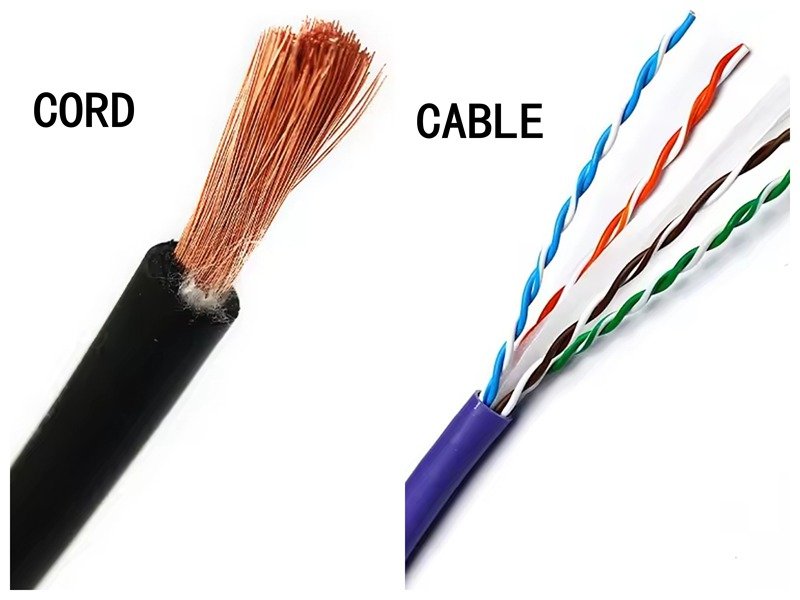
In everyday life, people often use the terms cord and cable interchangeably — a laptop power cord, an Ethernet cable, or even an extension cord. Yet, in the world of electrical engineering and manufacturing, these two terms have distinct meanings that affect how electricity or data travels, how devices connect, and even how safely a system performs.
A cord is a flexible, insulated conductor used to connect portable devices to power sources, while a cable consists of multiple insulated conductors bundled within a jacket, designed for power or signal transmission over longer distances or in fixed installations. Cords are flexible and portable; cables are durable and structured.
While cords prioritize flexibility and mobility — ideal for home appliances and portable tools — cables emphasize stability and performance, found in networks, automation systems, and industrial machinery. Understanding these differences ensures better design, longer equipment life, and safer operation.
Let’s explore how these two essentials differ, how they’re built, and how to choose the right one for your specific needs — especially when custom solutions from Sino-Conn can make all the difference.
What Is a Cord and How Is It Used?

A cord is a flexible insulated conductor used to transmit electrical power or signals between a power source and a portable device. It typically consists of one to three conductors inside a flexible jacket made from materials like PVC or rubber. Cords are designed for mobility and ease of use, making them ideal for appliances, tools, and consumer electronics that require frequent movement.
Understanding the Construction and Purpose of a Cord
The design of a cord focuses on portability, safety, and flexibility. Each part of its construction plays a specific role in achieving those goals.
| Component | Description | Purpose |
|---|---|---|
| Conductor | Stranded copper wire | Conducts current or signals efficiently |
| Insulation | PVC, TPE, or rubber | Prevents electrical leakage and short circuits |
| Outer Jacket | Durable, flexible covering | Protects from abrasion, moisture, and chemicals |
| Connector / Plug | Molded or detachable | Provides safe interface to devices or power sources |
Cords usually contain fewer conductors (often two or three), prioritizing flexibility and ease of movement rather than complex signal transmission. The use of fine-stranded copper enhances bend radius and prevents fatigue failure — critical for cords that are frequently coiled, pulled, or twisted during daily use.
Common Types of Electrical Cords
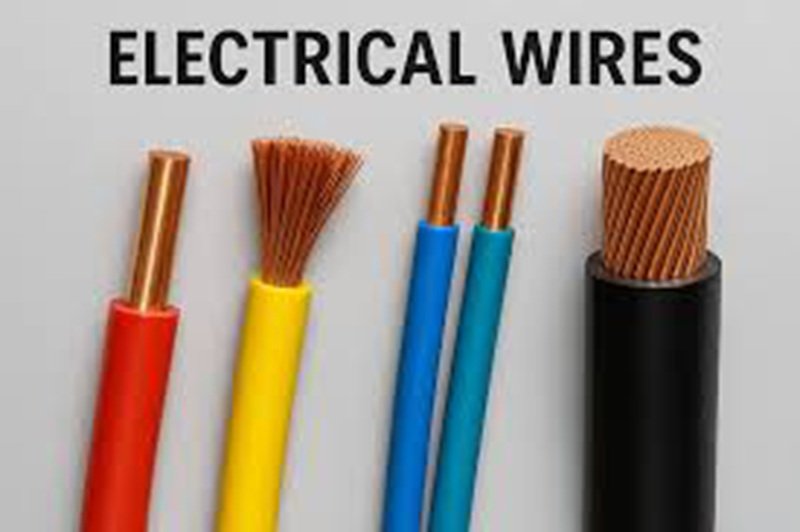
Different environments demand different cord designs. The main variations come from jacket material, temperature rating, and voltage capacity.
Below are some common examples:
| Cord Type | Voltage Rating | Typical Use |
|---|---|---|
| SVT / SJT | 300V | Light-duty indoor cords (computers, lamps) |
| SJTW / SJOOW | 300V–600V | Outdoor or industrial cords with water/oil resistance |
| H05VV-F / H07RN-F | 300/500V | European flexible cords for tools/appliances |
| Coiled Cord | 125V–250V | Extendable cords for handheld electronics |
| Detachable Cord | 125V–250V | IEC C13/C19 types for IT and server equipment |
Is a Power Cord a Cable?
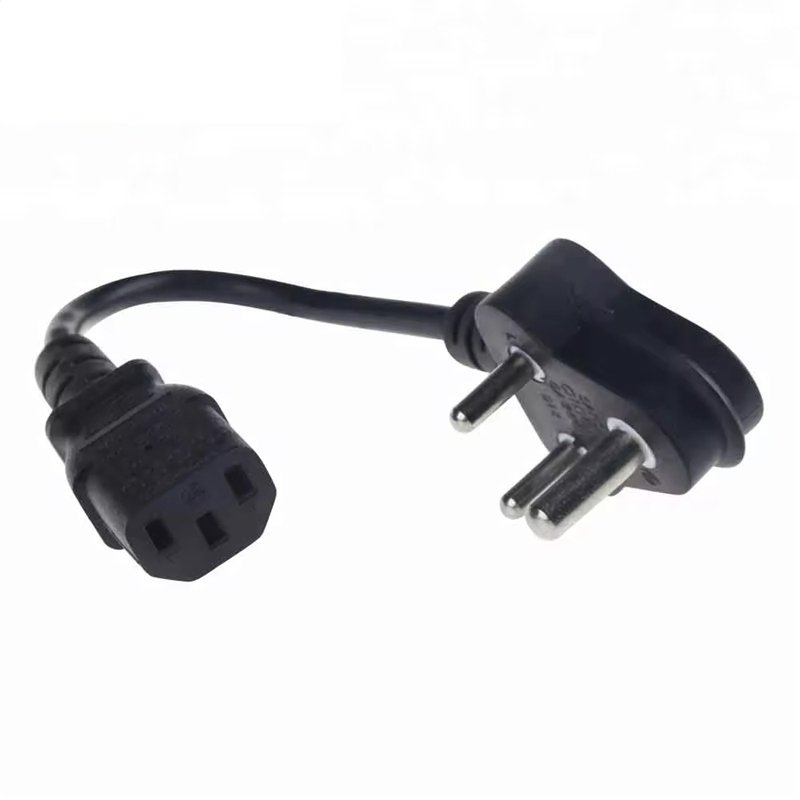
Technically, yes — a power cord is a type of flexible cable specifically engineered to supply electrical power to portable devices. However, in electrical terminology, “cord” emphasizes short-distance and movable use, while “cable” describes a more complex, often fixed system.
For example:
- A washing machine cord is flexible and detachable — it’s a cord.
- A buried underground line carrying electricity to a building is not — it’s a cable.
Power cords follow international standards such as IEC 60320 (C13, C19) or NEMA (5-15P, 6-15P) to ensure universal compatibility across regions. In Sino-Conn’s production line, power cords can be customized with regional plugs, voltage ratings, and insulation types depending on the client’s export destination (e.g., UL-listed for North America, VDE for Europe, PSE for Japan).
Typical Applications of Electrical Cords
Cords are everywhere — from household appliances to complex laboratory equipment. Their strength lies in mobility and user safety.
Common applications include:
- Home appliances: vacuum cleaners, fans, irons, blenders
- Office equipment: monitors, printers, desktop computers
- Medical instruments: diagnostic machines, portable analyzers
- Industrial tools: drills, portable welders, lighting rigs
Each cord is rated according to voltage (V), current (A), and temperature (°C) to ensure reliable performance without overheating or insulation failure.
Key Advantages of Using Cords
- High Flexibility: Made with stranded copper and soft insulation, cords can withstand frequent bending.
- Ease of Replacement: Cords are detachable, minimizing downtime when replacement is needed.
- Compact and Lightweight: Ideal for consumer and portable applications.
- Customizable Design: Length, color, and connector types can be tailored to end-user needs.
Limitations and Challenges
Despite their flexibility, cords are not a universal solution:
- Limited Length: Voltage drop increases with distance, making them unsuitable for long runs.
- Lower Power Rating: Typically capped at 600V and 15–20A for safety.
- Environmental Limits: Basic PVC cords may degrade under UV, oil, or extreme heat unless upgraded to TPE or rubber compounds.
For example, Sino-Conn offers SJTW cords rated for outdoor and oil-resistant use, designed for customers in automotive repair, construction, and industrial environments requiring higher durability.
Safety Standards and Certifications
All cords must comply with stringent regulatory standards to ensure electrical safety.
Common certifications include:
- UL 62 / CSA 49 (North America)
- VDE / EN 50525 (Europe)
- PSE / JET (Japan)
- SAA (Australia)
Sino-Conn’s cords undergo 100% testing for continuity, insulation resistance, and hi-pot verification before shipment. These steps are essential to guarantee compliance with RoHS, REACH, and PFAS-free environmental standards.
What Is a Cable and What Makes It Different?

A cable is a structured assembly of two or more insulated conductors enclosed within an outer jacket, designed to carry electrical power, control signals, or data over longer distances or within fixed installations. While a cord prioritizes flexibility for portable applications, a cable emphasizes durability, stability, and performance — especially in demanding industrial or communication environments.
The Anatomy and Engineering of a Cable
Cables are engineered for structure, performance, and safety. Each layer serves a precise function, ensuring efficient transmission and environmental protection.
| Cable Layer | Material Example | Purpose / Function |
|---|---|---|
| Conductor | Copper / Aluminum (solid or stranded) | Carries electric current or signal |
| Insulation | PVC, XLPE, PE, FEP | Electrically isolates conductors |
| Shielding | Aluminum foil, copper braid | Reduces electromagnetic interference (EMI) |
| Fillers | Cotton, PP rope | Maintains shape and flexibility |
| Jacket / Sheath | PVC, PUR, TPE, Rubber | Protects against mechanical and chemical stress |
| Armor (optional) | Steel tape, aluminum braid | Adds physical protection and rigidity |
This multi-layer design allows cables to operate in extreme environments — from deep underground installations to aerospace systems — while maintaining signal integrity and mechanical strength.
Is It an Ethernet Cord or Cable?

Technically, it’s an Ethernet cable, not a cord. Ethernet cabling, such as Cat5e, Cat6, or Cat7, contains multiple twisted pairs of insulated conductors arranged to reduce crosstalk and electromagnetic interference.
Even though users casually call it an “Ethernet cord,” the structure qualifies it as a cable because of its multi-conductor configuration, length, and standardized design.
| Category | Bandwidth | Shield Type | Max Length | Application |
|---|---|---|---|---|
| Cat5e | 1 Gbps | UTP (unshielded) | 100 m | Home/office networks |
| Cat6 | 10 Gbps | UTP/STP | 55 m | Professional networks |
| Cat6A | 10 Gbps | S/FTP | 100 m | Data centers |
| Cat7 | 40 Gbps | S/FTP | 100 m | Server rooms |
| Cat8 | 40 Gbps+ | F/FTP | 30 m | High-speed data, backbone links |
Each category defines not only speed and frequency but also construction precision — tight twist ratios, dielectric materials, and shielding quality that determine network reliability.
Core Characteristics That Distinguish Cables
- Higher Voltage and Current Ratings Cables can safely handle from 300 V to over 35 kV, depending on insulation thickness and material. This makes them essential for power distribution, control systems, and industrial automation.
- Enhanced EMI and Noise Protection Shielding layers (foil or braid) reduce interference in communication lines — critical for audio, RF, and data transmission.
- Environmental Resistance Outer jackets can be formulated for UV, oil, flame, and chemical resistance, ensuring long service life in harsh settings.
- Varied Conductor Configurations From single-core power cables to multi-pair control or hybrid cables, the structure is tailored for signal type, frequency, and current density.
- Compliance and Safety Standards Cables must conform to standards such as UL 1277, IEC 60502, or ISO 6722. Manufacturers like Sino-Conn verify compliance with UL, ISO 9001, RoHS, and REACH before production approval.
Common Types of Cables and Their Uses
| Cable Type | Description | Typical Use Case |
|---|---|---|
| Power Cable | Transmits electrical energy; usually multi-core with thick insulation | Power distribution, equipment wiring |
| Control Cable | Medium-voltage cable for automation and signal transmission | Industrial machinery, robotics |
| Coaxial Cable | Central conductor with shielded layer to reduce signal loss | RF systems, broadcast, CCTV |
| Instrumentation Cable | Multiple pairs for precise signal measurement | Process control and sensors |
| Data Cable | High-speed data transfer with minimal signal degradation | Networking, servers, telecom |
| Fiber-Optic Cable | Transmits light instead of electricity | Internet backbone, medical imaging |
Cables enable both analog and digital connectivity, supporting power, control, and data infrastructures across modern industries.
Applications of Cables in Different Sectors
- Industrial Automation – Shielded control cables connect PLCs, sensors, and motors with noise-free reliability.
- Telecommunication & Networking – Twisted-pair and fiber-optic cables deliver stable, high-speed data transfer.
- Energy & Utilities – Power cables manage high-voltage distribution from substations to equipment.
- Aerospace & Defense – Lightweight, flame-resistant cables provide precision signal control in critical systems.
- Medical & Laboratory Equipment – Clean-room-grade fluoropolymer cables ensure biocompatibility and chemical safety.
- Marine & Outdoor Systems – Armored or UV-resistant cables withstand moisture, oil, and temperature extremes.
Each category demands specific material formulations — for example, XLPE insulation for heat-resistant power cables, or FEP/PTFE insulation for data cables in high-temperature zones.
Advantages and Limitations of Cables
| Advantages | Limitations |
|---|---|
| Suitable for long-distance transmission | Less flexible than cords |
| Handles high power or data rates | More complex installation |
| Superior shielding and protection | Higher cost and weight |
| Long service life, low maintenance | Requires careful bending radius control |
Safety and Testing Requirements
Before production, professional manufacturers like Sino-Conn perform detailed verification processes:
- Conductor resistance and continuity testing
- Dielectric voltage withstand and insulation resistance
- EMI shielding efficiency
- Tensile and bending cycle tests
- Flame-retardant and temperature endurance evaluation
What Are the Key Differences Between a Cord and a Cable?
Even though cords and cables are both designed to conduct electricity or transmit signals, they serve very different functions and are engineered for distinct environments. The distinction lies not just in terminology, but in mechanical structure, electrical performance, and usage purpose. Understanding these differences ensures safer installations, longer lifespan, and higher reliability across power and data systems.
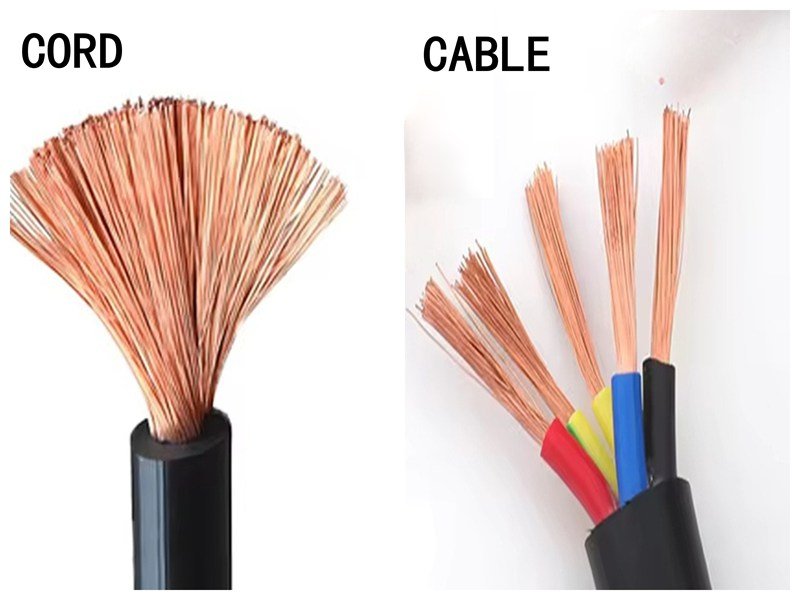
1. Structural Design: Flexibility vs Complexity
The physical structure of cords and cables determines how they function.
Cords are built for movement — typically containing 2–3 fine-stranded copper conductors surrounded by soft, flexible insulation.
Cables, on the other hand, are systematic assemblies with multiple conductors, fillers, shielding, and armor layers.
| Feature | Cord | Cable |
|---|---|---|
| Conductors | 1–3 stranded | 2–100+ (solid or stranded) |
| Insulation | Soft PVC, TPE | XLPE, FEP, PE, or rubber |
| Shielding | Rare | Foil, braid, or combination |
| Outer Jacket | Flexible thermoplastic | Tough, often multi-layered |
| Armor | Not applicable | Optional (metallic or non-metallic) |
| Flexibility | High (for movement) | Moderate to low (fixed routing) |
Cords are typically used for temporary or mobile power delivery, while cables are installed permanently in walls, machines, or conduits where stability and mechanical strength are prioritized.
2. Electrical Characteristics and Performance
Cords are designed for short-distance power transfer with lower voltage and current, while cables manage high-voltage or high-frequency applications over greater distances.
| Property | Cord | Cable |
|---|---|---|
| Voltage Rating | Up to 300–600V | Up to 35kV |
| Current Capacity | 10–20A typical | 10A to several hundred amps |
| Resistance to EMI | Minimal | High (with shielding) |
| Signal Integrity | Limited | Stable over long distances |
| Operating Temperature | –20°C to 60°C | –40°C to 125°C (depending on insulation) |
Cables are often required to comply with EMI/EMC standards (e.g., CISPR 22, FCC Part 15) when transmitting data or control signals. Shielded cables reduce crosstalk and noise, vital in Ethernet, coaxial, or industrial control systems.
3. Application Environment
Perhaps the most practical distinction between cords and cables is where and how they are used.
| Application Environment | Recommended Type | Example |
|---|---|---|
| Portable equipment | Cord | Power tools, computers |
| Industrial control | Cable | PLC wiring, robotics |
| Data transmission | Cable | Ethernet, coaxial |
| Home appliances | Cord | Fans, kitchen appliances |
| Underground / outdoor installation | Cable | Power or communication networks |
Cords are used for short-term or flexible connections, often visible and replaceable.
Cables are typically installed permanently, often within walls, conduits, or machinery — protected against environmental stress.
4. Mechanical Durability and Lifespan
From a mechanical perspective, cords must bend easily and repeatedly without cracking, while cables must endure external pressure, abrasion, and tension.
- Cords: Tested for flexibility cycles (e.g., 10,000+ bending operations).
- Cables: Tested for tensile strength, crush resistance, and fire retardance (IEC 60332 or UL 1685).
High-performance cables, such as those produced by Sino-Conn, may use PUR or TPE jackets for flexibility and braided reinforcement for mechanical protection. These enhance reliability in factory automation, medical devices, and robotics where mechanical stress is constant.
5. Shielding, Noise Control, and Signal Stability
Cables have the advantage of shielding layers — conductive barriers that prevent signal loss and external interference.
Cords, lacking shielding, are fine for low-frequency power applications but can cause interference in high-speed data systems if misused.
| Type | Shielding Option | Use Case |
|---|---|---|
| Unshielded Cord | None | Household appliances |
| Shielded Cable (Foil) | EMI/RFI reduction | Audio, instrumentation |
| Braided Shield Cable | High-frequency protection | RF and telecom |
| Hybrid Shielded Cable | Dual protection (foil + braid) | Industrial automation |
When systems require clean signals (e.g., sensors, communication networks, or test equipment), cables are indispensable due to their superior signal-to-noise ratio (SNR).
6. Safety Standards and Certification
Cords and cables fall under different regulatory categories because of their structure and intended use.
| Product Type | Applicable Standards | Certifications |
|---|---|---|
| Cords | UL 62, CSA 49, IEC 60227 | UL Listed, CE, VDE |
| Cables | UL 1277, IEC 60502, ISO 6722 | RoHS, REACH, CE, TUV |
Cables may also require fire resistance (IEC 60332-1-2), smoke toxicity (IEC 61034), and halogen-free compliance (IEC 60754) — especially in public buildings, aircraft, and marine environments.
Sino-Conn integrates these requirements into its production process, ensuring all assemblies are tested for continuity, insulation, voltage withstand, and mechanical strength before shipment.
7. Cost and Installation Considerations
From a procurement standpoint, cords are usually cheaper per meter due to their simple structure.
However, cables provide long-term value through durability, signal reliability, and reduced maintenance.
| Factor | Cord | Cable |
|---|---|---|
| Material Cost | Lower | Higher |
| Installation Time | Quick, plug-and-play | Requires routing and termination |
| Maintenance | Easy replacement | Minimal if installed properly |
| Service Life | 2–5 years typical | 10–25 years typical |
In large systems (factories, data centers, or energy plants), cables often represent a long-term investment, whereas cords are consumable accessories for end-use equipment.
8. Physical Appearance and Identification
Visually, cords and cables can often be distinguished by their diameter, flexibility, and labeling.
- Cords: Thinner, more flexible, often come with molded connectors.
- Cables: Thicker, marked with detailed specifications — voltage, conductor size, temperature rating, and certification logos.
For example:
- “SJTW 3×14 AWG 300V” — Cord specification for a power extension.
- “4C x 2.5mm² 600/1000V XLPE/PVC” — Cable specification for power transmission.
Understanding labeling ensures correct installation and compliance with safety regulations.
Comparative Summary Table
| Category | Cord | Cable |
|---|---|---|
| Purpose | Portable or temporary power | Permanent or structured installation |
| Voltage Range | 125–600V | 300V–35kV |
| Flexibility | High | Moderate |
| Conductor Count | 1–3 | 2–100+ |
| Shielding | Rare | Common |
| Length | Short (<10m typical) | Long (up to kilometers) |
| Durability | Moderate | High |
| Applications | Appliances, tools | Networking, power grids, control systems |
| Replacement | Easy | Complex |
| Cost per meter | Lower | Higher |
Which Type Should You Choose for Your Application?
Choosing between a cord and a cable isn’t a matter of preference — it’s a decision that affects performance, safety, and cost efficiency. The right selection depends on your application environment, electrical requirements, and mechanical constraints. Each serves a distinct purpose, and understanding these distinctions ensures that your system runs safely, efficiently, and in compliance with international standards.
1. Evaluating Your Application Environment
The first step is understanding where the product will operate and how it will be used.
| Environment | Recommended Type | Example Applications |
|---|---|---|
| Indoor Consumer Use | Cord | Home appliances, electronics |
| Office / IT Setup | Cable | Networking, servers |
| Industrial Automation | Cable | Motors, sensors, PLCs |
| Outdoor / Construction | Cord (rubber jacket) | Power tools, temporary lighting |
| Medical or Laboratory | Cable | Diagnostic devices, analyzers |
| Transportation / Automotive | Cable | Battery and data wiring |
Cords thrive in portable and flexible setups, whereas cables perform best in fixed, long-term installations. For instance, a hospital’s portable ECG machine might use a flexible power cord, while its data backbone relies on shielded Ethernet or fiber-optic cables.
2. Determining Electrical Requirements
Voltage and current capacity define how much energy your cord or cable can safely handle.
| Parameter | Cords | Cables |
|---|---|---|
| Voltage Range | 125–600V | 300V–35kV |
| Current Range | 5–20A typical | Up to several hundred amps |
| Frequency | 50–60 Hz (AC) | AC or DC; may carry data |
| Signal Type | Power only | Power, signal, or data |
Cords are usually rated for portable low-voltage applications, such as connecting a power drill or a desktop monitor.
Cables, by contrast, are engineered to handle high-voltage transmission or precision signal transfer — such as those in industrial automation or telecommunications.
3. Assessing Flexibility and Movement Needs
If your connection point needs to move frequently — as with robotic arms, medical devices, or consumer appliances — flexibility is essential.
| Usage Type | Preferred Product | Reason |
|---|---|---|
| Frequent movement or bending | Cord | Built with finely stranded copper and soft insulation |
| Fixed installation | Cable | Designed for static routing and mechanical protection |
| Continuous motion (e.g., cable chains) | Flexible Cable | PUR or TPE jackets resist fatigue |
Cords are designed to bend and twist thousands of times without failure.
Cables, especially those using XLPE or FEP insulation, are tougher but less flexible — ideal for environments where the line remains stationary.
4. Matching Material to Environment
Different jacket and insulation materials are engineered for different challenges — from heat to moisture to UV radiation.
| Material | Common Use | Key Properties |
|---|---|---|
| PVC (Polyvinyl Chloride) | General-purpose cords | Flexible, low-cost, flame-retardant |
| Rubber / Neoprene (SJTW, H07RN-F) | Outdoor or industrial cords | Oil, water, and abrasion resistance |
| XLPE (Cross-linked Polyethylene) | Power cables | High voltage and temperature tolerance |
| FEP / PTFE (Teflon) | Aerospace, medical | Excellent dielectric and chemical resistance |
| PUR / TPE | Robotics, factory automation | Superior flexibility, UV and oil resistance |
For example, Sino-Conn provides custom PVC cords for household appliances and TPE or PUR cables for automation systems where mechanical wear is high.
Selecting the correct material prevents premature failure and reduces maintenance costs.
5. Considering Data vs. Power Transmission
A critical distinction: cords deliver power, while cables can deliver both power and data.
If your system involves signal transmission, EMI (electromagnetic interference) becomes a major concern — favoring shielded cables.
| Function | Product Type | Example |
|---|---|---|
| Pure power delivery | Cord | Extension cord, appliance cord |
| Power + Data hybrid | Cable | USB, HDMI, or hybrid signal cables |
| High-speed communication | Cable | Ethernet, coaxial, or fiber-optic |
This distinction matters in fields like medical imaging, factory automation, or networking, where signal purity is crucial.
Sino-Conn’s engineers can integrate shielding, twisted pairs, or ferrite cores to minimize signal loss and interference.
6. Compliance and Safety Standards
Different markets and industries require different regulatory approvals. Before selecting a cord or cable, verify that it complies with international safety standards.
| Standard | Applies To | Region / Purpose |
|---|---|---|
| UL 62 / CSA 49 | Flexible cords | North America |
| VDE / IEC 60227 | Cords and cables | Europe |
| PSE / JET | Power cords | Japan |
| ISO 6722 / SAE J1128 | Automotive cables | Global |
| UL 1277 / IEC 60502 | Power cables | Industrial use |
| RoHS / REACH | Environmental compliance | Global |
Sino-Conn’s cords and cables are fully tested to meet UL, ISO 9001, RoHS, REACH, and PFAS-free requirements — ensuring they’re safe for export and long-term use in any region.
7. Customization and Engineering Considerations
Off-the-shelf products rarely meet specialized needs. In many industries — especially OEM manufacturing and R&D — custom cable design is necessary.
Sino-Conn provides:
- CAD drawings within 30–60 minutes for client review.
- Rapid sampling (2–3 days).
- Flexible MOQ (as low as 1 piece).
- Tailored options: length, insulation, shielding, pinout, and labeling.
For instance:
- An OEM power tool may require a rubber-insulated cord with a molded plug and strain relief.
- A robotic sensor harness may use a shielded multi-core cable with circular connectors and PUR jackets.
Custom engineering ensures each assembly performs optimally within its intended mechanical, thermal, and electrical conditions.
Cord vs Cable Selection Guide
| Decision Factor | Cord | Cable |
|---|---|---|
| Installation Type | Temporary or portable | Permanent or fixed |
| Movement Frequency | High | Low |
| Voltage / Power | Low to medium | Medium to high |
| Signal Transmission | Power only | Power + signal/data |
| Flexibility | High | Medium to low |
| Distance | Short (<10m) | Long (10m–1000m+) |
| Environmental Exposure | Moderate | Harsh/industrial |
| Cost per Unit | Lower | Higher |
| Replacement Frequency | Frequent | Rare |
| Best for | Portable appliances, tools | Automation, telecom, energy, EV systems |
How Do Cords and Cables Integrate with Connectors?
Cords and cables integrate with connectors through termination methods such as crimping, soldering, or molding. The connector type must match the cable’s conductor size, insulation, shielding, and intended function. This integration ensures stable electrical contact, secure mechanical fit, and environmental protection. Manufacturers like Sino-Conn design and assemble cable-connector systems according to precise voltage, current, and environmental specifications for maximum reliability.
The Purpose of Connectors in Cable Assemblies
Connectors act as bridges between electrical systems — allowing quick connection, disconnection, or replacement without rewiring. Their primary purposes include:
- Electrical continuity – ensures low-resistance contact between cable conductors and equipment terminals.
- Mechanical support – relieves strain on the cable to prevent conductor fatigue.
- Environmental sealing – protects against dust, moisture, and vibration.
- Configuration control – ensures proper polarity and pin matching for safe operation.
Without proper integration, even the highest-quality cable can fail due to contact resistance, corrosion, or misalignment.
Common Connector Types and Their Typical Uses
| Connector Type | Typical Cable Pairing | Application |
|---|---|---|
| Circular Connectors (M8, M12, GX, etc.) | Multi-core or shielded cables | Industrial automation, sensors |
| Coaxial Connectors (SMA, BNC, N-Type) | Coaxial cables | RF, communication, and broadcast systems |
| Rectangular Connectors (D-sub, IDC) | Ribbon or multi-core signal cables | Computers, instrumentation |
| Power Connectors (IEC, Anderson, XT60) | Power cords and DC cables | Power distribution, charging systems |
| Modular Connectors (RJ45, RJ11) | Twisted pair Ethernet or telephone cables | Networking and telecom |
| USB / HDMI / DisplayPort | Multi-conductor data cables | Consumer electronics and multimedia |
| Medical-grade Connectors (LEMO, Fischer) | Shielded or silicone-jacketed cables | Medical imaging and diagnostics |
Each connector’s mechanical design and contact plating (e.g., gold, nickel, or tin) influence conductivity, corrosion resistance, and insertion lifespan — often measured in mating cycles (up to 10,000+ for premium models).
Termination Techniques: How Cables Join Connectors
Cable-to-connector integration requires precision termination. The method depends on cable type, conductor material, and end-use environment.
| Termination Method | Description | Typical Use |
|---|---|---|
| Crimping | Conductors are compressed into connector pins using a calibrated crimp tool | Automotive, industrial power |
| Soldering | Conductors are bonded using molten solder for stable electrical contact | High-frequency or low-current circuits |
| Insulation Displacement (IDC) | Sharp contacts pierce insulation to contact conductor strands | Ribbon or data cables |
| Screw Terminals | Conductor wires clamped mechanically by screws | Field wiring, prototypes |
| Overmolding | Connector and cable encapsulated in molded plastic for strain relief and sealing | Consumer electronics, outdoor equipment |
Each method has trade-offs in cost, strength, and environmental resistance. Sino-Conn engineers select the most suitable termination approach based on mechanical load, current density, and production volume.
Shielding and Grounding Integration
For shielded cables — such as coaxial, Ethernet, or instrumentation types — proper grounding between cable shielding and connector housing is crucial.
| Integration Aspect | Purpose |
|---|---|
| 360° Shield Termination | Prevents EMI leaks by bonding the full circumference of the shield |
| Drain Wire Connection | Provides a low-resistance path to ground |
| Metal Shell Connectors | Offers continuous shielding from cable to device |
| Ferrule Clamps or Backshells | Mechanically secure shields and improve EMI protection |
Improper shielding termination is a common cause of signal degradation, interference, or system instability in sensitive environments such as data centers or radar systems.
Mechanical and Environmental Protection
A successful integration is not just about electrical contact — it must also survive mechanical stress, vibration, temperature changes, and humidity.
| Protection Element | Function | Example Use |
|---|---|---|
| Strain Relief Boot | Prevents bending stress at connector entry | Power tools, handheld devices |
| Overmolded Jacket | Encapsulates junction for water and dust resistance | Outdoor equipment |
| Gaskets and O-rings | Seal connectors against IP67/IP68 conditions | Marine, medical, automotive |
| Locking Mechanisms | Ensure secure connection under vibration | M12, Bayonet, and Threaded types |
Manufacturers like Sino-Conn often customize these features depending on the target environment — whether it’s outdoor exposure, cleanroom compliance, or industrial oil resistance.
Electrical Matching: Current, Voltage, and Impedance
Proper electrical matching between cable and connector prevents overheating, voltage drops, and reflection losses.
| Parameter | Cord / Cable Aspect | Connector Aspect |
|---|---|---|
| Current Rating | Determined by conductor cross-section | Connector pin gauge and plating |
| Voltage Rating | Based on insulation and spacing | Dielectric material and creepage distance |
| Impedance (for RF/data) | Cable geometry and dielectric | Connector internal geometry |
| Contact Resistance | Conductor purity and crimp quality | Surface finish and contact pressure |
Example:
- A 75-ohm coaxial cable must pair with 75-ohm BNC connectors to avoid reflection losses in video or RF systems.
- Similarly, a 16 AWG power cord requires connectors rated for at least 13–15A, depending on temperature rise limits.
Connector Integration Challenges and Solutions
| Common Challenge | Potential Issue | Sino-Conn Solution |
|---|---|---|
| Connector mismatch | Voltage or signal failure | Custom pin mapping & compatibility validation |
| Improper strain relief | Cable breakage at entry point | Precision-molded overmolds and boots |
| Poor crimp quality | High resistance or intermittent contact | 100% visual and pull-strength testing |
| Shield termination gaps | EMI and crosstalk | Full 360° termination with ferrule clamps |
| Environmental failure | Corrosion or ingress | IP67/IP68-rated sealing & corrosion-resistant plating |
Testing and Quality Verification
A high-quality connector integration must pass electrical, mechanical, and environmental testing.
| Test Type | Purpose | Standard |
|---|---|---|
| Continuity & Resistance | Verify electrical integrity | IEC 60512-2 |
| Dielectric Withstand | Check insulation under rated voltage | UL 817 |
| Bend / Flex Life | Ensure durability during motion | UL 62 |
| Tensile & Pull Test | Validate crimp or solder strength | ASTM D638 |
| EMI/Shield Effectiveness | Evaluate signal protection | CISPR 25 |
| Thermal Cycling | Assess expansion and contraction endurance | IEC 60068-2-14 |
These rigorous evaluations ensure safe operation and long-term reliability, particularly for mission-critical applications in medical, military, and industrial automation.
Connector and Cable Integration Examples
| Application | Cable Type | Connector Type | Special Feature |
|---|---|---|---|
| Industrial Sensor Line | 4-core shielded PUR cable | M12 circular | IP68 waterproof, 360° EMI shield |
| Medical Device Cable | TPE-insulated multi-core | LEMO push-pull | Biocompatible and autoclavable |
| RF Communication Line | RG-58 coaxial cable | SMA male/female | Low VSWR, high-frequency stability |
| Power Distribution | 3-core rubber cable | IEC C19 / C20 | High-current and flame retardant |
| Data Center Patch Cord | Cat6A Ethernet cable | RJ45 modular | 10 Gbps data rate, gold-plated contacts |
Each example demonstrates how connectivity engineering must harmonize electrical, mechanical, and environmental parameters for optimal performance.
What Are the Emerging Trends in Cord and Cable Design?
As industries evolve, cords and cables are becoming smarter, lighter, and more environmentally friendly.
Material and Performance Innovations
- Halogen-free compounds reduce toxic emissions.
- Flame-retardant PVCs meet IEC 60332 standards.
- UV- and oil-resistant jackets enhance outdoor longevity.
- Low-loss conductors improve data transfer integrity.
Hybrid Assemblies
New generation power + signal cables simplify wiring in:
- Robotics
- Electric vehicles
- Smart appliances
- Medical devices
Hybrid solutions reduce weight, cost, and space — a growing demand met efficiently by Sino-Conn’s flexible production model.
Sustainability and Compliance
- PFAS-free manufacturing.
- RoHS and REACH certification.
- Recyclable materials and minimal-waste extrusion processes.
Conclusion
Choosing between a cord and a cable is not just about wording — it’s about using the right interconnect for the job. Cords are built for portable, flexible, user-facing power connections. Cables are built for structured, long-term, often shielded transmission of power, control, or data. Systems that mix these up risk premature failure, EMI problems, overheating, or simply non-compliance with UL/IEC requirements.
What makes the decision even more critical is that most real-world projects don’t use just a cord or just a cable — they use both in one system. A machine may have a fixed shielded control cable inside, and a detachable IEC power cord outside. A medical device may use a silicone-jacketed cable inside the housing and a push-pull detachable cord for field service. A telecom cabinet may use fiber/copper hybrid cables for backbone links and flexible power cords for front-facing modules. Getting the interface right is where engineering — not guesswork — is needed.
If you’re designing, sourcing, or upgrading anything that involves cords, cables, or connectorized harnesses, it’s worth getting a professional layout from Sino-Conn before you freeze the BOM.