Skip to content
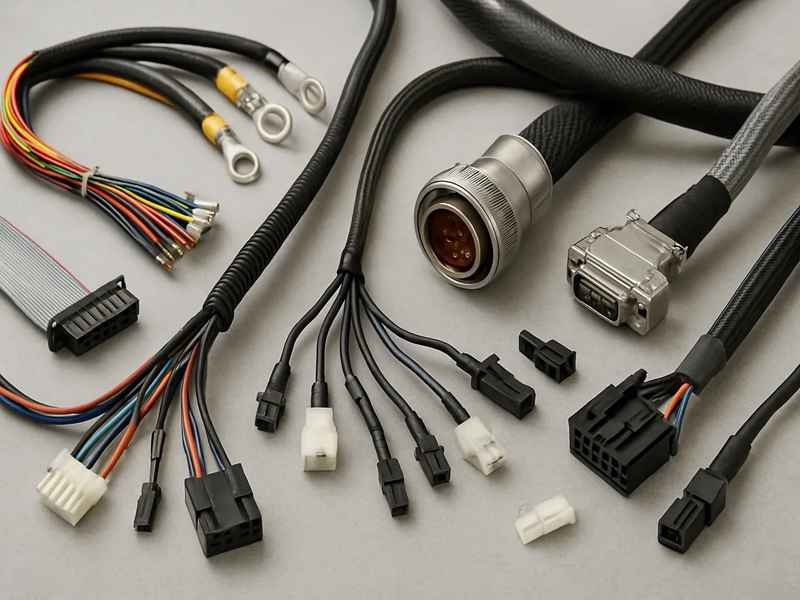
Wiring harnesses look simple from the outside—a bundle of wires organized neatly with connectors on the ends. But anyone who has worked in engineering, OEM manufacturing, or field maintenance knows the truth: a wiring harness is a highly engineered system, and its performance determines whether a product works flawlessly for years or fails within weeks. Every component—wire gauge, insulation material, connector interface, crimp quality, waterproofing choice, shielding method—affects reliability, safety, signal clarity, and regulatory compliance.
In today’s electric-powered world, wiring harnesses sit inside cars, medical devices, industrial robots, telecom systems, and consumer products. They carry power, transmit data, enable sensing, and ensure communication between components that cannot fail. And because modern systems are more compact and more demanding, engineers need complete clarity on what makes up a harness and how each component should be selected.
A wiring harness is an organized assembly of wires, connectors, terminals, protective sleeves, seals, tapes, and identification labels designed to transmit electrical power or signals within a device. Its components include conductors, insulation, shielding, grommets, connector housings, crimps, and mounting hardware. Each part is chosen based on voltage, current, environmental exposure, EMI requirements, and mechanical stress, ensuring long-term reliability and safety of the entire system.
Choosing the wrong harness component can create unexpected voltage drops, EMI noise issues, connector failures, overheating, moisture ingress, or premature wear. Sino-Conn engineers frequently support customers who send only a photo of an old harness and ask: “Can you make the same thing, but more durable?”
The answer is yes—but durability always comes from smart component choices. Let’s break down the full structure of a wiring harness and what each component actually does.
What Is a Wiring Harness?
A wiring harness is an organized bundle of wires, connectors, terminals, and protective materials designed to transmit power and signals within a device or machine. It improves reliability by keeping circuits organized, reducing electrical noise, strengthening mechanical protection, and simplifying manufacturing. Wiring harnesses are used because they standardize routing, reduce assembly time, increase durability in harsh environments, and ensure electrical safety across automotive, industrial, telecom, and consumer applications.
A wiring harness serves as the “circulatory system” of any electrical product—carrying power, data, and control signals across different components. Without harnessing, wires would remain loose, unprotected, and prone to vibration fatigue, moisture intrusion, miswiring, and installation errors. Many OEM failures Sino-Conn helps troubleshoot come from low-quality harness routing, mismatched terminals, or non-shielded cables used in high-noise environments.
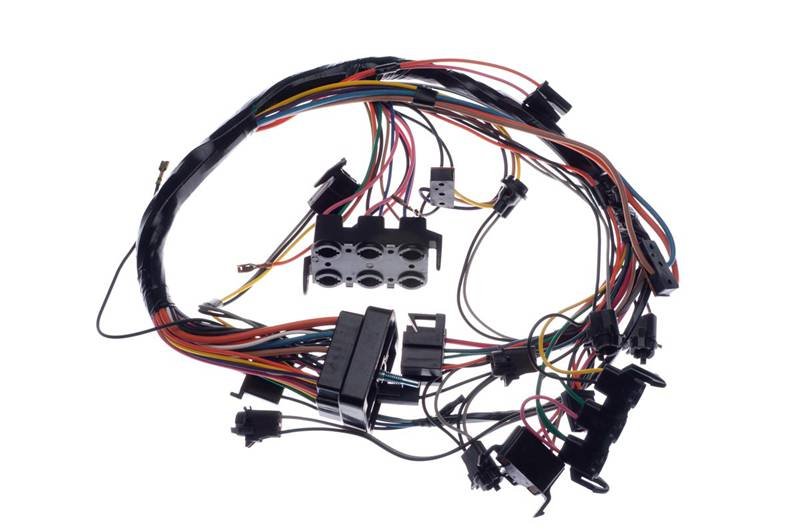
What a Wiring Harness Actually Includes
A standard wiring harness integrates multiple component categories working together:
Core Components
- Conductors (wires or cables) — carry power or signals
- Terminals / Crimp pins — create reliable electrical contact
- Connectors (male/female) — provide mating interfaces
- Fuses / Relays (optional) — add circuit protection
Protective Components
- Insulation materials — PVC, XLPE, TPE, silicone
- Sleeving — PET braided, nylon conduit, heat-shrink tubing
- Tapes — fleece, PVC, aluminum, fabric
- Grommets / boots — sealing and strain relief
Structural Components
- Clamps, clips, and routing brackets
- Labels or QR traceability tags
- Shielding foil or braid for EMI control
Sino-Conn maintains a component library covering over 600+ wire types, 2,000+ terminals, and 2,500+ connector families, ensuring precise matching for any OEM drawing or sample.
Why Wiring Harnesses Are Used Instead of Loose Wires
Loose wires introduce unnecessary risks. Harnesses exist because they significantly improve system performance and assembly reliability.
Key Advantages
- Improved Electrical Reliability
- Reduces the chance of short circuits
- Maintains consistent contact resistance
- Supports impedance control for RF and data lines Sino-Conn performs 100% continuity tests to guarantee every circuit is correct.
- Reduced Assembly Time (Up to 70% Faster)
- Installers receive a single, organized unit
- Labels and color codes guide correct routing
- Fewer wiring mistakes during production
- Mechanical Protection
- Sleeves and conduits protect against abrasion, pulling, and vibration
- Heat-shrink adds strain relief at critical points
- Can withstand −40°C to +125°C depending on materials
- Environmental Protection
- Waterproof sealing (IP67/IP68) for outdoor or automotive use
- UV-resistant jackets for solar/telecom towers
- Oil- and chemical-resistant TPE/PUR for industrial machinery
- EMI Noise Reduction Shielded wires prevent interference with:
- Sensors
- Antenna cables
- High-speed digital lines Sino-Conn RF harnesses maintain controlled 50Ω or 75Ω impedance for high-frequency applications.
- Space Optimization & Clean Routing Harnesses hold wires in shape, making them easier to position inside tight chassis or equipment frames.
- Enhanced Safety & Compliance
- UL-listed wires and components
- Halogen-free or PFAS-free materials when required
- Reduced fire risk with flame-retardant insulation
Where Wiring Harnesses Are Used
Harnesses are essential in any industry requiring stable electrical connectivity:
Automotive
- Engine bay harnesses
- Sensor and ECU connections
- Lighting, dashboards, ADAS systems
Telecom & RF
- 5G antenna jumpers
- Base-station power + signal bundles
- Shielded coaxial harnesses

Industrial
- Control cabinets
- Robotics and automation systems
- Oil-/chemical-resistant machine harnesses
Medical
- Imaging equipment
- Patient monitoring systems
- Clean-material low-noise cables

Consumer Electronics
- Smart appliances
- Gaming accessories
- Power and signal harnesses
Sino-Conn services all these industries with customized solutions matching voltage, environment, and regulatory requirements.
Real-World Reasons Customers Ask Sino-Conn for Wiring Harnesses
Based on thousands of customer inquiries:
Most Common Customer Motivations
- They need a drawing created quickly because their engineering team is overloaded
- They want alternative connectors due to long lead times
- They require cost-down solutions for OEM production
- They need fast prototypes (2–3 days) to validate a new design
- They want shielded cables or waterproof harnesses for harsh environments
- Their previous supplier produced inconsistent crimps or pin-outs
Sino-Conn solves these pain points through rapid delivery, 30-minute drawing capability, and strict 3-stage QC.
What Components Make Up a Wiring Harness?
A wiring harness is made from several key components: conductors (wires), terminals, connectors, seals, insulation materials, protective sleeves, tapes, grommets, EMI shielding, labels, and structural aids such as clips or clamps. Each component plays a specific role in electrical performance, environmental resistance, and mechanical durability. Engineers choose these parts based on voltage, current, temperature, vibration, waterproof rating, and industry compliance requirements.
Every wiring harness is a combination of electrical, mechanical, and environmental protection components. A harness is only as reliable as the weakest part—meaning even a premium wire can fail if paired with the wrong terminal or insufficient waterproofing. Sino-Conn engineers often rebuild harnesses for OEM customers because the original supplier used consumer-grade insulation, improperly matched crimps, or insufficient strain relief. Understanding the major components helps eliminate these failure points from the start.
Conductors (Wires) — The Core of Electrical Transmission
Wires within the harness typically use stranded copper conductors (bare or tinned) to maximize flexibility and reduce fatigue. Selection depends on:
- Ampacity (current carrying capacity)
- Voltage rating
- Flex cycles (robotics may need 1 million+ cycles)
- Temperature range (PVC to FEP: −40°C to +200°C)
- Insulation type (PVC, XLPE, TPE, silicone, FEP, etc.)
Sino-Conn frequently supplies wires with REACH / ROHS / UL certifications, and can also provide flame-rated wires for UL94-V0 requirements. For automotive customers, we often use low-voltage 28–18 AWG wires, while medical and RF systems require low-noise coaxial or twisted-pair wires to prevent interference.
Terminals & Crimp Contacts — The Mechanical-Electrical Interface
Terminals are critical because they create the electrical interface between a conductor and a connector. Even a perfect wire can fail due to a weak crimp.
Common types include:
- Blade terminals
- Ring terminals
- Female/male crimp pins
- Shielded terminals for coaxial cables
Sino-Conn maintains strict 3-stage QC for crimps (in-process → final → outgoing) and uses pull-force testing to ensure every crimp meets OEM specifications. Many failures from other suppliers come from incorrect crimp height, over-crimping, or using non-matching terminals.

Connectors — Electrical Interfaces & Locking Mechanisms
This includes:
- Plastic connector housings
- Male/female pins
- Waterproof connectors (IP67/IP68)
- RF connectors
- High-current connectors
- Automotive multi-pin housings
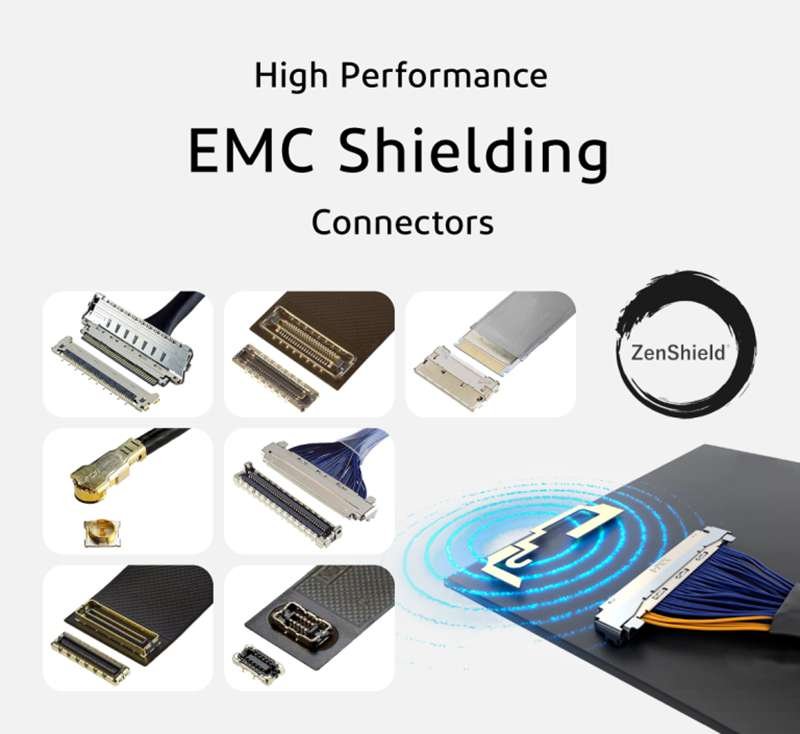
Customers often ask whether Sino-Conn uses original or alternative connectors. We provide both:
- Original brands (Molex, TE, JST, Hirose, etc.)
- Equivalent alternatives (lower cost, faster lead time, easier customization)
Because many OEM customers need urgent prototypes, Sino-Conn often delivers connector photos within minutes and can match models based on only a picture.
Insulation, Sleeving & Tubing — Protecting the Harness
Depending on environment:
- PVC sleeve: economical, general use
- PET braided sleeve: abrasion-resistant, heat-dissipating
- Nylon conduit: heavy-duty, automotive, anti-crush
- Heat-shrink tubing: sealing, strain relief, color coding
For outdoor or industrial applications, Sino-Conn uses materials resistant to oil, UV, flame, chemicals, and −40°C cold-flex.
Tapes, Grommets & Structural Components
Essential for routing, vibration suppression, and chassis mounting.
Examples include:
- Fabric tape (noise reduction in automotive interiors)
- PVC tape (basic bundling)
- Foam tape (gap filling, vibration dampening)
- Rubber grommets (panel pass-through protection)
- Clips & clamps (securing harness path)
A small decision such as switching from PVC tape to fleece tape can reduce cabin noise by 20–30% in automotive applications.
Labels & Identification Systems
Labeling prevents assembly mistakes. Sino-Conn can print:
- Serial numbers
- Routing IDs
- Barcodes
- Connector codes
- Pin-out markings
A European medical customer reported a 92% reduction in assembly errors after Sino-Conn standardized their labeling system.
How Do Engineers Choose the Right Wiring Harness Components?
Engineers choose wiring harness components based on electrical load, voltage rating, signal type, environmental exposure, movement requirements, waterproof level, EMI performance, industry certifications, and connector compatibility. The goal is to match each component—wire, terminal, connector, sleeving, shielding—to real operating conditions to ensure long-term reliability and compliance.
Component selection is an engineering decision that blends electrical science with real-world usage. Sino-Conn works with three main customer groups—traders, R&D engineers, and OEM manufacturers—and each group focuses on different priorities when choosing harness components. Engineers care most about reliability, OEMs about cost, and traders about specifications matching the drawing.
Below is the structured logic that professionals follow.
Voltage, Current & Wire Gauge Selection
Electrical load determines the AWG, insulation type, and current-carrying capacity.
Typical guidelines:
- Signal circuits: 28–30 AWG
- Low-voltage power: 22–18 AWG
- High-current loads: 16–12 AWG or custom high-strand cable
Sino-Conn always checks for voltage drop, which becomes critical in long harnesses (e.g., EV battery systems).
Environmental Resistance Requirements
Engineers must evaluate:
- Temperature (−40°C to +125°C or higher)
- Moisture (IP67/IP68 needed?)
- Oil exposure (industrial equipment)
- UV exposure (outdoor telecom)
- Vibration (automotive/robotics)
This dictates choices such as silicone insulation, TPE jackets, PET sleeves, or waterproof connectors.
Movement & Flexibility Constraints
If the harness is installed in a moving assembly, flex life becomes essential.
Solutions include:
- Fine-strand copper
- TPE or silicone insulation
- Spiral wrapping
- Reinforced strain-relief zones
Sino-Conn provides harnesses for robotic arms designed for 1–3 million flex cycles.
EMI & Signal Integrity Requirements
Coaxial cables, twisted pairs, and foil/braid shields are used for:
- RF communication
- Sensor data
- High-speed digital lines
Sino-Conn routinely builds harnesses requiring 50Ω impedance control, 95% braid coverage, and double shielding for industrial RF applications.
Connector Compatibility & Pin-Out Definition
Engineers must ensure:
- Gender (male/female)
- Locking mechanism
- Keying orientation
- Pitch spacing
- Pin count
- Brand compatibility
Sino-Conn provides drawings within 30 minutes for urgent connector matching.
Certification Requirements
Medical, automotive, aerospace, and industrial markets require:
- UL
- ISO9001
- ROHS/REACH
- PFAS-free materials
- Halogen-free options
Sino-Conn’s material library contains hundreds of certified components ready for production.

What Does Each Component Contribute to Wiring Harness Performance?
Each wiring harness component contributes a specific function: wires carry current and signals, insulation protects against heat and chemicals, terminals ensure stable electrical contact, connectors provide locking and interface compatibility, sleeving prevents abrasion, shielding reduces EMI, and tapes or grommets manage routing. Together, these elements determine the harness’s durability, electrical reliability, waterproofing, and long-term stability in real applications.
The performance of any wiring harness is the result of multiple components working together. Even a premium connector can fail if paired with the wrong wire insulation or inadequate strain relief. Sino-Conn frequently rebuilds harnesses from new customers whose original suppliers used mismatched terminals, weak crimps, or insufficient shielding, causing overheating, intermittent signals, or early mechanical failure. Below is a breakdown of what each component contributes—and how it directly affects real-world performance.
Wires
Wires are the backbone of the harness and influence three major performance areas:
1. Electrical Capacity
- Defines maximum current (ampacity)
- Voltage rating (300V / 600V / 1kV depending on insulation)
- Resistance and heat buildup
Sino-Conn often increases wire gauge (e.g., 22AWG → 20AWG) to reduce voltage drop for long cable runs by 8–15%.
2. Signal Stability
- Twisted pairs for noise-sensitive sensors
- Low-capacitance cables for high-frequency applications
- Coaxial wires maintaining 50Ω or 75Ω impedance
3. Flexibility & Fatigue Life
- Fine-strand conductors survive millions of cycles
- Silicone or TPE insulation prevents cracking in −40°C environments
Sino-Conn robotic cable assemblies use ultra-fine 0.05mm strands for 1–3 million flex cycles.
Insulation
Insulation directly affects how a harness behaves under stress.
What insulation contributes:
- Temperature rating (PVC 80°C, XLPE 125°C, FEP 200°C)
- Flame resistance (UL94-V0 and VW-1)
- Chemical / oil resistance for industrial machines
- UV resistance for outdoor telecom
- Flexibility for tight routing paths
Sino-Conn selects insulation according to customer environment:
- Outdoor 5G towers → XLPE / TPE / UV-stable jackets
- Medical sensors → low-noise, biocompatible insulation
- Automotive engine bay → XLPE + heat shield wrap
Terminals & Crimp Pins
A harness fails more often at the terminal than at the wire. Good terminals ensure:
Key contributions:
- Low, stable contact resistance
- Long-term mechanical retention (no pull-out)
- Corrosion resistance (tin, nickel, gold-plating)
- Proper fit within the connector housing
Sino-Conn uses crimp-height gauges, pull-force tests, and microscopic inspection. A correct crimp reduces resistance rise by up to 40% compared to poorly formed crimps.
Connectors
Connectors determine how well the harness interfaces with other components.
Core contributions:
- Mechanical locking strength
- Pin alignment accuracy
- Waterproof rating (IP67/IP68)
- Mating durability (5,000–10,000 cycles)
- Brand-specific compatibility
Sino-Conn offers both original Molex / TE / JST and high-quality alternatives, maintaining identical keying and pitch spacing. For urgent projects, customers often rely on Sino-Conn to match connectors from only a photo within minutes.

Shielding
Shielding is essential for RF lines, sensor cables, and communication systems.
What shielding contributes:
- Blocks external electromagnetic interference
- Prevents crosstalk between adjacent wires
- Maintains stable signal integrity at high frequencies
- Ensures compliance with EMC regulations
Types commonly used by Sino-Conn:
- 100% aluminum foil shield
- Braided copper shield (90–95% coverage)
- Dual-layer foil + braid for RF assemblies
One telecom customer saw a 32% reduction in data packet loss after switching to Sino-Conn’s dual-shielded harness.
Sleeving, Tubing & Conduits
These materials protect harnesses from the environment and mechanical stress.
Performance contributions:
- Abrasion protection
- Heat dissipation
- Bundling organization
- Noise dampening
- Chemical resistance
- Crush resistance for industrial systems
Sino-Conn uses:
- PET braided sleeve for abrasion
- Heat-shrink tubing for strain relief
- Nylon conduit for heavy-duty machinery
- Silicone sleeve for high temperatures
Tapes, Grommets & Structural Add-ons
These “small” components have outsized impact.
Key contributions:
- Reduce vibration noise (fleece tape)
- Secure wires in precise routing paths
- Seal openings around chassis pass-throughs
- Provide additional strain relief
Automotive harnesses using Sino-Conn fleece tape show 20–30% noise reduction, especially in interior wiring.
Labels & Traceability Systems
Identification affects long-term support and assembly accuracy.
Benefits:
- Prevents misconnection
- Reduces installation time
- Supports maintenance and field repairs
- Enables traceability for OEM production
One European medical client reduced assembly errors by 92% after adopting Sino-Conn’s labeling and QR tracking.
How Does Sino-Conn Build and Test Wiring Harnesses for Quality and Compliance?
Sino-Conn manufactures wiring harnesses using a controlled engineering workflow: rapid drawing creation, material verification, precision crimping, connector assembly, 100% in-process inspection, electrical testing, waterproof testing when required, and final outgoing QC. Every harness undergoes three full inspection stages to ensure electrical reliability, correct pin-outs, stable mechanical strength, and compliance with UL, ROHS, REACH, and customer-specific standards.
Most wiring harness failures occur not from design but from inconsistent production processes—mis-crimped terminals, incorrect pin-outs, loose connectors, or missing strain relief. Sino-Conn avoids these issues through a transparent, engineering-driven workflow centered on accuracy, speed, and traceability.
Below is Sino-Conn’s verified manufacturing process.
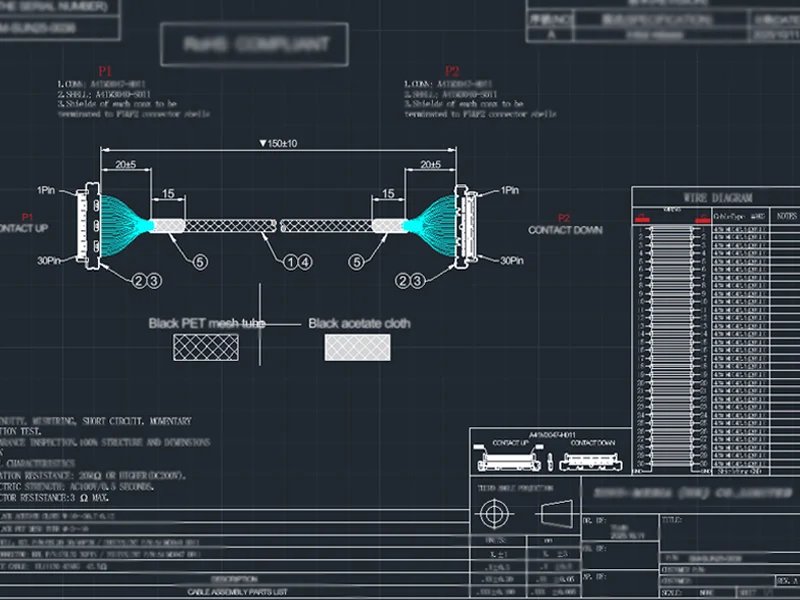
Step 1 — Engineering Evaluation & Drawing Creation
Every order begins with a drawing.
- Standard turnaround: 1–3 days
- Urgent projects: 30 minutes
Customers receive:
- CAD + PDF drawings
- Pin-out diagrams
- Exploded connector views
- Wire lists & BOMs
Nothing proceeds until the customer approves the drawing.
Step 2 — Wire Cutting, Stripping & Crimping
Sino-Conn uses precision stripping machines to ensure consistent strip length. Terminals are crimped using matched tooling to prevent:
- Over-crimp
- Under-crimp
- Wire pull-out
- Contact resistance spikes
Each crimp type undergoes:
- Pull-force tests
- Crimp-height measurements
- Cross-section inspection
Step 3 — Connector Assembly & Sealing
Connectors are assembled under controlled processes:
- Pin insertion
- Keying orientation check
- Seal ring placement (for IP-rated harnesses)
- Application of waterproof adhesives when required
For outdoor customers, Sino-Conn applies potting compounds to achieve IP67–IP68 performance.
Step 4 — Routing, Sleeving & Structural Reinforcement
Harnesses are bundled using:
- PVC or fleece tape
- PET sleeves
- Heat-shrink tubing
- Nylon conduits
- Custom grommets
Each harness is routed according to the approved drawing to ensure installation accuracy.
Step 5 — Electrical, Functional & Waterproof Testing
Every piece undergoes three complete QC stages:
- In-process inspection
- Final assembly inspection
- Pre-shipment inspection
Tests include:
- Continuity test
- Voltage withstand test
- Pin-out verification
- Resistance measurement
- High-frequency loss (for RF cables)
- Waterproof dunk or pressure testing (IP-rated product)
Sino-Conn achieves a 0.3% defect rate, significantly lower than the 1–2% industry average.
Step 6 — Packaging, Labeling & Traceability
Harnesses are packaged with:
- Connector protectors
- Customer-specific labels
- Heat-shrink codes
- QR traceability tags (optional)
OEM customers appreciate traceability because it reduces assembly time and simplifies warranty processes.
Why Do Different Industries Require Different Wiring Harness Components?
Different industries require different wiring harness materials and components because electrical load, environmental conditions, certification requirements, and mechanical movement vary widely across applications. Automotive demands vibration resistance and temperature endurance; medical devices require precision and clean materials; telecom needs EMI-shielded cables; and industrial equipment requires oil and chemical resistance.
Wiring harnesses are not universal. A harness built for office equipment cannot survive the vibration and heat in an EV engine bay, and a consumer-grade USB harness is not suitable for a 5G antenna tower.
Sino-Conn supplies harnesses to automotive, medical, industrial, telecom, robotics, and consumer electronics markets, and each industry has specialized expectations.
Automotive Harness Requirements
Key needs:
- Heat resistance: up to 125°C
- Vibration endurance
- Noise reduction (fleece tape)
- Waterproof connectors (IP67)
- Flame-resistant insulation
Sino-Conn frequently builds harnesses for headlamps, sensors, and ECUs using XLPE wires, PET sleeves, and sealed connectors.
Medical Device Harness Requirements
Key needs:
- Low-noise shielded wires
- Biocompatible materials
- Tight tolerance connectors
- Zero-contamination processes
Medical customers often require REACH + ROHS + PFAS-free certifications.
Telecom & RF Harness Requirements
Key needs:
- Impedance control (50Ω or 75Ω)
- Shielding (foil + braid)
- UV resistance
- Waterproof sealing
Sino-Conn supports telecom integrators with coaxial + mixed-signal harnesses for 4G/5G towers.
Industrial Equipment Harness Requirements
Key needs:
- Oil-resistant TPE or PUR cables
- Chemical resistance
- Heavy-duty connectors
- Mechanical strain relief
Factories often operate at high vibration, making reinforced strain-relief mandatory.
Consumer Electronics Harness Requirements
Key needs:
- Compact size
- Cost optimization
- High production volume
- Flexible routing
This market values fast sampling, and Sino-Conn can deliver prototypes within 2–3 days.
Conclusion — Ready to Build a Reliable, Custom Wiring Harness?
Sourcing the right wiring harness requires understanding components, environmental conditions, certification requirements, and performance expectations. A reliable harness is not about the cheapest parts—it’s about choosing materials that match your application and ensuring consistent production quality.
Whether you are an engineer needing a complex multi-connector harness or an OEM requiring high-volume production with strict cost control, Sino-Conn provides a complete, dependable solution.
Contact Sino-Conn for Custom Wiring Harness Solutions
If you have drawings, photos, samples, or even just an idea, Sino-Conn can turn it into a ready-to-produce wiring harness.
Click below to begin your project:
Start Your Custom Harness Inquiry