Skip to content
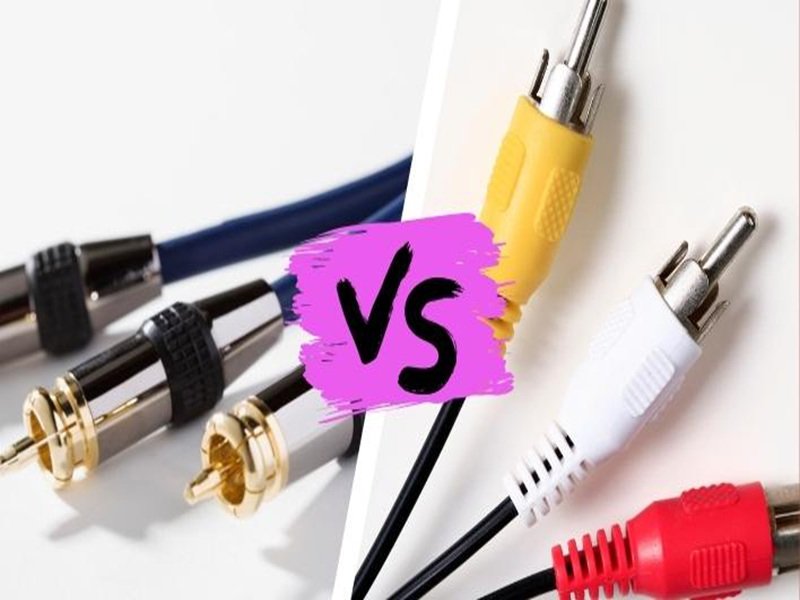
People search “coaxial vs RCA cable” because they’re trying to solve a real problem: a connection doesn’t fit, a signal is noisy, a video line shows interference, or a digital audio link drops out randomly. The confusion usually comes from language. Coaxial describes a cable structure. RCA describes a connector style and, in everyday use, a whole cable assembly. That sounds small — but it changes what you should check before you buy, and what you must specify before you order custom assemblies.
Here’s the key point many projects miss: two cables can look identical from outside, use the same RCA connectors, and still behave very differently electrically. That difference shows up as hum noise in analog audio, “sparkles” in composite video, or intermittent loss in digital audio. If you’re sourcing cables for OEM production, the hidden cost is not the cable price — it’s the field failure and rework cost.
Coaxial cable is a shielded cable design built to control impedance (commonly 50Ω or 75Ω) and resist EMI. RCA cable usually means a cable assembly using RCA connectors, often with a 75Ω coaxial core for video or digital audio, but not always made to strict impedance standards. They are not the same: coaxial is the internal cable design, RCA is the termination style.
A common Sino-conn inquiry is a single photo: “Can you make the same?” We can — but only after converting the photo into measurable specs (impedance, shielding, OD, materials). That’s how you avoid “looks the same, performs differently” problems.
What Is a Coaxial Cable?

A coaxial cable is built around a center conductor and a concentric shield. This geometry is designed to keep impedance stable and reduce interference. Coaxial cables are widely used for RF, antennas, video transmission, and digital coax audio, especially when signal stability matters and the cable runs near noise sources.
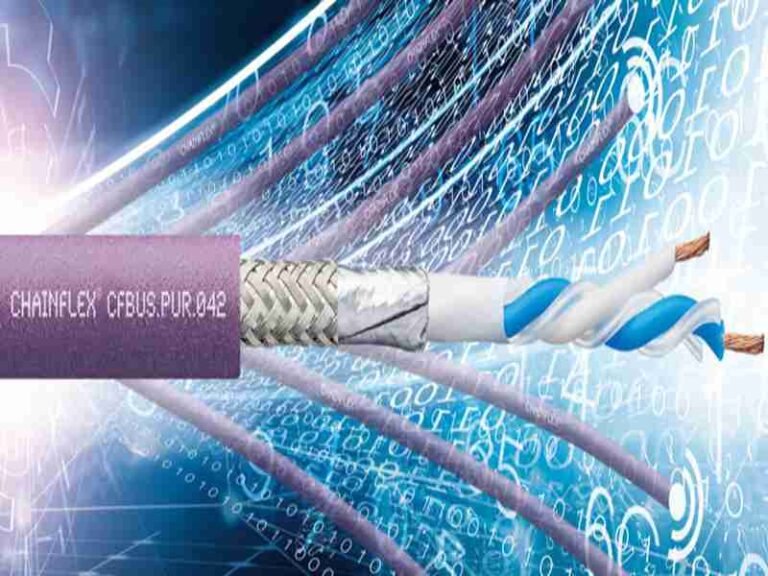
How Is a Coaxial Cable Constructed?
Coaxial cable is not just “wire + jacket.” Each layer has a job, and small changes in layer thickness or material can change performance.
| Layer | What it is | What it controls | Common material choices |
|---|---|---|---|
| Center conductor | solid or stranded copper | signal resistance, flexibility | bare Cu, tinned Cu |
| Dielectric | insulation around conductor | impedance, capacitance, loss | solid PE, foam PE, PTFE, FEP |
| Shield | foil and/or braid | EMI blocking, leakage control | Al foil, Cu braid |
| Outer jacket | protective cover | durability, chemical/UV/heat | PVC, LSZH, TPU, FEP |
What customers often don’t realize: the dielectric largely determines impedance and loss, and the shield largely determines noise performance.
A practical check list Sino-conn uses when a customer only has a picture:
- Cable OD (outer diameter) and connector fit
- Shield type (foil, braid, both)
- Dielectric appearance (solid vs foam)
- Intended signal type (audio/video/RF)
- Required impedance (50Ω vs 75Ω)
- Environment (heat/oil/UV/corrosion)
What Impedance Does a Coaxial Cable Use?
Impedance is the most “invisible” specification — and one of the most important.
| Coaxial impedance | Where it’s most common | What happens if you choose wrong |
|---|---|---|
| 50Ω coaxial | RF, antennas, lab instruments | reflection, higher VSWR, reduced RF efficiency |
| 75Ω coaxial | video, broadcast, digital coax audio | signal reflections, jitter, unstable digital lock |
| Other values | special instruments | compatibility issues |
For customers using SPDIF digital coax (RCA connectors are common here), 75Ω matters. A cheap analog RCA cable may not maintain 75Ω. That’s why some “works sometimes” issues appear, especially with longer cable lengths or noisy environments.
Here’s how mismatch shows up in real life:
- Digital coax audio: random dropouts, clicks, loss of lock
- Video coax: ghosting, interference lines, reduced sharpness
- RF coax: power loss, unstable performance, poor tuning
If you’re ordering custom assemblies, the spec sheet should clearly state impedance and target frequency range.
What Applications Use Coaxial Cable Most?

Coaxial is chosen when you need stable transmission and noise resistance. Common applications include RF modules, antennas, 75Ω video distribution, CCTV, measurement equipment, and digital coax audio.
| Application | Why coaxial is used | The spec customers must confirm |
|---|---|---|
| RF/antenna feed | controlled impedance, shielding | 50Ω, loss at frequency, connector type |
| CCTV / video | 75Ω matching | 75Ω, shielding coverage, length |
| Digital coax audio (SPDIF) | stable waveform, low jitter | 75Ω, shield type, connector quality |
| Test equipment | stable impedance and repeatability | 50Ω/75Ω, return loss, tolerance |
| Industrial sensing | EMI resistance | jacket + shielding + bend radius |
How Does Shielding Work in a Coaxial Cable?
Shielding is what keeps unwanted signals out (and keeps your signal from leaking out).
| Shield structure | What it means in production | What customers usually feel |
|---|---|---|
| Braid only | flexible, moderate EMI blocking | OK in clean environments |
| Foil + braid | stronger EMI blocking | fewer noise issues in real sites |
| Double braid / multi-shield | high isolation | used in demanding RF/industrial |
Shielding is also connected to durability. Poor braid quality can crack under repeated bending, causing intermittent noise.
Environmental requirements customers often request (and Sino-conn can build for):
- high temperature
- flame retardant
- oil resistance
- UV resistance
- corrosion resistance
- halogen-free
- fluorine-free requirement
What Is an RCA Cable?

An RCA cable usually means a cable assembly with RCA connectors. In practice, RCA cables can be built in very different ways internally. Some are true 75Ω coaxial cables designed for video or digital coax audio. Others are basic audio cables where impedance is not tightly controlled. The RCA connector alone does not tell you if the inside is 75Ω coaxial.
Is an RCA Cable a Type of Coaxial Cable?
Sometimes yes, sometimes no — and that’s where customers get trapped.
A reliable way to think about it:
- RCA = connector style
- Coaxial = cable design
Many RCA cables for video or digital coax audio use a 75Ω coaxial core. But many low-cost RCA audio cables are not made to strict impedance.
Here’s a practical classification:
| RCA cable type | Internal structure | Best use | Risk if misused |
|---|---|---|---|
| Analog audio RCA cable | may be coax-like but not controlled | stereo audio | usually minor issues |
| Composite video RCA cable | often 75Ω coax | analog video | interference if shielding weak |
| Digital coax RCA cable (SPDIF) | should be true 75Ω coax | digital audio | dropouts/jitter if not 75Ω |
So when someone asks “coaxial vs RCA cable,” the real question is usually:
“Is my RCA cable a proper 75Ω coaxial design or just a generic audio cable?”
What Signals Do RCA Cables Carry?
RCA cables typically carry:
| Signal type | Common RCA usage | What customers notice when cable is wrong |
|---|---|---|
| Analog audio (L/R) | red/white RCA | hum, buzz, weak shielding noise |
| Composite video | yellow RCA | noise lines, reduced clarity |
| Digital coax audio (SPDIF) | single RCA | clicks, dropouts, unstable lock |
Analog audio is forgiving. Digital coax audio is not. Composite video sits in the middle: it’s analog but sensitive to interference.
This is why many “cheap RCA cable” problems show up most clearly in digital coax audio.
How Does RCA Cable Structure Differ?
From a manufacturing view, RCA cable performance is mainly determined by:
- whether it is true 75Ω coax
- shielding density and continuity
- conductor quality and soldering quality
- connector plating and fit tolerance
Here’s a clear comparison:
| Feature | Basic RCA audio cable | 75Ω RCA coax cable |
|---|---|---|
| Impedance control | not strict | controlled 75Ω |
| Shield | light braid | foil + braid recommended |
| Dielectric | varies | stable PE preferred |
| Best for | analog audio | video + digital coax |
For long cable runs, the difference becomes obvious.
Which Connectors Are Used in RCA Cable?
RCA connectors are widely used because they’re simple and cheap. But they are not locking connectors.
In professional environments, you may see BNC instead of RCA for 75Ω video because BNC is locking and more stable mechanically.
| Connector | Where customers use it | Mechanical stability |
|---|---|---|
| RCA | consumer audio/video, SPDIF | moderate |
| BNC (75Ω) | broadcast, CCTV, pro video | strong (locking) |
When customers need higher reliability and less accidental unplugging, many switch from RCA to BNC assemblies.
Coaxial vs RCA Cable — What Are the Key Differences?

When customers compare coaxial vs RCA cable, they are often mixing structure and connector. The key differences are not cosmetic — they are electrical. Coaxial refers to the cable’s internal geometry and impedance control. RCA refers to the connector format and, in common usage, a finished cable assembly. The real differences appear in impedance stability, shielding density, frequency handling, and signal reliability.
To avoid confusion, let’s analyze the differences in measurable terms.
Is RCA Cable the Same as Coaxial Cable Internally?
Not necessarily.
Some RCA cables use true 75Ω coaxial cable internally. Others use simplified cable structures without strict impedance control.
Here’s the real breakdown:
| Product Type | Internal Cable Structure | Impedance Control | Intended Use |
|---|---|---|---|
| Basic analog RCA cable | single conductor + light braid | not strictly controlled | stereo audio |
| Digital RCA coax cable | true 75Ω coaxial core | controlled 75Ω | SPDIF, digital audio |
| RF coaxial cable (SMA/BNC) | precision 50Ω or 75Ω coax | tightly controlled | RF, antenna |
A cable can have RCA connectors and still not be a properly controlled 75Ω coaxial design.
This is why retail RCA cables often work fine for analog audio but cause issues in digital coax systems.
At Sino-conn, when customers request RCA cable for digital use, we always confirm:
- Is it analog or digital?
- What impedance is required?
- What length?
- What environment?
Because once cable length increases, differences become obvious.
How Does Impedance Control Differ Between Coaxial and RCA Cable?
Impedance control is where most performance issues begin.
Coaxial cable impedance depends on:
- Inner conductor diameter
- Dielectric thickness
- Dielectric constant
- Shield inner diameter
If geometry is consistent, impedance remains stable along the entire length.
For RCA cables, impedance depends entirely on the internal cable used.
Here’s a direct comparison:
| Parameter | Controlled 75Ω Coax | Basic RCA Cable |
|---|---|---|
| Target impedance | 75Ω ± tolerance | Often unspecified |
| Return loss stability | High | Variable |
| Reflection risk | Low | Medium to high |
| Digital signal integrity | Stable | May degrade with length |
Why does this matter?
For digital coax (SPDIF):
- Signal contains high-frequency components.
- Reflection increases jitter.
- Jitter causes audio dropouts or unstable lock.
For analog audio:
- Reflection is less critical.
- You may only hear minor noise differences.
For RF:
- Impedance mismatch causes measurable power loss.
If you mix 50Ω and 75Ω systems, reflection increases immediately.
Which Has Better Shielding Performance?
Shielding density and continuity directly affect EMI behavior.
Here’s how shielding usually differs:
| Shield Feature | Precision Coaxial Cable | Basic RCA Cable |
|---|---|---|
| Shield layers | foil + braid common | often braid only |
| Shield coverage | 90–100% | 60–85% |
| EMI rejection | High | Moderate |
| Signal leakage | Minimal | Higher |
In short cable runs under clean conditions, this may not matter.
In real installations, shielding problems show up quickly:
- Buzzing noise in audio systems
- Interference in video
- Crosstalk in AV racks
- EMI pickup near power cables
Longer cable length amplifies the difference.
Industrial or rack-mounted installations require stronger shielding than casual home audio use.
Which Handles Higher Frequency Better?
Frequency handling depends entirely on cable structure.
Here’s a practical comparison:
| Cable Type | Practical Frequency Handling |
|---|---|
| Analog RCA cable | Audio range (Hz–kHz) |
| 75Ω digital RCA coax | Suitable for digital audio and video |
| RF-grade coaxial | MHz to GHz range |
Analog audio signals are forgiving.
Digital coax audio requires waveform stability.
RF transmission requires precise impedance control and low loss.
If someone uses a generic analog RCA cable for RF or high-speed digital signals, the problem may not appear at 1 meter — but will appear at 5–10 meters.
Distance exposes structural weaknesses.
How Does Distance Performance Compare?
Distance magnifies electrical imperfections.
Here’s what happens over longer runs:
| Distance | Controlled 75Ω Coax | Basic RCA Cable |
|---|---|---|
| <3m | Usually stable | Usually stable |
| 5–10m | Stable digital lock | Possible dropouts |
| 15m+ | Requires low-loss design | High instability risk |
| RF transmission | Designed for it | Not suitable |
Why?
Attenuation increases with frequency and length.
If dielectric is inconsistent or shielding is weak, signal degradation accelerates.
Customers who experience “works at short length, fails at long length” almost always face impedance or shielding issues.
What Are the Most Common Customer Mistakes?
From production and troubleshooting experience, the most frequent issues are:
- Assuming all RCA cables are 75Ω
- Using analog RCA cable for digital SPDIF
- Mixing 50Ω and 75Ω components
- Ignoring shielding density
- Not confirming cable OD vs connector compatibility
- Skipping drawing approval before production
These mistakes often show up in OEM projects when cost reduction is prioritized without reviewing electrical requirements.
Clear Decision Logic for Coaxial vs RCA Cable
If your project involves:
- RF signals → Use proper 50Ω coaxial cable
- Digital coax audio → Use controlled 75Ω coax with RCA
- Broadcast video → Use 75Ω coax (RCA or BNC depending on environment)
- Short analog audio in low EMI → Basic RCA acceptable
- Long cable runs → Confirm impedance and shielding carefully
Before placing an order, confirm:
- Impedance value
- Shield type and coverage
- Dielectric material
- Operating frequency
- Maximum cable length
- Environment (heat, oil, EMI exposure)
If you only have a photo, these parameters must be reconstructed before production.
At Sino-conn, we convert appearance into measurable specification. That’s the difference between “looks right” and “works right.”
Which Should You Choose — Coaxial Cable or RCA Cable?
If you strip away marketing language, the decision between coaxial vs RCA cable comes down to five questions:
- What signal are you transmitting?
- What impedance does the system require?
- How long is the cable run?
- How noisy is the environment?
- What level of reliability do you need?
The correct cable is not the one that “fits.” It is the one that matches the electrical design of your system.
When Should You Use Coaxial Cable?

You should choose a proper coaxial cable (with confirmed impedance and shielding structure) when:
- The signal is RF
- The signal exceeds audio frequency
- The system requires 50Ω or 75Ω matching
- The cable length is long
- The environment has EMI
- The product is professional-grade or OEM
Here’s a simplified guide:
| Situation | Recommended Choice |
|---|---|
| RF antenna feed | 50Ω coaxial |
| Broadcast video | 75Ω coaxial |
| SPDIF digital audio | 75Ω coaxial with RCA |
| Lab equipment | 50Ω precision coax |
| Industrial rack installation | Shielded coax |
In these cases, the internal geometry matters more than the connector style.
When Is RCA Cable Enough?

Basic RCA cable assemblies are acceptable when:
- Signal is analog stereo audio
- Cable length is short (<3 meters)
- EMI exposure is minimal
- Product is consumer-level
- Cost sensitivity is high
For analog audio in home environments, impedance mismatch is rarely catastrophic.
But when RCA cables are used in:
- Long AV runs
- Digital coax audio
- Studio environments
- High-power amplifier setups
Quality differences become noticeable.
Many OEM brands start with low-cost RCA cables and later upgrade to controlled 75Ω coax once failure rates increase.
How Does Industry Affect the Decision?
Industry standards often dictate the safer choice.
| Industry | Preferred Solution | Why |
|---|---|---|
| Consumer audio | RCA cable | Cost-driven |
| Professional AV | 75Ω coax or BNC | Signal stability |
| Broadcast | 75Ω coax | Standardized impedance |
| RF systems | 50Ω coax | Required for matching |
| Medical devices | Shielded coax | EMI sensitivity |
| Industrial automation | Shielded coax | Noise environment |
In regulated industries (medical, military), documentation and compliance also matter. UL, RoHS, REACH, PFAS declarations may be required.
How Do You Customize Coaxial or RCA Cable Assemblies?
Most OEM customers do not use “catalog” cables. They require customized assemblies.
Customization typically includes:
- Length adjustment
- Connector combination
- Pin mapping
- Shielding upgrade
- Jacket material change
- Branding or labeling
- Packaging specification
At Sino-conn, customization begins with drawing confirmation.
What Can Be Customized in Coaxial Cable?
For coaxial assemblies, the following parameters are adjustable:
| Parameter | Why It Matters |
|---|---|
| Impedance (50Ω/75Ω) | System compatibility |
| Cable OD | Mechanical fit |
| Shield type | EMI control |
| Dielectric material | Frequency & temperature |
| Jacket type | Oil/UV/flame resistance |
| Connector type | Application match |
| Plating | Corrosion resistance |
| Bend radius | Installation reliability |
We frequently customize:
- High-temperature FEP jackets
- Halogen-free materials
- Oil-resistant outer layers
- Double shielding for EMI-heavy environments
What Can Be Customized in RCA Cable?
RCA cable assemblies can be customized in:
- Length (no MOQ, even 1 piece)
- Connector plating (gold/nickel)
- Shield density
- 75Ω controlled core
- Color coding
- Overmolding
- Splitter configurations
For digital coax RCA assemblies, we strongly recommend confirming 75Ω impedance before production.
How Fast Can Samples and Drawings Be Delivered?
Speed is often the deciding factor.
Sino-conn delivery capability:
| Stage | Standard | Urgent |
|---|---|---|
| Drawing (CAD to PDF) | ~3 days | Same day possible |
| Sample production | 2 weeks | 2–3 days |
| Mass production | 3–4 weeks | Within 2 weeks |
No MOQ requirement. 1 piece acceptable.
Every order includes:
- Confirmed drawing before production
- Spec sheet support
- 100% inspection (process + final + pre-shipment)
How Do Original and Compatible Connectors Affect Coaxial vs RCA Cable?
Customers often ask whether to use original branded connectors or compatible alternatives.
Here’s the practical comparison:
| Factor | Original Connector | Compatible Connector |
|---|---|---|
| Price | Higher | Lower |
| Lead time | Longer | Shorter |
| Brand requirement | Required by some OEM | Flexible |
| Performance | Excellent | Comparable in most cases |
| Supply flexibility | Limited | More flexible |
For large volume OEM production with strict brand requirements, original connectors may be required.
For cost-sensitive projects or fast turnaround, compatible connectors provide strong value.
The key is matching performance expectations and budget.
How Do You Evaluate a Coaxial or RCA Cable Supplier?
Choosing between coaxial vs RCA cable is only half the job.
The other half — and often the more important half — is choosing the right supplier.
Most cable failures in the field are not caused by “bad design.” They are caused by:
- Unconfirmed impedance
- Poor shielding consistency
- Inconsistent soldering
- No drawing approval
- Substituted materials without notice
- Lack of process inspection
So how do you properly evaluate a supplier before committing to volume production?
Below are the measurable criteria that separate reliable cable assembly suppliers from risky ones.
Do They Understand the Difference Between Coaxial and RCA Electrically?
The first test is technical clarity.
Ask the supplier:
- Is this RCA cable true 75Ω?
- What dielectric material is used?
- What is the shielding coverage percentage?
- What is the cable OD tolerance?
- Is the connector impedance matched?
If the answer is vague, that is a warning sign.
A qualified supplier should be able to explain:
| Technical Question | Expected Clear Answer |
|---|---|
| Is this 75Ω? | Yes, controlled structure, ± tolerance specified |
| Shield type? | Foil + 90% braid, or braid only (specified) |
| Dielectric? | Solid PE / Foam PE / PTFE |
| What frequency range? | Specified based on structure |
| Can you provide spec sheet? | Yes |
At Sino-conn, sales staff are trained to understand structure and impedance — not just part numbers.
Because quoting blindly creates future warranty risk.
Do They Provide Drawings Before Production?
A professional cable assembly supplier never starts production without drawing confirmation.
Drawing confirmation should include:
- Connector model and plating
- Cable type and impedance
- Overall length and tolerance
- Pin definition (if applicable)
- Shield termination method
- Labeling requirement
- Overmold or strain relief structure
Here is what a proper drawing workflow looks like:
| Step | Description |
|---|---|
| 1 | Customer provides model/photo/spec |
| 2 | Supplier clarifies electrical parameters |
| 3 | CAD drawing generated |
| 4 | PDF sent for approval |
| 5 | Customer signs off |
| 6 | Production begins |
Without drawing confirmation:
- Length errors occur
- Connector substitution happens
- Impedance mismatch goes unnoticed
- Mechanical fit problems appear
At Sino-conn, drawings are typically delivered within 3 days, and urgent projects can move faster.
Production does not begin without approval.
How Do They Control Impedance and Shielding Consistency?
Impedance and shielding cannot be “assumed.” They must be controlled.
Ask the supplier:
- How do you verify 75Ω structure?
- Do you test continuity and insulation resistance?
- Is shielding inspected during process?
- How do you prevent dielectric compression during termination?
A reliable supplier should perform:
- In-process inspection
- Final electrical testing
- Pre-shipment visual inspection
At Sino-conn, we apply:
- Process inspection
- Completed product inspection
- Pre-shipment 100% inspection
For higher-end projects, customers may request:
- Continuity test
- High-voltage insulation test
- Pull-force test
- Dimensional verification
If the supplier cannot describe their inspection process clearly, quality risk increases.
Can They Handle Customization Without Increasing Risk?
Customization is where many suppliers fail.
Customization may include:
- Non-standard length
- Mixed connector ends (e.g., RCA to BNC)
- Impedance-specific design
- Special jacket (oil resistant, UV resistant, flame retardant)
- Halogen-free requirement
- High-temperature environment
- Tight bend radius
A strong supplier should be able to answer:
| Custom Requirement | Can They Support? |
|---|---|
| 50Ω to 75Ω conversion | Yes, with correct structure |
| Overmolding | Yes |
| Different plating | Yes |
| Branding / labeling | Yes |
| Special jacket material | Yes |
| No MOQ sample | Yes |
At Sino-conn:
- No MOQ (1 piece acceptable)
- Urgent sample in 2–3 days possible
- Mass production in 3–4 weeks standard
- Urgent batch within 2 weeks possible
Flexibility reduces project delays.
How Transparent Is Their Pricing Structure?
Price should reflect structure — not just appearance.
For coaxial vs RCA projects, price differences come from:
| Cost Driver | Impact |
|---|---|
| Impedance control | Higher precision = higher cost |
| Shield density | More shielding = more copper |
| Connector type | Original vs compatible |
| Plating | Gold vs nickel |
| Cable diameter | More material = higher cost |
| Certification | Compliance documentation adds cost |
A supplier should explain price differences clearly.
If a price is much lower than market average, ask:
- Is shielding reduced?
- Is impedance uncontrolled?
- Is the connector compatible instead of original?
- Is plating thinner?
At Sino-conn, we provide tiered solutions:
- Premium (original connectors)
- Balanced (optimized performance)
- Cost-focused (compatible connectors)
Transparency builds long-term cooperation.
How Stable Is Their Lead Time?
Lead time instability disrupts OEM production.
Ask:
- What is standard sample time?
- What is urgent sample capability?
- What is standard mass production lead time?
- Can they support urgent batch?
Sino-conn timeline reference:
| Stage | Standard | Urgent |
|---|---|---|
| Drawing | ~3 days | Same day possible |
| Sample | 2 weeks | 2–3 days |
| Production | 3–4 weeks | Within 2 weeks |
Lead time must be realistic. Over-promising causes supply chain instability.
Do They Support Required Certifications?
Depending on destination market, documentation may include:
- UL
- ISO
- RoHS
- REACH
- PFAS statements
- COC
- COO
For medical, industrial, and regulated markets, documentation is not optional.
A capable supplier should:
- Understand destination market requirements
- Provide documentation before shipment
- Maintain traceable production records
Can They Communicate Like Engineers, Not Just Traders?
Strong technical communication reduces mistakes.
Good signs:
- They ask about impedance.
- They ask about environment.
- They confirm signal type.
- They propose solutions instead of copying blindly.
Weak signs:
- They only ask for quantity.
- They avoid discussing specifications.
- They skip drawing confirmation.
- They quote without clarifying requirements.
At Sino-conn, our team regularly supports:
- Engineers (detailed technical discussion)
- OEM factories (cost + delivery balance)
- Traders (model-based matching)
- Procurement teams (documentation + compliance)
Different customer types require different communication depth.
Final Thoughts: Coaxial vs RCA Cable — It’s About Internal Structure, Not Just the Connector
If you remember one thing, remember this:
RCA is the connector style.
Coaxial is the cable physics.
If you need:
- RF transmission
- Digital coax audio
- Video stability
- EMI resistance
- Long cable runs
- Regulated compliance
Choose properly specified coaxial cable — even if it ends in RCA connectors.
If you are working with:
- Short analog audio
- Consumer-level products
- Cost-sensitive retail goods
Basic RCA assemblies may be sufficient.
Ready to Customize Your Coaxial or RCA Cable?

If you have:
- A model number
- A drawing
- A sample
- Or even just a photo
Send it to Sino-conn.
We will:
- Confirm impedance
- Verify shielding structure
- Provide CAD drawings
- Recommend cost-optimized or premium solutions
- Support urgent sampling
- Deliver with full inspection
No MOQ.
Flexible connector options.
Fast response.
Certified documentation available.
The difference between coaxial vs RCA cable is small in words — but big in performance.
Let’s make sure your cable works correctly the first time.