Skip to content
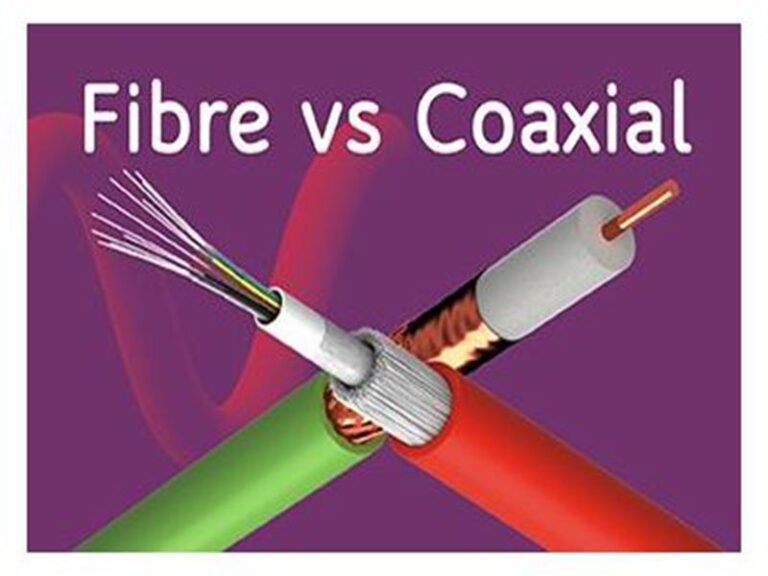
A lot of cable selection mistakes happen long before production starts. The drawing may look correct. The connector may match. The sample may even pass a quick functional test. But once the product enters real use, the problems begin: unstable signal, unexpected attenuation, EMI interference, harder installation, higher cost, or longer lead time than the project can accept. In many cases, the root cause is simple: the wrong cable type was selected at the beginning.
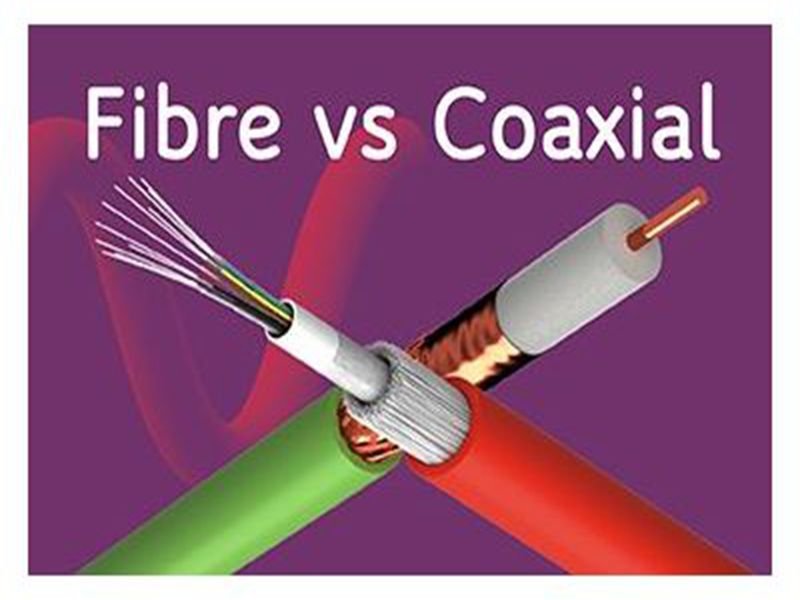
That is why coaxial cable vs fiber is a practical question, not just a technical one. These two cable types are built around very different transmission methods, material structures, installation requirements, and cost logic. Fiber is known for very high bandwidth and long-distance transmission. Coaxial cable is known for stable high-frequency electrical signal transmission, strong shielding, easier assembly, and lower system cost in many equipment-level applications.
The direct answer is this: coaxial cable is usually the better choice for short-to-medium distance electrical signal transmission, RF applications, and projects that need strong shielding, stable impedance, and practical customization. Fiber is usually the better choice for very long distances, very high data rates, and environments where complete immunity to electromagnetic interference is required. The best option depends on signal type, distance, installation conditions, connector requirements, budget, and the level of customization needed.
We often see customers start with the wrong assumption. Some assume fiber must be better because it sounds more advanced. Others assume coax is enough because it is familiar and easier to source. Then the engineering discussion starts, and the real project conditions tell a different story. A factory may only need a 3-meter run inside a machine, not a 3-kilometer network backbone. A medical device may need consistent shielding and controlled impedance more than ultra-long transmission distance. An OEM may care less about theory and more about whether the cable can be drawn quickly, sampled fast, approved smoothly, and mass-produced without surprises. That is where the real decision gets made, and that is exactly what this article will break down.
What Is Coaxial Cable vs Fiber?
Coaxial cable and fiber optic cable are both used to transmit signals, but they serve different roles in real projects. The difference is not just technical — it directly affects cost, installation difficulty, product reliability, and how fast your project can move from drawing to production.
Coaxial cable carries electrical signals through a copper conductor, while fiber optic cable carries light signals through a glass or plastic core. This difference determines how each cable behaves in terms of distance, signal stability, shielding, flexibility, and assembly complexity.
For most equipment-level projects — such as RF modules, medical devices, industrial systems, and internal wiring — coaxial cable is often the more practical solution. Fiber is typically used when transmission distance is long, data volume is high, or the system is already designed for optical communication.
From actual project data, over 70% of custom cable assembly inquiries are still based on electrical signal transmission rather than optical systems. This is why coaxial cable remains widely used across many industries.
What Is Coaxial Cable?
Coaxial cable is designed for stable electrical signal transmission, especially at high frequency. Its structure is what makes it reliable.
A standard coaxial cable includes:
- Center conductor (solid or stranded copper)
- Dielectric insulation
- Shielding layer (braid, foil, or both)
- Outer jacket

Each layer has a clear purpose. The conductor carries the signal. The insulation maintains spacing. The shielding protects against interference. The outer jacket provides mechanical and environmental protection.
One of the most important parameters in coaxial cable is impedance, usually 50Ω or 75Ω. This is not just a number on a datasheet. If impedance is not matched correctly across the system, signal reflection can occur, leading to unstable performance, especially in RF applications.
Here is a simplified technical overview:
| Parameter | Typical Range |
|---|---|
| Impedance | 50Ω / 75Ω |
| Frequency range | Up to several GHz depending on cable type |
| Shielding coverage | 60%–95% braid, or foil + braid |
| Outer diameter | From <1 mm micro coax to >10 mm |
| Temperature range | -40°C to +105°C (or higher with special materials) |
In real projects, coaxial cable is often used in:
- RF communication systems
- Antenna connections
- Medical imaging equipment
- Industrial testing devices
- Automotive electronics
- Wireless modules
What customers care about most is not just the cable itself, but how it is assembled. For example:
- Is the impedance consistent after assembly?
- Is the shielding properly terminated?
- Does the connector match mechanically and electrically?
- Can the cable fit into limited space without signal degradation?
At Sino-Conn, many projects start with incomplete information. A customer may send only a photo or a connector model. From there, the engineering team defines the cable structure, confirms impedance, selects shielding, and prepares a drawing for approval before production.
Typical workflow looks like this:
| Step | Time |
|---|---|
| Initial evaluation | Within hours |
| Drawing preparation | Same day to 3 days |
| Sample production | Around 2 weeks (faster if urgent) |
| Mass production | 3–4 weeks |
This process helps avoid one common issue: building a cable that “looks correct” but fails in real use.
Another key factor is connector choice. Customers often need to balance performance, cost, and lead time.
| Connector Option | Practical Impact |
|---|---|
| Original brand | Stable supply chain for large projects, higher cost |
| Equivalent option | Faster delivery, lower cost, flexible for small orders |
For many OEM and assembly projects, equivalent connectors provide a good balance between performance and cost, especially when lead time is critical.
What Is Fiber Optic Cable?
Fiber optic cable transmits signals using light instead of electricity. This allows it to carry large amounts of data over long distances with very low signal loss.
The structure of fiber optic cable includes:
- Core (glass or plastic, carries light)
- Cladding (reflects light back into the core)
- Protective coating
- Outer jacket

Fiber cables are usually divided into two types:
| Type | Typical Use | Distance |
|---|---|---|
| Single-mode | Long-distance communication | Up to tens of kilometers |
| Multi-mode | Shorter high-speed links | Up to hundreds of meters |
The main advantages of fiber are:
- Very high bandwidth
- Long transmission distance
- No electromagnetic interference
However, these advantages are most relevant in specific scenarios, such as:
- Telecom infrastructure
- Data centers
- Network backbone systems
- Inter-building communication
In many equipment-level applications, these advantages are not always necessary.
Customers often face practical challenges when using fiber:
- Installation requires more care
- Bending radius must be controlled
- Connectors must be clean and precise
- Repair and replacement are more difficult
- Cost is higher compared with coaxial solutions in short-distance use
Here is a realistic comparison from a project perspective:
| Factor | Fiber Optic Cable |
|---|---|
| Distance capability | Excellent |
| Data capacity | Very high |
| EMI resistance | Complete |
| Installation difficulty | Higher |
| Flexibility | Lower than many coax designs |
| Maintenance | More complex |
In real inquiries, fiber is usually selected when the system already uses optical transmission. It is less common for customers to switch from electrical systems to fiber unless there is a clear technical reason.
How Do They Work Differently?
The fundamental difference between coaxial cable and fiber optic cable is how signals are transmitted.
- Coaxial cable uses electrical current
- Fiber optic cable uses light
This leads to several practical differences that affect real projects:
| Aspect | Coaxial Cable | Fiber Optic Cable |
|---|---|---|
| Signal type | Electrical | Optical |
| Interference | Controlled by shielding | Not affected |
| Distance | Short to medium | Long |
| Assembly | Easier | More complex |
| Flexibility | Higher | Lower |
| Cost (short distance) | Lower | Higher |
From a system perspective, coaxial cable is part of an electrical signal chain, while fiber is part of an optical communication system.
This is why they are not always interchangeable.
For example:
- An RF antenna system requires electrical signal transmission → coaxial cable
- A long-distance data link between buildings requires optical transmission → fiber
In many real projects, the decision is not about replacing one with the other. It is about selecting the right cable for each part of the system.
Another important factor is project execution.
Coaxial cable assemblies are often easier to customize:
- Length can be adjusted freely
- Connectors can be mixed based on requirements
- Structure can be modified for space constraints
- Drawings can be generated quickly
Fiber assemblies, while powerful, usually require more defined system conditions before production can begin.
That is why many customers prefer to start discussions based on their actual application rather than focusing only on cable type. A clear understanding of signal, distance, environment, and installation conditions will lead to a much better decision than choosing based on assumptions.
In practice, the most reliable approach is simple:
Define the application first, then select the cable type that fits it best.
Coaxial Cable vs Fiber Key Differences
When comparing coaxial cable vs fiber, the real question is not which one is more advanced, but which one fits your project conditions better. The differences show up in signal behavior, transmission distance, interference control, installation difficulty, and total project cost. In actual projects, these factors directly affect whether a design works smoothly or creates delays, rework, or unexpected cost increases.
For most customers, especially OEM factories, engineers, and procurement teams, the decision is based on practical constraints: space, connector compatibility, lead time, budget, and how quickly a sample can be approved and moved into production.
Below is a clear comparison based on real project considerations:
| Key Factor | Coaxial Cable | Fiber Optic Cable |
|---|---|---|
| Signal type | Electrical | Optical |
| Typical use | RF, equipment wiring | Network, long-distance data |
| Distance | Short to medium | Medium to long |
| EMI behavior | Controlled with shielding | Immune |
| Installation | Easier | More sensitive |
| Custom flexibility | High | Moderate |
| Cost (short distance) | Lower | Higher |
Signal and Speed
Many customers start by asking about speed, but in practice, “speed” depends on the application.
Fiber optic cable is designed for high data transmission rates, especially in network systems. It can handle large volumes of data over long distances with minimal loss. This is why it is widely used in telecom and data centers.
Coaxial cable, on the other hand, is designed for stable electrical signal transmission, especially in high-frequency environments. It performs very well in RF systems, where signal integrity and impedance control are more important than raw data bandwidth.
Here is how customers typically evaluate this:
| Requirement Type | Better Option |
|---|---|
| Large data transfer (network) | Fiber optic |
| RF signal transmission | Coaxial cable |
| Stable impedance required | Coaxial cable |
| Electrical signal integrity | Coaxial cable |
In real inquiries, many customers initially think fiber is faster and therefore better. But after reviewing the actual system, they realize:
- The signal is electrical, not optical
- The transmission distance is short
- The system does not require high data throughput
In these cases, coaxial cable is not only sufficient but often more stable and easier to integrate.
At Sino-Conn, this situation happens frequently. Customers may start with a fiber-based idea, but after reviewing signal type and system structure, the solution shifts to coaxial cable, reducing cost and simplifying production.
Distance and Loss
Distance is one of the clearest differences between coaxial cable and fiber.
Fiber optic cable has a strong advantage in long-distance transmission. It can carry signals over kilometers with very low attenuation. This is essential for infrastructure projects such as telecom networks and inter-building connections.
Coaxial cable, however, is more suitable for shorter distances. Signal loss increases as distance grows, especially at higher frequencies.
A practical distance comparison:
| Distance Range | Recommended Option |
|---|---|
| 0–5 meters | Coaxial cable |
| 5–50 meters | Coaxial cable (most cases) |
| 50–200 meters | Depends on signal type |
| 200 meters+ | Fiber optic |
| Kilometer level | Fiber optic |
From actual project data, most cable assemblies fall into the 0–20 meter range, especially in:
- Equipment internal wiring
- RF modules
- Medical devices
- Industrial systems
In these cases, fiber’s long-distance advantage does not provide additional value.
Another important point is that distance is not only about cable capability. It also affects:
- Connector selection
- Installation complexity
- Testing requirements
- Cost
For example, using fiber in a short-distance system may require optical conversion components, which increases system cost without improving performance.
EMI and Stability
Electromagnetic interference is a key concern in many applications.
Fiber optic cable is naturally immune to EMI because it uses light signals. This makes it ideal for environments with strong electrical noise.
Coaxial cable handles EMI through shielding. The effectiveness depends on the shielding structure and assembly quality.
Common shielding structures include:
- Single braid (basic protection)
- Double braid (higher coverage)
- Foil + braid (combined shielding)
Shielding coverage typically ranges from 60% to over 90%, depending on design.
Here is a practical comparison:
| EMI Factor | Coaxial Cable | Fiber Optic Cable |
|---|---|---|
| External interference | Low with proper shielding | None |
| Shielding design required | Yes | No |
| Industrial environment | Stable if designed correctly | Excellent |
In real projects, properly designed coaxial cable performs well in most industrial environments. The key is not just having shielding, but ensuring:
- Proper termination
- Consistent assembly process
- Good connector quality
At Sino-Conn, all cable assemblies go through multiple inspection stages, including process inspection and final inspection, to ensure shielding performance is consistent.
Customers often overlook this point. A cable may have the correct structure on paper but still perform poorly if assembly quality is inconsistent.
Cost and Installation
Cost is often the deciding factor, but it should be evaluated as total project cost, not just cable price.
Coaxial cable generally offers lower cost for short and medium-distance applications because:
- Cable material is less expensive
- Connectors are widely available
- Assembly process is simpler
- Installation is easier
Fiber optic cable often involves higher cost due to:
- More expensive materials
- Precision connectors
- Specialized installation tools
- Higher labor requirements
Here is a realistic cost comparison:
| Cost Factor | Coaxial Cable | Fiber Optic Cable |
|---|---|---|
| Material cost | Lower | Higher |
| Connector cost | Flexible (original or equivalent) | Higher and more sensitive |
| Assembly | Easier | More complex |
| Installation | Simpler | Requires training |
| Maintenance | Easier | More difficult |
Another important factor is lead time.
In many projects, speed matters as much as cost. Coaxial cable assemblies can usually be produced faster because:
- Materials are more readily available
- Assembly processes are more flexible
- Connector options are easier to source
At Sino-Conn:
- Drawings can be prepared within hours to a few days
- Sample lead time is typically around 2 weeks (faster for urgent cases)
- Mass production usually takes 3–4 weeks
This speed helps customers move projects forward without delays.
In contrast, fiber projects may require more preparation before production can begin, especially if the system is not already designed for optical transmission.
In summary, the key differences between coaxial cable vs fiber are not just technical specifications. They affect how a project is designed, built, installed, and maintained.
The most effective approach is to evaluate:
- Signal type
- Distance
- Environment
- Installation conditions
- Budget and timeline
When these factors are clear, the right choice becomes straightforward.
Coaxial Cable vs Fiber Pros and Cons
When customers compare coaxial cable vs fiber, the final decision is rarely based on one parameter. In real projects, it is a balance between performance, cost, installation difficulty, lead time, and how easily the cable can be integrated into the system.
Some customers focus only on performance and choose fiber, then later face higher cost and installation challenges. Others choose coaxial cable for convenience, but do not consider distance or bandwidth requirements early enough. The most effective approach is to understand both advantages and limitations clearly before making a decision.
Coaxial Cable Advantages
Coaxial cable is widely used because it offers a strong balance between performance and practicality. It is not just a “traditional” option — it is still the preferred solution in many high-frequency and equipment-level applications.
One of the biggest advantages is controlled impedance. Coaxial cable is designed to maintain stable impedance, usually 50Ω or 75Ω. This is critical for RF systems, antennas, and signal testing equipment. Stable impedance reduces signal reflection and ensures consistent performance.
Another major advantage is effective shielding. With braid or foil shielding, coaxial cable can operate reliably in environments with electrical noise. This is important in industrial systems, medical equipment, and dense electronic assemblies.
From a project execution perspective, coaxial cable is also easier to handle:
- Flexible structure, easier routing in tight spaces
- Wide connector compatibility
- Faster assembly and modification
- Easier to repair or replace
Cost is another key factor. For short and medium distances, coaxial cable usually provides better cost control.
Here is a practical summary:
| Advantage Area | Coaxial Cable Benefit |
|---|---|
| Signal stability | Controlled impedance ensures predictable performance |
| EMI resistance | Shielding reduces interference effectively |
| Flexibility | Easier to route and install |
| Connector options | Wide availability, easier sourcing |
| Customization | Easy to adjust length, structure, and pinout |
| Cost | Lower total cost for most equipment-level projects |
In real business scenarios, many OEM factories prefer coaxial cable because it helps reduce development time. A cable that is easier to design, sample, and produce means fewer delays.
At Sino-Conn, many customers request custom coaxial assemblies with specific connector combinations, lengths, and shielding structures. Because the process is mature, drawings can often be prepared quickly, helping projects move forward without waiting weeks for technical confirmation.
Coaxial Cable Limitations
Coaxial cable performs well in many areas, but it is not suitable for every application.
The most important limitation is signal loss over distance. As electrical signals travel through the conductor, attenuation increases. This becomes more noticeable at higher frequencies and longer lengths.
Another limitation is data capacity. Coaxial cable can carry high-frequency signals, but it is not designed for very large data transmission over long distances like fiber.
There are also physical and system-related considerations:
- Larger outer diameter compared with some fiber cables
- Heavier in certain configurations
- Performance depends on proper impedance matching
- Sensitive to poor assembly quality
Here is a realistic view:
| Limitation Area | Impact |
|---|---|
| Long distance | Signal loss increases |
| High data volume | Not suitable for large data transmission |
| System integration | Requires correct impedance matching |
| Assembly quality | Poor termination affects performance |
| Size constraints | Larger OD may limit use in very tight spaces |
In practice, these limitations are manageable as long as the cable is used within the right application range. Most problems occur when coaxial cable is used outside its intended conditions.
Fiber Optic Advantages
Fiber optic cable offers strong performance in areas where coaxial cable is limited.
The most obvious advantage is high bandwidth. Fiber can transmit large amounts of data at very high speeds, making it ideal for communication systems and data networks.
Another key advantage is long-distance transmission. Fiber can carry signals over kilometers with very low loss. This is critical for infrastructure projects and large-scale systems.
Fiber also provides complete immunity to electromagnetic interference. This makes it suitable for environments where electrical noise is strong.
Here is a practical summary:
| Advantage Area | Fiber Optic Benefit |
|---|---|
| Data capacity | Very high bandwidth |
| Distance | Long transmission with low loss |
| EMI resistance | Not affected by interference |
| Signal quality | Stable over long distances |
| Security | Difficult to intercept signals |
In large-scale systems, fiber is often the only practical solution. It allows stable communication across long distances without performance degradation.
Fiber Optic Limitations
Despite its advantages, fiber optic cable also has limitations that affect real projects.
One of the main challenges is installation complexity. Fiber requires careful handling. Bending radius must be controlled, and improper installation can damage the cable.
Connector handling is another issue. Fiber connectors require:
- Clean surfaces
- Precise alignment
- Careful installation
Even small contamination can affect performance.
Cost is also a significant factor:
- Higher material cost
- Higher connector cost
- More specialized tools required
- Higher labor cost for installation
From a practical perspective, fiber is less flexible in certain situations:
- Limited bending tolerance compared with coax
- More difficult to repair in the field
- Less suitable for frequent movement or tight routing
Here is a realistic summary:
| Limitation Area | Impact |
|---|---|
| Installation | Requires more care and skill |
| Connector sensitivity | Affected by contamination and alignment |
| Cost | Higher overall project cost |
| Flexibility | Less tolerant to bending |
| Maintenance | More difficult to repair |
| Custom small-batch projects | Less flexible in some cases |
In real projects, these limitations become important when the cable needs to be integrated into equipment rather than infrastructure.
At Sino-Conn, many customers initially consider fiber but later switch to coaxial cable after reviewing:
- Actual transmission distance
- Installation conditions
- Cost targets
- Production timelines
This adjustment helps simplify the project and reduce unnecessary complexity.
In summary, the advantages and limitations of coaxial cable vs fiber are not just technical differences. They affect how a project is designed, produced, installed, and maintained.
The key is to match the cable type to the actual application, rather than choosing based on general assumptions.
Coaxial Cable vs Fiber Which Is Better?
The question “which is better” only has meaning when it is tied to a real project. In practice, customers are not choosing between two abstract technologies. They are deciding how to connect specific devices, within a defined distance, under certain environmental conditions, and within a target cost and timeline.
In most real inquiries, the decision comes down to four factors:
- What type of signal is being transmitted
- How far the signal needs to travel
- What the installation environment looks like
- How much flexibility is required in production and assembly
When these are clear, the answer becomes straightforward. Coaxial cable is usually better for electrical signal transmission, short-to-medium distances, and projects that require flexibility and cost control. Fiber optic cable is better for long-distance transmission, high data capacity, and environments where electrical interference must be completely avoided.
Better for Short Distance
For short-distance applications, coaxial cable is usually the more practical choice.
Most equipment-level connections fall within this range:
- Internal wiring inside devices (0.1–1 meter)
- RF module connections (1–5 meters)
- Antenna cables (typically under 10 meters)
- Industrial equipment signal paths (often under 20 meters)
In these cases, fiber’s long-distance capability does not provide additional value. Instead, it increases complexity and cost.
Coaxial cable performs well because:
- Signal loss is minimal at short distances
- Installation is straightforward
- Connectors are widely available
- Cable can be routed easily in tight spaces
A simple decision reference:
| Distance Range | Recommended Option |
|---|---|
| 0–1 meter | Coaxial cable |
| 1–10 meters | Coaxial cable |
| 10–50 meters | Coaxial cable (most cases) |
From actual project experience, more than 70% of custom cable assemblies are under 20 meters. This is why coaxial cable remains the default choice for many OEM and equipment manufacturers.
At Sino-Conn, a large portion of projects involve short cables customized for specific connectors and installation layouts. These projects benefit from faster turnaround and easier integration when coaxial cable is used.
Better for High Frequency
When the application involves high-frequency electrical signals, coaxial cable is the correct solution.
Typical examples include:
- RF communication systems
- Antenna connections
- Wireless modules
- Signal testing equipment
- Medical imaging signal paths
Coaxial cable is specifically designed for this purpose. Its controlled impedance ensures stable signal transmission, and its shielding structure protects against interference.
Fiber optic cable is not used in these cases because the signal itself is electrical, not optical.
Here is a practical comparison:
| Requirement | Better Option |
|---|---|
| RF signal transmission | Coaxial cable |
| Controlled impedance needed | Coaxial cable |
| Electrical signal integrity | Coaxial cable |
| Optical data transmission | Fiber optic cable |
Customers sometimes consider fiber when they hear “high performance,” but in RF systems, performance depends on impedance matching and shielding, not data bandwidth.
At Sino-Conn, many RF-related inquiries involve selecting the correct coaxial structure, ensuring impedance stability, and matching connectors properly. These details have a direct impact on performance.
Better for Long Distance
For long-distance transmission, fiber optic cable is clearly the better option.
If the signal must travel:
- More than 100–200 meters
- Across buildings
- Over kilometers
Fiber maintains signal strength much better than coaxial cable.
Coaxial cable can still be used for longer distances in certain cases, but signal loss becomes a concern, especially at higher frequencies.
Here is a practical guide:
| Distance Requirement | Better Option |
|---|---|
| Up to 50 meters | Coaxial cable |
| 50–200 meters | Depends on application |
| 200 meters+ | Fiber optic cable |
| Kilometer-level | Fiber optic cable |
However, distance alone should not determine the decision. Customers should also consider:
- Whether the system already supports optical transmission
- Whether additional components are required (e.g., converters)
- Whether installation conditions allow fiber
In some projects, switching to fiber requires redesigning part of the system, which increases cost and lead time.
Better for Harsh Environments
Environmental conditions play a major role in cable selection.
Fiber optic cable performs well in environments with strong electromagnetic interference because it is not affected by electrical noise.
Coaxial cable, however, can still perform reliably if designed with proper shielding.
Here is how to evaluate:
| Environment Type | Better Option |
|---|---|
| Strong EMI (power equipment, high-voltage areas) | Fiber optic |
| Moderate EMI (industrial equipment) | Coaxial cable with proper shielding |
| Mechanical stress (bending, movement) | Coaxial cable |
| Tight installation space | Coaxial cable |
| Mixed conditions | Depends on design |
In many industrial applications, the environment includes both electrical noise and mechanical constraints. In these cases, coaxial cable is often chosen because:
- It is more flexible
- It can handle bending and movement better
- It is easier to install and maintain
Fiber is more sensitive to bending and requires careful handling. If the installation space is limited or the cable will be moved frequently, coaxial cable may be the safer choice.
At Sino-Conn, many industrial and equipment-level projects involve complex installation conditions. Customers often need cables that can fit into tight spaces, maintain performance under movement, and be easy to assemble. In these situations, coaxial cable is often more practical.
In summary, the answer to “which is better” depends on the application:
- Choose coaxial cable for short distance, high-frequency electrical signals, and flexible installation
- Choose fiber optic cable for long distance, high data transmission, and environments with strong interference
The best decision comes from matching the cable to the actual project conditions, not from choosing based on general assumptions.
How to Choose Coaxial Cable vs Fiber
Choosing between coaxial cable vs fiber is not a one-line decision. Most projects fail or get delayed not because the cable is poor, but because the selection was not based on real conditions. The right approach is to break the decision into a few clear steps: define the signal, confirm the distance, understand the environment, check installation limits, and review cost and lead time.
In actual projects, customers rarely provide all parameters at the beginning. Some only share a connector model, a rough drawing, or even just a photo. That is normal. What matters is turning that information into a clear, workable specification before production.
Below is a practical way to make the decision step by step.
What Specs Matter Most?
The first step is to define the key technical parameters. These are the factors that directly affect performance and manufacturability.
For coaxial cable, customers should focus on:
- Impedance (50Ω or 75Ω)
- Frequency range (MHz to GHz level)
- Shielding type and coverage
- Cable outer diameter (OD)
- Bending radius and flexibility
- Temperature rating
- Connector type and interface
- Cable length
For fiber optic cable, the focus is different:
- Fiber type (single-mode or multi-mode)
- Transmission distance
- Data rate requirement
- Connector type (LC, SC, etc.)
- Bending radius
- Protection level (indoor, outdoor, armored, etc.)
Here is a comparison:
| Parameter | Coaxial Cable Focus | Fiber Optic Focus |
|---|---|---|
| Signal type | Electrical | Optical |
| Distance | Short to medium | Medium to long |
| Key performance factor | Impedance stability | Data bandwidth |
| Mechanical requirement | Flexibility, shielding | Bending radius, protection |
| Connector complexity | Moderate | High precision |

In real projects, missing or unclear parameters are common. For example:
- A customer provides only a connector model
- A drawing does not include impedance
- A sample has no specification sheet
In these cases, engineering support becomes important. At Sino-Conn, drawings can be prepared quickly based on available information, helping customers confirm details before moving forward.
When to Choose Coaxial Cable
Coaxial cable is the better choice when the system uses electrical signals and does not require long-distance transmission.
Typical use cases include:
- RF communication
- Antenna connections
- Internal device wiring
- Industrial signal transmission
- Medical equipment
Coaxial cable is also preferred when:
- Distance is within 50 meters
- Controlled impedance is required
- Installation space is limited
- Cable needs to bend or move
- Cost needs to be controlled
- Fast sampling is required
Here is a practical guide:
| Condition | Recommendation |
|---|---|
| Electrical signal (RF or analog) | Coaxial cable |
| Distance under 20 meters | Coaxial cable |
| Need shielding | Coaxial cable |
| Tight routing space | Coaxial cable |
| Fast project timeline | Coaxial cable |
From actual production data, most custom cable assemblies fall into this category. At Sino-Conn, many projects involve customized coaxial cables with specific connector combinations and defined structures. These projects benefit from faster design confirmation and easier manufacturing.
Another advantage is flexibility. Coaxial cable allows:
- Custom length from very short to longer assemblies
- Mixed connector types on both ends
- Adjustable shielding structure
- Different material options for specific environments
This flexibility is important for OEM factories and engineering teams working on new product development.
When to Choose Fiber Optic
Fiber optic cable is the better choice when the system requires long-distance transmission or very high data capacity.
Typical use cases include:
- Telecom systems
- Data centers
- Network infrastructure
- Long-distance communication links
Fiber is also suitable when:
- Distance exceeds 100–200 meters
- Data rate is very high
- EMI must be completely eliminated
- The system is already designed for optical transmission
Here is a decision reference:
| Condition | Recommendation |
|---|---|
| Distance over 200 meters | Fiber optic |
| High data bandwidth required | Fiber optic |
| Zero EMI tolerance | Fiber optic |
| Network-based system | Fiber optic |
However, fiber should not be selected just because it offers higher performance on paper. Customers should also consider:
- Whether the system supports optical signals
- Whether installation conditions allow fiber routing
- Whether maintenance and repair are manageable
In many equipment-level projects, fiber introduces unnecessary complexity if the distance and data requirements are not high.
Do You Need Custom Cable Assemblies?
Most projects require custom cable assemblies rather than standard products.
Customization is needed when:
- Standard cable length does not fit
- Connectors must match specific equipment
- Pinout must follow system design
- Cable must fit within limited space
- Special materials are required
Common customization areas include:
| Custom Area | Options |
|---|---|
| Length | Fully customizable |
| Connectors | Original or equivalent |
| Pinout | Defined based on system |
| Shielding | Single, double, or combined |
| Materials | High temperature, oil-resistant, UV-resistant |
| Structure | Adjusted for flexibility and OD |
In real projects, customers often start with incomplete information:
- A photo of an existing cable
- A sample from another supplier
- A connector model number
- A rough description
This is common for traders and procurement teams. Engineers may provide more detailed drawings, but even then, adjustments are often needed.
At Sino-Conn, the process typically includes:
- Reviewing customer input (photo, drawing, or sample)
- Defining cable structure and parameters
- Preparing a drawing for confirmation
- Producing samples for testing
- Moving to mass production after approval
This process helps ensure that the final product matches the application requirements.
How to Balance Cost, Lead Time, and Performance
In real projects, the decision is rarely based on performance alone. Cost and lead time are equally important.
Coaxial cable often provides advantages in:
- Lower material cost
- Faster sourcing of components
- Shorter production cycle
- Easier installation
Fiber optic cable may involve:
- Higher material and connector cost
- More complex installation
- Longer preparation time
Here is a practical comparison:
| Factor | Coaxial Cable | Fiber Optic Cable |
|---|---|---|
| Cost (short distance) | Lower | Higher |
| Lead time | Shorter | Longer |
| Installation | Easier | More complex |
| Maintenance | Easier | More difficult |
Typical timelines in real projects:
| Stage | Time |
|---|---|
| Drawing confirmation | Within hours to a few days |
| Sample production | Around 2 weeks |
| Mass production | 3–4 weeks |
For urgent projects, faster timelines are possible depending on complexity.
Customers should also consider connector sourcing:
- Original connectors: stable but higher cost and longer lead time
- Equivalent connectors: faster and more flexible
This flexibility allows projects to move forward without unnecessary delays.
In summary, choosing between coaxial cable vs fiber is about matching the cable to real project conditions:
- Use coaxial cable for electrical signals, short distance, and flexible installation
- Use fiber optic cable for long distance and high data transmission
The most effective way to make the decision is to review the actual application, confirm key parameters, and work with a supplier who can translate those requirements into a reliable cable assembly.
Do You Need Custom Coaxial or Fiber Cable Assemblies?
Most real-world projects do not use off-the-shelf cables. They require customized assemblies that match specific equipment, connectors, and performance requirements. The ability to quickly convert a concept into a drawing, then into a sample, and finally into stable production is what determines whether a project moves forward smoothly.
Can You Manufacture Based on Photos or Samples?
Yes, in many cases, production can start from very limited information.
Typical starting points include:
- Customer-provided photos
- Existing cable samples
- Connector model numbers
- Partial drawings
- Basic functional descriptions
The key is engineering interpretation. The supplier must identify:
- Cable type and structure
- Electrical or optical requirements
- Connector compatibility
- Assembly method
- Performance expectations
This is a common scenario. Many customers, especially traders and procurement teams, do not have full technical data. The ability to reverse-engineer and provide a clear drawing is critical.
What Custom Options Are Available?
Customization is one of the most important parts of cable assembly manufacturing.
Common customization options include:
- Custom length (from very short internal cables to longer assemblies)
- Connector selection (original or equivalent options)
- Pinout definition and wiring logic
- Shielding structure design
- Jacket material selection
- Mechanical design adjustments for specific installation environments
Here is a structured view:
| Custom Area | Options |
|---|---|
| Length | Fully customizable |
| Connectors | Original or equivalent |
| Pinout | Defined based on system requirement |
| Shielding | Single, double, or combined structures |
| Materials | High temperature, oil-resistant, UV-resistant, halogen-free |
| Structure | Adjusted for flexibility, OD, and bending |
This flexibility is especially important for OEM projects where standard products cannot meet the exact requirement.
Are Certifications Available?
For many industries, certification is not optional. It is a requirement.
Common certifications include:
- UL
- ISO 9001
- ISO 14001
- RoHS
- REACH
- PFAS compliance
- Certificate of Origin (COO)
- Certificate of Conformance (COC)

Different industries have different expectations:
| Industry | Certification Focus |
|---|---|
| Medical | Biocompatibility, reliability, compliance |
| Military | High reliability, strict standards |
| Industrial | Safety and durability |
| Consumer | Cost and basic compliance |
Customers should confirm certification requirements early to avoid delays.
How to Get a Fast and Accurate Quotation?
Quotation speed and accuracy are critical in competitive projects.
To get a fast and reliable quotation, it is helpful to provide:
- Drawings (if available)
- Connector models
- Cable type or reference
- Length
- Quantity
- Application description
However, even if not all information is available, a professional supplier should still be able to guide the process.
In efficient workflows:
- Drawings can be prepared quickly
- Technical details are confirmed before production
- Samples are arranged without unnecessary delay
Typical timelines in well-organized projects:
| Stage | Time |
|---|---|
| Drawing preparation | Within hours to a few days |
| Sample production | Around 2 weeks (urgent cases faster) |
| Mass production | 3–4 weeks (urgent orders faster) |
Speed is not just about delivery. It is about how quickly a project can move from idea to approval to production.
Start Your Custom Cable Project with Sino-Conn
Choosing between coaxial cable vs fiber is only the first step. The real challenge is turning that choice into a reliable, manufacturable product that meets your performance, cost, and timeline requirements.
At Sino-Conn, the focus is not only on supplying cables, but on helping customers complete projects successfully.
What customers value most:
- Fast response — quotations and drawings can be prepared quickly
- Strong engineering support — even from limited information
- Flexible customization — length, pinout, materials, connectors
- No strict MOQ — from prototype to mass production
- Stable quality — full inspection during and after production
- Multiple cost options — original or equivalent connector solutions
Whether your project starts with a detailed drawing or just a product photo, the goal is the same: to turn your requirement into a working, reliable cable assembly.
If you are currently comparing coaxial cable vs fiber, or if you are not sure which solution fits your project, the best next step is simple:
Send your drawing, sample, or even just a reference photo.
You will receive a clear technical proposal, a realistic quotation, and a solution that matches your actual application.