Skip to content
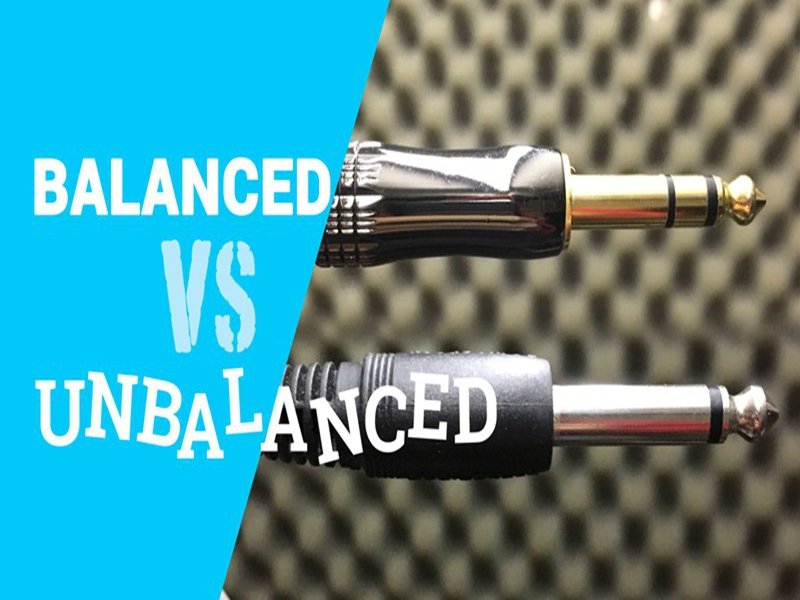
In audio and signal transmission, problems rarely announce themselves clearly. Most noise issues, hum, or signal distortion don’t come from broken equipment—they come from mismatched assumptions. One of the most common is assuming that all audio cables behave the same as long as the connector fits. Balanced and unbalanced cables look similar from the outside, yet they are designed around fundamentally different signal philosophies. Choosing the wrong one can quietly degrade performance long before anyone notices.
Balanced and unbalanced cables differ in how they carry and protect signals. Balanced cables use two signal conductors plus a ground to cancel noise, making them ideal for long runs and noisy environments. Unbalanced cables use one signal conductor and ground, making them simpler and cheaper but more sensitive to interference. The right choice depends on distance, environment, and application—not just connector type.
In real projects, the distinction often surfaces too late—after a system is installed and noise appears only under certain conditions. Understanding why balanced cables resist noise and when unbalanced cables still make sense helps engineers, OEMs, and buyers make confident decisions before production begins. Let’s walk through the concepts step by step, from signal theory to practical identification and selection.
What Is a Balanced Cable?
A balanced cable transmits an audio signal using two signal conductors that carry equal and opposite signals, along with a separate ground. This configuration allows external noise to be canceled at the receiving end, making balanced cables ideal for long distances and electrically noisy environments.

What does “balanced signal” mean?
A balanced signal uses differential transmission. Two conductors carry the same audio signal but with opposite polarity. When noise is induced along the cable, it affects both conductors equally. At the receiving device, the inverted signal is flipped back and combined with the other, canceling the shared noise. This principle—common-mode noise rejection—is the core advantage of balanced systems.
How is a balanced cable constructed?
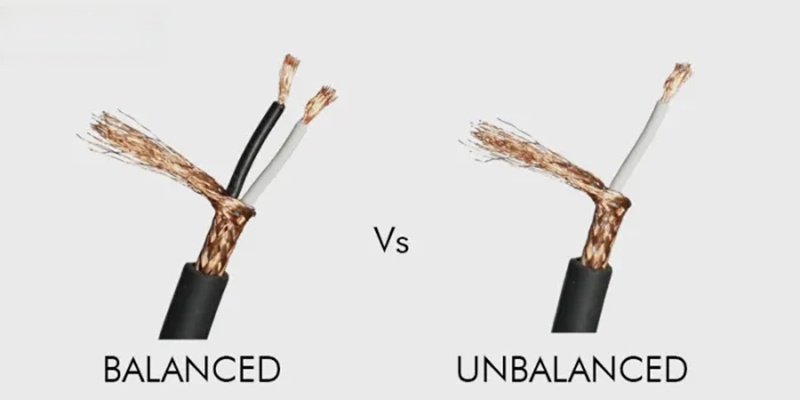
Most balanced audio cables contain two insulated signal conductors twisted together plus a separate shield or ground. Twisting helps ensure both conductors experience the same interference. The shield does not carry the signal itself; it mainly provides protection and grounding reference.
Why do balanced cables reduce noise?
Noise cancellation is not magic—it is math. Because the receiving circuit looks at the difference between two signals, any noise that appears equally on both is removed. This is why balanced cables perform well near power lines, lighting systems, and industrial equipment.
Where are balanced cables commonly used?
Balanced cables are standard in professional audio, broadcasting, stage equipment, recording studios, and industrial signal transmission where reliability matters more than minimal cost.
What Is an Unbalanced Cable?
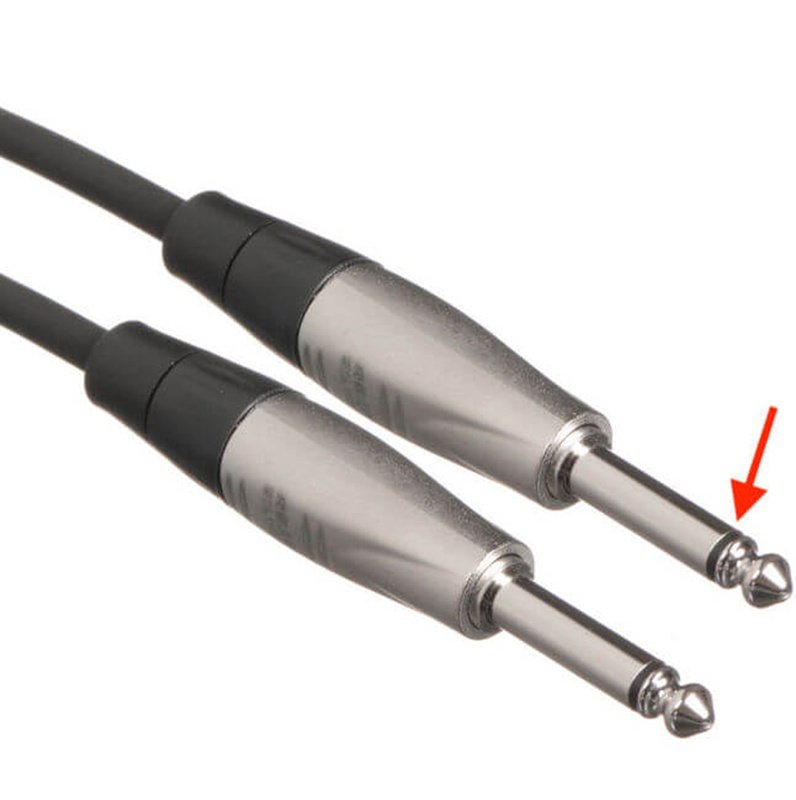
An unbalanced cable carries the signal on a single conductor with the shield acting as both ground and noise reference. This simpler design works well over short distances but is more sensitive to electrical interference.
What is an unbalanced signal?
An unbalanced signal has one signal path and one ground. Any noise picked up by the cable becomes part of the signal because there is no second conductor to cancel it out. This design is straightforward but inherently less resistant to interference.
How is an unbalanced cable constructed?
Most unbalanced cables consist of a single central conductor, an insulating layer, and a surrounding shield that serves as both ground and noise barrier. Coaxial cables and many RCA cables use this structure.
Why are unbalanced cables more sensitive to noise?
Because the shield doubles as ground and signal reference, any voltage induced on the shield directly affects the signal. Over longer distances or in noisy environments, this can lead to hum or buzz.
Where are unbalanced cables typically used?
Unbalanced cables are common in consumer audio, home electronics, short patch cables, and applications where distances are short and electrical noise is minimal.
What Is the Difference Between Balanced and Unbalanced Cables?
At a fundamental level, the difference between balanced and unbalanced cables lies in how the signal is referenced and how noise is handled during transmission. While both are designed to carry audio or low-level signals from one device to another, they rely on very different electrical principles, which directly affects reliability, allowable distance, and sensitivity to interference.
A balanced cable transmits the signal using two conductors that carry the same signal in opposite polarity, along with a separate ground or shield. The receiving device measures the difference between the two signal conductors, effectively canceling out any noise that has been equally induced along the cable. This method, known as common-mode noise rejection, makes balanced cables highly resistant to electromagnetic interference and ground-related noise.
An unbalanced cable, by contrast, uses a single signal conductor with the shield acting as both ground and signal reference. Any noise coupled into the shield becomes part of the signal itself. While this design is simpler and more cost-effective, it provides no inherent mechanism to cancel interference, making performance heavily dependent on cable length, grounding quality, and the surrounding electrical environment.
Key Structural and Electrical Differences
| Aspect | Balanced Cable | Unbalanced Cable |
|---|---|---|
| Signal conductors | Two (opposite polarity) | One |
| Ground role | Reference only | Signal return + reference |
| Noise rejection | High (differential) | Low |
| Sensitivity to EMI | Low | High |
| Typical cable length | Long (tens to hundreds of meters) | Short (usually a few meters) |
| System tolerance | High | Limited |
How Signal Reference Changes System Behavior
In balanced systems, the signal is not defined by ground, but by the voltage difference between two conductors. This makes the system far more tolerant of ground potential differences between devices. In unbalanced systems, ground is an integral part of the signal path. Any instability or noise on the ground directly affects signal quality, which is why ground loops and hum are far more common in unbalanced connections.
Why Distance and Environment Matter
Because balanced cables actively reject noise, they remain stable over long distances and in electrically noisy environments such as studios, factories, stages, and equipment rooms. Unbalanced cables, on the other hand, perform reliably only when cable runs are short and the electrical environment is well controlled. Beyond that, even high-quality unbalanced cables can exhibit hum, buzz, or signal degradation.
Common Connector Types for Balanced and Unbalanced Cables
While connectors alone do not define whether a signal is balanced or unbalanced, they provide strong practical clues during identification.
| Connector Type | Balanced Support | Typical Applications | Notes |
|---|---|---|---|
| XLR | Yes | Microphones, mixers, professional audio | Standard for balanced audio |
| TRS (Tip-Ring-Sleeve) | Yes | Audio interfaces, studio gear | Can be balanced or stereo |
| TS (Tip-Sleeve) | No | Instruments, short patch cables | Always unbalanced |
| RCA | No | Consumer audio, AV equipment | Unbalanced by design |
A connector capable of balanced transmission does not guarantee the cable or device is wired as balanced. Pinout confirmation is always recommended.
Which Is Better: Balanced or Unbalanced Cable?
Neither is universally “better.” Balanced cables excel in noisy or long-distance applications, while unbalanced cables remain practical for short, cost-sensitive connections.
Performance in noisy environments
Balanced cables outperform unbalanced cables wherever electromagnetic interference is present.
Long cable runs
Balanced systems maintain signal integrity over distance.
Cost considerations
Unbalanced cables are cheaper and easier to manufacture.
Professional vs consumer systems
Professional audio favors balanced; consumer systems often use unbalanced.
How Do You Choose Between Balanced and Unbalanced Cable for Your Application?
Choosing between a balanced and an unbalanced cable is not about selecting the “better” option in isolation, but about matching the cable design to the real operating conditions of your system. The correct choice depends on a combination of electrical environment, signal level, cable length, equipment interface, and long-term reliability requirements. Ignoring any of these factors can result in noise issues that only appear after installation.

Start With the Application Environment
The first question to ask is where and how the cable will be used. In electrically noisy environments—such as factories, studios with extensive lighting, equipment rooms, or installations near power lines—balanced cables provide a clear advantage due to their ability to reject common-mode noise. In contrast, unbalanced cables are best suited for electrically quiet environments, such as short internal connections or consumer electronics setups where interference sources are limited.
Consider Cable Length and Signal Sensitivity
Cable length is one of the most practical decision points. Balanced cables are designed to maintain signal integrity over long distances, often tens or hundreds of meters, without significant degradation. Unbalanced cables perform reliably only over short runs. As cable length increases, the risk of noise pickup, ground loops, and signal loss rises sharply in unbalanced systems. If the installation requires flexibility in routing or future expansion, balanced cabling offers greater tolerance.
Evaluate Equipment Interfaces, Not Just Connectors
While connector type provides a useful clue, it should not be the sole deciding factor. XLR and TRS connectors are capable of carrying balanced signals, while RCA and TS connectors are inherently unbalanced. However, a connector that can support a balanced signal does not guarantee that the connected equipment or internal wiring actually uses one. Always verify the interface specifications, pin assignments, and grounding method of both devices in the signal path.
How Do You Know If Your Cable Is Balanced or Unbalanced?
In practice, many users only have a physical cable or a reference photo. While visual inspection can help—such as counting contacts on the connector—it is not fully reliable. A cable with a three-contact connector may still be wired unbalanced internally. The only definitive method is to confirm the internal conductor structure and pinout through specifications or drawings. This step is especially critical in custom or OEM applications.
Balance Cost, Complexity, and Reliability
Unbalanced cables are simpler to manufacture and generally lower in cost, which makes them attractive for high-volume, short-distance applications. Balanced cables involve more conductors and stricter wiring requirements, increasing material and assembly cost. However, this added cost often pays for itself by reducing troubleshooting time, rework, and system instability—particularly in professional or industrial environments.
Think Beyond Initial Installation
Finally, consider how the system may evolve. Changes in layout, added equipment, or new sources of electrical noise can turn a previously acceptable unbalanced installation into a problem. Balanced systems offer greater margin for change, making them a safer choice when long-term reliability and adaptability are priorities.
Are Balanced and Unbalanced Cables Used in Custom Cable Assemblies?
Yes. Both are commonly used in custom cable assemblies, depending on application requirements and system design.
Customizability
Length, conductor gauge, shielding, flexibility, and connector type can all be customized.
Critical parameters
Impedance, EMI shielding, OD, flexibility, and compliance certifications are essential in audio assemblies.
Role of drawings and specifications
Clear drawings prevent mismatches between balanced and unbalanced designs before production begins.
Frequently Asked Questions About Balanced vs Unbalanced Cables
- Are XLR cables always balanced? Typically yes, but wiring must be confirmed.
- Is RCA always unbalanced? Yes, by design.
- Can unbalanced be converted to balanced? With active circuitry or transformers.
- Does balanced always mean better sound? Not necessarily—environment matters more.

Ready to Specify or Customize Your Audio Cable?
If you are comparing balanced and unbalanced cables, you are already thinking beyond basic connectivity. At Sino-Conn, we work with engineers, OEMs, and system integrators who need clarity before production—not after installation.
Whether you have a full specification, a drawing, or only a reference photo, our team can help define the correct signal structure, connectors, shielding, and materials. From fast CAD drawings to flexible production volumes, we help you move from concept to a reliable, production-ready cable assembly.
Share your application details, and let’s build the right cable for your system.