Skip to content
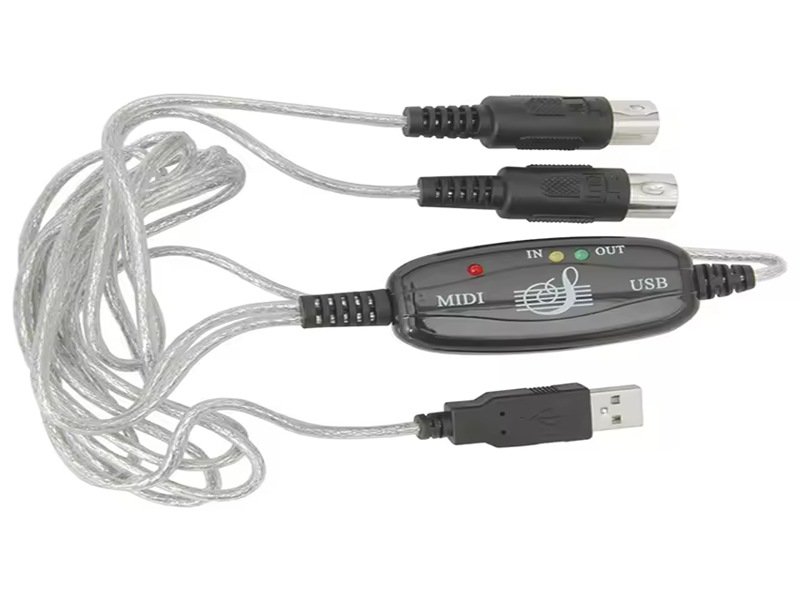
In today’s music technology world, USB MIDI has become the silent language connecting instruments, computers, and creative minds. Whether you’re producing beats in a home studio or engineering an electronic drum module for a global brand, the way devices “talk” to each other has transformed dramatically. Gone are the days of bulky 5-pin DIN connectors and tangled adapter chains — modern musicians now rely on plug-and-play digital links that are faster, smarter, and simpler.
USB MIDI (Musical Instrument Digital Interface) allows digital instruments, controllers, and computers to communicate using USB cables instead of traditional 5-pin MIDI ports. It transmits data such as notes, tempo, and control changes digitally, offering faster setup, higher speed, and improved reliability for both professionals and OEM manufacturers.
The idea is simple — use a universal, class-compliant interface that merges the power of MIDI with the convenience of USB. But behind that simplicity lies precision engineering: shielded copper conductors, accurate impedance control, EMI suppression, and firmware-level synchronization.
At Sino-conn, we understand that the success of every digital signal begins with a perfectly designed cable assembly. Let’s explore how USB MIDI works, how it differs from classic MIDI, and how choosing the right cable can optimize your performance or product reliability.
What Exactly Is USB MIDI and How Does It Work?
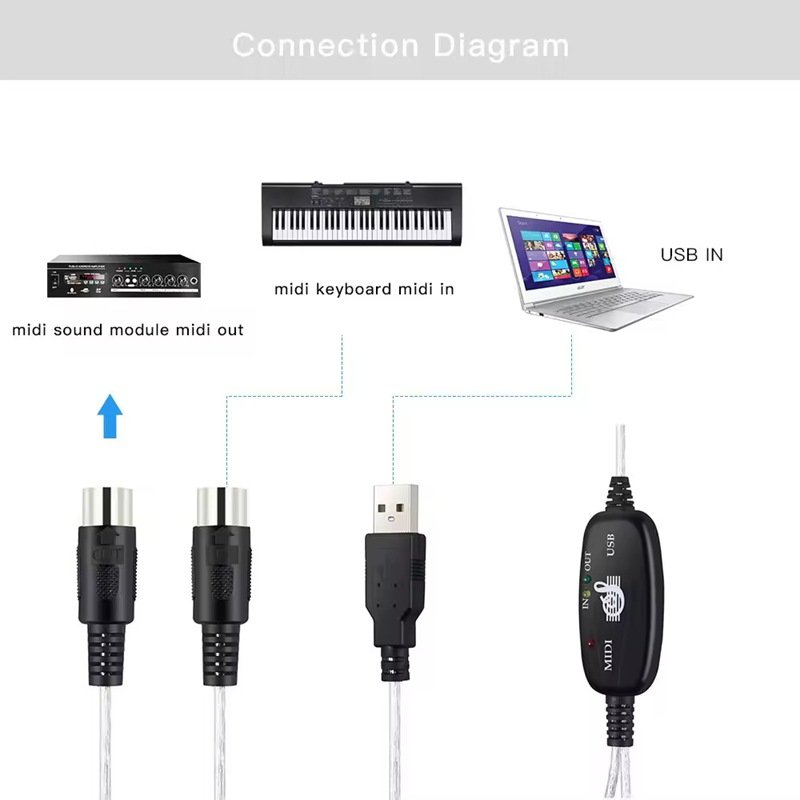
USB MIDI allows musical instruments, controllers, and computers to communicate through digital USB packets instead of the traditional 5-pin DIN interface. It transfers real-time performance data — such as notes, timing, and control information — across a high-speed USB connection, providing faster response, plug-and-play compatibility, and easier integration with modern audio systems.
From Serial Bytes to Digital Packets
Traditional MIDI sends one byte of data at a time in a fixed serial stream. USB MIDI, in contrast, packages multiple messages into structured USB frames (or packets) that travel at speeds of 12 Mbps (USB 1.1) or even 480 Mbps (USB 2.0).
Each packet contains a header, defining which MIDI channel and command type it belongs to, followed by one or more data bytes. This allows multiple instruments or software applications to exchange information simultaneously — a process known as multi-client or multi-port communication.
This shift from serial to parallel digital transfer makes USB MIDI vastly more efficient and accurate.
USB Transfer Modes in MIDI Systems
The USB protocol defines several data-transfer modes, and MIDI mainly uses bulk transfer for consistent, reliable throughput.
- Bulk Transfer: Used for high-priority, error-checked data transmission; perfect for MIDI event streams.
- Isochronous Transfer: Sometimes used for low-latency audio streaming (e.g., USB Audio Class 2.0).
- Interrupt Transfer: Used for small, periodic status updates like device recognition or controller polling.
MIDI messages are transmitted through USB endpoints — logical channels that connect the MIDI device to the host computer. Each endpoint has a specific direction (IN or OUT) and a unique identifier.
USB Class Compliance and Plug-and-Play Simplicity
One of the biggest advantages of USB MIDI is its class compliance. Class-compliant devices use standardized USB descriptors recognized by all major operating systems (Windows, macOS, Linux, iOS).
This means no proprietary drivers are needed — you can plug a USB MIDI keyboard into a laptop or tablet, and it’s instantly recognized as a “MIDI device.”
This universality transformed the workflow for musicians, producers, and developers, reducing the setup time from hours to seconds.
Bidirectional Communication — A Game Changer
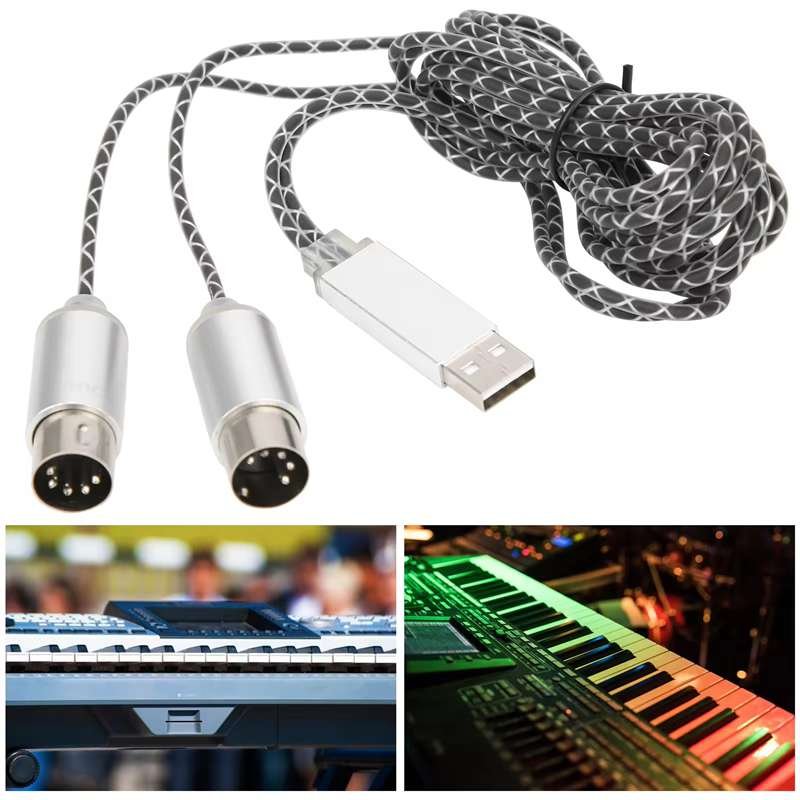
Unlike traditional 5-pin MIDI, which sends data in one direction per cable (MIDI IN or OUT), USB supports bidirectional communication within a single connection.
This allows:
- Real-time feedback (e.g., DAW sends parameter updates to a controller).
- Simultaneous multi-device control (e.g., controlling both a synth and lighting controller from one USB hub).
- Firmware and patch updates directly through USB instead of legacy MIDI SysEx dumps.
Bidirectionality has also paved the way for interactive controller surfaces, such as motorized faders and touch-responsive pads that display visual feedback from software in real time.
Timing, Latency, and Synchronization
Latency is one of the most critical performance metrics for musicians.
Classic DIN MIDI latency often averaged 3–5 ms per note message, while USB MIDI typically achieves under 1 ms, with even lower jitter.
USB’s frame-based timing also enables precise synchronization between multiple devices — ensuring that drum machines, sequencers, and DAWs stay perfectly in sync during live performances or recording sessions.
Manufacturers like Sino-conn ensure this level of timing precision through careful impedance control (90 Ω ± 10 %), EMI shielding, and low-resistance copper conductors, minimizing the risk of signal skew or packet loss.
Power Over USB: One Cable, Dual Function
Another defining feature of USB MIDI is bus power.
Many devices — especially MIDI controllers, drum pads, and portable synthesizers — can draw their power directly from the host’s USB port (5 V DC).
This eliminates the need for separate adapters and reduces cable clutter, making USB MIDI the preferred choice for mobile and live setups.
Evolution and MIDI 2.0
The MIDI 2.0 specification, adopted in 2020, integrates seamlessly with USB.
It brings higher-resolution (32-bit) messages, dynamic mapping, and enhanced per-note control, all of which are fully supported by USB’s higher bandwidth.
USB MIDI 2.0 also enables bidirectional device discovery — your controller and software can automatically “handshake” to determine each other’s features.
This evolution demonstrates why USB remains the backbone of future-ready MIDI systems: fast, flexible, and endlessly scalable.

Traditional MIDI vs USB MIDI
| Feature | Traditional MIDI (5-pin) | USB MIDI (Modern) |
|---|---|---|
| Data Rate | 31.25 kbps | 12 Mbps (USB 1.1), 480 Mbps (USB 2.0) |
| Direction | One-way (IN/OUT separate) | Two-way (Bidirectional) |
| Power Supply | External adapter required | 5 V bus power (via USB) |
| Latency | ~3–5 ms | < 1 ms |
| Setup | Manual MIDI channel config | Plug-and-play (class compliant) |
| Supported Devices | Hardware synths | Controllers, DAWs, tablets, embedded systems |
Which USB MIDI Cables and Connectors Are Commonly Used?
USB MIDI cables typically use USB Type-A, Type-B, or Type-C connectors, depending on the device design. Type-B is standard for digital keyboards and audio interfaces, while Type-C is becoming dominant in modern controllers, tablets, and smartphones. High-quality USB MIDI cables include shielding, gold-plated contacts, and strain relief to ensure signal stability and longevity in professional use.
Common Connector Types in USB MIDI Cables
Modern USB MIDI cables come in several connector variations, chosen based on device compatibility and portability. Below is a breakdown of the most widely used types:
| Connector Type | Typical Use | Key Advantages | Notes |
|---|---|---|---|
| USB Type-A to Type-B | Keyboards, audio interfaces, drum modules | Stable, robust, widely supported | The “classic” USB MIDI cable for studio setups |
| USB Type-C to Type-C | Modern MIDI controllers, tablets, laptops | Reversible, high-speed, compact | Future standard for mobile music production |
| USB Type-A to Micro-B / Mini-B | Legacy MIDI gear, small controllers | Small form factor | More fragile, less common in new designs |
| USB Type-A to Type-C | Hybrid use for new and old gear | Broad compatibility | Popular among prosumers and OEMs |
| TRS to USB (MIDI Adapter) | Connecting 3.5mm TRS MIDI devices | Simple adapter-based solution | Used in compact synths or modular rigs |
Most instruments still use USB Type-B ports — the square connector often found on printers — because it provides a secure fit and handles frequent plugging/unplugging well. However, the trend is shifting rapidly toward USB Type-C, especially for professional and mobile equipment.
Inside the Cable: Structure and Signal Integrity
A USB MIDI cable may look simple, but its internal design determines how efficiently data flows between devices.
High-performance USB MIDI cables typically include the following elements:
| Layer | Material / Design | Function |
|---|---|---|
| Conductors | Tinned or silver-plated copper (24–28 AWG) | Ensures low resistance and minimal voltage drop |
| Insulation | High-purity PVC, PE, or TPE | Prevents crosstalk and supports impedance control |
| Shielding (Foil) | Aluminum Mylar foil | Blocks EMI/RFI interference |
| Shielding (Braid) | 85–95% copper braid | Adds mechanical strength and EMI rejection |
| Outer Jacket | PVC, TPE, or braided nylon | Protects against abrasion, bending, and UV |
| Strain Relief | Molded rubber or overmolded TPU | Reduces stress at cable ends during movement |

These layers are critical because MIDI-over-USB data uses differential signaling (D+ / D–) that must maintain 90 ±10% ohm impedance across the length of the cable. A mismatch in impedance or poor shielding can cause data packet errors, audible latency, or intermittent device disconnections — issues that Sino-conn’s precision-engineered cables are designed to eliminate.
EMI Shielding and Signal Reliability
Electromagnetic interference (EMI) is the invisible enemy of digital audio and MIDI communication. Sources include:
- Laptop power adapters
- Lighting dimmers
- Wireless routers
- Amplifiers and stage gear
To mitigate EMI, Sino-conn’s cables use dual-layer shielding: a 100% aluminum foil wrap combined with a tinned copper braided layer. This design ensures over 85% shielding coverage, exceeding standard USB cable requirements and guaranteeing stable signal flow even in complex studio or stage environments.
For mission-critical OEM designs (like integrated instrument cabling or embedded module wiring), Sino-conn can add ferrite cores or extra shielding tape layers to further suppress high-frequency noise.
USB Connectors and Plating Quality
Connector quality is often underestimated, yet it’s one of the most important elements in long-term reliability.
Sino-conn’s USB MIDI connectors are designed with:
- Gold-plated contacts to resist corrosion and oxidation
- Nickel-plated shells for additional EMI shielding
- Injection-molded housings that prevent internal wire fatigue
- Precision crimping for low contact resistance and durability
Cable Length and Data Performance
While USB standards allow up to 5 meters (16 feet) for full-speed operation, longer cables risk voltage drop and signal degradation — particularly with bus-powered devices.
To maintain performance:
- Up to 3 m (10 ft) → Ideal for controllers, audio interfaces, and keyboards
- 3–5 m (10–16 ft) → Requires high-quality copper and shielding
- Beyond 5 m → Use active USB extension cables or powered hubs
Sino-conn engineers test all USB MIDI assemblies under real load conditions, ensuring they meet USB 2.0 compliance even at extended lengths.
Material Options
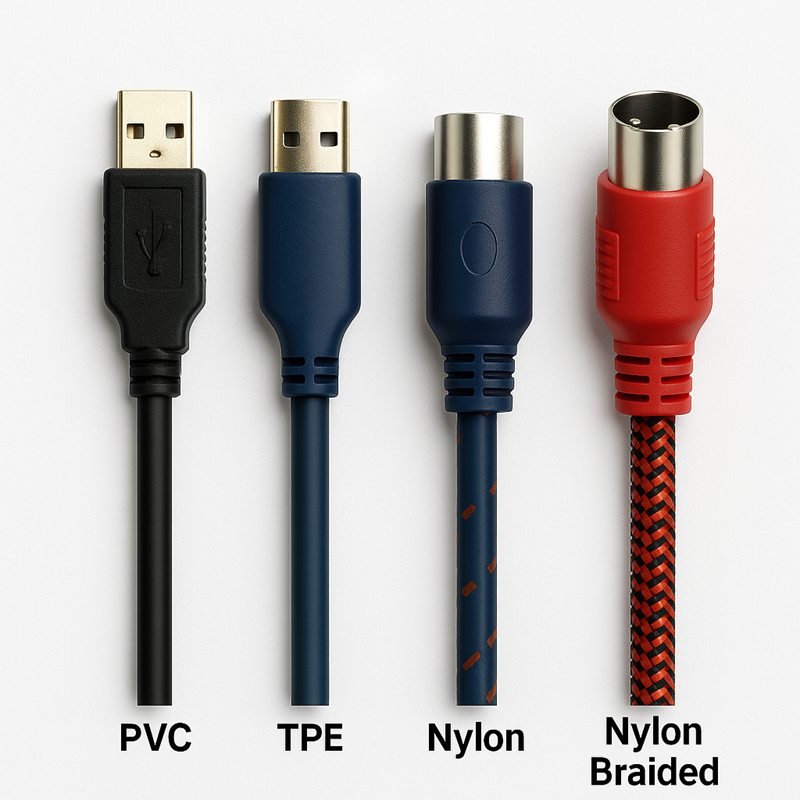
Modern musicians and OEM brands often want cables that not only perform well but also look premium. Sino-conn supports multiple jacket options:
- PVC (Polyvinyl Chloride): Cost-effective and flexible — suitable for studio environments.
- TPE (Thermoplastic Elastomer): Eco-friendly, high elasticity, and flame-retardant.
- Nylon Braided: Adds visual appeal, abrasion resistance, and anti-tangle performance.
These jackets can be color-coded, branded, or patterned to match a manufacturer’s product identity. Sino-conn also offers custom overmold colors and embossed logos for complete OEM differentiation.
The Future of USB MIDI Connectivity

The industry is quickly transitioning toward USB Type-C MIDI. This connector supports USB 2.0, 3.0, and MIDI 2.0 protocols, offering more bandwidth and full bidirectional data paths.
Many upcoming products — including synthesizers, pad controllers, and mobile production devices — are adopting USB-C for its universal fit and reversible design.
How Does USB MIDI Differ from Traditional MIDI Connections?
USB MIDI differs from traditional 5-pin MIDI by offering faster data transmission, bidirectional communication, and plug-and-play integration with computers and mobile devices. Traditional MIDI uses serial communication at 31.25 kbps with separate IN/OUT ports, while USB MIDI runs digitally at up to 480 Mbps, supports power delivery, and allows multiple virtual channels through a single cable.

1. Data Transmission Speed and Bandwidth
| Specification | Traditional MIDI (5-pin DIN) | USB MIDI 1.0 | USB MIDI 2.0 |
|---|---|---|---|
| Data Rate | 31.25 kbps | 12 Mbps | 480 Mbps |
| Transfer Type | Serial byte-stream | Bulk transfer | Isochronous & bulk |
| Max Channels | 16 | 16 × Virtual Ports | 256 × Per-Note Control |
| Typical Latency | 3–5 ms | ≤ 1 ms | < 0.5 ms |
The traditional MIDI link sends data one byte at a time — efficient for simple note or control messages, but limiting when dozens of controllers and automation lanes are in play.
USB MIDI, on the other hand, transmits packets of multiple messages simultaneously, leveraging USB’s high-speed bus.
That 300× jump in bandwidth allows multi-port routing, tighter timing, and greater resolution for advanced control surfaces and digital instruments.
Sino-conn’s cable assemblies are precision-tuned to maintain 90 Ω ± 10 % differential impedance, ensuring that high-speed USB packets remain stable even during heavy data flow in professional studio environments.
Material Options
2. Connection Topology and Communication Direction
Traditional MIDI uses a daisy-chain configuration — connecting devices in series with separate IN, OUT, and THRU ports. Data flows only one way at a time, and each hop adds latency.
USB MIDI replaces that with a star topology, where all devices connect directly to a USB host (usually a computer or tablet). This structure enables simultaneous, bidirectional communication between every device and software environment.
Advantages of Bidirectional USB MIDI:
- Real-time two-way feedback between DAW and controller (motorized faders, LED pads).
- Simplified device management — no THRU ports or extra cables.
- Parallel data streams (multiple MIDI ports) through one connection.
- Built-in power delivery — no need for separate adapters.
3. Power Delivery and Bus Operation
Traditional 5-pin MIDI ports cannot transmit power. Every device — from a keyboard to a sequencer — needs its own AC adapter or battery supply.
USB MIDI eliminates this inefficiency by delivering 5 V DC bus power directly from the host port. Most modern MIDI controllers, mini-keyboards, and pad devices are bus-powered, drastically reducing cable clutter and setup time.
For high-performance instruments that demand stable voltage, Sino-conn integrates tinned-copper conductors (24–26 AWG) and low-resistance shielding, maintaining consistent power delivery even across 5 m cables.
This is crucial for OEM clients producing portable or embedded MIDI systems, where voltage drop tolerance can’t exceed ±5 %.
4. Latency, Jitter, and Timing Precision
Latency — the delay between pressing a key and hearing the response — can destroy a musician’s performance feel.
Classic MIDI’s serial architecture naturally introduces delays of 3–5 ms, sometimes more in long chains or through-boxes.
USB MIDI reduces this delay to under 1 ms by sending timestamped packets that reach the host almost instantly.
MIDI 2.0 goes even further, supporting microsecond-level jitter correction through time-stamped event scheduling.
For embedded developers, this improvement allows precise synchronization of complex hybrid systems — from drum triggers to lighting control (MIDI-DMX bridges).
Sino-conn ensures cable assemblies remain electrically balanced and noise-isolated, preventing clock drift that can otherwise desynchronize time-critical devices.
5. Data Resolution and Message Capability
Traditional MIDI messages were 7-bit, meaning 128 possible values per control.
USB MIDI (especially in the MIDI 2.0 spec) expands this to 32-bit resolution, offering 65,536× greater precision for continuous controllers (like pitch bend, modulation, and expression pedals).
This allows developers and manufacturers to create instruments with ultra-smooth parameter control and expressive dynamics — something analog synths and digital orchestral libraries now heavily rely on.
Additionally, USB MIDI supports:
- Per-note expression (MPE)
- Dynamic channel configuration
- Extended device discovery for automatic mapping
These advanced data capabilities simply aren’t possible over the legacy 5-pin interface.
6. Physical Design: Connectors and Cable Construction
The 5-pin DIN connector, while rugged, is physically large and limited to short cable runs (usually ≤ 15 ft) before data degradation occurs.
USB connectors — whether Type-A, B, or C — provide smaller, reversible, and more mechanically secure connections with additional shielding layers.
Sino-conn’s USB MIDI cable assemblies feature:
- Gold-plated contacts for oxidation resistance
- Dual EMI shielding (foil + braid) for studio reliability
- Flexible outer jackets (PVC / TPE / braided nylon) for motion endurance
- Custom overmolds with brand engraving and color-coded strain reliefs
7. Compatibility and Integration
Traditional MIDI interfaces require dedicated I/O ports and often an external interface box for computers.
USB MIDI devices, by contrast, are class-compliant, meaning they’re instantly recognized by Windows, macOS, iOS, and Android without additional drivers.
This compatibility not only simplifies workflow but also enables cross-platform creativity — musicians can plug their controller into a phone, laptop, or tablet and start producing immediately.
For OEM designers, Sino-conn supports integration of USB MIDI harnesses directly into the mainboard or housing of your device, reducing assembly steps and simplifying final product certification.
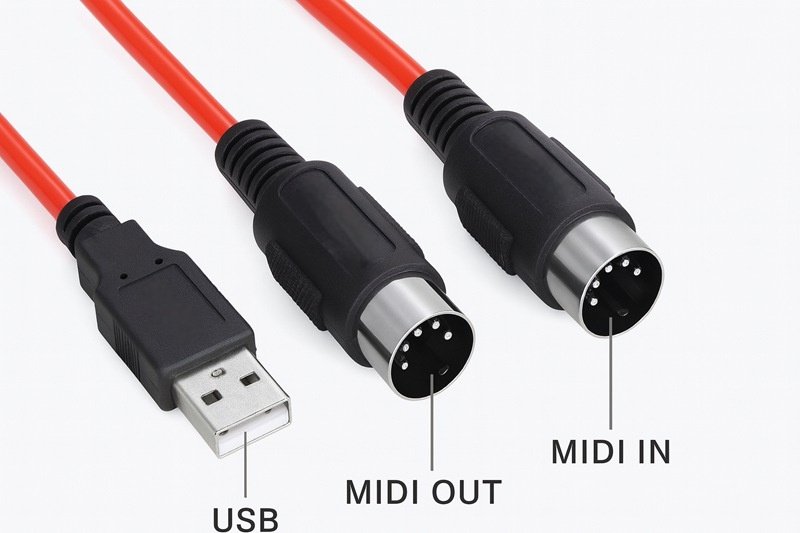
USB MIDI vs 5-Pin MIDI
| Feature | Traditional 5-Pin MIDI | USB MIDI (1.0 / 2.0) |
|---|---|---|
| Transmission Speed | 31.25 kbps | 12 – 480 Mbps |
| Power Supply | None (external required) | 5 V bus power |
| Directionality | One-way (IN / OUT / THRU) | Bidirectional |
| Latency | 3–5 ms typical | < 1 ms (0.5 ms w/ MIDI 2.0) |
| Data Resolution | 7-bit | 32-bit |
| Connector Type | 5-pin DIN | USB A / B / C |
| Setup Complexity | Manual configuration | Plug-and-play |
| Max Cable Length | ≈ 15 ft (5 m w/ repeaters) | 16 ft (5 m passive), longer active |
| Use Case | Vintage & hardware synths | Modern DAWs, mobile, OEM |
Do All Devices Support USB MIDI Natively?
Most modern instruments are class-compliant and work without drivers. Older devices or advanced interfaces may require manufacturer-specific firmware.
Class-Compliant vs. Driver-Dependent Devices
A class-compliant device uses built-in OS support for USB MIDI, ensuring compatibility with any system. Driver-dependent devices, often with advanced functions, need custom drivers to handle higher-resolution data or vendor-specific features.
Troubleshooting USB MIDI Connectivity
Common user issues include:
- Device not recognized
- Latency or jitter
- Insufficient power draw (especially from bus-powered devices)
Sino-conn mitigates these problems through precise impedance control, triple shielding, and low-resistance conductors, ensuring stable communication even over extended cable lengths.
Cable Quality & Signal Integrity
Cheap USB MIDI cables can fail due to poor solder joints or inconsistent shielding. A professionally engineered cable from Sino-conn ensures:
- Consistent 90Ω differential impedance
- Double strain relief design
- Flexible, anti-twist jacket materials for touring applications
Which Applications Use USB MIDI Today?
USB MIDI is used in modern music production, live performance, lighting control, and embedded system design. It connects keyboards, drum pads, DJ controllers, audio interfaces, and even mobile apps directly to computers or smart devices, enabling high-speed bidirectional communication, low latency, and power delivery through a single cable.

Let’s explore the major domains where USB MIDI dominates and continues to evolve — and how Sino-conn supports these industries with precision-engineered cable assemblies.
1. Professional Music Production and Recording Studios
Modern studios are built around USB MIDI integration. Virtually every major piece of hardware — from a Yamaha Motif synthesizer to a Native Instruments controller — uses USB MIDI to communicate with DAWs like Logic Pro, Ableton Live, or Cubase.
Typical Setup Components:
- MIDI controller (keyboard, pad surface) ↔ Computer DAW via USB
- USB audio interface with built-in MIDI I/O
- USB hubs for multiple instruments and control devices
Why USB MIDI matters here:
- Plug-and-play recognition (no driver installation)
- Low latency (< 1 ms) for real-time performance
- Bus-powered operation reduces power clutter
- High-bandwidth multi-channel communication

2. Live Performance and Stage Equipment
In concert environments, USB MIDI has replaced legacy 5-pin cabling for most live controllers and stage automation systems.
Real-world examples:
- Touring keyboardists use USB MIDI for patch changes and layer switching during performances.
- DJ controllers sync lighting effects and audio cues via USB MIDI links.
- Drummers trigger samples and loops from electronic kits connected to laptops.
Advantages for live use:
- Simplified rig setup (one cable for data + power)
- Reliable bidirectional feedback between hardware and DAW
- Easy integration with mobile devices for backup rigs
- Strong mechanical durability when using reinforced connectors
Sino-conn’s TPE-jacketed and braided nylon USB MIDI assemblies are designed for stage ruggedness — withstanding bending cycles exceeding 10 000 plug operations without signal dropouts.
3. DJ Controllers and Digital Performance Gear
USB MIDI also dominates the DJ and live-electronics market where precision timing and custom mapping are crucial.
Modern controllers like Pioneer DDJ, Roland DJ-707M, or Akai MPC units use USB MIDI to transmit real-time mix commands to software such as Serato or Traktor.
Key benefits for DJs:
- Near-zero latency for cue and tempo sync
- Integrated LED feedback and touch pad response
- Power and data over the same USB port
- Compatibility with multiple devices via USB hubs
4. MIDI over Mobile and Tablet Devices
The rise of mobile music creation has transformed USB MIDI into a mainstream interface.
Apps like GarageBand, FL Studio Mobile, and KORG Gadget all use USB MIDI for real-time instrument control.
Connection Examples:
- USB-C keyboard ↔ Android tablet
- USB-C to Lightning adapter ↔ iPad
- Compact pad controller ↔ smartphone
Why it works so well:
- Most mobile OS platforms are USB MIDI class-compliant
- 5 V bus power supports lightweight controllers
- Portable rigs need no external interface
Sino-conn produces custom USB-C to USB-B MIDI adapters and coiled TPE cables for mobile musicians who require compact and durable solutions without signal interference.
5. Lighting Control and Stage Automation (DMX Integration)
Beyond audio, USB MIDI is used in DMX lighting systems and show automation for theatrical and concert applications.
Typical Setup:
- Computer or controller → USB MIDI → DMX interface → Lighting rig
MIDI commands are converted to DMX signals to control intensity, color, and movement synchronization.
Benefits:
- Real-time tempo and cue automation from DAW tracks
- Perfect sync between music and visual effects
- Single-cable control path for audio and lighting
Sino-conn’s EMI-suppressed USB MIDI assemblies ensure noise-free operation even in high-voltage DMX environments, protecting controllers from signal fluctuation.
6. Embedded Systems and OEM Product Design
USB MIDI isn’t just external — many manufacturers embed it directly inside their products.
For example, digital pianos, synthesizers, and sound modules often feature integrated USB MIDI PCBs to communicate with computers or mobile apps for patch updates and firmware transfers.
Use cases for OEM engineers:
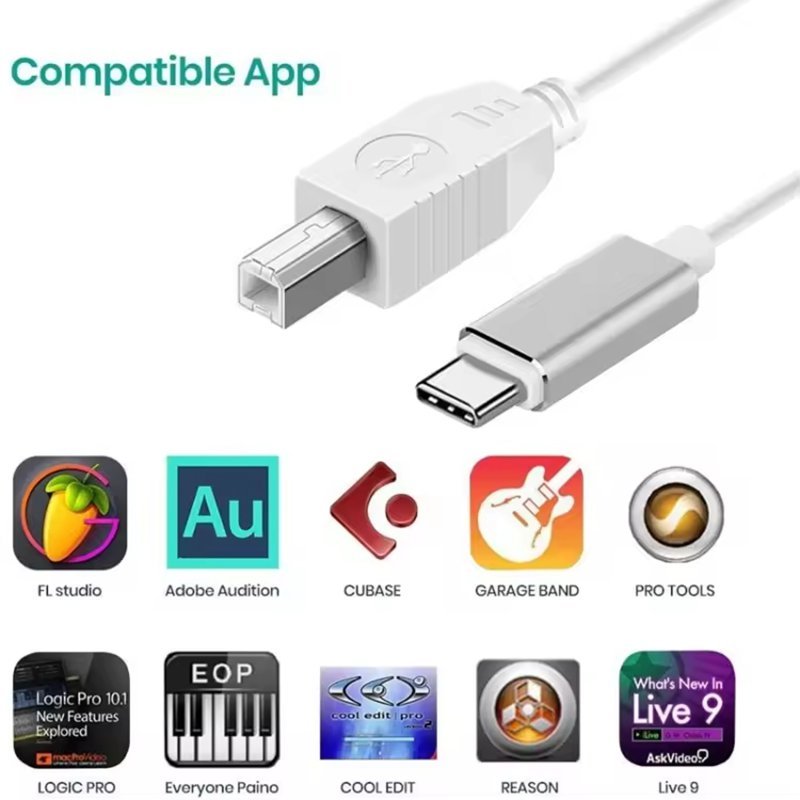
- Smart musical instruments with USB Type-C ports
- Embedded microcontrollers handling MIDI over USB for I/O control
- Firmware and diagnostic data transfer via USB MIDI endpoint
7. Educational and Consumer Electronics
USB MIDI has also entered the education market. Electronic keyboards for beginners or learning apps often rely on USB MIDI for instant connectivity to computers or smart devices.
Examples:
- Interactive learning keyboards with built-in USB Type-B port
- e-Learning apps that analyze playing accuracy via MIDI feedback
- Classroom systems linking multiple instruments to a teacher console
Advantages:
- Simple setup for students (no driver needed)
- Affordable implementation for manufacturers
- Reliable cross-platform compatibility
Sino-conn supports these applications with cost-efficient PVC cables and mass-production tooling for USB connectors, balancing durability with educational affordability.
8. Gaming, VR and Creative Interfaces
An emerging application for USB MIDI is in VR and gaming controllers. Developers use MIDI as a data transport layer for gesture input, sensor feedback, and haptic control.
This approach simplifies cross-platform compatibility and reduces custom driver costs.
Example Use Cases:
- VR music experiences triggered through MIDI events
- Custom motion controllers that map to DAW parameters
- Art installations with MIDI-controlled robotic motion
9. Industrial and Automation Control
Though originally musical, MIDI’s simple message structure and low bandwidth make it useful for industrial automation and testing applications where USB MIDI acts as a lightweight serial communication layer.
Applications:
- Test equipment signal triggers
- Robotics control interfaces
- Research and development prototyping
These projects require tight electrical tolerances and high mechanical durability. Sino-conn delivers precision-built USB MIDI solutions that combine industrial grade shielding with UL certified jacketing.
Where USB MIDI Is Used Today
| Application Area | Typical Devices | Key Benefit | Preferred Connector |
|---|---|---|---|
| Studio Recording | Keyboards, Audio Interfaces | Low latency, multi-channel | USB-B / USB-C |
| Live Performance | Controllers, Pads, Drum Kits | Power + data via one cable | USB-A ↔ USB-B |
| DJ and VJ Gear | Mixers, Lighting | Bidirectional feedback | USB-C |
| Mobile Music | Tablets, Phones | Compact, plug-and-play | USB-C / Lightning |
| Education | Student Keyboards | Simplicity + affordability | USB-B |
| Embedded OEM | Smart Instruments | Integrated I/O | USB-Micro / USB-C |
| Industrial Use | Robotics, Testing Systems | Lightweight protocol | USB-A / Custom Header |
How to Choose the Right USB MIDI Cable or Assembly
Choosing the right USB MIDI cable depends on your device connector type (USB-A, B, C, Mini-B, Micro-B), required cable length, shielding quality, data speed, and whether you need power delivery. For professional or OEM use, select cables with 90 Ω ± 10 % impedance control, dual-layer EMI shielding, gold-plated contacts, and strain-relieved overmolds to ensure stable, low-latency performance.
1. Identify the Connector Type Your Devices Use
Different devices use different USB connectors depending on design age, form factor, and current draw. Choosing the wrong type means the cable physically won’t fit—or will introduce mechanical stress.
| Connector Type | Typical Use | Shape Description | Notes |
|---|---|---|---|
| USB Type-A → Type-B | Keyboards, audio interfaces | Flat rectangular → square port | The “classic” MIDI cable for desktop setups |
| USB Type-C → Type-C | New controllers, tablets, laptops | Reversible oval | Supports high speed + PD |
| USB Type-A → Type-C | Mixed generation gear | Widely compatible | Ideal for hybrid rigs |
| Micro-B / Mini-B | Older devices, compact controllers | Small trapezoid | Fragile → replace when upgrading |
2. Determine the Required Cable Length
USB specifications limit passive cable runs to ≤ 5 m (≈ 16 ft) for full-speed (12 Mbps) devices. Exceeding this can cause voltage drop or timing errors.
| Use Case | Recommended Length | Solution for Longer Runs |
|---|---|---|
| Desktop or studio setup | 1–2 m (3–6 ft) | Standard passive cable |
| Stage performance | 3 m (10 ft) | Heavy-gauge 26 AWG cable |
| Installation routing | 5 m (16 ft) | Active extension / powered hub |
Sino-conn’s 24–26 AWG conductors maintain < 50 mΩ/m resistance, ensuring stable 5 V power even at maximum passive length. For fixed installations, the engineering team can design active repeater assemblies or hybrid power-boosted harnesses.
3. Evaluate Shielding and EMI Protection
USB MIDI data lines (D+ / D–) operate at differential 90 Ω impedance and are sensitive to electromagnetic interference from stage lighting, power supplies, and wireless transmitters.
Best-practice cable construction includes:
- Aluminum-Mylar foil (100 %) for high-frequency EMI
- Tinned-copper braid (≥ 85 %) for low-frequency noise
- Ferrite cores near connectors to suppress RF spikes
4. Prioritize Material Quality and Flexibility
Material choice determines not only longevity but also stage performance and tactile feel.
| Jacket Material | Flexibility | Temperature Range | Typical Application |
|---|---|---|---|
| PVC | Medium | –10 °C ~ +80 °C | Cost-effective studio use |
| TPE | High flex | –40 °C ~ +105 °C | Eco-friendly, flame retardant |
| Silicone | Ultra flexible | –60 °C ~ +200 °C | Robotics / moving arms |
| Braided Nylon + PVC Core | High durability | –20 °C ~ +90 °C | Touring / consumer premium |
Sino-conn’s Recommendation:
For live performance or frequent travel, choose braided nylon TPE. For embedded OEM, use silicone or TPE for tight-radius routing inside chassis.
5. Verify Electrical Performance and Compliance
Professional or industrial customers should always check for certified electrical characteristics.
Essential parameters to review:
- Differential impedance: 90 Ω ± 10 %
- Conductor gauge: 24–28 AWG (≤ 0.25 Ω/m)
- Shield coverage: ≥ 85 %
- Dielectric strength: > 300 V AC
- Compliance: UL, RoHS, REACH, ISO 9001
Sino-conn performs full continuity, TDR, and EMI tests on every production lot, delivering traceable QC reports for OEM clients.
For high-volume projects, automated 3-stage inspection (process / finished / pre-shipment) ensures defect rates below 0.02 %.
6. Consider Data Speed and Protocol Version
While MIDI itself needs little bandwidth, USB 2.0/3.0 compatibility affects signal stability and future expansion.
| Protocol | Nominal Speed | Recommended Usage |
|---|---|---|
| USB 1.1 (12 Mbps) | Legacy MIDI 1.0 | Basic controllers |
| USB 2.0 (480 Mbps) | Standard today | Most DAW / MIDI devices |
| USB 3.0 (5 Gbps) | Backward compatible | Future MIDI 2.0 gear |
Always choose cables certified for at least USB 2.0 High-Speed, ensuring they meet 480 Mbps data rate and full 5 V bus power capability. Sino-conn’s assemblies maintain these tolerances across full temperature ranges for industrial-grade reliability.
7. Factor in Connector Durability and Overmold Design
Frequent plugging during rehearsals or testing stresses connectors more than data lines. Look for:
- Gold-plated pins (10 µ inch min.) → oxidation resistance
- Nickel-plated shells → additional EMI shielding
- Reinforced strain reliefs → bend radius ≥ 60 mm
- Injection-molded housing → prevents wire fatigue
8. Match the Cable to Its Application
| Application | Recommended Type | Key Features |
|---|---|---|
| Studio Recording | USB-A → B, 1–3 m | High flex PVC / TPE jacket, noise shield |
| Live Performance | USB-A → B / C, ≤ 5 m | Braided nylon jacket, reinforced strain relief |
| Mobile Production | USB-C → C / Micro | Compact spiral cable, 5 V bus power |
| OEM Embedded | Micro / Type-C Header | Custom length, UL wire harness integration |
| Industrial Automation | USB-A → A | EMI-shielded, fixed mount strain clamp |
9. Evaluate Aesthetic and Branding Needs
For consumer and professional instrument manufacturers, cable design also contributes to brand identity.
Sino-conn offers:
- Custom jacket colors and textures (matte, gloss, braid)
- Embossed logos on overmolds
- Matching connector finishes (satin silver, gunmetal, black nickel)
- Custom packaging and labeling for retail bundles
These cosmetic options turn an ordinary USB MIDI cable into a recognizable brand asset.
10. Plan for Future Compatibility (MIDI 2.0 and USB-C)
The next generation of MIDI devices—following the MIDI 2.0 standard—demands higher data bandwidth and bidirectional communication.
Selecting USB-C assemblies with fully wired CC lines and EMI compliance now ensures your cables remain compatible for years.
Sino-conn’s engineering division already produces USB-C MIDI 2.0-ready harnesses supporting:
- 480 Mbps data rate
- 5 V / 3 A power delivery
- Optional DIN 5-pin to USB-C hybrid conversion
Choosing Your Ideal USB MIDI Cable
| Specification | Recommended Value | Why It Matters |
|---|---|---|
| Connector Type | USB-A / B / C (verified fit) | Prevents mismatch |
| Length | ≤ 5 m (passive) | Avoids voltage drop |
| Wire Gauge | 24–28 AWG | Balances flex and power |
| Shielding | Foil + 85 % braid | Blocks EMI |
| Impedance | 90 Ω ± 10 % | Maintains signal integrity |
| Material | TPE / PVC / Silicone | Defines durability |
| Compliance | UL, RoHS, REACH | Ensures safety |
| Aesthetic | Custom color / logo | Brand value |
Sino-conn: Your Partner for Custom USB MIDI Assemblies
For over 18 years, Sino-conn has specialized in precision USB and MIDI cable assemblies serving international OEMs, audio brands, and instrument manufacturers.
Our process guarantees:
- Rapid prototyping (30 min to 3 days)
- Flexible MOQ (1 pc sample to mass orders)
- Full certification support (UL, ISO, RoHS, REACH)
- 100 % inspection — process + final + pre-shipment
Conclusion
Selecting the right USB MIDI cable isn’t just about plugging in—it’s about ensuring precision, stability, and longevity in every performance and production environment.
Partner with Sino-conn to design your next generation USB MIDI assemblies.