Skip to content
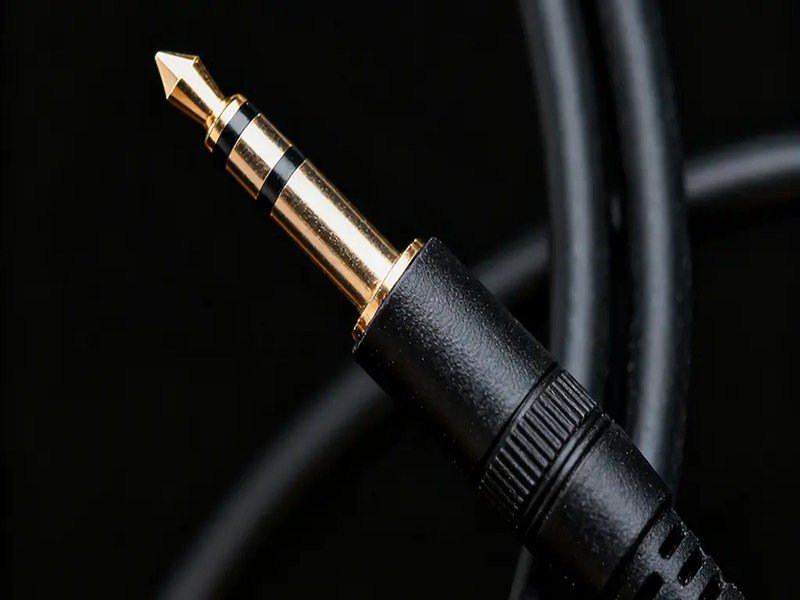
A TRS cable looks like a simple audio cable, but it solves more connection problems than many people realize. You may see it on studio headphones, audio interfaces, mixers, keyboards, stage equipment, broadcast devices, communication systems, test instruments, and even some medical or industrial devices. The connector is small, easy to recognize, and widely used, but the wiring inside can be very different from one product to another.
A TRS cable is a cable with a Tip-Ring-Sleeve connector. It has three conductive sections and can carry stereo audio or balanced mono signals. TRS cables are commonly used for headphones, professional audio equipment, recording devices, mixers, instruments, and custom electronic systems. The most common sizes are 2.5mm, 3.5mm, and 6.35mm.
The confusion usually begins when a customer says, “I need a 3.5mm audio cable,” but does not know whether the device needs TS, TRS, or TRRS wiring. These plugs may look similar, yet they do not always work the same way. A wrong cable can cause one channel to disappear, create noise, stop a microphone from working, or make the device feel defective even when the equipment itself is fine.
At Sino-Conn, many TRS cable assembly projects start with a product photo, an old sample, or a connector model number. Our engineers then help confirm the connector size, wiring definition, shielding structure, cable OD, jacket material, and test requirements before production. For OEM projects, this step is especially important because a cable that “looks right” may still be wired wrong inside.
What Is a TRS Cable?
A TRS cable is a signal cable that uses a Tip-Ring-Sleeve connector with three electrical conductors. Depending on the wiring configuration, it can transmit stereo audio, balanced audio, control signals, sensor signals, or other low-voltage electronic signals. TRS cables are commonly used in headphones, audio interfaces, mixers, studio equipment, medical devices, industrial electronics, and OEM products because they offer a compact, reliable, and cost-effective connection solution.

Many people recognize a TRS connector immediately but do not realize how many different applications it supports. Two TRS cables may look identical from the outside while performing completely different functions internally.
For example:
- One TRS cable may connect a pair of stereo headphones.
- Another may carry balanced audio in a professional recording studio.
- Another may transmit trigger signals inside a medical device.
- Another may be used in an industrial control system for sensor communication.
This flexibility is one reason TRS connectors have remained popular for decades despite the introduction of newer digital interfaces.
What Does a TRS Cable Mean?
The name TRS comes directly from the three conductive sections found on the plug.
TRS stands for:
- Tip
- Ring
- Sleeve
These three conductive areas are separated by insulating rings.
A standard TRS connector structure looks like this:
| Section | Typical Stereo Function | Typical Balanced Function |
|---|---|---|
| Tip | Left Channel | Positive Signal |
| Ring | Right Channel | Negative Signal |
| Sleeve | Ground | Ground/Shield |
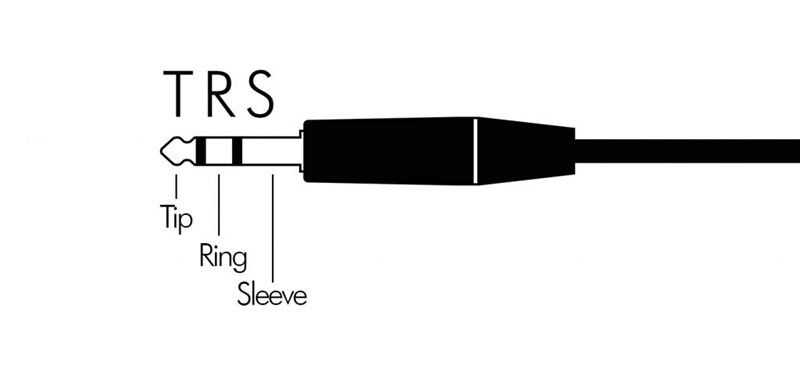
The additional ring contact is what separates a TRS connector from a TS connector.
Comparison:
| Connector Type | Contacts | Common Application |
|---|---|---|
| TS | 2 | Guitar, Instrument |
| TRS | 3 | Headphones, Balanced Audio |
| TRRS | 4 | Headsets, Smartphones |
One common misconception is that all TRS cables are stereo cables.
This is not true.
In professional audio systems, many TRS cables carry balanced mono audio rather than stereo audio.
The actual function depends on how the equipment is designed and how the connector is wired internally.
This is why professional engineers always verify the pin assignment before ordering custom cable assemblies.
At Sino-Conn, customers often provide only a connector photo or product sample. Before production begins, our engineering team confirms the internal wiring definition because appearance alone cannot determine cable functionality.
How Is a TRS Cable Built?
The connector is only one part of a TRS cable assembly.
The internal cable structure often determines performance, reliability, flexibility, and lifespan.
A typical TRS cable assembly contains:
| Component | Function |
|---|---|
| TRS Connector | Electrical Interface |
| Conductors | Signal Transmission |
| Insulation | Electrical Isolation |
| Shielding | EMI Protection |
| Drain Wire | Ground Path |
| Outer Jacket | Mechanical Protection |
| Strain Relief | Stress Reduction |
Cable construction can vary significantly depending on the application.
Consumer-grade headphone cables often prioritize:
- Low cost
- Lightweight design
- Soft flexibility
Professional equipment cables often prioritize:
- Signal quality
- Shielding effectiveness
- Connector durability
- Long service life
Industrial and OEM cable assemblies may additionally require:
- Oil resistance
- UV resistance
- Abrasion resistance
- Custom pin assignments
- Specialized jacket materials
The conductor itself can also vary.
Common conductor options include:
| Conductor Type | Characteristics |
|---|---|
| Bare Copper | Economical |
| Tinned Copper | Better Corrosion Resistance |
| High-Strand Copper | Improved Flexibility |
| Silver-Plated Copper | High-End Applications |
A low-cost TRS cable purchased online may use minimal shielding and a simple PVC jacket.
A custom TRS cable assembly used in a recording studio, medical system, or industrial device may use:
- Foil shielding
- Braided shielding
- High-flex conductors
- Custom overmolding
- Reinforced strain relief
Although both products are called “TRS cables,” their performance can differ dramatically.
How Does a TRS Cable Work?
A TRS cable works by transmitting electrical signals through three independent conductive paths.
The signal assignment depends entirely on the application.
For stereo audio:
| Contact | Signal |
|---|---|
| Tip | Left Audio |
| Ring | Right Audio |
| Sleeve | Ground |
This configuration is commonly used in:
- Headphones
- Portable music players
- Audio interfaces
- Consumer electronics
For balanced audio:
| Contact | Signal |
|---|---|
| Tip | Positive Signal |
| Ring | Negative Signal |
| Sleeve | Ground |
Balanced transmission is widely used in professional audio because it helps reduce noise over longer cable runs.
Benefits include:
- Lower noise
- Better signal integrity
- Longer cable runs
- Improved system reliability
This becomes increasingly important when cables are routed near:
- Power supplies
- LED lighting systems
- Amplifiers
- Motors
- Industrial equipment
A real example involved an OEM customer producing audio control equipment.
Their original TRS cable used a basic shielded structure.
During testing, noise appeared whenever nearby power equipment was operating.
After Sino-Conn upgraded the assembly to a foil-plus-braid shield structure and optimized grounding termination, the interference was significantly reduced.
The issue was not the connector.
The issue was the cable construction.
This demonstrates why signal performance depends on the entire cable assembly rather than the connector alone.
Why Is a TRS Cable So Widely Used?
TRS connectors have survived for decades because they offer an excellent balance of performance, simplicity, and cost.
Unlike many specialized connectors, TRS connectors are:
- Easy to source
- Easy to install
- Cost-effective
- Compact
- Mechanically reliable
- Widely compatible
Common TRS connector sizes include:
| Size | Typical Application |
|---|---|
| 2.5mm | Compact Electronics |
| 3.5mm | Consumer Devices |
| 6.35mm | Professional Audio |
The 3.5mm TRS connector remains one of the most widely used audio interfaces globally.
Millions of devices continue to use this format because it provides a simple and proven solution.
Professional equipment often favors the larger 6.35mm connector because:
- It is mechanically stronger.
- It withstands repeated insertion cycles.
- It provides improved durability.
Many OEM manufacturers also prefer TRS connectors because they simplify product development.
Advantages include:
| Benefit | Result |
|---|---|
| Mature Supply Chain | Easier Procurement |
| Low Component Cost | Lower Product Cost |
| Small Footprint | Saves Space |
| Multiple Wiring Options | Design Flexibility |
| Broad Compatibility | Simplifies Integration |
At Sino-Conn, TRS cable assemblies are regularly customized for:
- Professional audio equipment
- Headphone manufacturers
- Medical devices
- Testing equipment
- Industrial electronics
- Communication systems
Customers can customize:
- Cable length
- Connector orientation
- Shielding structure
- Jacket material
- Pin assignments
- Overmolding
- Labeling
Because every application has different requirements, there is no single “best” TRS cable.
The most suitable TRS cable is the one designed around the actual operating environment, signal requirements, installation space, and reliability expectations of the final product.
Why Do OEM Manufacturers Still Use TRS Cables?
Many people assume TRS cables are only used for consumer audio products.
In reality, OEM manufacturers continue using TRS connectors in thousands of commercial products every year.
Common OEM applications include:
| Industry | Example Application |
|---|---|
| Audio | Headphones, Mixers |
| Medical | Diagnostic Equipment |
| Industrial | Control Interfaces |
| Test Equipment | Signal Connections |
| Communication | Monitoring Devices |
| Education | Training Equipment |
The reason is simple.
TRS connectors offer:
- Proven reliability
- Compact size
- Low development cost
- Easy field replacement
- Flexible wiring options
One customer approached Sino-Conn with a medical monitoring project requiring a compact three-conductor interface.
Several specialized connectors were evaluated.
Ultimately, the engineering team selected a custom TRS cable assembly because it reduced overall system cost, simplified installation, and shortened development time while still meeting performance requirements.
This type of decision is common across many industries.
The connector may appear simple, but when properly engineered, a TRS cable assembly can provide an effective and highly reliable solution for a wide range of applications.
What Is the Difference Between TRS Cables?
Many customers searching for TRS cables are actually trying to answer a much bigger question:
“Which cable does my device really need?”
The challenge is that TS, TRS, and TRRS connectors often look nearly identical to non-engineers. A connector may physically fit into the jack, but that does not mean it will function correctly.
In practice, many audio problems, microphone failures, missing channels, signal interference issues, and equipment compatibility problems can be traced back to selecting the wrong cable type.
Understanding the differences between TRS cables is not just important for audio enthusiasts. It is equally important for:
- Audio equipment manufacturers
- Medical device developers
- Industrial equipment OEMs
- Test equipment suppliers
- Communication system designers
- Purchasing teams sourcing replacement cables
A cable that costs only a few dollars can create thousands of dollars in troubleshooting costs if the wrong connector type is selected.
TRS Cable vs TS Cable
The most common comparison is between TRS and TS cables.
At first glance, they look very similar.
The difference is one additional conductive section.
TS stands for:
- Tip
- Sleeve
TRS stands for:
- Tip
- Ring
- Sleeve
Physical comparison:
| Connector Type | Conductive Contacts | Insulating Rings |
|---|---|---|
| TS | 2 | 1 |
| TRS | 3 | 2 |
Electrical comparison:
| Feature | TS Cable | TRS Cable |
|---|---|---|
| Conductors | 2 | 3 |
| Mono Audio | Yes | Yes |
| Stereo Audio | No | Yes |
| Balanced Audio | No | Yes |
| Noise Rejection | Limited | Better |
| Signal Flexibility | Low | High |
TS cables are commonly found in:
- Electric guitars
- Instrument cables
- Basic signal connections
- Simple mono systems
TRS cables are commonly found in:
- Headphones
- Studio monitors
- Mixers
- Audio interfaces
- Professional audio systems
The biggest advantage of TRS over TS is flexibility.
A TS cable is limited because it only provides two conductors.
A TRS cable can support:
- Stereo audio
- Balanced mono audio
- Custom signal transmission
A customer once approached Sino-Conn after experiencing noise problems in a recording setup.
The audio interface was designed for balanced TRS connections.
However, standard TS cables had been installed.
After replacing the cables with properly shielded TRS assemblies, the noise level dropped noticeably.
The issue was not the equipment.
The issue was the cable selection.

TRS Cable vs TRRS Cable
Another common source of confusion is the difference between TRS and TRRS.
TRRS stands for:
- Tip
- Ring
- Ring
- Sleeve
It contains four conductors instead of three.
Physical comparison:
| Connector Type | Conductors |
|---|---|
| TS | 2 |
| TRS | 3 |
| TRRS | 4 |
Typical functions:
| Contact | TRS Stereo | TRRS Headset |
|---|---|---|
| Tip | Left Audio | Left Audio |
| Ring 1 | Right Audio | Right Audio |
| Ring 2 | — | Microphone |
| Sleeve | Ground | Ground |
TRRS became popular because mobile devices needed a microphone connection in addition to stereo audio.
Common TRRS applications include:
- Smartphones
- Tablets
- Gaming headsets
- Video conferencing devices
- Portable communication equipment
Many customers mistakenly order TRS cables for headset applications.
The result is often:
- Audio works
- Microphone does not work
This is one of the most common compatibility issues encountered in consumer electronics.
For OEM projects, Sino-Conn always recommends confirming:
- TRS or TRRS
- Connector size
- Wiring standard
- Pin assignment
before production begins.
Two connectors can appear nearly identical while functioning completely differently.
Which TRS Cable Is Best?
There is no universal answer because performance depends entirely on the application.
The best TRS cable for a studio monitor may not be suitable for a headset.
The best TRS cable for a medical device may not be suitable for an industrial controller.
Selection should begin with the application.
| Application | Recommended Solution |
|---|---|
| Headphones | Stereo TRS |
| Studio Monitor | Balanced TRS |
| Audio Interface | Shielded TRS |
| Broadcast Equipment | Premium Shielded TRS |
| Medical Device | Custom TRS Assembly |
| Industrial Equipment | Ruggedized TRS Assembly |
Performance priorities vary significantly.
For example:
Studio customers often prioritize:
- Low noise
- Signal accuracy
- Shielding effectiveness
Industrial customers often prioritize:
- Durability
- Flexibility
- Connector retention
Medical equipment manufacturers often prioritize:
- Reliability
- Consistency
- Compact design
- Documentation support
At Sino-Conn, engineering teams usually ask customers several questions before recommending a cable:
- What equipment is being connected?
- How long is the cable?
- Is the signal audio or data?
- Is shielding required?
- Is flexibility important?
- What environment will the cable operate in?
The answers often determine the optimal cable design.
Can TRS Cables Be Interchanged?
Many users assume that if a connector physically fits, it should work.
Unfortunately, this assumption causes many compatibility problems.
The following examples are common:
| Connection | Result |
|---|---|
| TRS Plug into TS Jack | May work partially |
| TS Plug into TRS Jack | May lose stereo or balanced function |
| TRRS Plug into TRS Jack | Microphone usually fails |
| TRS Plug into TRRS Jack | Audio may work, microphone usually unavailable |
In some cases, the system appears to function initially but experiences:
- Reduced audio quality
- Increased noise
- Missing channels
- Microphone failure
- Unstable signal transmission
One OEM customer contacted Sino-Conn because a newly developed communication device was experiencing inconsistent performance.
The engineering team eventually discovered that two suppliers were providing visually similar cables with different internal wiring.
The connectors looked identical.
The electrical behavior was completely different.
This situation is surprisingly common in production environments.
What Problems Can Occur?
Most cable-related problems are not caused by the connector itself.
They are caused by incorrect cable selection, poor construction quality, or mismatched wiring.
The most common issues include:
| Problem | Likely Cause |
|---|---|
| No Audio | Incorrect Wiring |
| Missing Channel | Broken Conductor |
| Hum or Buzz | Poor Shielding |
| Intermittent Signal | Connector Wear |
| Microphone Failure | TRS/TRRS Mismatch |
| Low Volume | Incorrect Pin Assignment |
| Signal Distortion | Poor Grounding |
Several risk factors increase failure rates:
- Long cable runs
- Low-quality shielding
- Poor soldering
- Frequent bending
- Excessive pulling force
- Low-quality connectors
A real project involved an audio equipment manufacturer that experienced a high return rate from customers.
Initial investigations focused on the amplifier.
The actual problem was inconsistent cable wiring from multiple suppliers.
After standardizing the TRS cable assembly and implementing drawing-based production controls, the failure rate dropped significantly.
This is one reason Sino-Conn creates production drawings for custom cable assemblies before manufacturing begins.
Drawings help verify:
- Connector type
- Pin assignment
- Cable length
- Shielding structure
- Material selection
before production starts.
Why Do OEM Manufacturers Pay Attention to TRS Differences?
For consumers, choosing the wrong TRS cable may be a minor inconvenience.
For OEM manufacturers, the consequences can be much larger.
A cable problem can lead to:
- Product delays
- Field failures
- Warranty claims
- Customer complaints
- Production rework
OEM engineers therefore evaluate far more than connector appearance.
Typical evaluation criteria include:
| Evaluation Factor | Importance |
|---|---|
| Pin Assignment | Critical |
| Signal Integrity | Critical |
| Shielding Performance | High |
| Connector Durability | High |
| Flexibility | Application Dependent |
| Material Quality | High |
| Cost Stability | High |
| Supply Reliability | High |
At Sino-Conn, many TRS cable assembly projects begin with only:
- A photo
- An existing sample
- A connector model number
The engineering team then assists with:
- Connector verification
- Pinout confirmation
- Cable structure selection
- Shielding design
- Drawing creation
This process helps eliminate costly mistakes before production begins.
The most important difference between TRS cables is not always visible from the outside.
The real differences are often hidden inside the cable assembly itself, including conductor count, wiring configuration, shielding design, material selection, and manufacturing quality. These factors ultimately determine whether the cable performs reliably in the final application.
What Are TRS Cables Used For?
One of the reasons TRS cables have remained popular for decades is their versatility.
Unlike many specialized connectors that are designed for only one application, TRS connectors can support a wide range of signal transmission requirements. Depending on the wiring design, a TRS cable may carry stereo audio, balanced audio, trigger signals, sensor signals, communication signals, or custom low-voltage electronic signals.
Many people associate TRS cables only with headphones or speakers, but the reality is much broader.
Today, TRS cable assemblies can be found in:
- Consumer electronics
- Professional audio equipment
- Recording studios
- Broadcasting systems
- Musical instruments
- Medical devices
- Industrial control systems
- Test and measurement equipment
- Communication devices
- OEM electronic products
The same connector may look identical externally, but the internal cable structure, shielding, conductor design, and wiring configuration can vary dramatically depending on the application.
This is why many OEM customers work directly with suppliers like Sino-Conn to develop custom TRS cable assemblies rather than purchasing standard off-the-shelf products.
TRS Cable for Audio Equipment
Audio equipment remains the largest application area for TRS cables.
Millions of TRS cables are used every year in:
- Headphones
- Amplifiers
- Audio interfaces
- DAC systems
- Mixers
- Speakers
- Studio monitors
- Portable audio devices
The reason is simple.
A single TRS connector can carry stereo audio while maintaining a compact size.
Typical stereo wiring:
| Contact | Signal |
|---|---|
| Tip | Left Channel |
| Ring | Right Channel |
| Sleeve | Ground |
This configuration makes TRS connectors ideal for devices where space is limited.
Examples include:
| Device | Common Connector |
|---|---|
| Headphones | 3.5mm TRS |
| Portable Audio Player | 3.5mm TRS |
| Laptop Audio Output | 3.5mm TRS |
| Studio Monitor | 6.35mm TRS |
| Audio Interface | 6.35mm TRS |
For OEM audio manufacturers, cable quality directly affects customer experience.
Common complaints caused by poor cable design include:
- Crackling sounds
- Channel imbalance
- Intermittent audio
- Excessive noise
- Premature cable failure
One audio equipment customer approached Sino-Conn after experiencing high failure rates with low-cost molded TRS cables.
After evaluating the application, the cable assembly was redesigned with:
- Improved strain relief
- Higher-strand conductors
- Better shielding
- Reinforced connector termination
The result was a significant reduction in warranty claims and customer complaints.
This demonstrates that even simple audio cables can have a substantial impact on product quality.
TRS Cable for Music Equipment
Musical equipment often operates in environments that are much more demanding than home audio systems.
TRS cables are commonly used with:
- Keyboards
- Synthesizers
- Digital pianos
- Audio processors
- Effects units
- Mixing consoles
- Stage equipment
Musicians frequently connect and disconnect cables hundreds or thousands of times during the life of a product.
As a result, connector durability becomes extremely important.
Typical requirements include:
| Requirement | Importance |
|---|---|
| Connector Strength | Very High |
| Flexibility | High |
| Shielding | High |
| Noise Resistance | High |
| Bend Resistance | High |
Stage environments create additional challenges:
- High-power lighting systems
- Wireless transmitters
- Power distribution equipment
- Long cable runs
All of these can introduce electrical noise.
This is why professional music equipment often uses shielded TRS cable assemblies rather than basic consumer-grade cables.
For many music equipment manufacturers, the cable becomes part of the performance system itself.
A failed cable during a live event can interrupt the entire show.
Because of this, many OEM customers request:
- Gold-plated contacts
- Braided shielding
- Flexible jackets
- Metal-shell connectors
to improve long-term reliability.
TRS Cable for Recording Studios
Recording studios place extremely high demands on signal quality.
Unlike casual listening environments, recording engineers can hear very small imperfections in the audio chain.
A poorly designed cable may introduce:
- Hum
- Buzz
- Ground noise
- Signal loss
- High-frequency interference
Even minor signal issues can become noticeable during recording and post-production.
TRS cables are commonly used for:
- Studio monitors
- Patch bays
- Mixing consoles
- Audio interfaces
- Outboard processors
- Recording systems
Balanced TRS connections are particularly popular because they help reduce noise.
Benefits include:
| Benefit | Impact |
|---|---|
| Noise Reduction | Improved Audio Quality |
| Longer Cable Runs | Greater Flexibility |
| Better Signal Integrity | More Accurate Recording |
| Reduced EMI | Cleaner Signal Path |
Many studio installations contain dozens or even hundreds of cable assemblies.
As system complexity increases, shielding quality becomes increasingly important.
One recording equipment manufacturer worked with Sino-Conn to develop custom TRS patch cables for rack-mounted studio systems.
The customer required:
- Exact cable lengths
- Color identification
- Low-profile connectors
- Enhanced shielding
These seemingly small changes improved installation efficiency and simplified maintenance for end users.
TRS Cable for Broadcast Systems
Broadcast applications demand reliability above almost everything else.
A signal interruption during a live television or radio broadcast can have immediate consequences.
TRS cable assemblies are commonly used in:
- Radio stations
- Television studios
- Streaming systems
- Podcast production
- Audio routing systems
- Commentary equipment
Broadcast installations often involve:
- Long cable runs
- Multiple equipment racks
- Dense electronic environments
- Continuous operation
The priorities differ from consumer audio.
Broadcast engineers typically focus on:
| Requirement | Priority |
|---|---|
| Signal Stability | Very High |
| Noise Control | Very High |
| Connector Reliability | Very High |
| Service Life | High |
| Maintenance Simplicity | High |
Because systems often operate continuously, durability becomes critical.
Many broadcast customers request:
- Double shielding
- Metal-shell connectors
- Custom labels
- Serial number tracking
- Rack-specific cable lengths
Sino-Conn has supported multiple custom cable projects where standard retail cables could not satisfy installation requirements.
Customized lengths alone can significantly improve cable management and reduce clutter inside equipment racks.
TRS Cable for Medical Devices
Many people are surprised to learn that TRS connectors are widely used in medical equipment.
Medical device designers often choose TRS connectors because they offer:
- Compact size
- Reliable contact structure
- Low cost
- Easy replacement
- Flexible wiring options
Examples include:
- Diagnostic equipment
- Patient monitoring systems
- Portable medical devices
- Therapy equipment
- Laboratory instruments
Unlike consumer audio products, medical devices often use TRS connectors for custom signal transmission rather than audio.
Typical requirements include:
| Requirement | Importance |
|---|---|
| Signal Stability | Very High |
| Compact Design | High |
| Shielding Performance | High |
| Reliability | Very High |
| Documentation Support | High |
One customer developing a portable diagnostic device needed a compact three-conductor interface.
Several connector options were evaluated.
Ultimately, a custom TRS cable assembly was selected because it:
- Reduced product size
- Lowered component costs
- Simplified assembly
- Met signal requirements
The connector looked similar to a headphone cable, but the internal wiring was completely different.
This highlights a key point:
Connector appearance does not determine cable function.
TRS Cable for Industrial Equipment
Industrial applications continue to expand as more equipment requires compact signal connections.
TRS connectors are frequently used in:
- Control panels
- Sensor systems
- Test equipment
- Monitoring devices
- Automation systems
- Communication interfaces
Industrial environments introduce challenges such as:
- Motors
- Power equipment
- Vibration
- EMI interference
- Continuous operation
Because of these conditions, industrial TRS cable assemblies often require:
| Feature | Importance |
|---|---|
| Shielding | Very High |
| Strain Relief | High |
| Durability | Very High |
| Flexible Routing | High |
| Connector Retention | High |
One industrial customer experienced intermittent communication failures inside a machine control system.
The original cable used minimal shielding.
After Sino-Conn upgraded the assembly to a foil-plus-braid shield structure and improved grounding design, communication stability improved significantly.
This demonstrates that in industrial environments, cable design often affects performance just as much as the electronics themselves.
TRS Cable for OEM Products
OEM products represent one of the fastest-growing segments for custom TRS cable assemblies.
Many OEM manufacturers choose TRS connectors because they provide:
- Proven reliability
- Compact size
- Flexible wiring options
- Mature supply chains
- Low development costs
Common OEM products include:
| Industry | Example Product |
|---|---|
| Audio | Headphones, Mixers |
| Medical | Diagnostic Devices |
| Industrial | Control Units |
| Education | Training Equipment |
| Communication | Monitoring Systems |
| Testing | Measurement Devices |
For OEM projects, standard cables are often unsuitable.
Customization commonly includes:
- Custom cable lengths
- Custom pinouts
- Shielding upgrades
- Special jacket materials
- Connector orientation changes
- Overmolding
- Product labeling
At Sino-Conn, many TRS cable projects begin with only:
- A sample cable
- A connector model
- A rough drawing
- A product photo
The engineering team then develops:
- Drawings
- Cable specifications
- Connector recommendations
- Shielding solutions
before production begins.
This process helps ensure the final cable assembly matches the customer’s performance requirements, installation constraints, and cost targets.
The broad range of applications is one reason TRS cables remain one of the most widely used interconnect solutions in electronics today. Whether the goal is high-fidelity audio, reliable industrial communication, portable medical equipment, or a custom OEM product, a properly designed TRS cable assembly can provide a simple, durable, and highly effective connection solution.
How Do You Choose a TRS Cable?
Choosing a TRS cable seems simple until a project encounters noise problems, compatibility issues, intermittent signals, or premature cable failures.
Many customers initially focus on the connector size and assume that if the plug fits into the jack, the cable will work correctly. In reality, connector size is often one of the least important factors.
The most successful product developers evaluate a TRS cable based on:
- Signal requirements
- Wiring configuration
- Connector size
- Shielding performance
- Cable length
- Mechanical durability
- Operating environment
- Product lifecycle expectations
A TRS cable used for a pair of headphones may cost only a few dollars.
A TRS cable used in a medical device, industrial controller, or professional recording system may require extensive engineering to achieve reliable performance.
At Sino-Conn, engineering discussions rarely start with “Which TRS connector do you need?”
Instead, they usually start with:
- What device is being connected?
- What signal is being transmitted?
- How long is the cable?
- Is shielding required?
- Will the cable move during operation?
- What environment will it operate in?
The answers often determine the correct cable structure more than the connector itself.
TRS Cable Size
The first selection factor is usually connector size.
The three most common TRS connector sizes are:
| Connector Size | Common Name | Typical Applications |
|---|---|---|
| 2.5mm | Sub-mini TRS | Compact electronics |
| 3.5mm | Mini TRS | Headphones, consumer devices |
| 6.35mm | 1/4″ TRS | Professional audio equipment |
Many customers automatically choose 3.5mm because it is familiar.
However, different applications often benefit from different connector sizes.
Comparison:
| Feature | 2.5mm | 3.5mm | 6.35mm |
|---|---|---|---|
| Size | Smallest | Medium | Largest |
| Durability | Lower | Good | Excellent |
| Consumer Devices | Common | Very Common | Rare |
| Professional Audio | Rare | Moderate | Very Common |
| Mechanical Strength | Lower | Good | Excellent |
For example:
A studio monitor manufacturer will usually choose 6.35mm TRS because:
- The connector is stronger.
- It survives repeated insertions.
- It handles heavier cables more effectively.
Meanwhile, a portable medical device may use 2.5mm or 3.5mm TRS to save space.
The connector size should always be selected according to the device rather than personal preference.
TRS Cable Shielding
Shielding is one of the most overlooked factors during cable selection.
Many customers focus on the connector while ignoring the cable structure.
However, poor shielding is one of the most common causes of:
- Hum
- Buzz
- Signal interference
- Communication instability
- Recording noise
Common noise sources include:
- Switching power supplies
- LED lighting
- Electric motors
- Wireless equipment
- Industrial machinery
- Computer systems
Different shielding structures provide different levels of protection.
| Shield Structure | EMI Protection |
|---|---|
| Unshielded | Low |
| Spiral Shield | Moderate |
| Braided Shield | High |
| Foil Shield | High |
| Foil + Braid | Very High |
A practical example:
An OEM customer manufacturing audio control equipment experienced random noise during field testing.
The initial assumption was that the amplifier design was faulty.
After investigation, the actual problem was insufficient cable shielding.
The cable assembly was redesigned with:
- Aluminum foil shielding
- High-coverage braided shielding
- Improved grounding termination
The interference issue was resolved without changing the electronics.
This illustrates why shielding should be considered early in the design process rather than after problems occur.
TRS Cable Length
Cable length directly affects both performance and usability.
Many customers request longer cables than necessary because they want flexibility during installation.
However, excessive length can create problems.
Potential effects include:
| Factor | Impact |
|---|---|
| Signal Loss | Increases |
| EMI Exposure | Increases |
| Weight | Increases |
| Cost | Increases |
| Cable Management Difficulty | Increases |
General recommendations:
| Application | Recommended Length |
|---|---|
| Headphones | 1–3 m |
| Studio Equipment | 1–5 m |
| Broadcast Systems | Application Specific |
| Medical Devices | Optimized for Device Layout |
| Industrial Equipment | Based on Routing Requirements |
A customer developing a portable testing instrument initially specified a 5-meter TRS cable.
After reviewing the installation requirements, the engineering team determined that 2 meters was sufficient.
Benefits included:
- Lower cost
- Reduced weight
- Improved handling
- Less signal exposure to interference
The best cable length is usually the shortest length that still meets operational requirements.
TRS Cable Quality
Not all TRS cables are manufactured to the same standard.
Two cables may appear identical externally while performing very differently.
Key quality factors include:
| Component | Effect on Performance |
|---|---|
| Conductors | Signal Transmission |
| Shielding | Noise Control |
| Connector Contacts | Reliability |
| Jacket Material | Durability |
| Strain Relief | Cable Lifespan |
| Assembly Quality | Consistency |
Higher-quality cable assemblies often include:
- Tinned copper conductors
- Multi-layer shielding
- Reinforced strain relief
- Better connector plating
- Consistent manufacturing processes
Quality becomes increasingly important when:
- Products are sold commercially
- Equipment is used professionally
- Downtime is expensive
- Service calls are difficult
At Sino-Conn, every cable assembly undergoes:
- Process inspection
- Final inspection
- Pre-shipment inspection
This three-stage inspection approach helps improve consistency across production batches.
For OEM customers, consistency is often more valuable than cosmetic appearance.
A cable that performs identically across thousands of units creates fewer field issues and fewer warranty claims.
TRS Cable Durability
Durability requirements vary significantly between applications.
A TRS cable used occasionally at home experiences very little stress.
A TRS cable used in industrial equipment may experience:
- Continuous movement
- Frequent plugging and unplugging
- Mechanical vibration
- Elevated temperatures
Common durability concerns include:
| Failure Mode | Cause |
|---|---|
| Conductor Breakage | Repeated Bending |
| Connector Damage | Mechanical Stress |
| Jacket Cracking | Material Aging |
| Signal Dropout | Connector Wear |
| Shield Failure | Excessive Flexing |
When evaluating durability, consider:
- Bend frequency
- Pulling force
- Connector insertion cycles
- Environmental exposure
- Cable routing
One customer producing portable audio equipment experienced repeated failures near the connector exit.
The issue was not the conductor itself.
The problem was inadequate strain relief.
After redesigning the cable with:
- Longer strain relief boots
- More flexible conductor construction
- Improved jacket material
the product achieved significantly better field performance.
Application Environment
The environment where the cable operates often determines which cable design is most suitable.
A cable that performs perfectly in an office environment may fail quickly inside a factory.
Environmental factors include:
| Environment Factor | Design Impact |
|---|---|
| Temperature | Material Selection |
| Humidity | Corrosion Resistance |
| Vibration | Connector Design |
| UV Exposure | Jacket Selection |
| Chemicals | Material Compatibility |
| EMI | Shielding Requirements |
Examples:
Consumer audio device:
- Light usage
- Minimal environmental stress
Recording studio:
- Noise-sensitive environment
- Long cable runs
Medical equipment:
- Reliable signal transmission
- Compact design requirements
Industrial equipment:
- Vibration resistance
- EMI protection
- Mechanical durability
At Sino-Conn, application environment is often one of the first topics discussed because it directly affects material selection, shielding design, and overall cable construction.
Cost vs Performance
Many purchasing teams focus heavily on unit price.
However, the lowest-cost cable is not always the lowest-cost solution.
The total cost of ownership often includes:
- Initial purchase cost
- Installation cost
- Downtime cost
- Replacement cost
- Warranty cost
- Maintenance cost
Comparison:
| Option | Initial Cost | Long-Term Cost |
|---|---|---|
| Low-Cost Cable | Lower | Often Higher |
| Optimized Cable | Higher | Often Lower |
A cable assembly that costs 15% more may significantly reduce:
- Field failures
- Service calls
- Warranty claims
- Customer complaints
Several OEM customers working with Sino-Conn have discovered that investing in improved shielding, better strain relief, or higher-quality materials often reduces overall product support costs.
The goal should not be to buy the cheapest cable.
The goal should be to select the cable that provides the best balance of performance, reliability, manufacturability, and cost.
Supplier Capability
Even the best cable design can fail if the supplier lacks engineering support or quality control.
When selecting a TRS cable supplier, evaluate:
| Capability | Why It Matters |
|---|---|
| Engineering Support | Solves Design Problems |
| Drawing Creation | Prevents Errors |
| Customization Ability | Supports OEM Projects |
| Quality Control | Improves Consistency |
| Fast Prototyping | Accelerates Development |
| Production Capacity | Supports Growth |
Many TRS cable projects begin with limited information.
Customers may only provide:
- A photo
- A sample
- A connector model number
- A rough sketch
Sino-Conn regularly assists customers by providing:
- Connector recommendations
- Wiring verification
- Cable structure selection
- CAD drawings
- PDF drawings
- Prototype production
before mass manufacturing begins.
This process helps identify potential problems before they become production issues.
Choosing a TRS cable is ultimately about understanding the application, the environment, and the performance expectations. The more accurately those requirements are defined, the easier it becomes to select a cable assembly that performs reliably throughout the life of the product.
How Can a TRS Cable Be Customized?
Although TRS cables are widely available as standard products, many commercial devices, OEM products, industrial systems, medical instruments, and professional audio products require customized cable assemblies rather than off-the-shelf cables.
A standard TRS cable is designed to work for the largest number of users.
A custom TRS cable is designed to work for a specific product.
This difference is extremely important.
Many equipment manufacturers discover that a standard cable creates limitations such as:
- Excessive cable length
- Incorrect wiring
- Installation difficulties
- Poor shielding
- Space constraints
- Insufficient durability
- Product appearance inconsistencies
As a result, custom TRS cable assemblies have become increasingly common across multiple industries.
At Sino-Conn, most TRS cable inquiries are not for standard retail products. Instead, customers typically request modifications based on:
- Existing products
- Prototype development
- Product upgrades
- OEM manufacturing
- Equipment integration projects
The most common customization areas include:
| Custom Item | Frequency |
|---|---|
| Cable Length | Very High |
| Pin Assignment | Very High |
| Connector Style | Very High |
| Shielding Structure | High |
| Cable Material | High |
| Connector Angle | High |
| Overmolding | Medium |
| Labeling | Medium |
| Packaging | Medium |
A properly customized cable can improve installation efficiency, product reliability, service life, and user experience while reducing long-term maintenance costs.
Custom TRS Cable Length
Length customization is usually the first requirement discussed during a project.
Many manufacturers initially purchase standard cable lengths because they are readily available.
Common retail lengths include:
- 1 meter
- 1.5 meters
- 2 meters
- 3 meters
- 5 meters
However, equipment layouts rarely match these standard dimensions.
This often creates problems:
| Problem | Impact |
|---|---|
| Excess Cable | Poor cable management |
| Tight Routing | Connector stress |
| Longer Signal Path | More EMI exposure |
| Increased Weight | Reduced usability |
| Higher Material Cost | Increased product cost |
For OEM equipment, even a 200 mm length difference can affect installation quality.
A customer manufacturing desktop audio controllers originally used a standard 2-meter TRS cable.
After reviewing actual installation requirements, Sino-Conn redesigned the assembly to 1.2 meters.
Benefits included:
- Reduced material cost
- Improved packaging efficiency
- Cleaner cable routing
- Better user experience
For custom projects, cable lengths can range from:
| Length Range | Typical Application |
|---|---|
| 100–500 mm | Internal Equipment Wiring |
| 0.5–2 m | Portable Devices |
| 2–5 m | Audio Systems |
| 5–20 m | Broadcast and Industrial Systems |
The objective is not simply making the cable longer or shorter.
The objective is optimizing the cable for the actual application.
Custom TRS Cable Wiring
Internal wiring is often the most critical customization area.
Two TRS cables may appear identical externally while functioning completely differently internally.
This is especially common in OEM products.
Common custom wiring applications include:
| Application | Wiring Type |
|---|---|
| Stereo Headphones | Left / Right / Ground |
| Balanced Audio | Positive / Negative / Ground |
| Trigger Systems | Custom Signal Assignment |
| Sensor Systems | Signal + Power |
| Industrial Controls | Custom Pin Functions |
| Medical Devices | Proprietary Signal Routing |
A common mistake during replacement sourcing is assuming that connector appearance determines function.
In reality, identical TRS connectors may have completely different internal wiring.
One OEM customer sent Sino-Conn a photo of a cable and requested an identical replacement.
After reverse engineering the original assembly, engineers discovered:
- Custom trigger signals
- Non-standard pin assignments
- Shield termination requirements
A visually identical retail cable would not have worked.
This is why production drawings are created before manufacturing.
Typical drawing information includes:
- Connector model
- Pin assignment
- Wire color
- Shield termination
- Cable length
- Material specification
This process significantly reduces the risk of costly wiring mistakes.
Custom TRS Cable Connectors
Connector customization affects both performance and user experience.
Many customers focus only on connector size.
However, several connector parameters can be customized.
Available options include:
| Feature | Available Choices |
|---|---|
| Size | 2.5mm, 3.5mm, 6.35mm |
| Housing | Plastic, Metal |
| Angle | Straight, Right Angle |
| Plating | Nickel, Gold |
| Mounting | Molded, Serviceable |
| Color | Various Options |
Connector angle is particularly important in compact products.
Comparison:
| Connector Type | Typical Advantage |
|---|---|
| Straight | Simple Routing |
| Right Angle | Space Saving |
| Low Profile | Compact Equipment |
| Metal Housing | Increased Durability |
| Molded Housing | Lower Cost |
A medical device manufacturer once struggled with cable stress because the connector exited directly into a crowded enclosure.
Switching from a straight connector to a right-angle design reduced bending stress and improved service life.
Sometimes a small connector change can solve a much larger mechanical problem.
Custom TRS Cable Shielding
Shielding is one of the most important customizations for professional applications.
Many signal problems originate from electromagnetic interference rather than the equipment itself.
Common interference sources include:
- Power supplies
- Motors
- Wireless transmitters
- LED drivers
- Industrial equipment
- High-current cables
Different shielding structures provide different protection levels.
| Shield Type | EMI Protection |
|---|---|
| Unshielded | Low |
| Spiral Shield | Moderate |
| Braided Shield | High |
| Foil Shield | High |
| Foil + Braid | Very High |
Applications commonly requiring enhanced shielding include:
- Recording studios
- Broadcast equipment
- Medical electronics
- Industrial control systems
- Test instruments
One customer producing audio processing equipment experienced intermittent noise issues.
The original assembly used a basic shield.
After upgrading to a foil-plus-braid structure designed by Sino-Conn, noise levels were significantly reduced without modifying the electronics.
This demonstrates how cable design can directly affect overall system performance.
Custom TRS Cable Materials
Cable material selection directly influences durability, flexibility, and environmental resistance.
Different applications require different materials.
Common jacket materials include:
| Material | Characteristics |
|---|---|
| PVC | Cost-effective |
| TPE | Soft and Flexible |
| TPU | Flexible and Durable |
| PUR | Oil Resistant |
| Silicone | High Flexibility |
| FEP | High Temperature Resistance |
Selection depends on the operating environment.
Examples:
Consumer audio:
- Lightweight
- Cost-sensitive
Professional audio:
- Flexible
- Durable
Medical equipment:
- Smooth surface
- Frequent cleaning resistance
Industrial equipment:
- Oil resistance
- Abrasion resistance
- Long service life
One industrial customer initially selected standard PVC.
After evaluating the operating environment, Sino-Conn recommended PUR because the cable would be exposed to oil and continuous movement.
Although the material cost increased slightly, the expected service life improved substantially.
Custom TRS Cable Durability
Many cable failures occur near the connector exit.
This area experiences the highest mechanical stress.
Common durability upgrades include:
- Reinforced strain relief
- Flexible conductor construction
- Improved overmolding
- High-flex cable structures
Failure analysis frequently reveals:
| Failure Location | Common Cause |
|---|---|
| Connector Exit | Repeated Bending |
| Cable Body | Abrasion |
| Internal Conductors | Flex Fatigue |
| Shield Layer | Mechanical Stress |
Applications involving movement often require:
- Higher strand count conductors
- Softer jacket materials
- Longer strain relief boots
- Improved connector retention
One portable test equipment manufacturer experienced repeated cable failures within six months.
After redesigning the assembly with a high-flex conductor structure and reinforced strain relief, product reliability improved significantly.
Custom TRS Cable Identification
As production volumes increase, cable identification becomes increasingly important.
Many OEM customers require:
- Product labels
- Part numbers
- Serial numbers
- QR codes
- Laser markings
- Heat-shrink identification
Benefits include:
| Feature | Advantage |
|---|---|
| Part Number | Easier Service |
| Serial Number | Traceability |
| QR Code | Faster Identification |
| Custom Logo | Brand Recognition |
| Color Coding | Faster Installation |
For large equipment manufacturers, these small details simplify production and maintenance.
Custom TRS Cable Development Process
Many customers assume they need complete engineering drawings before requesting a custom cable.
In reality, development can often begin with:
- A connector model
- A product photo
- A hand sketch
- A sample cable
- A BOM
- Basic performance requirements
A typical Sino-Conn development process includes:
| Stage | Description |
|---|---|
| Requirement Review | Understand Application |
| Engineering Evaluation | Recommend Structure |
| Drawing Creation | CAD and PDF |
| Customer Approval | Design Confirmation |
| Sample Production | Prototype Build |
| Verification | Testing |
| Mass Production | Manufacturing |
Drawing support is particularly valuable.
Many wiring and compatibility problems are identified during this stage rather than after production.
Sino-Conn can typically provide drawings within approximately three days, and urgent projects may be completed much faster when specifications are clear.
Why OEM Manufacturers Choose Custom TRS Cables
OEM manufacturers rarely select cables based only on connector appearance.
Their priorities usually include:
| Requirement | Importance |
|---|---|
| Reliability | Critical |
| Consistency | Critical |
| Installation Efficiency | High |
| Product Appearance | High |
| Long-Term Supply | High |
| Cost Control | High |
Custom TRS cable assemblies allow manufacturers to optimize:
- Electrical performance
- Mechanical reliability
- Product aesthetics
- Installation efficiency
- Manufacturing consistency
This is why many commercial products use custom TRS cable assemblies rather than standard retail cables.
A well-designed custom cable can improve product quality, simplify assembly, reduce field failures, and create a better user experience. For many OEM projects, the cable may represent only a small percentage of total product cost, yet it can have a major influence on overall product performance and customer satisfaction.
For manufacturers developing new products or improving existing designs, custom TRS cable assemblies often provide a practical and cost-effective way to achieve those goals.
Frequently Asked Questions
Is a TRS Cable Stereo or Mono?
A TRS cable can be either.
When used for headphones, it usually carries stereo audio.
When used in professional audio systems, it often carries balanced mono audio.
The actual function depends on the device wiring.
Can a TRS Cable Carry Balanced Audio?
Yes.
Balanced audio is one of the most common professional uses of TRS cables.
Balanced transmission helps reduce noise and is widely used in:
- Recording studios
- Broadcast systems
- Mixing consoles
- Professional audio equipment
Does Cable Length Affect Audio Quality?
Yes.
Longer cables can introduce:
- Greater signal loss
- More EMI exposure
- Increased capacitance
For best performance, cable length should be optimized for the application rather than choosing excessive length.
Can TRS Cables Be Used for Microphones?
Some microphones use TRS connections, while others use XLR or TRRS connections.
Compatibility depends on the equipment design and wiring configuration.
Always verify the connector and pin assignment before selecting a cable.
Are Custom TRS Cables Worth It?
For consumer applications, standard cables may be sufficient.
For OEM products, professional equipment, medical devices, industrial electronics, and commercial systems, custom TRS cable assemblies often provide:
- Better reliability
- Improved installation
- Enhanced signal quality
- Longer service life
- Lower long-term maintenance costs
Conclusion
TRS cables remain one of the most versatile and widely used cable types in modern electronics. Their ability to carry stereo audio, balanced audio, and custom signals makes them suitable for everything from headphones and studio equipment to industrial controls and specialized OEM devices.
Although TRS connectors may appear simple, the cable assembly behind them can vary dramatically in terms of wiring, shielding, materials, durability, and performance. Choosing the right TRS cable requires more than selecting the correct connector size. Signal requirements, operating environment, cable length, flexibility, shielding, and lifespan should all be considered during the design process.
For standard applications, off-the-shelf cables may work well. For OEM products and specialized equipment, a custom cable assembly often delivers better reliability, easier installation, and improved long-term performance.
If you are developing a new product, replacing an existing cable, or looking for a custom TRS cable assembly manufacturer, Sino-Conn can help.
Our engineering team supports:
- Custom TRS cable assemblies
- OEM and ODM projects
- Custom lengths
- Custom wiring and pinouts
- Shielded cable designs
- Original or compatible connectors
- CAD and PDF drawing support
- Prototype and production orders
Whether you have a drawing, a sample, a connector model, or simply a product photo, Sino-Conn can help transform your requirements into a reliable custom cable solution tailored to your application.