 Skip to content
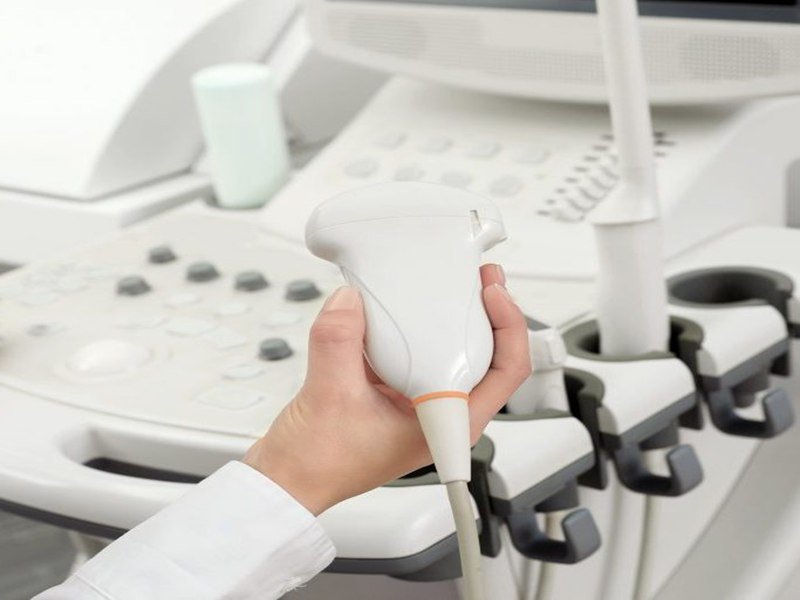
A lot of teams start looking for medical cable assembly manufacturers only after a problem appears. A drawing looks correct, the connector part number seems right, and the first assumption is that any factory that can crimp, solder, and test cables should be able to make the product. Real projects usually prove otherwise. A cable may pass continuity but fail once it is installed inside the device. The outer diameter may be only 0.5 mm too large, but that is enough to stop the housing from closing. The signal may look stable on the bench, then become noisy after routing near a power section. In many medical programs, the issue is not the idea of the cable. The issue is whether the manufacturer can understand the application and turn that requirement into a stable, repeatable assembly.
Medical cable assembly manufacturers are companies that design, prototype, and produce cable assemblies for medical equipment, with control over wiring, shielding, dimensions, materials, and compliance-related details. The right manufacturer does more than quote a part. It helps turn a sample, drawing, or even a photo into a workable cable solution that can move from prototype to production with fewer delays and less rework.
That difference matters much earlier than many customers expect. A project can lose one to three weeks not because the cable is difficult, but because the supplier is slow to clarify pinout, slow to update a drawing, or unable to adjust the structure after the first test. That is why choosing medical cable assembly manufacturers is not just a sourcing task. It is part of the product development strategy.
What Are Medical Cable Assembly Manufacturers?
Medical cable assembly manufacturers are companies that design and build cable assemblies specifically for medical devices. Their role is not limited to connecting wires and connectors. They are responsible for making sure the cable works correctly inside the device, fits the available space, maintains stable performance, and can be produced consistently from prototype to volume.
In many projects, customers start with a simple idea: “We just need a cable with these connectors.” The reality is usually more complex. The cable must match the device layout, support signal quality, and survive real usage conditions. This is where the manufacturer becomes part of the engineering process, not just a supplier.
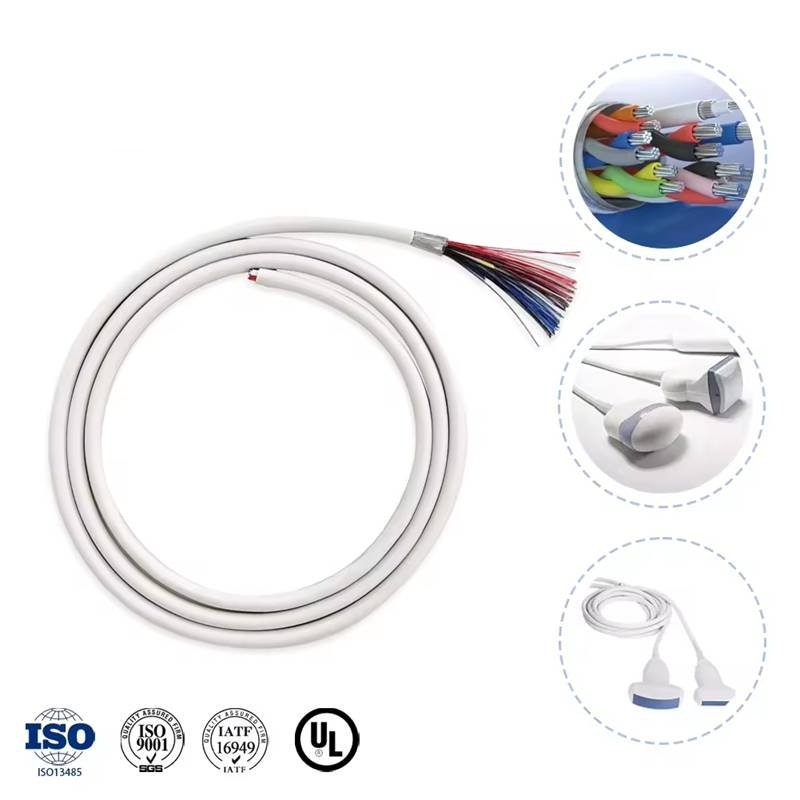
What Do Medical Cable Assembly Manufacturers Do?
Medical cable assembly manufacturers handle several key steps that directly affect whether your project moves forward smoothly or gets delayed.
Their work typically includes:
| Task | What It Means in Practice |
|---|---|
| Requirement review | checking connector type, cable structure, and application conditions |
| Drawing creation | converting your input into a clear, buildable design |
| Material selection | choosing the right wire, jacket, and shielding |
| Sample production | building prototypes for testing |
| Process control | ensuring stable assembly methods |
| Inspection | verifying wiring, dimensions, and performance |
From a customer perspective, the most valuable part is not production, but how the manufacturer handles unclear or incomplete information.
Many customers do not have a full specification at the beginning. They may provide:
- a connector part number
- a sample cable
- a photo
- a rough description
A capable manufacturer can still move the project forward by:
- analyzing the structure
- identifying key parameters
- proposing a workable design
- creating a drawing for confirmation
For example, in many projects handled by Sino-Conn, the first input is incomplete. The next step is to create a drawing within about 3 days so the customer can confirm:
- cable length
- pin definition
- connector orientation
- structure
This avoids building a sample based on assumptions.
Which Products Do Medical Cable Assembly Manufacturers Make?
Medical cable assembly manufacturers produce different types of assemblies depending on the device function and constraints.

The main product categories include:
| Product Type | Where It Is Used | What Customers Care About |
|---|---|---|
| Signal cable assemblies | monitoring and diagnostic devices | stable signal, low noise |
| Power cable assemblies | internal and external power connections | current capacity, safety |
| Hybrid cable assemblies | combined signal and power systems | integration and routing |
| RF/coax assemblies | imaging and high-frequency applications | impedance and shielding |
| Micro cable assemblies | compact devices | small OD and flexibility |
| Wire harness assemblies | internal device wiring | organization and fit |
Most customers do not use these products in standard form. They usually need adjustments such as:
- custom length
- specific pinout
- smaller outer diameter
- different materials
- improved shielding
A common situation:
A standard cable has an OD of 4.0 mm, but the device allows only 3.5 mm.
This requires redesign, not just selection.
Another example:
A cable works electrically but feels too stiff in a handheld device.
This leads to material change or structure adjustment.
These are typical scenarios in medical projects.
Where Are Medical Cable Assembly Manufacturers Used?
Medical cable assembly manufacturers support a wide range of devices where stable connections are critical.
Typical applications include:
| Application | Main Requirement |
|---|---|
| Patient monitoring systems | stable signal over long periods |
| Diagnostic equipment | accurate data transmission |
| Imaging systems | low-noise signal handling |
| Portable devices | flexibility and compact size |
| Surgical equipment | durability and secure connections |

Each application creates different challenges.
In monitoring systems, signal stability is critical.
In imaging systems, shielding and signal integrity are key.
In portable devices, flexibility and size affect usability.
From actual project experience, the most common issues after installation include:
- cable too thick to fit
- cable too stiff to route
- EMI affecting signal quality
- incorrect pin definition
These problems are usually not visible at the beginning. They appear when the cable is installed in the real device.
This is why manufacturers must understand not only the cable itself, but also how it will be used.
In many cases, customers start with limited information. The process then includes:
- reviewing available data
- proposing a suitable structure
- providing a drawing for confirmation
- building a sample for testing
This step-by-step approach reduces the risk of rework.
What Makes Medical Cable Assembly Manufacturers Different from General Suppliers?
Not all cable manufacturers are suitable for medical projects. The difference is not always obvious at the quotation stage.
Key differences include:
| Factor | General Supplier | Medical-Focused Manufacturer |
|---|---|---|
| design support | limited | supports incomplete requirements |
| customization | basic | flexible structure and pinout |
| response speed | slower | faster iteration |
| quality control | standard | multi-stage inspection |
| project handling | production-focused | design + production |
In practice, this means:
- a general supplier may wait for a complete specification
- a medical-focused manufacturer can help define the specification
For example:
If a customer sends only a photo, a general supplier may not proceed.
A more experienced manufacturer will:
- analyze the structure
- estimate key parameters
- suggest improvements
- provide a drawing
This ability becomes important when projects involve:
- tight space constraints
- complex routing
- sensitive signals
- frequent design changes
At Sino-Conn, many projects begin with partial information. The focus is on moving from unclear input to a confirmed design as quickly as possible.
The key point is simple. Medical cable assembly manufacturers are not just vendors. They are part of the process that turns a concept into a working product.
Why Medical Cable Assembly Manufacturers Matter?
Medical cable assembly manufacturers have a direct impact on whether your product works, how fast your project moves, and how much rework you need before production. In many projects, the cable itself is not the most complex part. What makes the difference is how well the manufacturer understands your design and how quickly they can turn it into a reliable assembly.
A cable that looks correct in a drawing can still create problems later. These problems usually appear during installation or testing, not at the quotation stage. That is why the manufacturer you choose matters more than most teams expect.
Why Do Medical Cable Assembly Manufacturers Affect Quality?
Quality is not only about whether the cable works once. It is about whether it works the same way every time, across all units, under real conditions.
Manufacturers influence quality in several key areas:
| Area | What They Control | What Happens If Not Controlled |
|---|---|---|
| materials | wire type, insulation, shielding | stiffness, poor durability |
| assembly process | crimping, soldering, molding | unstable connections |
| dimensions | OD, length, stripping accuracy | installation failure |
| wiring | pinout accuracy | device malfunction |
| inspection | process and final checks | hidden defects |
From project experience, these are common quality issues:
- cable works during testing but fails after repeated bending
- signal becomes unstable due to poor shielding
- connector is correct but orientation causes assembly difficulty
- different batches behave differently
A single working sample is not enough. The same structure must be maintained in production.
In practice, reliable manufacturers use multiple inspection steps instead of relying only on final checks.
For example, Sino-Conn uses:
- process inspection during assembly
- inspection after completion
- final inspection before shipment
This reduces variation between units and helps ensure consistency from sample to batch.
How Do Medical Cable Assembly Manufacturers Affect Lead Time?
Lead time is influenced by more than production speed. It includes how fast the manufacturer responds, how quickly drawings are prepared, and how efficiently changes are handled.
A typical timeline:
| Stage | Time Range |
|---|---|
| drawing | 1–3 days |
| sample production | around 2 weeks |
| mass production | 3–4 weeks |
However, most delays do not come from production itself. They come from gaps between steps.
Common sources of delay:
| Issue | Impact |
|---|---|
| slow drawing updates | delays sample start |
| unclear communication | requires repeated clarification |
| incorrect first sample | adds extra iteration cycle |
| slow response | extends decision time |
For example:
- a 3-day delay in drawing → pushes sample production by 3 days
- a 5-day delay in revision → delays testing by 5 days
These delays accumulate quickly.
In real projects, reducing waiting time between steps is more important than reducing production time.
At Sino-Conn:
- drawings are usually provided within about 3 days
- urgent samples can be completed in 2–3 days (depending on structure)
- standard samples take around 2 weeks
Fast response and clear communication help reduce unnecessary delays.
What Problems Come from Wrong Medical Cable Assembly Manufacturers?
Choosing the wrong manufacturer often leads to problems that are not obvious at the beginning but become serious later.
Common problems include:
| Problem | Result |
|---|---|
| poor understanding of requirements | cable does not fit device |
| limited customization | cannot solve real issues |
| slow response | project delays |
| inconsistent production | quality variation |
| weak inspection | defects appear in use |
These problems usually appear in real situations:
- cable cannot be installed due to size
- signal becomes unstable after integration
- pinout mismatch requires rebuilding samples
- multiple revisions increase project time
One important point is cost.
Many customers focus on unit price, but the larger cost often comes from delays and rework.
| Cost Type | Description |
|---|---|
| product cost | price per cable |
| delay cost | lost time, retesting, redesign |
| risk cost | potential failure in production |
In many cases, delay cost is higher than product cost.
How Do Medical Cable Assembly Manufacturers Affect Project Success?
The manufacturer influences how smoothly your project moves from concept to production.
A capable manufacturer helps:
- identify potential issues early
- provide clear drawings for confirmation
- support fast iteration
- maintain consistent quality
This reduces:
- number of revisions
- testing delays
- production risks
A less capable manufacturer often leads to:
- repeated design changes
- longer development cycles
- inconsistent results
From a customer perspective, a good manufacturer makes the process predictable.
In many projects, the difference comes down to how quickly problems are solved.
For example:
- adjusting cable OD before sample → avoids enclosure redesign
- confirming pinout before production → avoids rework
- improving shielding early → prevents signal issues
At Sino-Conn, the focus is on solving these issues early in the process. This includes:
- reviewing requirements before production
- providing drawings for confirmation
- supporting adjustments based on testing
This approach helps customers move from idea to production with fewer interruptions.
The main point is clear. Medical cable assembly manufacturers affect not only the cable itself, but the entire project timeline and outcome.
How to Evaluate Medical Cable Assembly Manufacturers?
Evaluating medical cable assembly manufacturers is not about comparing quotations line by line. Most suppliers can quote a cable if you provide a part number or drawing. The real difference shows up when your project starts moving—when specifications are incomplete, when the first sample needs changes, or when the cable must fit into a tight and complex device.
A practical evaluation focuses on how the manufacturer handles real situations: unclear input, design adjustments, time pressure, and consistency from sample to production.
What Should Medical Cable Assembly Manufacturers Provide?
A capable manufacturer should provide information that allows your engineering and purchasing teams to make decisions without guessing. Missing or unclear information is one of the main reasons projects get delayed.
The following deliverables are essential:
| Deliverable | What It Should Include | Why It Matters |
|---|---|---|
| Cable specification | material, OD, voltage, current, shielding, structure | confirms design feasibility |
| Connector details | part number, pin layout, compatibility | avoids mismatch |
| Drawing (CAD/PDF) | length, pinout, orientation, structure | prevents wiring errors |
| Sample photos | overall and close-up details | visual confirmation |
| Test checks | continuity, insulation, basic performance | ensures functionality |
In many projects, the drawing is the most critical step.
Common issues that come from missing or unclear drawings:
- pinout described in text but wired differently
- connector orientation reversed
- cable exit direction interfering with enclosure
- incorrect length assumptions
A clear drawing avoids these problems before production begins.
In practice, many customers start with limited data. A supplier should be able to:
- review a sample or photo
- estimate key parameters
- create a drawing for confirmation
For example, Sino-Conn often prepares drawings within about 3 days based on partial information. This allows the customer to confirm structure and wiring before samples are built.
How Fast Should Medical Cable Assembly Manufacturers Respond?
Response speed affects the entire project timeline, not just communication convenience.
Most delays in medical cable projects come from waiting between steps, not from production itself.
Key response benchmarks:
| Task | Reasonable Time |
|---|---|
| initial reply | within 24 hours |
| drawing preparation | 1–3 days |
| drawing revision | 1–3 days |
| technical clarification | same day or next day |
When response is slow, delays multiply:
| Delay Type | Effect |
|---|---|
| drawing delay (3–5 days) | sample start postponed |
| unclear answers | repeated emails needed |
| slow revision | testing schedule pushed back |
For example:
- a 3-day delay in drawing → sample delayed by 3 days
- a 5-day delay in revision → testing delayed by 5 days
These delays often overlap and extend the project timeline significantly.
In real projects, fast response includes:
- clear answers without repeated clarification
- quick updates after feedback
- ability to identify issues early
Sino-Conn focuses on reducing waiting time between steps:
- drawings typically ready within about 3 days
- urgent cases handled faster when possible
- clear communication to avoid repeated questions
From a customer perspective, faster response means fewer interruptions and a more predictable schedule.
Do Medical Cable Assembly Manufacturers Support Custom?
Customization is one of the most important evaluation points. Medical cable projects rarely match standard products exactly.
A manufacturer should support adjustments in:
| Custom Area | Example |
|---|---|
| cable length | 200 mm to 2 m or more |
| pinout | custom wiring definitions |
| structure | reduced OD or special routing |
| materials | flexibility or environmental resistance |
| shielding | improved EMI protection |
Many projects require changes after the first sample.
Common adjustments include:
- reducing cable diameter to fit enclosure
- changing material to improve flexibility
- upgrading shielding to reduce noise
- modifying pinout after integration testing
If the manufacturer cannot support these changes, the customer may need to:
- redesign the device
- switch suppliers
- restart development
A flexible manufacturer can handle these changes without restarting the process.
In practice, customization also includes connector options:
- original connectors (higher cost, longer lead time)
- equivalent connectors (more flexible, faster availability)
Having both options allows better control over cost and schedule.
How Do Medical Cable Assembly Manufacturers Handle Incomplete Requirements?
Incomplete requirements are common, especially in early-stage projects.
Customers may provide:
- a sample cable
- a connector model
- a photo
- a basic description
A supplier should be able to work with this information instead of waiting for a complete specification.
Key capabilities include:
| Capability | What It Means |
|---|---|
| structure analysis | understanding cable from sample or image |
| parameter estimation | identifying wire gauge, shielding, OD |
| design proposal | suggesting workable structure |
| drawing creation | providing clear design for confirmation |
Without this capability, the project may stall until all details are defined.
In real projects, this can delay development by weeks.
At Sino-Conn, many projects begin with partial data. The process focuses on:
- understanding the application
- proposing a suitable structure
- confirming through drawings
- refining after testing
This approach allows the project to move forward without waiting for complete information.
How Do Medical Cable Assembly Manufacturers Ensure Consistency?
Consistency is critical when moving from sample to production. A working sample is only the first step. The same performance must be maintained across all units.
Manufacturers ensure consistency through:
| Control Area | Method |
|---|---|
| process control | standardized assembly steps |
| material control | stable sourcing |
| dimensional control | precise cutting and stripping |
| inspection | multi-stage verification |
Without proper control, problems may appear such as:
- variation in cable length or OD
- inconsistent crimp quality
- differences between batches
These issues can affect product reliability.
A common risk is:
- sample works → production batch behaves differently
To reduce this risk, inspection should not rely on a single final check.
At Sino-Conn, inspection is carried out at multiple stages:
- during production
- after assembly
- before shipment
This helps ensure that production matches the approved sample.
The key point is that evaluating medical cable assembly manufacturers is about understanding how they handle real project conditions. The more complex your project, the more important this evaluation becomes.
Which Medical Cable Assembly Manufacturers Fit You?
There is no single “best” medical cable assembly manufacturer for every project. The right choice depends on your stage, your priorities, and how much uncertainty still exists in your design. Some projects need speed and flexibility. Others need stability and cost control. Many teams realize this only after working with a supplier that fits one stage but not the next.
A practical way to choose is to match the manufacturer’s strengths to your current needs, not just to the final production goal.
Which Medical Cable Assembly Manufacturers Fit R&D?
R&D projects usually start with incomplete information and change frequently. The main requirement is not cost optimization. It is speed and flexibility.
Typical R&D characteristics:
| Situation | What It Means |
|---|---|
| incomplete specs | drawing or pinout may not be finalized |
| frequent changes | design updates after testing |
| small quantities | only a few samples needed |
| tight schedule | fast iteration required |
Manufacturers that fit R&D should be able to:
- work with partial input (sample, photo, rough description)
- provide drawings quickly for confirmation
- support multiple revisions without long delays
- accept small quantity orders
In many R&D cases, the first version of the cable is not final. It is used to verify:
- mechanical fit
- signal behavior
- routing feasibility
After testing, changes are almost always required.
Common R&D adjustments:
- reducing OD to fit enclosure
- modifying pinout after integration
- changing material for flexibility
- improving shielding
If the manufacturer cannot handle these changes quickly, the project slows down.
In practice, many R&D teams prefer suppliers that respond quickly rather than those offering the lowest price.
Sino-Conn often supports this stage by:
- preparing drawings within about 3 days
- supporting quick revisions after feedback
- accepting small sample quantities
This helps shorten the gap between design and testing.
Which Medical Cable Assembly Manufacturers Fit OEM?
OEM projects focus on stability, consistency, and cost control. Once the design is confirmed, the priority shifts from flexibility to repeatability.
Typical OEM priorities:
| Requirement | Why It Matters |
|---|---|
| consistent quality | ensures product reliability |
| stable supply | avoids production interruption |
| predictable lead time | aligns with production schedule |
| cost control | supports volume production |
OEM customers often require:
- consistent material sourcing
- repeatable production processes
- stable delivery schedules
- long-term cooperation
They may also expect:
- 30–60 day payment terms
- volume-based pricing
- reliable communication for planning
The main risk in OEM stage is variation.
For example:
- sample works, but production batch differs
- material change affects performance
- inconsistent assembly causes defects
A suitable manufacturer should control:
| Area | What to Watch |
|---|---|
| process consistency | same method for every unit |
| material stability | same source and specification |
| inspection | checks during and after production |
| documentation | traceable production records |
Sino-Conn supports OEM projects with:
- multi-stage inspection
- stable production workflow
- flexible pricing depending on volume
For OEM customers, the goal is not just to produce cables, but to maintain the same result every time.
Which Medical Cable Assembly Manufacturers Fit Small Orders?
Small orders are common in early-stage development, testing, and niche applications. These orders often have different requirements compared to large-scale production.
Typical small order needs:
| Requirement | Why It Matters |
|---|---|
| low MOQ | reduces financial risk |
| fast turnaround | supports quick testing |
| flexibility | allows design changes |
Many manufacturers prefer large orders because:
- setup effort is similar
- margins are higher
This can create challenges for customers who need:
- 1–10 samples
- small batch testing
- quick design validation
A suitable supplier for small orders should:
- accept low quantities
- provide reasonable pricing
- maintain the same quality as larger orders
In practice, small orders often require more support:
- more communication
- more revisions
- more customization
Without flexibility, small projects can become difficult to manage.
Sino-Conn supports this stage with:
- no strict MOQ (starting from 1 piece)
- support for prototype and small batch production
- ability to scale up after validation
This allows customers to move from small testing quantities to larger production without changing suppliers.
Which Medical Cable Assembly Manufacturers Fit Cost-Sensitive Projects?
Some projects are highly sensitive to cost, especially when targeting consumer or high-volume markets.
In these cases, the focus shifts to:
| Factor | Priority |
|---|---|
| unit cost | high |
| material selection | optimized for cost |
| connector choice | original vs equivalent |
| production efficiency | critical |
One important decision is connector type:
| Option | Advantage | Limitation |
|---|---|---|
| original connector | stable quality, brand recognition | higher cost, longer lead time |
| equivalent connector | lower cost, faster availability | may require validation |
Many customers use a mixed strategy:
- prototype with original connectors
- production with equivalent connectors (after validation)
A manufacturer that supports both options provides more flexibility.
Cost-sensitive projects also benefit from:
- simplified structure
- optimized material selection
- efficient production methods
However, cost reduction should not compromise performance.
The balance between cost and reliability is important, especially in medical applications.
How to Decide Which Medical Cable Assembly Manufacturers Fit You?
Choosing the right manufacturer depends on your current priorities.
A simple comparison:
| Project Stage | Best Fit Manufacturer |
|---|---|
| R&D | flexible, fast response |
| validation | balanced flexibility and consistency |
| production | stable, cost-controlled |
| small batch | low MOQ, responsive |
| high volume | scalable, cost-efficient |
Instead of asking “which manufacturer is best,” it is more useful to ask:
- can this manufacturer support my current stage?
- can they adapt as my project evolves?
- can they handle both small and large quantities?
In many cases, the ideal supplier is one that can support the entire process:
- early design
- sample testing
- production scaling
This reduces the need to switch suppliers and restart the process.
What really matters is choosing a manufacturer that fits your current stage and can keep supporting your project as it moves forward.
Do You Need Custom Medical Cable Assembly Manufacturers?
Many teams begin with standard cable solutions because they are easy to source and quick to quote. This works in simple cases. In medical projects, it often works only at the very beginning. Once the cable is installed inside the device, small mismatches start to appear.
The decision is not about whether custom is better in theory. It is about whether a standard solution can survive real conditions: tight space, repeated movement, sensitive signals, and changing design requirements.
When to Choose Custom Medical Cable Assembly Manufacturers?
Custom medical cable assembly manufacturers are needed when the cable must match the device, not just connect two interfaces.
Common triggers include:
| Situation | What Happens with Standard Cable |
|---|---|
| limited internal space | cable too thick to fit |
| complex routing | cable cannot follow bending path |
| moving parts | cable becomes stressed or damaged |
| sensitive signal | EMI affects performance |
| non-standard wiring | pinout does not match system |
| fast development cycle | standard lead time slows progress |
From actual project experience, mechanical fit is the most frequent issue.
For example:
- a cable designed at 4.2 mm OD cannot pass through a 3.6 mm channel
- a connector exit direction blocks nearby components
- the cable cannot bend within the required radius
These problems are usually discovered after the first sample is tested inside the device.
Signal issues are another common trigger.
A cable may pass basic electrical tests but show:
- unstable signal after installation
- noise when placed near power components
- inconsistent performance under movement
Once these issues appear, continuing with a standard solution usually leads to repeated adjustments. Custom design becomes the faster path.
How Custom Medical Cable Assembly Manufacturers Solve Real Problems?
Custom manufacturers focus on adapting the cable to the device, instead of forcing the device to adapt to the cable.
The most common adjustments include:
| Area | Adjustment | Result |
|---|---|---|
| cable diameter | reduce OD | fits enclosure |
| material | change to softer jacket | improves flexibility |
| shielding | upgrade structure | reduces EMI |
| wiring | adjust pinout | matches system |
| structure | redesign layout | improves routing |
Even small changes can solve major issues.
For example:
- reducing OD by 0.5–0.8 mm can eliminate assembly conflicts
- switching from PVC to TPU can improve flexibility and reduce stress
- upgrading from foil shielding to braid can stabilize signal
Another advantage is faster iteration.
During development, requirements change after testing. A custom manufacturer can:
- update drawings quickly
- adjust structure without restarting from zero
- produce revised samples in shorter cycles
In many projects, 2–3 iterations are needed before finalizing the design. The speed of these iterations directly affects the project timeline.
Sino-Conn supports this process by:
- updating drawings based on feedback
- providing revised samples after adjustments
- helping identify practical solutions early
What Risks Can Custom Medical Cable Assembly Manufacturers Reduce?
Custom solutions help reduce risks that are difficult to see at the beginning but become expensive later.
| Risk | Without Custom | With Custom |
|---|---|---|
| assembly failure | cable does not fit | correct dimensions |
| signal instability | EMI or noise | improved shielding |
| repeated redesign | multiple iterations | faster alignment |
| project delay | extended timeline | quicker adjustments |
| production inconsistency | variation between batches | controlled design |
One of the biggest hidden costs in medical projects is rework.
For example:
- redesigning an enclosure due to cable size
- rebuilding samples due to incorrect pinout
- retesting due to signal instability
These delays can add weeks to the project.
Custom design reduces these risks by addressing them earlier.
How Does Custom Affect Cost and Lead Time?
Custom solutions are often assumed to increase cost and lead time. In practice, the impact depends on the project stage.
During development:
| Factor | Standard Approach | Custom Approach |
|---|---|---|
| iteration speed | slower | faster |
| fit accuracy | uncertain | improved |
| rework risk | higher | lower |
During production:
| Factor | Standard | Custom |
|---|---|---|
| unit cost | fixed | optimized |
| stability | moderate | higher |
| scalability | limited | better |
Another important factor is MOQ.
Many suppliers require large quantities, which is not suitable for early-stage projects.
Flexible manufacturers allow:
- small quantity orders
- testing before scaling
- gradual transition to production
Sino-Conn supports this with:
- no strict MOQ (starting from 1 piece)
- support for prototype and small batch production
- ability to scale after validation
This reduces financial risk during development.
How to Start with Custom Medical Cable Assembly Manufacturers?
Starting a custom project does not require a complete specification. Many projects begin with limited information.
Common starting points:
- connector part number
- existing sample
- drawing
- photo
- basic description
A practical process includes:
| Step | Action |
|---|---|
| 1 | share available information |
| 2 | confirm basic concept |
| 3 | create drawing for review |
| 4 | produce sample |
| 5 | test and adjust |
Customers often ask what information is needed.
The most useful inputs include:
| Information | Example |
|---|---|
| connector | part number or image |
| length | 300 mm, 1 m |
| pinout | wiring description |
| application | monitoring, imaging, portable |
| requirements | shielding, flexibility, size |
If some details are missing, they can be clarified during the process.
In many cases, the first version is not final. The goal is to reach a working sample quickly, then refine.
Choosing custom medical cable assembly manufacturers is not about making the design more complex. It is about making sure the cable works correctly in the device and supports the project from development to production without unnecessary delays.
Start Your Project with the Right Medical Cable Assembly Manufacturer
Choosing the right medical cable assembly manufacturer affects more than supply. It affects how quickly your project moves, how many revisions are needed, and how stable your final product will be.
Many customers reach out when they encounter issues such as:
- cable does not fit inside the device
- signal becomes unstable after installation
- supplier response is too slow
- design changes take too long
- small orders are not accepted
These are common problems in medical cable projects.
A more effective approach is to work with a manufacturer that can:
- understand your application, even with incomplete data
- provide drawings for confirmation before production
- support fast iteration during development
- handle both small and large orders
- maintain consistent quality across batches
If you have a drawing, a sample, or even just a photo, you can start the process. The goal is not only to build a cable, but to build one that works in your device from the first test to final production.
If you are evaluating medical cable assembly manufacturers for your next project, you can share your requirements and review possible solutions before committing to production.



