Skip to content
What Is RG-6 Coaxial Cable and How Is It Used in Real Applications?
- andy

Coaxial cables are often treated as commodity products—picked from a catalog, cut to length, and installed without much thought. Among them, RG-6 coaxial cable is one of the most widely used and least understood. Many people know the name. Fewer understand what actually defines it. Even fewer understand why RG-6 is still used today, how it differs from other coaxial cables, or when standard RG-6 stops being “good enough.”
In real projects, problems rarely come from the idea of using RG-6 itself. They come from assumptions. Assumptions that all RG-6 cables are the same. Assumptions that shielding levels do not matter. Assumptions that length, connector choice, or jacket material are minor details. Over time, these assumptions show up as signal loss, interference, installation headaches, or premature failure.
RG-6 cable appears in residential TV systems, satellite installations, CCTV networks, commercial buildings, and OEM equipment. It carries RF signals reliably over moderate distances at a reasonable cost. That balance—performance versus practicality—is exactly why RG-6 has survived decades of technology change.
RG-6 coaxial cable is a 75-ohm RF cable commonly used for television, satellite, broadband, and CCTV signal transmission. “RG” stands for Radio Guide, a historical classification system. RG-6 is defined by its impedance, shielding structure, and frequency performance rather than a single fixed standard. It offers lower signal loss than RG-59 and greater flexibility than RG-11, making it a practical choice for many real-world applications.
To truly understand RG-6, however, we need to look beyond the label—starting with what the name actually means.
What Is RG-6 Coaxial Cable?
RG-6 coaxial cable is a 75-ohm radio-frequency cable designed for video, RF, and broadband signal transmission. It is commonly used in CATV, satellite, CCTV, and commercial RF systems. “RG” refers to Radio Guide, a legacy military classification. RG-6 is defined by its impedance, shielding, and frequency performance rather than a single universal construction standard.
What Does “RG” Stand for in RG-6 Coaxial Cable?
The term RG originates from “Radio Guide,” a U.S. military designation system developed decades ago. At the time, RG numbers were used to categorize different coaxial cables based on electrical behavior and intended use—not to define a strict manufacturing specification.
This point is critical:
RG-6 is not a single, tightly controlled global standard.
Instead, it is a family designation. Over time, the industry adopted RG-6 as shorthand for a 75-ohm coaxial cable with certain expected performance characteristics. As a result, multiple constructions can all legitimately be called “RG-6,” even though they differ in materials, shielding, and durability.
This is why two RG-6 cables from different suppliers may behave very differently in real installations—especially at higher frequencies or longer distances.
What Exactly Defines an RG-6 Coaxial Cable Today?
In modern practice, RG-6 is defined by a combination of electrical intent and physical structure, not a single blueprint.
Typical defining characteristics include:
| Parameter | Typical RG-6 Value |
|---|---|
| Characteristic impedance | 75 Ω |
| Center conductor | Solid or stranded copper / copper-clad |
| Dielectric | Foamed polyethylene |
| Shielding | Foil + braid (dual or quad) |
| Outer diameter | ~6.9–7.5 mm |
| Frequency range | Up to ~3 GHz (construction-dependent) |
The key takeaway is this:
RG-6 describes what the cable is meant to do, not exactly how it must be built.
That flexibility is both a strength and a risk. It allows RG-6 to adapt to different applications—but it also means buyers must look beyond the name and examine real specifications.
Why RG-6 Is Considered a “Middle Ground” Coaxial Cable
RG-6 sits between thinner, higher-loss cables (like RG-59) and thicker, stiffer options (like RG-11). This positioning explains its popularity.
Compared to RG-59:
- Lower attenuation
- Better high-frequency performance
- Longer usable runs
Compared to RG-11:
- Smaller diameter
- Easier installation
- Better flexibility in tight spaces
That balance makes RG-6 suitable for a wide range of installations where extreme performance is not required, but reliability still matters.
Is RG-6 a Product or a Category?
This question matters more than many buyers realize.
RG-6 is a category, not a guaranteed product specification. Two cables labeled “RG-6” can differ in:
- Shielding effectiveness
- Conductor material
- Jacket durability
- Mechanical lifespan
From an engineering and procurement standpoint, this means RG-6 should always be evaluated by datasheet, not by name alone. The label opens the door—but the details determine whether the cable actually fits the application.
Transition to Next Section
Now that we understand what RG-6 is—and what it is not—the next step is to look inside the cable itself. Its materials, shielding structure, and construction choices explain why RG-6 behaves the way it does in real systems.
What Is RG-6 Coaxial Cable Made Of?
RG-6 coaxial cable consists of a center conductor, dielectric insulation, one or more shielding layers (foil and braid), and an outer jacket. Each layer serves a specific electrical and mechanical function. Variations in conductor material, shielding density, and jacket type significantly affect signal loss, interference resistance, flexibility, and durability—even when the cable is still labeled “RG-6.”
Understanding RG-6 starts from the inside out. The name alone tells you almost nothing about how well the cable will actually perform.
What Are the Core Structural Layers of RG-6 Cable?
At a structural level, RG-6 follows the classic coaxial architecture:
| Layer | Function | Why It Matters |
|---|---|---|
| Center conductor | Carries the RF signal | Determines attenuation and DC resistance |
| Dielectric | Maintains impedance & spacing | Controls signal velocity and stability |
| Shielding | Blocks EMI/RFI | Prevents signal leakage and noise |
| Outer jacket | Mechanical & environmental protection | Determines lifespan and installability |
Each of these layers can vary significantly between manufacturers—and those variations matter in real installations.

What Materials Are Used for the RG-6 Center Conductor?
The center conductor is the heart of RG-6 performance. It carries the RF signal and directly affects attenuation and long-distance reliability.
Common options include:
| Conductor Type | Characteristics | Typical Use |
|---|---|---|
| Solid copper | Lowest signal loss, best conductivity | Professional, long-run systems |
| Copper-clad steel (CCS) | Lower cost, higher resistance | Residential CATV |
| Stranded copper | More flexible, slightly higher loss | Short, movable assemblies |
From a signal-integrity perspective, solid copper is superior—especially at higher frequencies or longer distances. CCS conductors rely on the skin effect at RF frequencies, which works well enough for many TV installations but becomes limiting in demanding or mixed-signal environments.
For OEMs and commercial systems, conductor choice is often one of the first customization points.
How Does the Dielectric Affect RG-6 Performance?
The dielectric layer keeps the center conductor precisely spaced from the shield. That spacing is what creates the cable’s 75-ohm characteristic impedance.
Most RG-6 cables use foamed polyethylene (FPE) as the dielectric because it offers:
- Stable impedance
- Low dielectric loss
- Lightweight structure
However, dielectric quality varies more than many buyers expect.
Key factors include:
- Foam density consistency
- Resistance to compression during bending
- Long-term dimensional stability
A poorly controlled dielectric may still pass initial testing but drift over time—especially when cables are tightly routed or exposed to heat. This drift shows up as impedance mismatch and signal reflection, problems that are difficult to diagnose after installation.
What Types of Shielding Are Used in RG-6 Coaxial Cable?
Shielding is where most RG-6 confusion—and marketing noise—comes from.
The purpose of shielding is twofold:
- Prevent external EMI/RFI from entering the cable
- Prevent the RF signal from leaking out
Common RG-6 shielding structures include:
| Shield Type | Construction | Typical Effectiveness |
|---|---|---|
| Dual shield | Foil + single braid | Moderate EMI protection |
| Tri-shield | Foil + braid + foil | Improved isolation |
| Quad shield | Foil + braid + foil + braid | High EMI resistance |
Quad-shield RG-6 is often specified for environments with:
- Dense cabling
- Strong RF fields
- Satellite or broadband signals
However, more shielding is not automatically better. Additional layers increase:
- Cable stiffness
- Outer diameter
- Termination complexity
In tight routing spaces or high-flex applications, an over-shielded cable can actually fail sooner due to mechanical stress.
How Does the Outer Jacket Influence Real-World Use?
The outer jacket is often treated as an afterthought, but it determines how long an RG-6 cable survives in the field.
Common jacket materials include:
| Jacket Material | Properties | Typical Application |
|---|---|---|
| PVC | Low cost, flexible | Indoor residential |
| LSZH | Low smoke, fire safety | Commercial buildings |
| PE | UV-resistant, tough | Outdoor installations |
| TPU / PUR | Oil, abrasion resistant | Industrial systems |
Using the wrong jacket material does not usually cause immediate failure. Instead, it leads to:
- Cracking over time
- Hardening and loss of flexibility
- Jacket damage during maintenance
For OEM equipment and industrial installations, jacket choice is often a design decision, not a commodity choice.
Why Two RG-6 Cables Can Behave Very Differently
At this point, an important pattern should be clear:
RG-6 describes a performance class—not a guaranteed build quality.
Two cables labeled “RG-6” may differ in:
- Conductor resistance
- Shielding effectiveness
- Mechanical durability
- Installation lifespan
This is why engineers and experienced buyers rarely ask only “Is it RG-6?”
They ask for:
- Full specifications
- Cross-section details
- Electrical performance data
- Real photos or samples
Engineering Insight: Where Problems Usually Start
In practice, RG-6 failures often originate from:
- Cost-driven conductor substitutions
- Inconsistent shielding braid density
- Dielectric compression during bending
- Jackets not suited to the environment
None of these issues are visible from the label. All of them are visible in the construction details.
What Is RG-6 Coaxial Cable Used For?
RG-6 coaxial cable is primarily used for RF signal transmission in applications such as cable television (CATV), satellite systems, broadband internet, CCTV, and certain RF communication systems. Its 75-ohm impedance, low attenuation, and strong shielding make it suitable for medium-to-long runs where signal stability and noise resistance are critical.
RG-6 exists because RF systems need predictable signal behavior over distance, not just electrical continuity.
Which Applications Commonly Use RG-6 in Practice?
Although often associated with home TV wiring, RG-6 is widely used across multiple industries:
| Application | Why RG-6 Is Used |
|---|---|
| CATV / Cable TV | Low loss over long runs |
| Satellite TV | High-frequency signal handling |
| Broadband internet | Stable impedance for DOCSIS |
| CCTV / video systems | Reduced noise and signal loss |
| RF distribution systems | Controlled impedance |
What these systems have in common is continuous RF transmission, often over tens of meters, where attenuation and interference quickly become visible problems.
Why RG-6 Became the Industry Default for 75-Ohm Systems
RG-6 replaced older coax types (such as RG-59) in many applications because it offered a better balance of:
- Lower attenuation
- Improved shielding
- Reasonable flexibility
- Acceptable cost
At frequencies used for modern TV and broadband signals, RG-6 maintains signal integrity far better than thinner cables, without the installation difficulty of very thick cables.
Is RG-6 Only for Residential Use?
No—and this is a common misconception.
While residential installations represent high volume, commercial and OEM systems also rely on RG-6, especially when:
- RF signals must travel longer distances
- EMI environments are unpredictable
- Signal loss margins are tight
In OEM equipment, RG-6 is often used inside enclosures, between RF modules, tuners, or distribution boards—sometimes in much shorter but more demanding runs.
What Does “RG” Stand for in RG-6?
“RG” originally stands for Radio Guide, a military designation used to classify coaxial cables by size and electrical characteristics. RG-6 is not a brand name or performance guarantee; it is a legacy classification indicating a 75-ohm coaxial cable with specific dimensional and electrical properties.
Understanding this prevents a lot of confusion.
Why RG Numbers Do Not Guarantee Performance
The RG system originated in military documentation decades ago. Over time, it became a reference framework, not a strict manufacturing standard.
This means:
- RG-6 does not specify conductor purity
- RG-6 does not specify shielding density
- RG-6 does not define jacket material
Two cables can both be labeled RG-6 and perform very differently in the field.
RG Classification vs Modern Specifications
Modern performance is determined by:
- Attenuation per meter
- Shielding effectiveness (dB)
- Frequency range
- Mechanical durability
That’s why professional buyers request datasheets and cross-sections, not just the RG number.
How Does RG-6 Compare With RG-59 and RG-11?
RG-6 offers lower signal loss and better shielding than RG-59, while being thinner and more flexible than RG-11. It serves as a balanced solution for most RF transmission needs. RG-59 suits short, low-frequency runs; RG-11 is used for very long distances where minimal attenuation is critical.
This comparison is essential for correct cable selection.

RG-6 vs RG-59: Why Thicker Often Means Better
RG-59 was widely used in older systems but struggles at higher frequencies and longer distances.
| Feature | RG-59 | RG-6 |
|---|---|---|
| Diameter | Thinner | Thicker |
| Attenuation | Higher | Lower |
| Shielding | Lighter | Stronger |
| Typical Use | Short runs | Medium-long runs |
Using RG-59 where RG-6 is required often results in:
- Snowy video
- Intermittent signal drops
- Reduced broadband speed
RG-6 vs RG-11: When Bigger Is Not Better
RG-11 is designed for very long runs, often hundreds of meters.
| Feature | RG-6 | RG-11 |
|---|---|---|
| Attenuation | Low | Very low |
| Flexibility | Moderate | Poor |
| OD | Medium | Large |
| Installation | Easy | Difficult |
RG-11 is rarely used inside equipment or tight spaces. In many cases, RG-6 provides sufficient performance with far better handling.
Selection Rule Engineers Actually Use
In practice, engineers often follow this logic:
- Short, low-frequency → RG-59
- Medium distance, general RF → RG-6
- Very long runs → RG-11
This rule works because it balances electrical needs with mechanical reality.
Are RG-6 Cables Still Used in Modern Systems?
Yes. RG-6 cables remain widely used in modern RF systems, including digital TV, broadband internet, CCTV, and OEM RF equipment. Despite advances in fiber and wireless technologies, physical RF connections still require controlled-impedance coaxial cables, and RG-6 continues to meet these requirements effectively.
Technology has changed—but physics has not.
Why Fiber and Wireless Did Not Replace RG-6 Everywhere
Fiber excels at long-distance, high-bandwidth transmission, but it requires:
- Optical transceivers
- Power
- More complex termination
Wireless removes cables, but introduces:
- Interference
- Latency
- Security concerns
RG-6 remains relevant wherever:
- RF signals must be stable
- Cost must be controlled
- Installation simplicity matters
Modern Uses Look Different—but Still Depend on RG-6
Today’s RG-6 use often involves:
- Higher frequencies
- Denser installations
- Stricter EMI environments
This is why shielding quality and materials matter more today than ever before, even though the cable name hasn’t changed.
When Do Standard RG-6 Cables Become a Problem?
Standard RG-6 cables are designed for average scenarios. Problems arise when reality deviates.
Common issues include:
- Fixed lengths creating excess slack
- Stiff cables in tight enclosures
- Incompatible connectors
- Jackets unsuitable for heat or oil
At this point, RG-6 stops being a commodity—and becomes an engineering concern.
When Should Custom RG-6 Cable Assemblies Be Considered?
Custom RG-6 cable assemblies should be considered when standard cables cannot meet length, connector, environmental, or routing requirements. Customization improves fit, reliability, EMI performance, and installation efficiency—especially in OEM equipment, industrial systems, or dense RF layouts.
Custom Lengths: Solving Real Installation Problems
| Length Strategy | Result |
|---|---|
| Standard lengths | Excess slack, strain |
| Custom exact length | Clean routing, reliability |
Exact length matters more than most buyers expect—especially when cables are installed by the hundreds.
Custom Connectors and Pin Definitions
OEM systems often require:
- Specific connector models
- Orientation control
- Alternative mating interfaces
Standard RG-6 jumpers rarely support this cleanly.
Material Customization for Harsh Environments
| Environment | Recommended Jacket |
|---|---|
| Indoor | PVC / LSZH |
| Outdoor | UV-resistant PE |
| Industrial | TPU / PUR |
This is where a cable assembly manufacturer, not just a cable supplier, becomes essential.
Why RG-6 Is Simple—Until It Isn’t
RG-6 looks simple because it’s familiar.
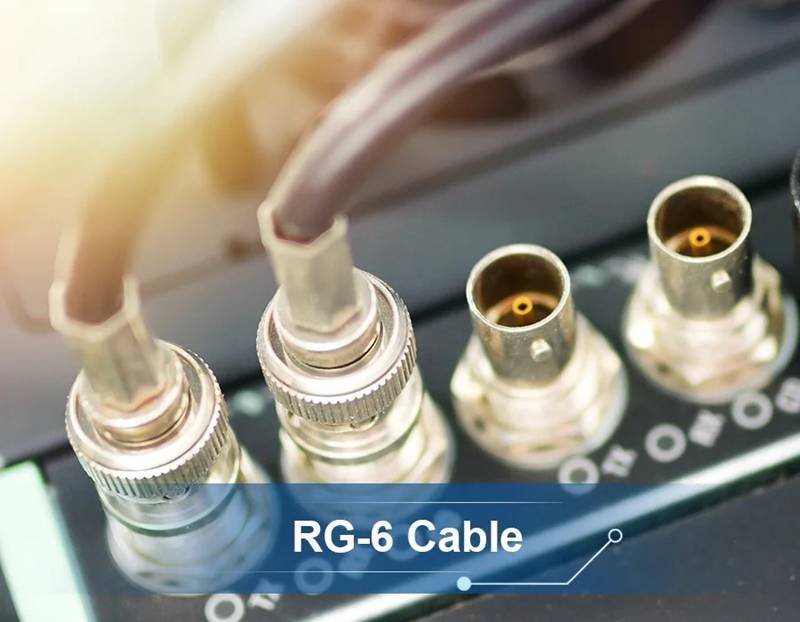
It becomes complex when:
- Performance margins shrink
- Environments get harsher
- Systems get denser
At that point, success depends less on the label “RG-6” and more on how the cable is built, terminated, and integrated.
For OEMs, system integrators, and professional buyers, early technical discussion prevents late-stage failures.
Sino-Conn supports custom RG-6 coaxial cable assemblies with:
- Full specifications and drawings
- Flexible materials and connectors
- Rapid samples
- No MOQ constraints
Related Keywords :rg-6 coaxial cable, what is rg6 cable, rg6 cable uses, rg coaxial meaning, rg6 vs rg59, rg6 specifications, coaxial cable 75 ohm, custom coaxial cable, rg6 cable assembly, rf coaxial cable, rg6 shielding, quad shield rg6, rg6 cable manufacturer, coaxial cable applications, rg6 for cctv, rg6 for satellite, rg6 impedance, coaxial cable structure, rf cable assembly, custom rg6 cable,

With over 18 years of OEM/ODM cable assemblies industry experience, I would be happy to share with you the valuable knowledge related to cable assemblies products from the perspective of a leading supplier in China.
manufacturer catalogue
Get A Sample Now From Factory→
Get a quote quickly
Here, developing your OEM/ODM custom cable assemblies collection is no longer a challenge—it’s an excellent opportunity to bring your creative vision to life.