Skip to content
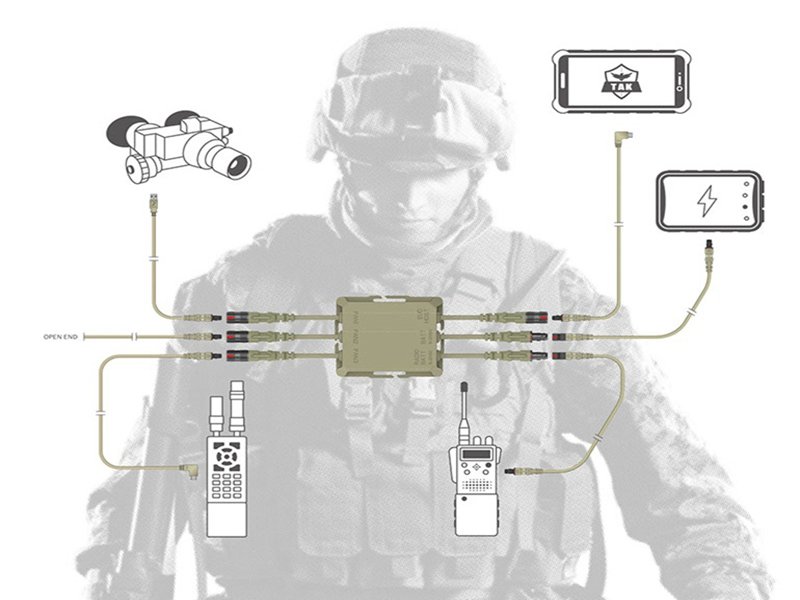
In military projects, cable assemblies are rarely treated as “just wiring.” They sit between mission electronics and real-world stress—heat, vibration, fluids, UV, and electrical noise—often all at once. When a commercial cable fails, the cost is usually time and a replacement. In a defense environment, failure can mean system downtime, failed qualification, or expensive troubleshooting where the cable is the last thing people suspect.
What makes military cable assembly manufacturing hard is not one single requirement. It’s the combination: stable electrical performance, strong mechanical joints, strict EMI control, and consistent output from sample to mass production. Many sourcing problems happen when a supplier can build one good sample but cannot repeat it reliably, or when small material changes quietly enter production and create field failures later.
Military cable assembly manufacturing is the controlled process of designing, building, and verifying cable assemblies for defense applications where reliability under harsh conditions is mandatory. It focuses on correct pinout, durable materials, EMI shielding, mechanical strength, and strict inspection tied to approved drawings. The purpose is to deliver consistent performance from the first sample to every production piece, even in extreme environments.
If you’ve ever had a “works in the lab, fails in the field” cable issue, you already understand why this topic matters—because the cable is usually blamed last, but it is often the first weak link.
What Is Military Cable Assembly Manufacturing?
Military cable assembly manufacturing is not defined by appearance, price, or even by the connector model alone. It is defined by how risk is controlled from design to delivery. In military and defense programs, a cable assembly is treated as a functional component of system reliability, not a consumable part. If the cable fails, the system fails—and troubleshooting rarely starts with the cable, which makes failures expensive and time-consuming.
In practical terms, military cable assembly manufacturing means building cable assemblies that must continue to perform after exposure to vibration, temperature extremes, fluids, EMI, and long service life, often simultaneously. This requirement changes everything: material selection, pinout confirmation, shielding design, inspection depth, and even how drawings are managed.
From a customer’s perspective, military cable assembly manufacturing is a process discipline, not a product label.
What military customers actually expect from cable assembly manufacturing

Military customers usually do not ask for “the strongest cable.” They ask for predictable performance. Their expectations are very specific:
- the cable must match the approved drawing exactly
- every unit must behave the same, not just the sample
- materials must survive the defined environment
- electrical behavior must remain stable over time
- any change must be traceable and approved
A cable that works electrically on day one but degrades after vibration, heat, or handling is considered a manufacturing failure—even if the design was correct.
How military cable assembly manufacturing differs from commercial manufacturing
The difference is not just higher specifications. It is how decisions are made.
| Area | Commercial cable assembly | Military cable assembly |
|---|---|---|
| Design control | Often flexible | Locked before production |
| Material changes | Sometimes acceptable | Require approval |
| Inspection | Sampling common | Often 100% |
| Failure tolerance | Moderate | Very low |
| Documentation | Limited | Mandatory |
In commercial projects, suppliers may optimize for cost and speed first. In military cable assembly manufacturing, risk reduction comes first, even when it adds steps to the process.
What problems military cable assembly manufacturing is designed to prevent
This manufacturing approach exists because of real, repeated failures seen in the field.
Common failure scenarios it is meant to prevent:
- Pinout errors Cable looks correct, powers on, but signals are swapped or mirrored.
- Intermittent faults Cable passes initial tests, then fails after vibration or movement.
- EMI issues Shield exists physically but is not electrically bonded correctly.
- Material degradation Jacket cracks, insulation hardens, or shielding corrodes after exposure.
- Sample-to-production mismatch Sample works, production behaves differently due to process variation.
Military cable assembly manufacturing treats these as predictable risks, not surprises.
What “manufacturing” really means in military cable assembly
For military projects, manufacturing is not just assembly. It includes:
Design confirmation
- connector model and keying verified
- pinout mapped and confirmed
- shielding logic defined
- materials matched to environment
Document control
- drawings issued before production
- customer approval recorded
- revisions tracked
Controlled assembly
- defined crimp or solder methods
- consistent strain relief
- repeatable routing and dressing
Verification
- electrical checks against drawings
- mechanical checks where needed
- visual inspection for every unit
Release
- shipment only after inspection pass
If any one of these steps is weak, the cable may still function—but reliability becomes uncertain.
What military customers usually include in a cable assembly specification

Below is what customers typically expect to see clarified before approving production:
| Specification item | Why it matters |
|---|---|
| Voltage / current | prevents overheating |
| Cable structure & OD | affects termination reliability |
| Pinout definition | avoids functional errors |
| Shielding method | controls EMI |
| Temperature rating | protects insulation |
| Oil / fuel resistance | prevents jacket failure |
| UV / corrosion resistance | ensures outdoor durability |
| Bend & flexibility limits | avoids fatigue |
| Connector material & plating | ensures contact stability |
A supplier who cannot clearly explain how these are controlled is usually not ready for military work.
Why many military cable projects fail at the sourcing stage
From experience, failures often start before manufacturing, not during it.
Common sourcing mistakes:
- choosing suppliers based on sample only
- accepting “equivalent” materials without validation
- skipping drawing approval to save time
- assuming commercial processes are “good enough”
Military cable assembly manufacturing exists to remove these assumptions and replace them with controlled decisions.
How Sino-Conn approaches military cable assembly manufacturing
Sino-Conn treats military cable assemblies as engineering-controlled products, not catalog items:
- drawings are created or verified for every project
- pinout is confirmed before any wire is cut
- materials are selected based on environment, not habit
- inspection is applied to every piece, not just samples
- customization is documented, not informal
This approach reduces field risk and shortens the time between prototype approval and stable production.
Which Standards Matter in Military Cable Assembly?
Standards in military cable assembly define how materials are selected, how electrical and mechanical performance is controlled, and how reliability is verified. They exist to prevent hidden failures caused by heat, vibration, EMI, and aging. In practice, standards guide cable structure, insulation, shielding, connector choice, and inspection depth—long before production begins.
Which specifications guide military cable assembly?
Military cable assemblies are rarely governed by a single document. Instead, customers combine multiple specification layers depending on system risk and application.
Common specification sources include:
- Customer drawings and internal specs These override everything else. If a drawing defines pinout, shielding, or material, that becomes the rule.
- Military or defense-related standards Often used to define environmental performance, reliability expectations, or test methods.
- Industry standards (electrical & materials) Used when military-specific documents do not fully define cable behavior.
What experienced customers care about is not the name of the standard, but what problem it prevents.
For example:
- a vibration requirement prevents fatigue failure
- a temperature rating prevents insulation breakdown
- a shielding rule prevents EMI leakage
A good manufacturer translates standards into build rules, not paperwork.
Which materials are used in military cable assembly?
Materials are where many military cable projects fail quietly. A cable can pass electrical tests today but degrade months later because the wrong jacket or insulation was used.
Key material areas customers scrutinize:
Conductor
- copper type and strand count affect flexibility and fatigue life
- higher strand count usually improves vibration resistance
Insulation
- must survive temperature, voltage stress, and aging
- poor insulation choice leads to leakage or cracking
Jacket
- selected for oil, fuel, UV, and abrasion resistance
- jacket failure often exposes shielding and causes EMI problems
Shielding
- braid density, foil coverage, and termination method matter
- shielding is only effective if electrically continuous and bonded correctly
Connector materials
- shell material affects corrosion resistance
- contact plating affects contact resistance and long-term stability
Material choices and what they prevent
| Material area | Wrong choice causes | Correct choice prevents |
|---|---|---|
| Conductor strand | early fatigue | vibration failure |
| Insulation type | leakage, breakdown | electrical stability |
| Jacket material | cracking, swelling | environmental damage |
| Shield structure | EMI leakage | noise control |
| Connector plating | contact resistance rise | signal loss |
Which environments affect military cable assembly?
Military cable assemblies are designed for combined stress, not single stress.
Real environments include:
- heat + vibration
- moisture + corrosion
- oil + flexing
- EMI + long cable runs
Common environmental concerns customers specify:
- High temperature Prevents softening, deformation, or insulation aging.
- Flame resistance Required in confined or vehicle environments.
- Oil and fuel resistance Essential for ground vehicles and aviation systems.
- UV exposure Important for outdoor routing and exposed equipment.
- Corrosion resistance Critical in coastal or naval applications.
A mistake many suppliers make is designing for each condition separately. Military cable assembly manufacturing requires materials that survive all of them together.
How Is Military Cable Assembly Designed?

Military cable assembly design starts with locking down drawings, pinout, materials, and shielding before production. The design phase ensures the cable can be built consistently, tested reliably, and survive real-world stress. A correct design removes ambiguity—so production follows the drawing exactly, not assumptions.
How are drawings made for military cable assembly?
In military projects, drawings are not a formality—they are the control point.
A proper military cable assembly drawing includes:
- connector model and orientation
- pin numbering and interconnection logic
- wire type, gauge, and color
- shielding structure and termination points
- overall length and tolerances
- strain relief and overmold details (if any)
Why this matters:
- production builds to the drawing
- inspection checks against the drawing
- future reorders depend on the drawing
At Sino-Conn:
- drawings are issued before production
- customers approve them before work begins
- revisions are tracked, not guessed
This process prevents the most common failure: “We thought this was what you wanted.”
How is pinout defined in military cable assembly?
Pinout errors are one of the most expensive mistakes in military cable projects because they often pass visual inspection.
Correct pinout definition includes:
- exact pin-to-pin mapping
- confirmation of connector keying
- confirmation of left/right orientation
- verification against mating connectors
Risks if pinout is unclear:
- reversed signals
- crossed power lines
- ground paths missing or duplicated
Why engineers insist on drawings:
- photos are misleading
- connector families look similar
- keying differences are subtle
A manufacturer who redraws and confirms pinout before building is not slowing the project—they are protecting it.
How is EMI controlled in military cable assembly?
EMI control is not achieved by “adding a shield.” It is achieved by design discipline.
Key EMI control design points:
- correct shield type (braid, foil, or combined)
- continuous shield path end to end
- defined shield termination (one end or both)
- separation of sensitive signal lines
- proper ground reference
Common EMI design failures:
- shield cut too short at connector
- braid not bonded electrically
- shield touching signal pins
- inconsistent termination between samples
These failures often appear only after installation, making them expensive to diagnose. EMI control must be designed, not fixed later.
Design-stage mistakes vs consequences
| Design mistake | Field consequence |
|---|---|
| No approved drawing | inconsistent production |
| Unclear pinout | system malfunction |
| Wrong shield termination | EMI instability |
| Poor strain relief design | vibration fatigue |
| Loose tolerances | assembly variation |
How Is Military Cable Assembly Tested?

Military cable assembly testing verifies that each cable meets electrical, mechanical, and build requirements before shipment. Testing focuses on correct pinout, insulation integrity, shielding continuity, and resistance to stress. Unlike commercial products, military assemblies are often inspected piece by piece to eliminate hidden failures caused by vibration, EMI, or long-term use.
How is electrical testing done for military cable assembly?
Electrical testing is the first gate that every military cable assembly must pass. It ensures the cable behaves exactly as defined in the approved drawing.
Core electrical checks include:
- Continuity and pinout verification Every conductor is checked against the drawing, not against assumptions.
- Short and miswire detection Conductors are verified to be isolated where required.
- Insulation resistance Confirms insulation quality and prevents leakage under voltage.
- Shield continuity (if applicable) Ensures EMI protection is electrically effective, not just physical.
Why customers care:
- pinout errors are expensive to debug
- insulation problems often appear late
- EMI issues usually show up after installation
Electrical testing is not just about “pass or fail.” It is about confirming the cable matches the design exactly.
How is mechanical reliability tested?
Military cable assemblies often fail mechanically before they fail electrically.
Mechanical checks focus on:
- termination strength
- strain relief effectiveness
- resistance to movement and handling
Common verification methods:
- pull tests on terminated conductors
- bend and flex evaluation at connector exits
- visual inspection of crimp and solder quality
What these tests prevent:
- conductor breakage after vibration
- intermittent contact failures
- fatigue at the connector transition point
Mechanical reliability is especially critical for:
- vehicle-mounted systems
- airborne electronics
- portable military equipment
A cable that looks fine on the bench but fails after movement is not acceptable in defense use.
How is 100% inspection used in military cable assembly?
Sampling works for consumer products. Military cable assemblies usually demand more.
100% inspection typically means:
- every finished cable is checked
- inspection follows the approved drawing
- defects are caught before shipment, not after installation
At Sino-Conn, inspection is layered:
- inspection during assembly
- inspection after completion
- inspection before shipment
Why this matters:
- catches human error early
- prevents variation between pieces
- builds confidence for repeat orders
Military customers do not want explanations after failure. They want prevention before delivery.
Test methods and what they protect
| Test area | What it protects against |
|---|---|
| Pinout & continuity | system malfunction |
| Insulation resistance | leakage and breakdown |
| Shield continuity | EMI instability |
| Pull / flex checks | vibration fatigue |
| Visual inspection | build inconsistency |
How Do Buyers Choose Military Cable Assembly Manufacturing?
Buyers choose military cable assembly manufacturers based on reliability, process control, documentation, and responsiveness. Engineers focus on feasibility and correctness, OEMs focus on consistency and cost, and procurement focuses on delivery and risk. A strong supplier understands all three perspectives and adapts without compromising build quality.
How engineers specify military cable assembly?
Engineers usually drive the first contact.
They care about:
- whether the design can actually be built
- whether pinout and shielding logic make sense
- whether materials match the environment
Engineers value suppliers who:
- ask technical questions early
- point out risks before sampling
- provide drawings quickly and accurately
Engineer-led projects often start small. But once validated, they tend to lock suppliers for long periods.
How OEMs evaluate military cable assembly factories?
OEMs focus on production reality.
Key OEM concerns:
- stable output from sample to mass production
- lead time reliability
- ability to scale without quality loss
OEM customers often:
- negotiate pricing more aggressively
- require delivery commitments
- evaluate factory inspection capability
A factory that passes OEM evaluation is one that can repeat success—not just show one good sample.
How customization works in military cable assembly?
Customization is expected in military projects, not optional.
Common customization areas:
- cable length and tolerance
- pinout definition
- connector combinations
- material upgrades
- shielding structure
Where projects fail:
- customization requested verbally
- changes not reflected in drawings
- production continues on old assumptions
A controlled customization process always ties changes back to updated drawings and customer approval.
Different customers, different priorities
| Customer type | Main focus |
|---|---|
| Engineer | feasibility & correctness |
| OEM | consistency & cost |
| Procurement | delivery & risk control |
How Does Sino-Conn Handle Military Cable Assembly Manufacturing?
Sino-Conn supports military cable assembly manufacturing through controlled design confirmation, flexible customization, fast sampling, and full inspection. The focus is on reducing customer risk—by locking drawings early, testing every cable, and maintaining consistency from sample to production.
How Sino-Conn supports custom military cable assembly?
Sino-Conn’s workflow is built around control:
- customers provide drawings, specs, or even just photos
- Sino-Conn rebuilds the design into a clear drawing
- customers approve before production
- manufacturing follows the approved document exactly
This approach avoids:
- assumption-based builds
- undocumented changes
- disputes after delivery
Customization is treated as a controlled process, not an informal request.
How fast Sino-Conn delivers military cable assembly?

Speed matters in defense projects, especially during development.
Typical timelines:
- drawings: same day to 3 days
- samples: as fast as 2–3 days when urgent
- production: normally 3–4 weeks, faster when required
Fast delivery only works when processes are clear. Sino-Conn prioritizes clarity first, speed second—so fast does not mean risky.
How Sino-Conn balances cost and compliance?
Military projects do not always mean unlimited budgets.
Sino-Conn supports:
- original connectors or qualified alternatives
- material selection based on actual environment
- different solutions for prototype vs production
This flexibility allows customers to:
- control cost without sacrificing reliability
- move quickly during development
- scale when programs are approved
Sino-Conn advantages for military projects
| Capability | Customer benefit |
|---|---|
| No MOQ (1 pc) | engineering validation |
| Fast drawings | fewer misunderstandings |
| Flexible connectors | lead time control |
| Full inspection | lower field risk |
| Video communication | faster technical alignment |
Conclusion
Military cable assembly manufacturing is not about one perfect cable. It is about delivering the same correct cable—again and again—under real-world stress.
If your project requires:
- reliable pinout
- controlled EMI
- durable materials
- clear documentation
- fast response and customization
Sino-Conn is ready to support your military cable assembly needs. Send your drawings, specifications, or even reference photos, and our team will help you move from concept to verified production with confidence.