Skip to content
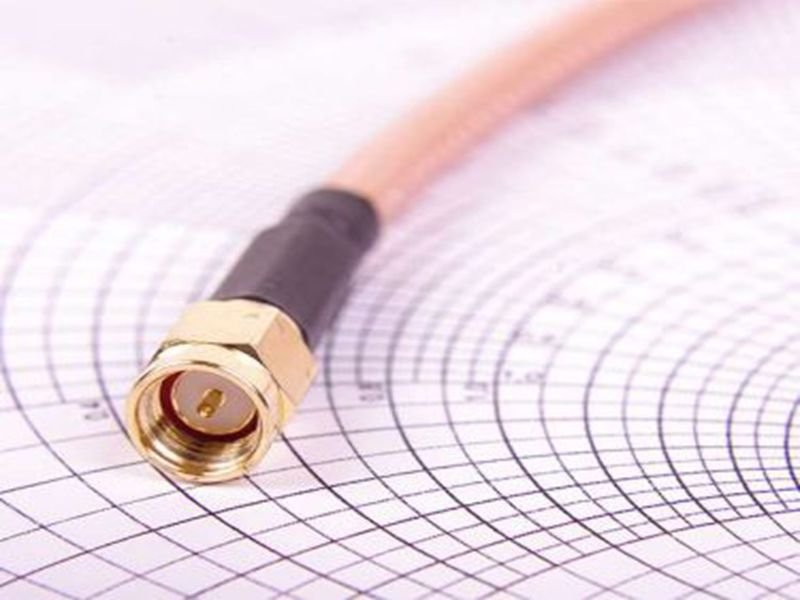
Wireless technology powers everything from smartphones and smart factories to satellite communication networks and industrial IoT devices. Behind every wireless system is a network of components that must transfer radio frequency signals with precision. Among these components, RF cable assemblies play a critical role in connecting antennas, transmitters, receivers, and communication modules.
Choosing the wrong RF cable assembly can lead to signal loss, reduced transmission range, unstable wireless connections, and electromagnetic interference. Engineers and procurement teams therefore evaluate many factors when selecting RF cables, including impedance, connector compatibility, shielding structure, cable diameter, flexibility, and environmental durability.
The right RF cable assembly for wireless systems is selected by matching cable impedance, frequency range, connector type, shielding design, and cable structure to the specific wireless application. A properly selected RF cable ensures low signal loss, stable transmission, and long-term reliability in wireless equipment.
In many real-world projects, buyers initially approach cable suppliers with only a connector model number or even just a product photo. They may not know the exact cable type or electrical specifications required. Experienced cable manufacturers help translate these requirements into a complete RF cable assembly design.
Imagine a wireless base station installed on a tower. A poorly selected cable with high attenuation could reduce signal strength significantly before it even reaches the antenna. The difference between a well-matched cable and a poorly matched one may determine whether the entire wireless system performs as expected.
What Is RF Cable Assembly for Wireless Systems?
An RF cable assembly for wireless systems is a coaxial cable with RF connectors installed on both ends, designed to transmit radio-frequency signals between wireless components such as antennas, transmitters, receivers, amplifiers, and communication modules. The purpose of the RF cable assembly is to deliver signals with minimal attenuation, stable impedance, and strong resistance to electromagnetic interference.

An RF cable assembly for wireless systems is a coaxial transmission line with connectors attached that links wireless components such as antennas and RF modules. It is designed to maintain stable impedance (usually 50 ohms), minimize signal loss, and protect signals from interference, ensuring reliable communication performance in wireless equipment.
What Is RF Cable Assembly for Wireless Systems?
In practical wireless equipment design, RF signals rarely travel directly from the radio module to the antenna through open space. Instead, they must pass through a controlled transmission path. That path is usually an RF cable assembly.
An RF cable assembly combines three main elements:
| Component | Function |
|---|---|
| RF coaxial cable | Transmits high-frequency signals |
| RF connectors | Provide electrical and mechanical connection |
| Cable termination structure | Ensures impedance stability and durability |
Inside the cable, the structure is carefully engineered to control how radio signals travel.
| Cable Layer | Role in Signal Transmission |
|---|---|
| Center conductor | Carries RF electrical signal |
| Dielectric insulation | Maintains constant spacing and impedance |
| Shield layer | Prevents signal leakage and EMI interference |
| Outer jacket | Protects cable from mechanical damage |

The most common impedance used in wireless RF systems is 50 ohms, which provides a good balance between power handling and signal attenuation.
If impedance is not controlled properly, signals may reflect back toward the source. This can reduce system efficiency and create unstable communication performance.
Why Do Wireless Systems Need RF Cable Assembly?
Even though wireless communication ultimately happens through radio waves in the air, the signal must first travel through a physical transmission path inside the device.
This is where RF cable assemblies become essential. They connect critical components such as:
- antennas
- RF modules
- power amplifiers
- receivers
- testing instruments
Without properly designed RF cables, wireless systems can suffer from several issues.
| Problem | Possible Cause |
|---|---|
| Weak signal strength | Excessive cable attenuation |
| Communication dropouts | Poor connector termination |
| High signal reflection | Impedance mismatch |
| Interference | Inadequate shielding |
For example, in a wireless base station installation, the antenna may be located several meters away from the transmitter. If the cable used between these components has high attenuation, a large portion of the transmitted power may be lost before reaching the antenna.
Signal loss becomes more noticeable at higher frequencies.
| Frequency | Impact on RF Cable |
|---|---|
| <500 MHz | Lower attenuation |
| 1 GHz | Moderate attenuation |
| >3 GHz | Significant attenuation |
This is why selecting the correct RF cable assembly is a critical step in wireless system design.
Where Is RF Cable Assembly Used in Wireless Systems?
RF cable assemblies are used in a wide range of wireless technologies. Their role is to transfer signals between components while maintaining signal quality and minimizing interference.
Common wireless applications include:
| Industry | Example Equipment |
|---|---|
| Telecommunications | Cellular base stations, 5G equipment |
| Consumer electronics | WiFi routers, smart home devices |
| Industrial IoT | wireless sensors and gateways |
| Automotive | vehicle telematics and radar systems |
| Aerospace | satellite communication equipment |
| Testing laboratories | RF measurement instruments |
Each of these applications places different requirements on the cable assembly.

For example:
- telecommunication infrastructure may require low-loss cables capable of transmitting signals over longer distances
- compact wireless devices need flexible miniature cables that can fit into small housings
- outdoor wireless systems require cables that resist ultraviolet exposure, moisture, and temperature changes
Because of these differences, many wireless equipment manufacturers prefer custom RF cable assemblies rather than standard off-the-shelf cables.
Manufacturers such as Sino-Conn typically work with customers to determine the appropriate cable structure, connector combination, shielding design, and cable length. Engineers may generate CAD drawings for approval before production begins, ensuring that the RF cable assembly meets both electrical and mechanical requirements of the wireless system.
Which RF Cable Assembly Types Are Used in Wireless Systems?
Wireless systems use several types of RF cable assemblies depending on signal frequency, transmission distance, installation space, and mechanical flexibility requirements. The cable that works well inside a compact wireless module may not perform well in an outdoor antenna system or a telecom base station.
Wireless systems commonly use RF cable assemblies based on RG-series coaxial cables, low-loss cables such as LMR types, and semi-rigid or micro-coax cables. Each type offers different advantages in terms of signal attenuation, flexibility, cable diameter, and installation environment. Choosing the correct cable type helps reduce signal loss and maintain reliable wireless performance.
Which Coaxial RF Cable Assembly Is Most Common?
Most RF cable assemblies used in wireless communication equipment are built on coaxial cable structures. A coaxial cable is designed with a central conductor surrounded by insulation and shielding, allowing high-frequency signals to travel with stable impedance and minimal interference.
Several coaxial cable families are widely used in wireless systems.
| Cable Type | Outer Diameter | Flexibility | Typical Wireless Use |
|---|---|---|---|
| RG174 | ~2.8 mm | Very flexible | Compact wireless modules |
| RG316 | ~2.5 mm | Flexible, heat resistant | RF testing equipment |
| RG58 | ~5 mm | Moderate | Industrial wireless devices |
| RG400 | ~4.9 mm | Good shielding | Aerospace & high-frequency systems |
| LMR200 | ~5 mm | Moderate | Antenna installations |
| LMR400 | ~10.3 mm | Stiffer | Base station antennas |

RG-series cables are commonly used because they are widely available, flexible, and easy to terminate with connectors. For example, RG174 is often used inside WiFi routers or IoT devices because the cable is thin and easy to route inside small housings.
However, RG cables typically have higher signal attenuation, especially at frequencies above 1 GHz. This is why larger low-loss cables are used when signal strength must be preserved over longer distances.
How Does RF Cable Assembly Size Affect Signal Loss?
One of the most important differences between RF cable types is signal attenuation, which refers to how much signal strength is lost as the signal travels through the cable.
In general:
- larger cable diameter → lower signal loss
- smaller cable diameter → higher signal loss
This happens because larger cables use thicker conductors and lower-loss dielectric materials.
The table below shows approximate attenuation levels for several common cable types at 1 GHz.
| Cable Type | Diameter | Signal Loss per Meter |
|---|---|---|
| RG174 | 2.8 mm | ~1.3 dB |
| RG316 | 2.5 mm | ~0.9 dB |
| RG58 | 5 mm | ~0.6 dB |
| LMR200 | 4.95 mm | ~0.4 dB |
| LMR400 | 10.3 mm | ~0.22 dB |
To understand how this affects real systems, consider a 10-meter cable run.
| Cable Type | Signal Loss (10 m at 1 GHz) |
|---|---|
| RG174 | ~13 dB |
| RG58 | ~6 dB |
| LMR400 | ~2.2 dB |

A loss of 13 dB means most of the signal power is lost before reaching the antenna. In contrast, a low-loss cable such as LMR400 preserves much more signal strength.
However, larger cables also have trade-offs:
- heavier weight
- larger bend radius
- higher installation difficulty
This is why engineers must balance signal performance with mechanical constraints when selecting cable types.
Which Flexible RF Cable Assembly Works for Compact Devices?
Many wireless devices require RF cables that are small, lightweight, and highly flexible. Examples include:
- WiFi routers
- IoT communication modules
- wearable medical devices
- automotive wireless sensors
- handheld testing instruments
In these cases, engineers often choose micro-coax or ultra-flexible RF cables.
These cables typically use:
- fine multi-strand copper conductors
- thin dielectric insulation
- braided shielding
- soft outer jackets
This structure allows the cable to bend repeatedly without damaging the internal conductor.
Flexibility is often measured by minimum bend radius.
| Cable Type | Minimum Bend Radius |
|---|---|
| RG174 | ~12 mm |
| RG316 | ~10 mm |
| RG58 | ~25 mm |
| LMR400 | ~50 mm |
A smaller bend radius means the cable can be routed more easily in tight spaces.
For example, inside a small IoT gateway or wireless router, the RF cable may need to bend sharply to connect the antenna to the RF module. A thick low-loss cable may not physically fit inside the enclosure.
This is why compact wireless devices often prioritize flexibility and size over low attenuation.
When Are Low-Loss RF Cable Assemblies Needed?
Some wireless systems require cables that preserve signal strength over longer distances. These systems typically use low-loss RF cable assemblies.
Common scenarios include:
- outdoor antennas
- base station installations
- distributed antenna systems
- satellite communication equipment
Low-loss cables such as LMR400 or similar designs use:
- thicker conductors
- advanced dielectric materials
- improved shielding structures
These features reduce signal attenuation, especially at high frequencies.
| Cable Type | Typical Maximum Frequency | Best Use |
|---|---|---|
| RG174 | ~3 GHz | Short internal cables |
| RG58 | ~5 GHz | Medium-length connections |
| LMR200 | ~6 GHz | Wireless antenna systems |
| LMR400 | ~6 GHz+ | Long cable runs |
In real installations, selecting a low-loss cable can significantly improve wireless coverage.
For example, a wireless access point connected to a rooftop antenna may require a 15-meter cable run. Using a low-loss cable can preserve enough signal strength to maintain stable communication with distant devices.
How Sino-Conn Helps Customers Select the Right RF Cable Type
In many sourcing situations, customers approach cable suppliers with limited information. They may provide:
- a connector model number
- a photo of an existing cable
- a rough description of the wireless device
Experienced manufacturers help translate these inputs into a complete cable design.
When evaluating an RF cable assembly project, engineers typically review:
- operating frequency
- required cable length
- connector types
- signal power levels
- installation environment
- flexibility requirements
Based on these factors, they recommend suitable cable structures and provide detailed specifications.
Customers working with Sino-Conn often receive:
- cable structure drawings (CAD to PDF)
- connector compatibility recommendations
- prototype samples for testing
- customized RF cable assemblies tailored to their device design
By selecting the right cable type early in the design process, wireless equipment manufacturers can reduce signal loss, improve system reliability, and avoid costly redesigns later in development.
Which RF Connectors Are Used in RF Cable Assembly for Wireless Systems?
RF connectors serve as the electrical and mechanical interface between RF cable assemblies and wireless devices. Choosing the correct connector type is essential for maintaining impedance stability and minimizing signal reflection.
Common RF connectors used in wireless systems include SMA, BNC, N-type, TNC, and MMCX connectors. Each connector type supports different frequency ranges, cable sizes, and installation requirements. Matching the correct connector to the cable and device ensures stable impedance, secure connections, and reliable signal transmission.
Which RF Connectors Work with RF Cable Assembly?
Different wireless systems require different connector types depending on frequency range and mechanical requirements.
Some of the most commonly used RF connectors include:
| Connector Type | Frequency Range | Typical Use |
|---|---|---|
| SMA | up to 18 GHz | antennas, wireless modules |
| BNC | up to 4 GHz | testing equipment |
| TNC | up to 11 GHz | industrial RF systems |
| N-type | up to 11 GHz | base stations |
| MMCX | up to 6 GHz | compact devices |
SMA connectors are widely used because they provide excellent performance at high frequencies while remaining relatively compact.

N-type connectors are commonly used in outdoor installations because they offer strong mechanical durability and weather resistance.

Selecting the correct connector ensures that the RF cable assembly maintains stable impedance throughout the signal path.
How Do You Match RF Connectors to RF Cable Assembly?
RF connectors must match both the electrical properties and physical size of the cable. Using incompatible connectors can lead to signal reflections or mechanical failure.
Important matching factors include:
| Matching Factor | Why It Matters |
|---|---|
| Cable diameter | Connector must fit cable OD |
| Impedance | Must match cable impedance (usually 50 ohms) |
| Frequency range | Connector must support operating frequency |
| Installation environment | Outdoor connectors require weather resistance |
For example, a small RG174 cable cannot be paired with a large N-type connector without proper design adjustments.
Connector compatibility also affects assembly reliability. Improper connector termination can lead to increased signal reflection, known as return loss.
Engineers typically evaluate return loss values during RF cable testing.
Do RF Cable Assembly Connectors Need to Be Original?
When sourcing RF cable assemblies, customers often ask whether connectors must be original brand components or if compatible alternatives can be used.
Both options have advantages.
| Connector Option | Advantages | Considerations |
|---|---|---|
| Original brand connectors | High reputation, certified quality | Higher cost, longer lead time |
| Compatible connectors | Lower cost, flexible supply | Must ensure compatibility |
Many wireless equipment manufacturers choose original connectors for critical systems. However, compatible connectors can perform very well when produced by reliable manufacturers.
For OEM factories and distributors, compatible connectors often offer faster delivery and lower cost while still meeting electrical performance requirements.
Manufacturers such as Sino-Conn can provide both options depending on the customer’s project requirements.
What Specifications Matter in RF Cable Assembly for Wireless Systems?
Selecting the right RF cable assembly for wireless systems requires careful attention to several key technical specifications. Even small mismatches in electrical parameters can cause signal loss, reflections, or unstable wireless performance.
Key specifications for RF cable assemblies include impedance, operating frequency range, signal attenuation, shielding effectiveness, and environmental durability. Matching these specifications with the wireless system’s design ensures stable signal transmission and prevents interference or power loss in high-frequency communication systems.
What Impedance Should RF Cable Assembly Use?
Impedance is one of the most important electrical characteristics of an RF cable assembly. It represents the relationship between voltage and current within the cable and determines how signals travel through the transmission line.
Most wireless communication systems use 50-ohm impedance as the industry standard.
| Impedance | Typical Applications |
|---|---|
| 50 ohm | RF communication, antennas, wireless systems |
| 75 ohm | Video transmission, broadcast equipment |
| 93 ohm | Specialized instrumentation |
When the cable impedance does not match the impedance of the connected devices, part of the signal energy is reflected back toward the source. This phenomenon is known as signal reflection or return loss.
For example:
| Return Loss (dB) | Signal Quality |
|---|---|
| -10 dB | Acceptable |
| -20 dB | Good |
| -30 dB | Excellent |
Higher return loss values indicate better impedance matching and improved signal transmission.
Engineers designing wireless systems therefore ensure that the RF cable assembly maintains consistent 50-ohm impedance across the entire signal path, including connectors.
How Does Frequency Affect RF Cable Assembly Selection?
RF signals used in wireless communication systems span a wide frequency range, from a few megahertz to tens of gigahertz. As frequency increases, signal attenuation within the cable also increases.
This means cable selection must account for both operating frequency and cable length.
The following table shows approximate attenuation values for common cable types at different frequencies.
| Cable Type | 500 MHz | 1 GHz | 2 GHz |
|---|---|---|---|
| RG174 | ~0.8 dB/m | ~1.3 dB/m | ~2.0 dB/m |
| RG58 | ~0.4 dB/m | ~0.6 dB/m | ~1.0 dB/m |
| LMR200 | ~0.25 dB/m | ~0.4 dB/m | ~0.7 dB/m |
| LMR400 | ~0.12 dB/m | ~0.22 dB/m | ~0.4 dB/m |
These values illustrate why low-loss cables are preferred for longer cable runs or higher frequency applications.
For example:
- A 5-meter RG174 cable at 2 GHz could lose about 10 dB of signal.
- A 5-meter LMR400 cable at 2 GHz may lose only 2 dB.
This difference can significantly affect wireless system range and signal quality.
Engineers therefore evaluate both frequency and cable length when selecting RF cable assemblies.
How Does Shielding Improve RF Cable Assembly Performance?
Shielding is another important factor in RF cable assemblies used in wireless systems. Shielding prevents external electromagnetic signals from interfering with the RF signal traveling through the cable.
The most common shielding structures include:
| Shield Type | Structure | Performance |
|---|---|---|
| Aluminum foil | Full coverage foil wrap | Excellent high-frequency shielding |
| Copper braid | Woven copper shield | Strong mechanical protection |
| Foil + braid | Combined layers | Maximum EMI protection |
Wireless environments can contain many potential sources of electromagnetic interference, including:
- nearby transmitters
- electronic equipment
- power supply systems
- industrial machinery
Without proper shielding, interference may cause signal distortion or communication errors.
For high-performance wireless systems, engineers often use double-shielded cables combining foil and braided shielding. This structure provides both high shielding coverage and mechanical durability.
How Do You Source RF Cable Assembly for Wireless Systems?
Selecting the right RF cable assembly supplier can significantly affect product reliability, development speed, and overall project cost.
When sourcing RF cable assemblies, customers should evaluate the supplier’s engineering capability, customization options, production speed, and quality control processes. A reliable manufacturer should provide detailed specifications, engineering drawings, prototype samples, and stable production quality.
What Should RF Cable Assembly Suppliers Provide?
Professional RF cable assembly suppliers should be able to support both technical and production requirements.
Important capabilities include:
| Supplier Capability | Why It Matters |
|---|---|
| Detailed specifications | Ensures correct electrical performance |
| Engineering drawings | Confirms cable structure before production |
| Connector compatibility knowledge | Prevents design errors |
| Cable testing capability | Verifies signal performance |
| Quality control procedures | Ensures consistent production |
Customers often request connector and cable specification sheets containing parameters such as:
- impedance
- operating frequency
- cable outer diameter
- shielding structure
- temperature resistance
- mechanical flexibility
Providing clear technical documentation helps customers verify that the cable assembly meets their system requirements.
How Fast Can RF Cable Assembly Samples Be Made?
In wireless equipment development, speed is often critical. Engineers need to test prototypes quickly in order to verify system performance.
Typical production timelines include:
| Production Stage | Typical Lead Time |
|---|---|
| Engineering drawing | 30 minutes – 3 days |
| Prototype sample | 2–14 days |
| Mass production | 3–4 weeks |
Some manufacturers can accelerate this process for urgent projects.
For example, fast-response factories may provide:
- rapid drawing generation
- quick connector sourcing
- expedited sample production
This flexibility can significantly shorten product development cycles.
How Can RF Cable Assembly Be Customized?
Most wireless equipment requires customized RF cable assemblies because standard cable products may not meet specific design constraints.
Customization options typically include:
- cable length adjustments
- connector combinations
- shielding structure design
- cable diameter optimization
- impedance matching
- environmental protection features
The development process usually follows several steps:
| Step | Description |
|---|---|
| Requirement analysis | Review application needs |
| Engineering design | Create cable drawings |
| Prototype production | Build test samples |
| Validation testing | Confirm signal performance |
| Mass production | Begin large-scale manufacturing |
Customers can approve drawings before production begins to ensure that the cable assembly meets their exact specifications.
Conclusion: Selecting the Right RF Cable Assembly for Wireless Systems
Selecting the right RF cable assembly for wireless systems is not just a component decision—it directly affects signal quality, system stability, and the overall performance of wireless equipment. Factors such as cable type, impedance, connector compatibility, shielding structure, frequency range, and signal attenuation all play critical roles in determining how effectively RF signals travel between antennas, transmitters, and communication modules.

In real projects, engineers and sourcing teams rarely choose cables based on one parameter alone. Instead, they evaluate the complete operating environment, including installation space, cable routing, signal frequency, transmission distance, and environmental exposure. A well-matched RF cable assembly ensures low signal loss, minimal interference, and reliable communication across the entire wireless system.
For companies developing wireless equipment, working with an experienced cable assembly manufacturer can significantly simplify this process. A professional supplier should be able to review technical requirements, recommend suitable cable structures, generate engineering drawings, and provide prototype samples for validation before mass production begins.
At Sino-Conn, we specialize in custom RF cable assemblies designed for wireless systems. Our engineering team supports customers by providing detailed specifications, rapid CAD drawings, prototype samples, and customized connector configurations tailored to each project. With flexible customization options, fast sample lead times, and strict quality inspection processes, Sino-Conn helps wireless equipment manufacturers develop reliable RF connectivity solutions.
If you are designing a wireless device, upgrading an antenna system, or sourcing RF cable assemblies for production, the Sino-Conn team is ready to assist. Contact us today to discuss your project requirements and request a customized RF cable assembly solution.