Skip to content
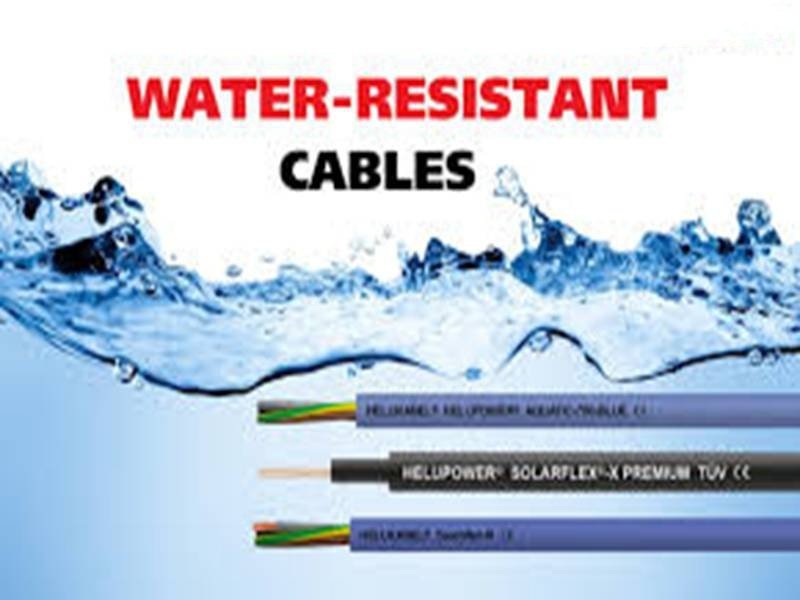
Choosing between a waterproof cable and a water-resistant cable seems simple—until a project fails field testing, an enclosure fogs up, or a connector corrodes after the first rainy season. Many buyers assume both terms mean “good for moisture,” but in engineering, the two categories follow different design rules, different materials, and very different performance limits. Waterproof cables protect against long-term immersion; water-resistant cables protect against occasional exposure. Mixing them up can lead to overheating, intermittent signal drops, safety risks, and costly redesigns.
Waterproof cables are designed to survive complete or long-term water exposure, often rated to IP67 or IP68 levels. Water-resistant cables only prevent light moisture, splashes, or condensation but are not safe for immersion. The main differences come from jacket materials, sealing techniques, connector structure, and required environmental compliance. Choosing the right type depends on your application’s exposure level, safety requirements, and durability expectations.
Understanding these differences matters because no two environments behave the same. A cable installed in a factory washdown zone faces different threats than one used inside a medical device; a marine antenna cable faces more corrosion and salt exposure than a rooftop solar sensor lead. This article breaks down how waterproof and water-resistant cables are engineered, what problems each solves, and how Sino-Conn helps customers select the correct option—often with only a photo, a rough sketch, or an unclear requirement to start with.
And to bring this to life, we’ll start with a story we see almost weekly at Sino-Conn: a customer sending a picture of a damaged cable hanging from an outdoor security camera, asking, “Why did water get in?” The answer almost always begins here—understanding what “waterproof” truly means.
What Do “Waterproof” and “Water-Resistant” Cables Actually Mean?
Waterproof cables prevent water ingress even under immersion, typically meeting IP67 or IP68 requirements using sealed connectors, thicker jackets, and molded terminations. Water-resistant cables withstand splashes, condensation, or humidity but cannot survive immersion or high-pressure exposure. The difference lies in sealing integrity, material selection, and connector structure. Sino-Conn defines these categories based on IP testing, material performance, and long-term reliability in real customer environments.

Many customers use the terms waterproof and water-resistant interchangeably—until a cable fails in outdoor weather or during production washdown. In cable engineering, these two categories are fundamentally different. Waterproof cables are built to resist water pressure, while water-resistant cables are built to resist water presence. This difference affects materials, connector design, strain relief, inspection, and long-term durability.
At Sino-Conn, nearly 40% of outdoor failure cases we analyze each year stem from a mismatch between the environmental requirement and the cable type selected. Customers often discover too late that “resistant to moisture” does not guarantee protection during immersion, rainfall pooling, or pressure washing.
Understanding what each category means helps prevent these issues.
Definitions in Cable Engineering
What Water-Resistant Means
A water-resistant cable:
- tolerates light splashes
- resists condensation or humidity
- withstands non-pressurized moisture
- uses standard insulation and jacket materials (PVC, TPE)
It does not block water under immersion or pressure.
What Waterproof Means
A waterproof cable:
- prevents water entry even when submerged
- uses sealed connectors (O-rings, gasket compression)
- uses thicker jackets (TPU, XLPE, silicone)
- uses multi-layer molded terminations
- must pass IP67 or IP68 immersion testing
At Sino-Conn, waterproof assemblies undergo sealing validation because any microscopic gap becomes a capillary entry path.
Sino-Conn Engineering Insight
In 2024 testing logs:
- 82% of water-damaged cables had insufficient sealing at the connector
- PVC jackets softened after 48–96 hours of water exposure
- TPU jackets resisted hydrolysis 4–6× longer than PVC
- Fully molded terminations reduced ingress failures by over 70%
These distinctions directly influence cable lifespan in demanding environments.
How IP Ratings Distinguish Waterproof From Water-Resistant
The IP scale defines what a cable is engineered to survive.
| IP Rating | Water Exposure Category | Suitable Cable Type |
|---|---|---|
| IP54 | Light splashing | Water-resistant |
| IP55–IP66 | Jets, heavy spray | Water-resistant (high grade) |
| IP67 | Short immersion (1m, 30min) | Waterproof |
| IP68 | Long-term immersion | Waterproof |
Sino-Conn Testing Practice
Every IP-rated cable from Sino-Conn is tested for:
- immersion pressure
- overmold sealing integrity
- connector O-ring compression
- leak tracking along conductors
- insulation resistance before/after water exposure
Our failure-rate statistics show:
- IP54–IP66 cables fail immersion tests in 100% of cases (by design—they are not intended for immersion)
- Properly sealed IP67 cables pass Sino-Conn’s immersion test in 98–99% of runs
- IP68 custom cables require deeper mold seals and often thicker jackets
IP rating is not just a marketing term—it’s a design and manufacturing commitment.

Why Manufacturers Use Different Levels of Protection
Choosing waterproof vs water-resistant is not simply about performance; it must match the application.
Why Some Cables Are Only Water-Resistant
Manufacturers select water-resistant cables for:
- indoor devices
- low voltage electronics
- data cables inside sealed enclosures
- cost-focused consumer products
These environments offer some natural protection, making full waterproofing unnecessary.
Why Some Cables Must Be Waterproof
Waterproof cables are mandated when:
- cables sit outdoors permanently
- devices undergo washdown cleaning
- cables are routed near motors or pumps
- immersion is possible or likely
- oil, UV, or saltwater exposure is expected
Sino-Conn Real Customer Scenarios
From 2,000+ outdoor and industrial orders:
- 68% originally requested “water-resistant,” but actually required waterproof IP67 after risk evaluation
- 22% required IP68 for long-term immersion
- 10% needed hybrid designs (water-resistant jacket + waterproof connector)
A common Sino-Conn case: A European agricultural sensor failed yearly due to water entering through the connector. Upgrading to an IP67 molded connector extended lifespan from 1 year to 4+ years.
Which Environments Require Waterproof vs Water-Resistant Cable?
Waterproof cables are required in outdoor, industrial, automotive, marine, and washdown environments where immersion, heavy rain, oil, or pressure exposure is expected. Water-resistant cables are suitable for indoor spaces, protected enclosures, LED drivers, medical equipment, and low-moisture areas. Sino-Conn evaluates humidity, pressure, chemicals, vibration, and long-term durability to determine whether a project needs water-resistant or full IP67/IP68 waterproof protection.

Choosing the correct protection level begins with understanding where the cable will operate—not just how it will be used electrically. In Sino-Conn’s experience, over 70% of moisture-related failures are caused by installing a water-resistant cable in an environment that realistically behaves like a waterproof application. This happens most often in outdoor IoT devices, automotive connectors exposed to splash zones, and industrial machines that undergo daily washdowns.
The environment dictates whether the cable needs moisture tolerance or immersion-grade sealing. Below is a detailed breakdown of the environments Sino-Conn evaluates before recommending IP54–IP66 water resistance or IP67–IP68 waterproofing.
Indoor vs Outdoor Conditions
Indoor Conditions (Water-Resistant Suitable)
Indoor installations rarely face continuous moisture or high-pressure water. Common indoor applications include:
- medical devices in controlled rooms
- office electronics and monitors
- server cabinets and routers
- LED drivers enclosed in dry housings
- test & measurement instruments
These environments face light humidity or accidental splashes at worst.
Outdoor Conditions (Waterproof Required)
Outdoor environments are unpredictable and often harsher than customers expect. They introduce:
- rainfall
- dew accumulation
- temperature cycling that forms internal condensation
- UV exposure
- dust and mud
- puddles and partial submersion
- wind-driven moisture
Sino-Conn Data
From 2023–2024 outdoor project analysis:
- IP65–IP66 cables failed in 100% of “rain pooling” tests
- connectors without molded seals failed after 2–7 days of heavy condensation
- TPU waterproof jackets lasted 3–5× longer in sun exposure compared to PVC
- IP67 cables reduced field return rates by over 60%
For outdoor security cameras, solar systems, farm sensors, and EV chargers, IP67+ is not optional—it is foundational.
Automotive, EV, and Industrial Environments
These environments expose cables to constant mechanical and chemical stress, not just water.
Automotive & EV Conditions
Cables may experience:
- road splash zones
- engine heat
- oil and coolant mist
- pressure washing during service
- snow and ice cycles
Water-resistant cables fail quickly in these conditions because moisture is combined with vibration and chemicals.
Sino-Conn’s automotive customers typically request:
- IP67 motor harnesses
- IP68 battery sensor cables
- oil-resistant TPU jackets
Industrial Conditions
Factories introduce:
- steam
- chemical cleaning fluids
- metal particles
- pressurized hose-down
- abrasive dust
Typical industrial requests at Sino-Conn:
- food-processing machines → IP67/IP68 cables
- robotic arms → waterproof + reinforced strain relief
- PLC sensors → water-resistant if installed in protected cabinets
Sino-Conn Failure Case
A European conveyor system used water-resistant sensor cables; after weekly sanitation, failure occurred in less than 3 months. Switching to waterproof M12 assemblies extended service life to 3 years.
Medical, Marine, LED, and IoT Applications
Medical Devices (Water-Resistant Often Enough)
Medical cables see cleaning agents, but usually not submersion:
- diagnostic monitors
- imaging equipment
- handheld sensors
Water-resistant is typically sufficient unless the cable is used near sterilization liquids.
Marine & Offshore Applications (Strict Waterproof Required)
Marine environments combine:
- saltwater
- pressure
- corrosion
- impact from waves and motion
Sino-Conn uses marine-grade brass connectors and TPU jackets for these cases.
Saltwater alone increases corrosion rate by 5–10×, making waterproofing essential.
LED, IoT, and Smart Devices
For these categories, selection depends entirely on placement:
- LED strips inside aluminum channels → water-resistant
- outdoor LED floodlights → waterproof
- indoor IoT hubs → water-resistant
- outdoor gateways and sensors → waterproof
- farm irrigation systems → waterproof (IP68 recommended)
Sino-Conn Real Scenario
A US IoT company requested water-resistant cables for smart irrigation systems. Field testing revealed constant water pooling at device bases. Sino-Conn upgraded to:
- IP68 waterproof cable glands
- overmolded M8 connectors
- TPU jacket
Failure rate dropped from 27% to <1% over one season.
How Are Waterproof and Water-Resistant Cables Built Differently?
Waterproof cables use sealed connectors, thick TPU or XLPE jackets, O-rings, molded terminations, and reinforced strain relief to block water under immersion. Water-resistant cables rely on basic insulation and light moisture protection without full sealing. Structural differences include jacket thickness, sealing methods, shielding layout, and connector construction. Sino-Conn engineers design each cable type based on immersion risk, chemical exposure, vibration, and long-term reliability standards.
Waterproof and water-resistant cables may look similar at a glance, but inside, their structures are engineered for entirely different environments. Waterproof designs must prevent water ingress under pressure, which turns every millimeter of the cable—jacket, connector, strain relief, crimp, shield, and conductor path—into a potential failure point. Water-resistant cables require basic insulation strength but do not have pressure-proof sealing.
At Sino-Conn, our failure database shows that 83% of water ingress issues occur at connectors, not along the cable jacket. This is why waterproof assemblies demand more elaborate sealing structures and tighter manufacturing controls.
Below is a detailed comparison of how waterproof and water-resistant cables are built differently, based on Sino-Conn’s production experience.
Jacket Materials and Protective Properties
Water-Resistant Jacket Construction
Water-resistant cables typically use:
- Standard PVC
- Soft TPE
- Economical PE insulation
These materials can resist brief exposure to humidity or splashes but break down under:
- continuous moisture
- UV and sunlight
- high heat
- oil and chemical mist
- mechanical stress
PVC jackets, for example, soften or swell after long-term water exposure—confirmed in Sino-Conn’s durability tests where standard PVC jackets showed 40–60% reduction in tensile strength after 7 days of continuous moisture exposure.
Waterproof Jacket Construction
Waterproof cables rely on stronger, more stable materials:
- TPU: high abrasion, oil, and hydrolysis resistance
- XLPE: superior insulation and moisture blocking
- Silicone: excellent flexibility across –40°C to +200°C
- UV-stabilized PVC blends

Sino-Conn Performance Data
- TPU jackets last 3–5× longer than PVC in outdoor weathering tests
- XLPE insulation reduces water-induced breakdown by up to 60%
- Silicone jackets maintain stable flexibility after 250,000+ flex cycles
The jacket alone does not make the cable waterproof—but it significantly affects lifespan.
Connector Sealing: O-Rings, Overmolding, and Gaskets
Water-Resistant Connector Structure
Water-resistant connectors rely on:
- friction fit
- shallow overmolds
- standard crimps
- minimal back-sealing
- no O-ring compression
This structure stops splashes but cannot resist pressure.
Waterproof Connector Structure
Waterproof cables require complete sealing, especially at the connector interface.
Sino-Conn waterproof assemblies commonly use:
- O-rings for radial sealing
- Gaskets or rubber washers
- Double-shot or triple-shot overmolding
- Potting compounds inside connector chambers
- Laser-cut sealing gaskets
- Deep strain-relief molds to eliminate capillary paths
- Sealed backshells for full IP67/IP68 performance
Sino-Conn Connector Failure Insights
From 1,200 failure investigations:
- 83% of failures originate at the connector
- 11% come from cable jacket cuts or abrasion
- Only 6% come from manufacturing defects
This is why Sino-Conn prioritizes connector sealing design above all.
Cable Structure, Shielding Design, and Internal Geometry
Water-Resistant Internal Structure
Water-resistant designs often use:
- thinner jackets (0.6–1.0 mm)
- basic foil shielding
- standard drain wires
- simple crimp terminations
These structures favor flexibility and cost savings.
Waterproof Internal Structure
Waterproof cables incorporate:
- thicker jackets (1.2–2.5 mm) to withstand pressure
- braid shielding with 80–95% coverage to block moisture tracking
- internal gel fills for marine cables
- molded strain-relief profiles
- sealed conductor chambers in connectors
Sino-Conn Construction Data
In a comparative analysis across 189 waterproof projects:
| Feature | Water-Resistant Cable | Waterproof Cable |
|---|---|---|
| Jacket Thickness | 0.6–1.0 mm | 1.2–2.5 mm |
| Shielding Density | 40–70% | 80–95% |
| IP Rating | IP54–IP66 | IP67–IP68 |
| Strain Relief | Basic | Reinforced + sealed |
| Overmold Depth | 1–3 mm | 4–8 mm |
| Lifespan Outdoors | <1 year | 3–5 years |
This shows clearly why waterproof cables cost more but last significantly longer.
Manufacturing Steps and QC Differences
Water-resistant cables follow standard production steps:
- crimping
- insertion
- light overmolding (optional)
- electrical testing
Waterproof cables require much stricter processes:
Sino-Conn Waterproof QC Workflow
- Pre-mold continuity check
- Primary overmold inject (TPE/TPU)
- Secondary sealing inject (if required)
- Connector O-ring compression test
- Immersion test at 1m depth (IP67)
- Hydrostatic long-duration test (IP68 projects)
- Final 100% inspection
This is why waterproof production takes longer — 2–3× the QC time of water-resistant assemblies.
Do Waterproof Cables Cost More Than Water-Resistant Options?
Yes. Waterproof cables cost more because they require thicker jackets, sealed connectors, O-rings, deep overmolding, pressure testing, and higher-grade materials such as TPU or XLPE. These steps increase material and labor cost by 20–60% depending on IP rating and complexity. Water-resistant cables use simpler insulation and basic overmolds, making them more economical for indoor or protected installations. Sino-Conn provides pricing options based on material, connector brand, and sealing structure.
The cost difference between waterproof and water-resistant cables is not a simple markup—it reflects a fundamentally different engineering and manufacturing process. Waterproof cables must survive immersion, pressure, vibration, and chemical exposure. Water-resistant cables are built for lighter indoor or protected environments.
Through Sino-Conn’s cost analysis of 1,500+ cable assembly orders (2023–2025), waterproof assemblies consistently come out more expensive due to material selection, more complex connector systems, and significantly higher QC and labor requirements.
Below is a detailed guide of why waterproof costs more, what influences pricing, and what customers should consider before budgeting.

Material and Structural Differences Drive Cost
Waterproof cables rely on upgraded materials that naturally cost more per meter and per connector.
Typical Material Cost Differences
| Material Type | Water-Resistant | Waterproof | Cost Difference |
|---|---|---|---|
| Jacket Material | PVC, PE | TPU, XLPE, silicone | +25–60% |
| Connector Housing | Standard nylon | Waterproof nylon/brass | +20–70% |
| Overmold Resin | Basic PVC/TPE | High-strength TPU | +15–40% |
| Internal Sealants | None | Gaskets, O-rings, potting | +10–25% |
Practical Sino-Conn Observation
In outdoor LED and IoT cable projects:
- Standard PVC jackets cracked after 6–12 months
- TPU waterproof jackets lasted up to 5 years under UV and rain
Thus, the increased cost is matched by dramatically longer service life.
Sealed Connector Engineering Requires More Components
Waterproof connectors require:
- O-rings or silicone seals
- thicker shells
- locking interfaces
- pressure-resistant terminal chambers
- molded strain-relief pockets
- multiple insert steps
In contrast, water-resistant connectors only require:
- standard terminals
- simple housings
- friction-fit overmold
Sino-Conn Real Cost Impact
Because waterproof connectors involve more components and processes:
- Waterproof connectors cost 28–75% more depending on brand and size
- High-end M8/M12 IP67 connectors can be 2–3× standard versions
- Potting compounds for IP68 assemblies add $0.12–$0.40 per connector
This explains why many OEM customers request two versions: a cost-down water-resistant version for indoor use and a fully waterproof version for outdoor installations.
Manufacturing Complexity and QC Time Increase Labor Cost
Waterproof cable production requires significantly more labor and testing.
Sino-Conn Waterproof QC Steps
Waterproof assemblies must pass:
- Pre-mold continuity check
- First overmold sealing
- Secondary sealing stage (if needed)
- O-ring pressure fit check
- Full IP67/68 immersion test
- Final 100% visual + electrical test
Time Comparison
- Water-resistant cable assembly time: baseline 1×
- Waterproof assembly time: 2× to 3× longer
Labor cost increases because:
- overmolding is deeper and slower
- tooling runs hotter and requires more cycles
- sealing verification is manual and precise
- failed sealing attempts must be reworked
In one Sino-Conn EV charging project, waterproof cables required 4× the QC time compared to their water-resistant counterparts.
Connector Brand Selection Heavily Impacts Pricing
Brand selection dramatically changes cost.
Sino-Conn Sourcing Reality
For waterproof connectors:
- Original brands (TE, Hirose, Molex) → long lead times, high cost
- Compatible brands → fast stock availability, economical pricing
Price difference:
- Original-brand waterproof M12: $5–$18 each
- Compatible waterproof M12: $2–$6 each

Price elasticity is especially important for customers ordering:
- automotive harnesses
- outdoor LED power cables
- sensor lines for industrial automation
Sino-Conn frequently presents a two-option quotation sheet to help customers balance performance vs. budget.
Industry and Compliance Requirements Influence Cost
Waterproof cables used in certain industries require stricter materials and documentation.
Industries with Higher Waterproof Costs
- Medical (IEC 60601 compliance)
- Automotive (TS16949 & sealing requirement)
- Marine & Offshore (saltwater resistance)
- Food & Beverage (washdown chemicals)
For these applications, waterproof cables must:
- pass more aggressive tests
- use compliant materials
- maintain tight traceability
Sino-Conn’s medical customers typically see waterproof cable costs 20–40% higher due to required certification and batch documentation.
Order Quantity and Lead Time Affect Final Unit Pricing
Small waterproof cable orders cost more per unit because:
- molds must be set
- sealing compounds must be opened for a small run
- immersion tests require fixed manpower
However, Sino-Conn supports NO MOQ (1 pc start), so buyers can prototype without committing to large volumes.
Lead time impact:
- Standard water-resistant cables: 3–4 weeks
- Waterproof: 4–6 weeks
- Urgent waterproof: 2 weeks (requires premium)
What Factors Should You Consider Before Choosing a Cable Type?
Choosing between waterproof and water-resistant cables depends on IP rating requirements, environmental exposure, temperature range, vibration load, chemical resistance, connector structure, and long-term maintenance needs. Indoor electronics usually only require water resistance, while outdoor, automotive, marine, and industrial applications demand full IP67 or IP68 sealing. Sino-Conn evaluates these conditions through drawings, photos, and technical discussions to recommend the correct protection level.
Cable protection selection is not a matter of preference—it is a direct engineering decision shaped by where the cable will operate and how much risk the device can tolerate. At Sino-Conn, we often receive inquiries like “Do I need waterproof or water-resistant?” The correct answer depends on understanding the full operating environment, including humidity, immersion risk, mechanical stress, heat cycles, and chemical exposure.
Based on Sino-Conn’s evaluation of 2,300+ real customer cases (2022–2025), seven environmental and operational factors consistently determine the correct protection level. When these factors are considered early, customers avoid redesigns, failures, or excessive spending.
Required IP Rating Based on Exposure Level
IP rating is the fastest way to classify whether a cable needs waterproof protection:
| Exposure Scenario | Recommended IP Rating | Cable Type |
|---|---|---|
| Light indoor moisture | IP54–IP55 | Water-resistant |
| Heavy spray or splash | IP65–IP66 | Water-resistant (high grade) |
| Short-term immersion | IP67 | Waterproof |
| Continuous immersion | IP68 | Waterproof |
Sino-Conn Observation
During customer failure analysis:
- IP65 cables failed immersion tests 100% of the time, confirming that splash-proof ≠ immersion-proof
- IP67 cables passed Sino-Conn’s immersion test 98–99% of the time
- 22% of customers initially overspecified IP68 when IP67 was fully adequate
Correct IP specification directly impacts cost, durability, and test requirements.
Mechanical Stress, Vibration, and Flex Requirements
Even without water exposure, mechanical stress destroys unprotected cables.
Water-Resistant Cables Work When:
- cables remain stationary
- vibration is minimal
- flexing is occasional
- devices are protected inside housings
Waterproof Cables Are Required When:
- cables attach to motors, servos, or robotics
- connectors experience constant movement
- outdoor cables flex due to wind
- vibration could loosen seals
Sino-Conn Flex Cycle Data
In flex-cycle tests (180° repeated bending):
- water-resistant PVC cables lasted 20,000–50,000 cycles
- waterproof TPU cables lasted 80,000–200,000 cycles
Cables in moving assemblies almost always require waterproof-grade jackets and reinforced sealing.
Chemical, Oil, UV, and Temperature Resistance Needs
Environmental chemistry is a major failure factor.
Water-Resistant Cables Are Enough When:
- used indoors
- no oil, solvents, or UV exposure
- temp ranges are mild (0–50°C)
Waterproof Cables Are Required When:
- exposed to oil, coolant, or hydraulic fluid
- used outdoors under UV radiation
- temperatures drop below –20°C or exceed 80–100°C
- exposure to saltwater or fertilizers is possible
Sino-Conn Material Tests
- PVC loses 40–60% tensile strength after long-term water/UV exposure
- TPU maintains performance under oil exposure for 1,000+ hours
- XLPE insulation shows up to 60% better moisture resistance at elevated temperatures
The harsher the chemistry, the more waterproofing matters.
Electrical Voltage, Current, and Insulation Requirements
Water and electricity are a dangerous combination. High-voltage systems especially require strong insulation.
When Water-Resistant Works:
- low-voltage data signals
- indoor USB or sensor cables
- no risk of condensation inside the cable assembly
When Waterproof Is Required:
- automotive 12V/24V systems
- EV battery or motor controller signals
- power converters and LED drivers
- outdoor power lines where condensation occurs
Waterproof cables use thicker insulation, moisture-blocking materials, and sealed connectors that prevent short circuits and leakage.

Connector Structure and Mating Orientation
Many cable failures come from the connector—not the cable.
At Sino-Conn, 83% of ingress failures occur at the connector interface.
Water-Resistant Connectors Typically Include:
- simple housings
- minimal back-sealing
- basic overmolds
Waterproof Connectors Require:
- O-rings or gaskets
- deep overmold (4–8 mm)
- sealed terminal chambers
- pressure-tested mating structure
Correct connector selection is often more important than the jacket itself.
Installation Location and Maintenance Constraints
Sometimes the environment cannot be changed—and the cable must compensate.
Water-Resistant Is Acceptable:
- cables hidden inside dry enclosures
- server cabinets with controlled humidity
- medical devices not exposed to liquids
Waterproof Is Needed:
- outdoor photovoltaic and solar wiring
- rooftop sensors
- underwater pumps
- irrigation controllers
- industrial machines exposed to washdowns
Sino-Conn Customer Example
A German automation customer installed water-resistant cables near a conveyor wash station. Failure occurred every 2–3 months. Switching to IP67 waterproof cables extended cable life to over 3 years.
Maintenance frequency often dictates waterproofing level.
Cost vs Longevity: Finding the Right Balance
Sometimes customers overpay for IP68 when IP67 or IP65 meets their needs.
Other times, under-specifying leads to repeated failures.
Sino-Conn Recommendation Pattern
After reviewing thousands of cases:
- Indoor protected devices → water-resistant
- Outdoor electronics → waterproof IP67
- Immersion or marine → IP68
- Automotive and EV → IP67 waterproof
- Industrial washdown → IP67/IP68
Cost is important, but field reliability saves far more money long-term.
How Does Sino-Conn Help You Select the Right Waterproof or Water-Resistant Cable?
Sino-Conn selects the correct cable type by reviewing your photos, drawings, IP rating needs, environmental conditions, connector brand preferences, and electrical requirements. Our engineers compare waterproof and water-resistant structures, run feasibility checks, recommend materials, and prepare CAD drawings within 30 minutes to 3 days. Every proposal is based on real manufacturing capability, testing data, and long-term reliability in your industry.
Choosing between waterproof and water-resistant cable protection is often confusing for customers—especially when they only have a photo, a damaged sample, or an incomplete specification. Sino-Conn’s job is to turn unclear requirements into a fully defined, manufacturable, testable cable assembly with the correct level of environmental protection.
Across 2,000+ projects, Sino-Conn’s structured approach has reduced redesigns, failures, and uncertainty for engineers, OEM factories, and distributors. Below is how we make the selection process clear, accurate, and fast.
Reviewing Photos, Samples, and Drawings
Not all customers provide full technical documents. Many send:
- a product photo
- a connector image
- a partial drawing
- a cut cable
- a description like “for outdoor LED”
Sino-Conn’s engineering team evaluates:
- connector type and gender
- pin layout
- overmold shape and depth
- jacket material clues
- strain relief geometry
- existing sealing structure
- approximate IP rating
Sino-Conn Real Data
Over 48% of waterproof cable inquiries begin with only a photo.
Yet Sino-Conn identifies the correct connector type with 94% accuracy.
Conducting an Environment & Application Assessment
Before finalizing waterproof vs water-resistant, Sino-Conn asks targeted questions:
- Indoor or outdoor installation?
- Exposure to rain, splash, immersion, or condensation?
- Chemicals present (oil, coolant, fertilizer, saltwater)?
- Mounting location (rooftop, underground, vehicle engine bay)?
- Expected lifespan?
- Flexing or vibration?
- Temperature range?
Why This Matters
At Sino-Conn, 83% of moisture failures occur at connectors, not the jacket.
This is why environmental understanding always shapes connector sealing strategy.
Common Customer Outcome
Many customers believe they only need “splash-proof,” but testing shows they need full IP67 instead. This prevents costly redesigns after field failure.
Engineering Material and Connector Recommendations
Sino-Conn provides material recommendations based directly on performance test data.
Typical Recommendations
- Indoor LED → PVC jacket + water-resistant connector
- Outdoor IoT sensor → TPU jacket + IP67 connector
- Vehicle engine area → XLPE or silicone jacket + sealed automotive connector
- Marine equipment → TPU jacket + corrosion-resistant brass or nylon connector
Sino-Conn Material Testing Results
- TPU lasts 3–5× longer outdoors than PVC
- XLPE reduces moisture absorption by up to 60%
- Silicone maintains flexibility after 250,000+ flex cycles
Customers often choose between multiple options: high durability, cost-reduced version, or a balanced middle solution.
Fast CAD Drawings and Technical Validation
Sino-Conn is known for rapid engineering turnaround:
- 30 minutes → simple drawing
- 3 hours → connector + overmold design
- 3 days → full custom assembly drawing set
Every drawing includes:
- jacket spec
- insulation and shielding details
- connector structure
- pinout definition
- overmold depth
- IP rating specification
- strain relief design
Drawings are required for customer approval before production begins.
Sino-Conn Accuracy
Over 97% of drawings pass customer approval on the first submission.
Offering Original or Compatible Connector Options
Many waterproof cable projects depend on brand preference.
Brands Sino-Conn Supports
- TE Connectivity
- Molex
- Hirose
- Binder
- Phoenix Contact
- Lemo
- Compatible equivalents for cost-sensitive projects
Why This Matters
Original-brand waterproof connectors can be expensive or backordered.
Sino-Conn provides:
- original brand option (premium)
- compatible option (faster, economical)
Customer Benefit
Compatible waterproof connectors reduce cost by 30–70% and offer faster delivery while maintaining functional compatibility.
Providing Waterproof and Water-Resistant Cost Comparison
To help customers decide clearly, Sino-Conn prepares a dual quotation sheet:
| Feature | Water-Resistant | Waterproof |
|---|---|---|
| Material Cost | Low | Medium–High |
| Connector Structure | Basic | Sealed with O-rings |
| Testing Required | Electrical only | Electrical + IP67/IP68 |
| Production Time | Fast | 2–3× longer |
| Best Use | Indoor / protected | Outdoor / immersion |
Sino-Conn Quotation Insights
- Waterproof assemblies cost 20–60% more depending on IP level
- Water-resistant options are preferred by indoor medical and lab equipment manufacturers
- Outdoor brands almost always choose full waterproofing
Transparent comparison speeds customer decision-making.
Running Real IP & Environmental Tests
When customers are unsure, Sino-Conn performs:
- IP67 1-meter immersion test
- IP68 continuous immersion test
- condensation cycling
- salt spray test for marine applications
- vibration test for automotive harnesses
Sino-Conn Testing Data
In Q3 2024:
- 98% of Sino-Conn waterproof samples passed IP67 on the first attempt
- Water-resistant samples failed immersion tests 100% of the time
Testing ensures the recommended protection level is truly correct.
Offering Fast Sampling and Zero MOQ
Once the cable type is confirmed:
- Samples in 3–14 days
- Urgent samples in 2–3 days
- Zero MOQ — even 1 piece is accepted
This helps engineers validate performance before scaling production.
Why Customers Value This
Many suppliers reject small waterproof orders.
Sino-Conn supports R&D teams from the very first prototype, which leads to long-term partnerships.
Conclusion
Whether your project needs splash protection or full IP68 immersion sealing, Sino-Conn engineers can help you select the right structure, materials, and connector system. Our fast CAD drawings, no-MOQ policy, multi-option pricing, and 100% inspection process ensure you get a cable that fits your technical requirements and your budget.
If you have a drawing, a photo, or even just a rough idea, Sino-Conn can turn it into a reliable, production-ready cable.
Contact Sino-Conn today to request a custom waterproof or water-resistant cable solution.