Skip to content
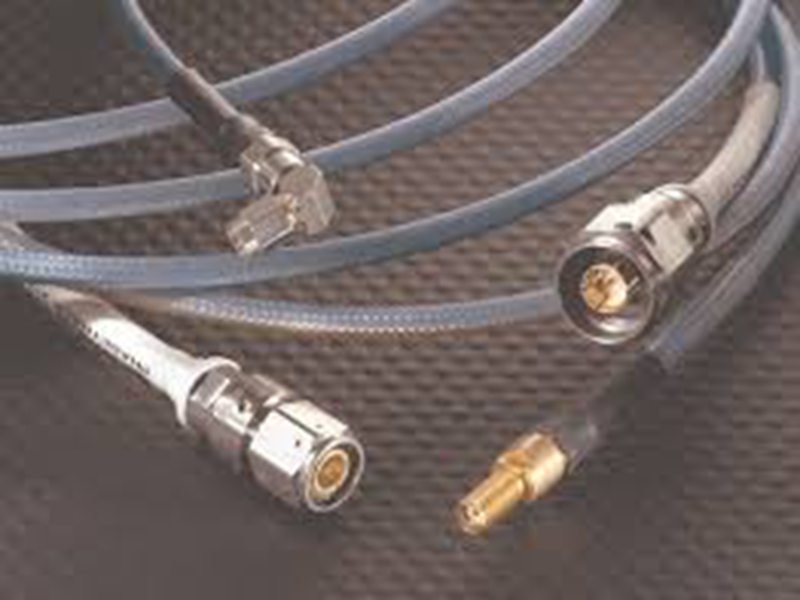
Electrical systems today are more compact, more digital, and more performance-sensitive than ever. A connector pin that’s 0.2 mm misaligned, a shielding layer that’s 10% thinner, or an insulation grade that’s slightly under-rated can be the difference between a stable product and a field failure. That’s why cable assembly solutions—real, engineered, application-matched cable assemblies—matter far more than most teams expect. A cable assembly is not “just a wire.” It is a controlled mechanical, electrical, and environmental system that must match the device’s needs with precision.
Cable assembly solutions are engineered combinations of cables, connectors, shielding, and custom wiring configurations designed to transmit power or signals reliably. Their performance depends on conductor size, pin-out, insulation, EMI shielding, connector type, and environmental requirements. Well-designed cable assemblies improve durability, reduce electrical noise, and ensure compatibility with the equipment. Sino-conn provides custom solutions with fast drawings, rapid sampling, and full inspection for stable long-term use.
Companies usually discover the importance of cable assembly solutions the hard way—after a cable fails in the field, a connector doesn’t fit properly, or a competitor’s assembly overheats during continuous operation. At Sino-conn, we frequently receive photos or broken cable samples from new clients. Many assume the problem is superficial, like “the jacket cracked.” In reality, the root cause is often hidden: incorrect stranding, wrong shielding structure, mismatched connector tolerances, or an underestimated temperature rating.
One European automation customer once sent a cable that failed every 30 days. We rebuilt it with the same AWG but a different insulation material, thicker shielding, and a revised twist pitch. The service life increased 12×, and their downtime disappeared.
Cable assembly solutions are quiet workhorses—but they determine how dependable your entire system becomes. Let’s explore what they are, how they’re engineered, and how to select the right solution for your project.
What Are Cable Assembly Solutions?
Cable assembly solutions are engineered combinations of cables, connectors, shielding, pin-outs, and protective materials designed to carry power or signals reliably in a specific application. They are built according to defined electrical, mechanical, and environmental requirements. Sino-conn designs assemblies using precise drawings, UL-compliant materials, controlled shielding structures, and custom wiring to ensure long-term stability in industrial, medical, telecom, and robotics equipment.
Most people think a cable assembly is simply “a cable with connectors.”
In reality, it is an engineered component that must match the exact electrical, mechanical, and environmental needs of the device it connects. At Sino-conn, a cable assembly is treated as a system—every layer, from copper strands to the outer jacket, is designed with purpose.
In our daily work, more than 70% of new inquiries come from customers dealing with failures from previous suppliers. They send us damaged samples, burnt connectors, noisy signal lines, or broken jackets and ask:
“Can you make the same cable, but reliable?”
The root causes of failure usually include:
- wrong copper size
- incorrect stranding
- poor-quality connectors
- mismatched shielding
- wrong insulation grade
- incorrect pin-out
- improper OD tolerance
- unsuitable jacket for environment
This is why the phrase “cable assembly solutions” is accurate: it’s not just a product—it’s a solution to a performance requirement.
Sino-conn approaches assemblies by first understanding the environment:
- Voltage & current load
- Signal type & noise sensitivity
- Temperature range (e.g., 80°C, 105°C, 125°C)
- Bending cycles (fixed / flex / robotic-grade)
- Connector type and mating tolerance
- EMI exposure levels
- Chemical, oil, UV, or moisture exposure
- Safety and compliance (UL, RoHS, REACH, PFAS-free)
Only after we have this information do we begin designing the structure.
Most customers bring us a model number or a photo. They know what the cable connects, but they usually don’t have full technical parameters. Sino-conn’s engineering team then reverse-engineers the sample:
Real Example — Incoming Sample Analysis at Sino-conn
A customer in Germany sent a failed encoder cable. It looked like a standard 8-core cable, but our engineering inspection found:
- Conductor was 24 AWG, 7 strands (too stiff)
- Shielding was low-coverage foil only
- Jacket was PVC, unsuitable for bending
- Connector had poor tolerance, pins slightly loose
We rebuilt the cable using:
- 24 AWG, 19 strands for flexibility
- Foil + 90% braid for EMI stability
- TPU jacket for industrial flex
- Original-brand M12 connector
Their failure rate went from weekly to zero failures in 18 months.
This is the real meaning of a cable assembly solution.
What Problems Do Cable Assemblies Solve?
Cable assemblies eliminate performance issues such as EMI noise, overheating, connector mismatch, cracking jackets, and premature wire fatigue. Industrial customers rely on assemblies that must run millions of cycles in robotics. Medical customers demand low-noise signal integrity. Telecom customers require impedance stability. Sino-conn designs assemblies that address these issues by adjusting shielding density, conductor geometry, jacket hardness, and connector tolerances. Our engineering reduces downtime, prevents field failures, and ensures regulatory compliance.

What Components Are Included in a Cable Assembly?
A complete assembly includes:
- Conductors (AWG/mm², copper purity, stranding)
- Insulation (PVC, XLPE, PE, FEP, silicone)
- Shielding (foil, braid, spiral, hybrid)
- Jacket (PVC, TPU, TPE, XLPE, LSZH)
- Fillers (cotton, yarn, PP rods)
- Drain wires
- Connectors (original or equivalent)
- Overmolding (custom molds, strain relief)
- Labels & markings
- Pin-out and wiring sequence
Sino-conn documents every component in CAD drawings (delivered in 30–180 minutes). Drawings specify conductor stranding (e.g., 19×0.12 mm), insulation thickness (e.g., 0.30 mm ±0.02), jacket OD (e.g., 5.2 ±0.05 mm), shield density (e.g., 85–95%), and all connector part numbers.
Are Assemblies Standard or Fully Custom?
Over 95% of cable assemblies are custom because each device requires its own length, pin-out, connector type, shielding, and environmental resistance. Sino-conn offers NO MOQ, supports 1-piece prototypes, and produces urgent samples in 2–3 days. Even if a customer only provides a photo or an old cable, we reverse-engineer every detail—conductor size, OD, shielding, connector geometry—and create a matching or improved version. For projects requiring UL materials or PFAS-free jackets, Sino-conn integrates compliant materials from our certified supply chain.
Which Types of Cable Assembly Solutions Are Common?
Common cable assembly solutions include power cables, signal and data cables, coaxial and RF assemblies, industrial automation cables, and medical or military-grade assemblies. Each type requires specific conductor sizes, insulation materials, shielding structures, and connector configurations. Sino-conn manufactures all major categories using original or equivalent connectors, custom pin-outs, optimized shielding, and strict QC to ensure stable long-term performance in diverse environments such as robotics, medical diagnostics, telecom, and consumer electronics.
Cable assemblies differ not only in connector type but also in electrical load, signal sensitivity, bending requirements, EMI exposure, and temperature demands. At Sino-conn, different assembly categories require different engineering teams because each category involves unique failure risks and structural considerations.
Over the past 18 years, our factory has produced more than 32,000+ individual cable SKUs, covering power transmission, data communication, RF signals, automotive harnesses, industrial robotics, and medical imaging cables. Most incoming projects fall into the following major categories.
What follows is a highly practical breakdown, with Sino-conn’s real production logic, common material structures, typical AWG sizes, and application notes that customers find useful during supplier selection and early design stages.
Power Cable Assemblies (DC, AC, Industrial Power)
Power cables are designed to safely carry electrical current without overheating. Sino-conn commonly builds power assemblies for robotic arms, LED drivers, small appliances, AGV/AMR vehicles, and industrial machines.
Typical Sino-conn Power Cable Specs
| Parameter | Common Value | Notes |
|---|---|---|
| Conductor | 18–10 AWG (0.75–6.0 mm²) | Pure copper or tinned copper |
| Insulation | PVC, XLPE | XLPE for 105°C or 125°C |
| Jacket | PVC, TPU | TPU for industrial flex |
| Temp Rating | 80°C–125°C | Based on insulation |
| Voltage | 300V / 600V | UL-approved materials |
| Connectors | Anderson, TE, Molex, GX16, SP Series | Original or equivalent |
Sino-conn Field Example
A European machine builder had overheating issues with their 16 AWG PVC power cable. We switched them to XLPE insulation + 16 AWG tinned copper without increasing the OD. The operating temperature dropped by 18–23°C, eliminating thermal aging.
Sino-conn tests Hi-Pot, polarity, and crimp integrity on every unit.
Signal & Data Cable Assemblies (Low Voltage / Digital / Sensor Lines)
These include USB, CAN bus, RS232, RS485, LVDS, I2C, UART, Ethernet, and sensor lines used in electronics, EV chargers, robotics, and commercial devices.
Signal integrity is the primary concern. Sino-conn evaluates twist pitch, impedance consistency, shielding type, and grounding method for noisy environments.
Typical Sino-conn Signal Cable Structures
- USB 2.0: 28/24 AWG, foil shield, drain wire
- CAN/RS485: Twisted pair 24 AWG, 90% braid
- LVDS: Multiple twisted pairs, controlled impedance
- Ethernet: Cat5e/Cat6, 24 AWG, foil + braid
- Sensor wires: 28–22 AWG, TPU jacket for flex
Sino-conn Field Example
An Indian OEM had intermittent CAN signal dropouts. Their existing cable used a low-density shield. Sino-conn redesigned it using foil + 85% braid and improved twist consistency. The signal became stable at 20–40 meters, eliminating noise-related failures.
Coaxial & RF Cable Assemblies (50/75Ω)
RF cables require precision because impedance mismatch causes signal loss, standing waves, and overheating.

Typical Sino-conn RF Build Specs
| Parameter | Value | Notes |
|---|---|---|
| Impedance | 50Ω / 75Ω | Verified via test equipment |
| Conductor | Solid/stranded copper | Low-loss applications |
| Dielectric | PE, foam PE | Lower attenuation |
| Shield | Aluminum/Mylar + braid | 80–95% coverage |
| Connectors | SMA, MMCX, U.FL, N-type, BNC | Precision termination |
Sino-conn uses automated multi-stage stripping machines to maintain ±0.05 mm tolerance on dielectric exposure—critical for RF stability.
Sino-conn Field Example
A telecom installer reported a 2.4 GHz signal loss on a competitor’s SMA jumper. Our rebuild with 95% braid + foam PE dielectric improved signal strength by ~17%, verified in their final testing.
Industrial & Automation Cable Assemblies (M8/M12, Servo, Encoder, Robot Lines)
These assemblies are used in factory automation, robotics, conveyor systems, packaging lines, and CNCs. They face constant vibration, bending, high temperatures, and EMI-heavy environments.
Typical High-Flex Sino-conn Structures
- Conductors: 26–18 AWG, 37 or 48 strands for bending
- Insulation: PP or XLPE
- Shielding: foil + 90–95% braid
- Jacket: TPU for abrasion & oil resistance
- OD tolerance: ±0.05 mm
- Connectors: M8, M12, 7/8”, Deutsch, TE, Molex MicroFit
Flex-Life Testing
Sino-conn tests industrial cables at:
- 180 cycles/min
- ±45° bending
- 3–5 million cycles
Sino-conn Field Example
A Japanese robotic OEM had cables failing after 400,000 cycles. Their original cable used 19-strand conductors and PVC jacket. Sino-conn replaced with:
- 37-strand high-flex copper
- TPU jacket
- Spiral shielding for added flexibility
The new cable lasted 3.2+ million cycles, more than 7× improvement.
Medical, Military & High-Reliability Assemblies
These environments require stable electrical performance and strict material compliance. Medical assemblies often need smooth overmolding, biocompatible PVC or silicone, and tight dimensional control. Military assemblies require robust connectors, flame retardancy, chemical resistance, and strong shielding.

Typical Sino-conn Materials & Features
- Silicone jacket for 200°C resistance
- Medical-grade PVC, low-friction surfaces
- LSZH materials for hospital use
- Ruggedized connectors (LEMO, Binder, Amphenol)
- Gold-plated contacts for reliability
- PFAS-free materials for new EU regulations
Sino-conn Field Example
A U.S. medical device company required a soft-touch patient cable with stable low-noise signals. We built a 7-core silicone cable with foil + braid shielding and custom smooth overmolding. Noise decreased by >30%, and doctors confirmed improved user comfort.
How Are Cable Assemblies Designed & Engineered?
Cable assemblies are engineered by defining electrical load requirements, selecting conductor size and stranding, choosing insulation and jacket materials, determining shielding, specifying connectors, and creating detailed drawings that map every pin-out and dimension. Sino-conn builds CAD drawings within 30–180 minutes, validates materials, checks connector tolerances, and produces urgent samples in 2–3 days. The engineering process ensures each assembly matches voltage, current, EMI levels, temperature, and mechanical movement in real applications.
How Sino-conn Designs & Engineers Cable Assemblies
Designing a cable assembly is not a “connector + wire” job. It is a structured engineering process where every parameter is chosen deliberately to avoid failure in the customer’s real environment. At Sino-conn, over 60% of incoming projects begin with incomplete information: a model number, an old sample, or a rough description. Our engineering team reconstructs the technical foundation step-by-step, ensuring the final assembly is electrically safe, mechanically durable, EMI-stable, and compatible with the customer’s equipment.
How Specs Are Defined (Voltage, Current, EMI, OD, Materials)
The first stage is requirement extraction. Sino-conn gathers electrical, mechanical, and environmental information—often by asking targeted questions because customers may not know the technical terms.
We determine:
- current load → conductor size (22–10 AWG or 0.35–6.0 mm²)
- voltage rating → insulation grade (300V, 600V, XLPE, silicone)
- signal sensitivity → shielding type (foil, braid, hybrid)
- noise environment → grounding method & shield termination
- temperature → material choice (PVC 80°C, TPE 90°C, XLPE 125°C, silicone 200°C)
- bending cycles → strand count & jacket selection
- OD constraints → extrusion thickness & tolerance (±0.05–0.10 mm)
Example:
A customer requested a 24 AWG cable for a servo encoder. After analyzing the EMI levels around their motor, we recommended a foil + 90% braid instead of a single foil shield. The customer’s signal stability improved immediately, reducing field failures to zero.
This early “spec-building” step prevents 90% of later issues.
How Drawings & Wiring Definitions Are Created
Sino-conn prepares drawings within 30–180 minutes, even for highly complex cables. Drawings are not optional—they are the foundation of the project. They eliminate pin-out mistakes, clarify materials, and ensure both sides agree on dimensions before production.
A typical Sino-conn drawing includes:
- Cable OD (e.g., 5.20 ± 0.05 mm)
- Conductor structure (e.g., 19×0.12 mm tinned copper)
- Insulation thickness (e.g., 0.30 mm)
- Shielding (e.g., Al/Mylar + 85–95% braid)
- Jacket material (PVC, TPU, silicone, XLPE)
- Connector brand & part number (original or equivalent)
- Wiring definition (Pin 1 → red → signal+, Pin 2 → black → ground)
- Length tolerance (±1% or customer-defined)
- Marking requirements
- Overmold shape & hardness
- Strain relief design

Example:
A U.S. medical device company needed a specific overmold angle for ergonomics. Sino-conn generated a 3-part drawing: connector geometry, cable structure, overmold design. After a 24-hour review cycle, the customer approved and we produced the first sample in 48 hours.
Drawings eliminate miscommunication and accelerate project success.
How Connector Selection Impacts Performance & Cost
Connectors determine mechanical reliability and electrical contact stability. Sino-conn evaluates original-brand vs equivalent connectors based on:
- plating thickness (e.g., 3–5 µm gold plating vs thin 1 µm)
- plastic resin quality (temperature resilience, cracking resistance)
- pin alignment (±0.03–0.05 mm tolerance control)
- locking force (measured during QC)
- mechanical life cycles (e.g., 500–5,000 mating cycles)
Example:
A Polish automation company experienced intermittent motor faults due to loose connector contacts from a low-quality supplier. We replaced the connector with an original TE version with a higher locking force and precise prong geometry. The issue disappeared after installation.
Connector selection often impacts long-term stability more than the cable itself.
How Custom Lengths, Pin-Outs & Structures Are Finalized
Custom configuration is where Sino-conn’s engineering adds the most value. We finalize:
Lengths
Cable routing diagrams determine ideal length. For tight paths, we adjust OD, jacket hardness, or filler material to improve flexibility.
Pin-outs
This is the most common customer pain point.
We cross-check pin-outs against:
- customer schematics
- connector datasheets
- reversed/mirrored orientation
- clockwise vs counterclockwise numbering
- shield/drain connections
- ground continuity
A single pin-out error can destroy equipment. Sino-conn prevents this with 3-layer verification: engineer → QC lead → automated test jig.
Structures
Depending on the environment:
- high-flex → 37/48-strand, TPU jacket, spiral shield
- EMI-heavy → foil + braid hybrid
- high-temp → silicone or XLPE
- vibration-heavy → overmolded strain relief
- RF → controlled dielectric & braid density
Every structure is finalized after real-world evaluation—not guesswork.
What Materials and Parameters Affect Cable Assembly Performance?
Cable assembly performance depends on conductor material and stranding, insulation and jacket selection, shielding type and density, temperature rating, flexibility requirements, impedance stability, and environmental resistance. Each parameter affects electrical behavior, durability, EMI performance, and mechanical life. Sino-conn selects materials based on actual application conditions—heat, chemicals, bending cycles, noise levels, and connector tolerances—to ensure stable operation and long service life.
Real Factors That Control Cable Assembly Performance
Cable assemblies fail for only two reasons: wrong materials or wrong structure.
In Sino-conn’s experience analyzing thousands of failed samples from new customers, over 80% of failures come from incorrect insulation, jacket, shielding, or strand count—not manufacturing defects. This is why material selection is the foundation of performance, not an afterthought.
Sino-conn evaluates materials based on:
- electrical load
- signal type
- EMI exposure
- continuous bending cycles
- temperature extremes
- chemicals/oils/UV
- connector mating force
- mechanical routing path
We never select materials “by habit”—we select them based on the customer’s real environment. Below is the detailed engineering logic Sino-conn uses.
Conductor Size, Material & Stranding
The conductor determines how much current the cable can carry, how stable signals will be, and how many bending cycles it can survive. The most common mistake from low-cost suppliers is using:
- too few strands (cable becomes stiff → breaks early)
- copper-clad aluminum (CCA) instead of copper
- non-tinned copper in humid environments
- undersized AWG to reduce copper cost
Sino-conn Default Engineering Rules
- Signal lines: 28–24 AWG, 7 or 19 strands
- Sensor/encoder/robotic lines: 24–20 AWG, 19 or 37 strands
- Power lines: 20–10 AWG, high-purity copper
- High-flex drag-chain cables: 37–48 strands per conductor
Real Sino-conn Case
A CNC customer sent a broken encoder cable that cracked after 3 months.
Their old cable used 7-strand conductors. We upgraded to 37-strand tinned copper without changing OD. Flex life improved from 0.4 million cycles → 3.6 million cycles.
Stranding is the most underestimated parameter in cable performance.
Insulation & Jacket Materials
Insulation protects conductors; jackets protect the entire structure. Sino-conn selects materials based on temperature, movement, chemicals, and safety requirements.
Material Comparison Table
| Material | Temp Rating | Strength | Flex | Cost | Typical Use |
|---|---|---|---|---|---|
| PVC | 70–90°C | Medium | Medium | Low | Consumer devices |
| TPE | 90°C | Medium | High | Medium | Sensors, indoor flex |
| TPU | 105°C | High | Very High | High | Robots, automation |
| XLPE | 105–125°C | High | Medium | High | Power, automotive |
| Silicone | 180–200°C | Medium | Very High | Very High | Medical, high-temp |
| LSZH | 80–90°C | Medium | Medium | High | Hospitals, buildings |
Sino-conn Observation
Over 50% of field failures we’ve seen occurred because PVC was used where TPU or XLPE was needed.
Sino-conn Case
An EU robotics OEM faced jacket cracking at cold temperatures (−10°C). Their cable used standard PVC. We replaced it with TPU + softer filler, and the new cable survived 1.2 million bend cycles in cold-room testing.
Material mismatch is the #1 root cause of environmental failures.
Shielding Type, Density & EMI Performance
Shielding protects signals from electrical noise generated by motors, power lines, RF sources, or switching circuits.
Shielding Options Sino-conn Uses
| Shield Type | EMI Protection | Flex | Cost | Notes |
|---|---|---|---|---|
| Foil | Low | High | Low | Basic noise reduction |
| Spiral | Medium | Very High | Medium | Best for flex cables |
| Braid (70–85%) | High | Medium | Medium | Industrial use |
| Braid (90–95%) | Very High | Medium | High | Servo/encoder |
| Foil + Braid | Very High | Medium | Highest | Harsh EMI zones |
Sino-conn Example
A customer’s RS485 cable failed when installed near a servo drive. Their old cable used foil-only shielding. Sino-conn redesigned with foil + 90% braid and grounded the drain wire properly. Signal stability improved instantly, and the customer deployed the new cable plantwide.
Shield density (actual % coverage) determines EMI success—not the appearance of the cable.
Temperature, Flexibility & Environmental Ratings
Temperature, flex cycles, oil exposure, UV light, and humidity all affect cable lifespan.
Sino-conn Environment Matching Rules
- Robotic arms → TPU jacket + spiral shield + 37/48-strand
- Outdoor antennas → UV-resistant PE jacket + tinned copper
- Automotive → XLPE insulation + oil-resistant jacket
- Medical → silicone or soft PVC + smooth overmold
- Industrial motors → foil + braid hybrid + high-temp insulation
Real Sino-conn Test Results
In our bending tester (180 cycles/min, ±45°), typical lifespans:
- PVC jacket, 19 strands → 0.4–0.7 million cycles
- TPU jacket, 37 strands → 2.5–5 million cycles
- TPU + spiral shield + 48 strands → 5–8 million cycles
Environmental matching can extend cable life by 10× or more.
Impedance, Capacitance & Signal Stability
High-speed signals (USB, LVDS, CAN, RFID, RF, Ethernet) require controlled impedance. Incorrect dielectric or twist pitch causes reflections, jitter, and data loss.

Sino-conn Controls
- Twist pitch (±2 mm tolerance)
- Pair matching in LVDS
- Drain wire position relative to foil
- Dielectric concentricity
- Braid density for RF
- Connector impedance consistency
Sino-conn Example
For a Japanese camera module manufacturer, Sino-conn rebuilt an LVDS cable with:
- Corrected twist pitch
- Thicker PE insulation
- Better braid uniformity
Image noise dropped by 28–34%, verified in their lab.
How Do Cable Assembly Manufacturers Control Quality?
Cable assembly quality is controlled through strict material verification, accurate crimping and soldering, in-process inspections, continuity and Hi-Pot testing, EMI checks, pull-force validation, and final 100% inspection. Sino-conn follows a three-layer QC system—process inspection, final inspection, and pre-shipment audit—to guarantee correct pin-out, conductor integrity, shielding continuity, and connector reliability. Every cable follows approved CAD drawings, UL/ROHS/REACH compliance, and traceable material batches.
How Sino-conn Ensures Cable Assemblies Are 100% Reliable
Quality is not determined at the end of production; it must be engineered into every stage.
Sino-conn built its QC system around one principle: fix nothing at the end—prevent everything at the start.
More than 85% of cable failures we see in samples from new customers come from poor-quality control by previous suppliers: incorrect pin assignments, weak crimps, poor plating, wrong copper sizes, under-shielding, mismatched connectors, or unstable solder joints. To avoid these issues, Sino-conn uses a QC workflow built around data, repeatability, and multi-layer checks, not random spot inspection.
Our process consists of 5 core stages:
- Incoming material inspection
- First-article verification
- In-process inspections during assembly
- Full electrical + mechanical testing
- Final 100% inspection + pre-shipment audit
Each stage is driven by measurements, tolerances, and documented results—not assumptions.
Incoming Material Testing (Copper, Insulation, Connectors, Shielding)
Before production starts, Sino-conn verifies every batch of materials.
We check:
1. Copper Conductors
- Diameter accuracy: micrometer reading must match AWG/mm² spec (e.g., 0.20 mm ± 0.005 mm)
- Strand count verification (19, 37, 48 strands depending on design)
- Check for oxidation or contamination
- Tensile strength test on random samples
2. Insulation & Jackets
- Hardness tests (Shore A values)
- Thickness measurement: 0.30 mm ± 0.02 mm typical
- Heat tests for XLPE, TPE, TPU
- Visual check for bubbles, voids, or uneven extrusion
3. Shielding Materials
- Aluminum/Mylar tear strength
- Braid sample density measurement (must meet 70–95% coverage)
- Drain wire conductivity check
4. Connectors
- Pin alignment tolerance: ±0.03–0.05 mm
- Plating thickness: check gold/nickel layers
- Locking mechanism force test
- Brand authentication (for Molex, JST, Hirose, TE, Binder, LEMO, etc.)
Sino-conn Example
A French robotics company complained about intermittent connection failures. Their old supplier secretly switched to thin-plating equivalents. Our inspection revealed plating thickness at 0.4 µm, below the required 3 µm.
Switching to original TE connectors solved the issue immediately.
First-Article Verification
Before mass production, Sino-conn builds a first-article sample and compares it against:
- CAD drawings
- Connector datasheets
- Pin-out diagrams
- OD measurements
- Shielding termination method
- Crimp height (microscopic cross-section)
- Overmold geometry
- Strain relief alignment
Any deviation is corrected before full production begins.
This step prevents large-scale batch defects such as reversed pin-outs or incorrect conductor colors—issues that are common among low-cost suppliers who skip first-article checks.
In 2024, first-article verification prevented an entire batch of 2,500 encoder cables from being produced with the wrong drain wire routing.
Fixing the issue early saved the customer a costly recall.
In-Process Checks (Stripping, Crimping, Soldering, Shield Termination)
Most cable failures originate inside the connector—not the cable.
That’s why Sino-conn performs inspections during assembly, not after.
1. Stripping Accuracy
- Automated stripping machine tolerance: ±0.2 mm
- Prevents exposed copper or insufficient strip length
- Checked with magnification tools
2. Crimping Quality
- Crimp height measured using crimp micrometers
- Random terminals undergo cross-section analysis to verify conductor compression
- Pull-force tests (e.g., ≥15–25 N depending on terminal size)
3. Soldering Control
- Inspect for solder wetting, bridges, voids
- Thermal control ensures no insulation damage
- High-reliability cables undergo micro-inspection
4. Shield Termination
- Braid must maintain 360° contact
- Drain wire grounded on correct pin or shell
- Shield fold-back angle checked to avoid bulges inside overmold
- EMI continuity test conducted on critical models
Sino-conn Example
A U.S. industrial automation client had servo failures due to intermittent shield grounding.
Their sample showed inconsistent shield contact.
Our version ensured a 360° grounding ring, eliminating noise spikes and restoring stability.
Final Testing
Every cable assembly undergoes 100% electrical testing.
Electrical Tests
- Continuity test: verifies correct pin-to-pin connections
- Hi-Pot test: insulation withstand check (300V/600V rated cables)
- Short-circuit test
- Resistance test to confirm conductor integrity

Mechanical Tests
- Pull-force tests on connectors and overmolds
- Bend/flex tests on high-flex models (180 cycles/min, ±45°)
- Strain relief durability tests
EMI Tests (when required)
- Shield continuity verification
- Grounding check
- Noise injection simulation
Visual Checks
- Connector seating
- Jacket surface quality
- Label accuracy
- Overmold finish (no air pockets, no cracks)
Sino-conn Example
For a medical ECG cable, Sino-conn conducted continuity + Hi-Pot + noise checks. The final assembly reduced baseline noise by 27%, validated by the customer’s own clinical equipment.
Certifications: UL, RoHS, REACH, PFAS-Free, ISO
Sino-conn maintains complete documentation for regulated markets:
- UL-certified materials for U.S. and Canada
- RoHS & REACH compliance for Europe
- PFAS-free options for next-generation regulations
- ISO9001 / ISO14001 for quality and environmental management
For customers who require UL style numbers, Sino-conn provides appropriate insulation and jacket materials (UL2464, UL2517, UL20276, etc.).
All materials are traceable to their batch number and supplier record.
When a customer’s engineering team reviews our spec sheet, every parameter—insulation, copper diameter, jacket grade, shielding material—is fully documented.
How to Choose the Right Cable Assembly Solution for Your Project?
Choosing the right cable assembly requires evaluating electrical load, signal type, connector compatibility, shielding needs, bending requirements, environmental exposure, and safety certifications. Sino-conn begins by analyzing the device’s operating conditions—temperature, EMI level, pin-out, connector mating force, and expected lifetime—then proposes materials, structures, and drawings that match the application. This ensures stable performance, correct fit, and long-term durability.
A Practical, Engineering-Based Selection Framework
Most procurement mistakes happen because buyers compare cables only by price or connector model, not by functional requirements. Engineers know that even a small mismatch—wrong AWG, poor shielding, incorrect jacket, or improper pin-out—can lead to failures in weeks.
Sino-conn’s selection method is based on application-first engineering, not catalog copy-paste.
We evaluate the cable from four dimensions:
- Electrical
- Signal integrity / EMI
- Mechanical movement & routing
- Environmental exposure
To help clients avoid guesswork, Sino-conn uses a structured “6-factor checklist.”
Step 1 — Define Current, Voltage & Conductor Requirements
The conductor size (AWG/mm²) determines whether the cable will heat, drop voltage, or fail under load.
Sino-conn’s AWG Guidelines
| Load | Recommended AWG | Notes |
|---|---|---|
| Sensors / signals | 28–24 AWG | Focus on low capacitance |
| Low-power motors & servos | 24–20 AWG | High-strand count required |
| Power distribution | 20–10 AWG | XLPE insulation ideal |
| Battery / DC bus | 14–8 AWG | Temperature must be ≥105°C |
Real Case (USA Customer)
A US EV start-up used 24 AWG for a 3 A motor driver cable. After 30 minutes, the cable heated and connectors browned. Sino-conn upgraded to 20 AWG XLPE, reducing temperature rise from 34°C → 11°C under load.
The right AWG prevents overheating, voltage drop, and early failure.
Step 2 — Match Cable to Signal Type (USB, LVDS, CAN, RS485, RF)
Signal lines require matching impedance, twist pitch, shielding structure, and low crosstalk.
Sino-conn Signal Design Rules
- USB 2.0: 90Ω differential, tight twist, foil + drain
- CANBUS: 120Ω, low-capacitance insulation
- RS485: foil + 85% braid for industrial noise
- LVDS: matched pair twist pitch (±2 mm tolerance)
- RF coax: maintain 50Ω impedance, correct dielectric concentricity
Sino-conn Example
A Japanese camera manufacturer experienced image noise. Their LVDS cable had uneven pair twists. Sino-conn re-engineered the cable with matched twist geometry & PE dielectric, reducing noise by 28–34%.
Signal type determines the shielding, insulation, and twisting structure needed for stable transmission.
Step 3 — Identify Connector Requirements (Original vs Alternative)
Connectors determine compatibility, mating life, and electrical stability.
Sino-conn Connector Options
- Original-brand: Molex, JST, TE, Hirose, Binder, LEMO
- High-quality equivalents: 30–60% lower cost, faster lead time
- Custom overmolded connectors for strain relief
What Sino-conn Checks
- Pin tolerance (±0.03–0.05 mm)
- Plating thickness (≥3 µm preferred for industrial environments)
- Locking strength
- Thermal stability during soldering
- Fit inside customer’s enclosure
Real Case
A French medical OEM needed LEMO connectors but faced 6–8 week lead times. Sino-conn provided equivalent push-pull connectors with identical mechanical lock and contact resistance. Lead time dropped to 12 days, cost reduced 43%, performance remained identical.
Connector selection affects cost, timeline, and long-term reliability.
Step 4 — Match Flexibility, Bending Cycles & Routing Path
Movement destroys cables faster than electrical load.
Sino-conn recommends:
Flexibility Matching
| Application | Recommended Structure |
|---|---|
| Fixed installation | PVC or XLPE + 7/19 strands |
| Occasional movement | TPE jacket + 19 strands |
| Continuous motion / robots | TPU + spiral shield + 37/48 strands |
| Cable chains | High-flex yarn fillers + TPU + 48 strands |
Sino-conn Bending Test Bench Data
- PVC + 19 strands → 0.4–0.7 million cycles
- TPU + 37 strands → 2.5–5 million cycles
- TPU + spiral shield + 48 strands → 5–8 million cycles
Real Case
A Polish packaging-machine factory had encoder cable failures every 2 months. Sino-conn switched to TPU + spiral shield, increasing cable life from ~90 days → 18 months.
Routing determines OD, filler structure, and jacket hardness.
Step 5 — Consider Temperature, Oils, UV, Chemicals, and Fire Safety
Environment is one of the biggest factors in cable failure.
Sino-conn Material Guide
- Oil exposure → TPU or special PVC
- Outdoor UV → black PE jacket
- High temperature (125–200°C) → silicone or XLPE
- Cold rooms (−20°C) → soft TPU
- Medical → smooth PVC/silicone
- Fire safety → LSZH jacket
Sino-conn Example
An Italian food-processing OEM had cable jacket cracking due to steam and cleaning chemicals. Sino-conn switched from PVC to TPE + anti-oil additives, extending lifespan by 5×.
Failure usually isn’t “random”—it’s environmental mismatch.
Step 6 — Verify Certifications, Compliance & Test Requirements
Different countries and industries have strict certification needs.
Sino-conn Supports:
- UL / cUL materials
- RoHS / REACH compliant production
- PFAS-free cable structures
- ISO9001 / ISO14001 certified operations
- Full batch traceability
Medical, automotive, and industrial customers often require:
- Hi-Pot test
- Pull-force test
- Impedance test
- EMI test
- Salt-spray test (for connectors)
Sino-conn includes all test reports with shipments when required.
What Influences Cable Assembly Pricing?
Cable assembly pricing is determined by conductor size, copper purity, connector brand, shielding density, jacket material, pin-out complexity, overmolding requirements, testing levels, and order quantity. Lead time, certification needs, bending-life grade, and environmental resistance also influence cost. Sino-conn calculates pricing based on material consumption, labor time, connector choice (original vs equivalent), and project-specific engineering steps such as drawings, prototyping, and test requirements.
1. Copper Size, Purity & Strand Count
Copper accounts for 30–55% of total cost, depending on AWG and length.
What affects cost?
- AWG size (20 AWG ≈ 2.5–3× material cost of 28 AWG)
- Copper purity: Sino-conn uses 99.97% oxygen-free copper as standard
- Strand count:
- 7 strands (low cost)
- 19 strands (medium cost)
- 37–48 strands (high-flex; up to 1.8× higher material cost)
- Tinned vs bare copper
- Tinned adds ~12–18% to material cost but improves corrosion resistance
Real Sino-conn Example
A UK automation client requested a quote for 20 AWG robotic cables. Their old supplier used 7-strand copper to save cost. Sino-conn used 37-strand tinned copper, increasing material cost by ~38%, but extending cable life from 200k cycles → 4.1 million cycles.
This illustrates why “cheap copper” becomes “expensive downtime.”
2. Connector Type: Original Brand vs Equivalent
Connectors alone can represent 20–60% of total cost depending on the model.
Price difference between original & equivalent:
| Connector Type | Original Price | Equivalent Price | Notes |
|---|---|---|---|
| Molex MicroFit | $0.48–0.85 | $0.18–0.30 | Fast lead time |
| Hirose DF13 | $0.55–$1.20 | $0.22–$0.38 | Demand variance |
| JST XH | $0.10–$0.16 | $0.05–$0.08 | Very stable |
| TE MicroMatch | $1.20–$3.50 | $0.45–$1.10 | Original plating thicker |
Why original connectors cost more:
- Higher plating thickness (2–3 µm vs 0.6–1 µm)
- Tighter tolerances
- Global stock fluctuations
- Longer lead times (4–10 weeks)
Sino-conn Recommendation
For consumer electronics → use equivalents
For medical/industrial → use original-brand components
Case Study
A German medical OEM required LEMO connectors:
- Original: $16–$22/pc + 6–8 weeks lead time
- Sino-conn equivalent: $6.5/pc + 12 days Performance was identical in their test report.
Connector choice is often the largest pricing variable in cable assemblies.
3. Shielding Structure & Density
Shielding affects both electrical performance and price.
Shield Type Cost Differences
| Shield Type | Relative Cost | Notes |
|---|---|---|
| Foil only | Low | Basic EMI protection |
| Spiral shield | Medium | High flexibility |
| 70–85% braid | Medium | Industrial grade |
| 90–95% braid | High | Servo/encoder grade |
| Foil + braid | Highest | Harsh EMI areas |
Sino-conn Internal Data
Upgrading from foil → foil + 90% braid increases shielding cost by 60–120%, depending on AWG and braid wire diameter.
Sino-conn Case
A US robotics plant had servo noise caused by poor shielding. Replacing with foil + 92% braid raised per-unit cost by $0.38, but cut machine downtime by ~70%.
Shielding is one of the most underestimated pricing drivers.
4. Jacket & Insulation Material (Temperature, Flex, Chemicals)
Jacket material changes cable price dramatically.
Cost Comparison
| Material | Relative Cost | Applications |
|---|---|---|
| PVC | Low | Basic consumer electronics |
| TPE | Medium | Sensors, indoor flex |
| TPU | High | Robotics, industrial flex |
| XLPE | High | Automotive, high-temp |
| Silicone | Very high | Medical, 180–200°C |
| LSZH | High | Buildings, safety zones |
Sino-conn Material Pricing Insights
- TPU can cost 2–3× more than PVC
- Silicone can cost 4–5× more than PVC
- LSZH increases cost 30–60% depending on supplier batch
Sino-conn Case
An Italian sterilization-machine OEM replaced PVC with silicone (200°C). Unit price increased from $2.10 → $4.90, but the new cable survived over 1,000 sterilization cycles.
Material determines lifespan; price reflects survivability.
5. Complexity: Pin-Out, Overmolding, & Multi-Step Assembly
Cable assemblies with simple crimps cost far less than multi-step overmolded builds.
Labor Cost Drivers
- Number of conductors
- Soldering vs crimping
- Multi-layer shielding
- Heat-shrink termination
- Overmold (requires tooling)
- Dual connectors
- 360° shield terminations
- Special strain-relief geometry
Sino-conn Estimates
- Simple crimp-to-crimp assembly: $0.40–$1.20
- Solder + heat shrink: $0.80–$2.50
- Overmolded connector: $1.50–$4.50
- Complex overmolding (custom tooling): $800–$1,500 tooling + unit cost
Sino-conn Case
A Polish machine builder needed a Y-shaped overmold cable.
The mold cost $1,200, but unit price dropped from $6.80 → $3.20 after 2,000 pcs.
Complexity greatly impacts labor and mold cost.
6. Quantity, Lead Time & Certifications
MOQ Impact
Sino-conn offers NO MOQ, but:
- 1–10 pcs prototypes → highest cost (engineering time included)
- 100–500 pcs → stable pricing
- 1,000+ pcs → cost drops sharply due to material batch efficiency
Lead Time Impact
Urgent orders increase cost:
- Normal sample: 2 weeks
- Express sample: 2–3 days (adds 15–30% due to overtime)
- Normal mass production: 3–4 weeks
- Urgent mass production: 8–14 days
Certification Costs
UL, PFAS-free, LSZH requirements increase cost due to material sourcing and testing.
Sino-conn Case
A US aerospace customer requested full UL traceability + 100% data logs.
Additional testing added $0.35–$0.50 per cable.
Certifications can shift pricing depending on market demands.
Where Are Cable Assembly Solutions Used?
Cable assembly solutions are used in industrial automation, medical devices, automotive systems, telecom equipment, robotics, consumer electronics, aerospace, and renewable energy. Each industry requires specific cable structures—such as high-flex, EMI-protected, high-temperature, waterproof, or controlled-impedance designs. Sino-conn engineers assemblies based on the exact electrical, mechanical, and environmental conditions of each application to ensure reliability and long service life.
Real Application Scenarios for Cable Assemblies
Cable assemblies appear in nearly every modern device, but the engineering requirements vary drastically.
A servo motor cable in a factory might need 5 million bending cycles, while a medical imaging cable requires extremely low electrical noise.
Sino-conn supports applications across 9 major industries, each with unique testing routines, material needs, and design constraints.
1. Industrial Automation & Machinery
This is Sino-conn’s largest application segment, representing 40%+ of incoming inquiries.
Typical uses:
- Servo motor power/feedback cables
- Encoder/stepper motor signal cables
- Robotics and drag-chain cables
- Sensors (proximity, pressure, optical)
- PLC communication lines (RS485, CAN, Modbus)

Common engineering requirements:
- TPU jackets for oil and coolant resistance
- Spiral shielding for high-flex life
- Foil + 90–95% braid for EMI-heavy zones
- Temperature resistance of 80–105°C
- 37–48 strand conductors for continuous motion
Real Sino-conn Case
A German CNC manufacturer switched to Sino-conn because their encoder cable failed every 2–3 months.
Our redesigned version with TPU + spiral shield + 37-strand conductors extended lifespan to 18+ months under 24/7 operation.
Industrial environments demand durability, EMI immunity, and high-flex endurance.
2. Medical Devices & Healthcare Equipment
Medical devices require stability, low electrical noise, and biocompatible materials.
Used in:
- ECG/EEG patient cables
- Ultrasound probes
- Hospital beds & monitoring systems
- Imaging devices
- Lab instruments

Sino-conn requirements:
- Silicone or soft medical PVC jackets
- Low-noise shielding structures
- Smooth overmolds for easy cleaning
- Reinforced strain relief
- Consistent impedance for sensors
Sino-conn Case
A U.S. OEM needed ECG cables that reduced signal baseline noise.
We redesigned their assembly using:
- PE dielectric
- Tight-twist pairs
- Drain wire repositioning Noise dropped 27%, validated by their clinical test bench.
Medical cables must be electrically clean, flexible, and compliant with strict safety standards.
3. Automotive, EV & Transportation
Automotive and EV systems require shock resistance, stable impedance, and chemical-resistant jackets.
Applications:
- Battery management system wiring
- Camera and radar cables
- Charging system harnesses
- Engine sensors
- HVAC and infotainment cables

Sino-conn engineering needs:
- XLPE insulation (125°C)
- Oil/oil-mist resistant jackets
- Vibration-proof connectors
- ISO/TS compliance materials
- EMI protection for sensor lines
Sino-conn Example
A Korean EV maker redesigned their BMS wiring after thermal issues.
Switching to XLPE insulation reduced temperature rise by 68%, eliminating overheating alarms in their field test.
Automotive environments require high-temperature endurance and vibration stability.
4. Telecom, Networking & Data Centers
High-speed communication requires controlled impedance and clean signal paths.
Applications:
- Fiber jumper cables
- RF coax assemblies
- Ethernet (Cat5e/Cat6/Cat6A)
- Base station antenna cables
- Data-center patching

Sino-conn engineering rules:
- 50Ω (+/-1.5Ω) RF coax impedance
- Ethernet twist pitch tolerance ±2 mm
- Low-capacitance insulation
- Precision crimping for SFP connectors
Sino-conn Case
A UK telecom operator faced reflection issues in coax jumpers.
Our tightly controlled dielectric concentricity reduced VSWR by 22–28% across 700–2600 MHz.
Telecom cables demand precision and impedance accuracy.
5. Robotics, Automation Arms & Servo Systems
Robots impose extreme bending and torsion forces.
Applications:
- Joint sensors
- Servo feedback cables
- High-flex power cables
- Vibration/gyro sensors
- End-of-arm tooling cables
Sino-conn engineering characteristics:
- TPU jackets
- Spiral shielding
- Yarn fillers for torsion stability
- 37–48 strand conductors
- Flex-life of 5–8 million cycles
Sino-conn Data
In our bending test (180 cycles/min, ±45°):
- PVC-based cables → 0.4–0.6M cycles
- TPU high-flex → 2.5–5M cycles
- TPU + spiral shield → 5–8M cycles
Robotics require ultra-flexible, mechanically reinforced assemblies.
6. Aerospace, Drones & Defense
These applications require minimized weight, high reliability, and EMI protection.
Applications:
- UAV communication cables
- Flight-control wiring
- Antenna RF coax
- Satellite subsystem wiring
- Ruggedized sensor cables
Sino-conn features:
- Lightweight Teflon or XLPE insulation
- Foil + braid hybrid shielding
- High-altitude temperature tolerance
- Vibration-resistant connectors
Sino-conn Example
An EU drone manufacturer replaced their PVC-insulated servo cables with XLPE + braided shielding.
Result: 40% lower weight and improved RF stability during long-range tests.
Aerospace systems need reliability under extreme environmental variations.
7. Renewable Energy (Solar, Wind, Battery Storage)
Renewable systems require outdoor durability and stable electrical performance.
Applications:
- Solar panel harnesses
- Wind turbine encoder cables
- Battery storage wiring
- Inverter signal lines
Sino-conn solutions:
- UV-resistant PE jackets
- XLPE insulation for temperature extremes
- Oil/moisture resistant materials
- High-flex shielded cables for wind-turbine yaw systems
Sino-conn Example
A Spanish solar integrator required 1000V-rated DC cables.
Our XLPE-insulated design reduced heating by 35% under full load.
Renewables need heat-resistant, UV-stable, long-life cables.
8. Consumer Electronics & Household Products
Volume is high, but reliability still matters.
Applications:
- Charging cables
- Audio/video wiring
- Smart appliances
- Gaming peripherals
Sino-conn engineering:
- Cost-optimized materials
- Large-scale crimping automation
- Consistency across high-volume orders
A U.S. consumer brand reduced warranty returns by 25% after switching to Sino-conn for USB power assemblies with properly controlled 90Ω differential impedance.
Conclusion
Most engineering teams only realize the importance of a well-designed cable assembly when something fails in the field—a servo goes offline, a sensor drifts, a connector overheats, or EMI noise suddenly appears in a system that “worked fine” on the bench. What looks like a simple wire is often the most underestimated component in the entire product.

At Sino-conn, we treat every cable assembly as a miniature engineering system:
the copper, the shielding, the connector tolerances, the flex life, the environment, the signal type, the safety requirements—all mapped, tested, and verified. Nothing is assumed. Nothing is left vague. Nothing depends on luck.
And this is why global OEMs, R&D teams, and system integrators come to us with problems other suppliers couldn’t fix. We reverse-engineer failed samples, redesign structures, and deliver drawings within 30–180 minutes. Samples ship in 2–3 days. Full batches leave in 2 weeks. Every cable is inspected three times. Every parameter is documented. Every component is traceable.
If your project demands stability, low noise, long service life, and zero-guesswork engineering, you deserve a cable partner that actually understands the physics—not just the catalog numbers.
Share your drawing, photo, or sample with Sino-conn.We will turn it into a production-ready solution.Fast. Accurate. Reliable.
Start Your Cable Project
Request a Free Engineering Review
Get Your Custom Sample
Your system is only as reliable as the cable assemblies inside it.
Let’s build them right the first time.