Skip to content
In today’s interconnected world, where cars, machines, and servers exchange massive data every millisecond, signal integrity is everything. Even a small interference spike can distort readings, shut down control systems, or cause safety risks. Shielded cables are the unsung heroes behind reliable communication — protecting electronic signals from electromagnetic noise that surrounds every industrial, automotive, and consumer environment.
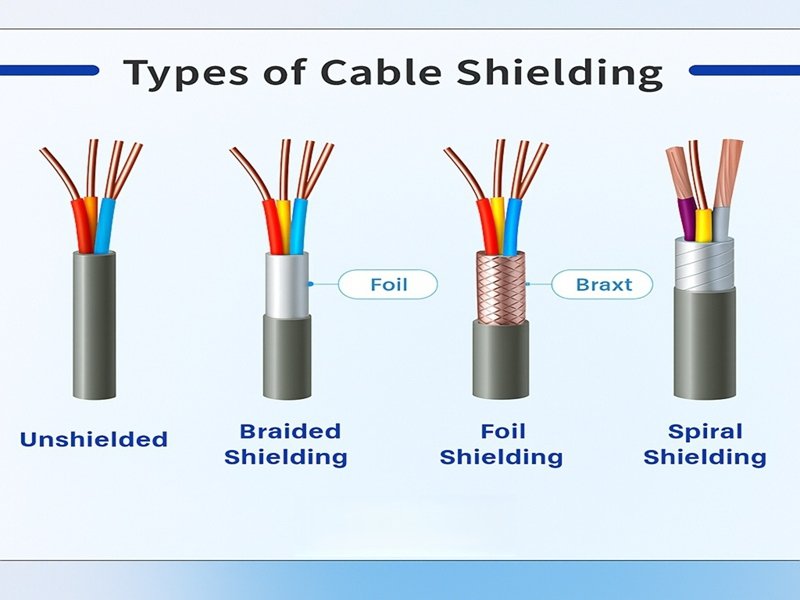
A shielded cable is an electrical cable with one or more conductive layers (foil, braid, or spiral wrap) that block electromagnetic interference (EMI) and radio frequency interference (RFI). It ensures clean signal transmission, especially in noisy environments like factories, vehicles, and communication systems.
The world depends on shielded cables more than most people realize. From your EV’s sensors to robotic automation, every high-precision system relies on this layer of protection. Yet many buyers and engineers still wonder: What makes a shielded cable different? When is it worth the cost? Let’s break it down — layer by layer.
What Does “Shielded Cable” Mean?
A shielded cable is an electrical cable designed with a conductive barrier or layer that surrounds its internal conductors to block or redirect electromagnetic interference (EMI) and radio frequency interference (RFI). In essence, the shielding acts like a protective “armor” that keeps unwanted electrical noise from disrupting signals inside the cable — while also preventing the cable’s own emissions from interfering with nearby equipment.
Understanding the Concept
In modern electronics, hundreds of signals coexist within tight spaces — from high-power motors to delicate data lines. Every device radiates electromagnetic energy, and when this energy crosses paths with nearby circuits, EMI (Electromagnetic Interference) occurs. This can distort signals, trigger false readings, or even cause complete communication failure.
To counter this, a shielded cable integrates an additional conductive layer between the cable’s insulation and outer jacket. This layer, known as the shield, serves two crucial functions:
- Block External Noise: The shield intercepts unwanted electromagnetic fields before they reach the signal conductors. It either absorbs these fields or safely redirects them to ground, maintaining clean data flow.
- Contain Internal Emissions: In high-frequency systems, the cable itself can emit interference. The shield acts like a containment barrier, ensuring compliance with EMI standards and protecting nearby electronics.
Types of Shielding in Basic Terms
Depending on the level of protection required, different shield types are used:
| Shield Type | Description | Primary Advantage |
|---|---|---|
| Foil Shield | Thin aluminum or copper foil wrapped around conductors | 100% coverage for high-frequency noise |
| Braided Shield | Woven mesh of copper strands | Excellent durability and low-frequency protection |
| Spiral/Serve Shield | Helical winding of copper wires | High flexibility for moving applications |
| Combination Shield | Foil + braid or foil + spiral | Maximum shielding for demanding systems |
Each type balances coverage, flexibility, and cost differently. For instance, foil shields are common in Ethernet and audio cables, while braided shields dominate in industrial control or automotive systems.
Why Shielding Matters
Without shielding, cables act like antennas — transmitting or receiving interference. In noisy industrial settings, this can lead to data corruption, signal loss, or operational downtime. Even in consumer electronics, unshielded cables may introduce hums, flickers, or network instability.
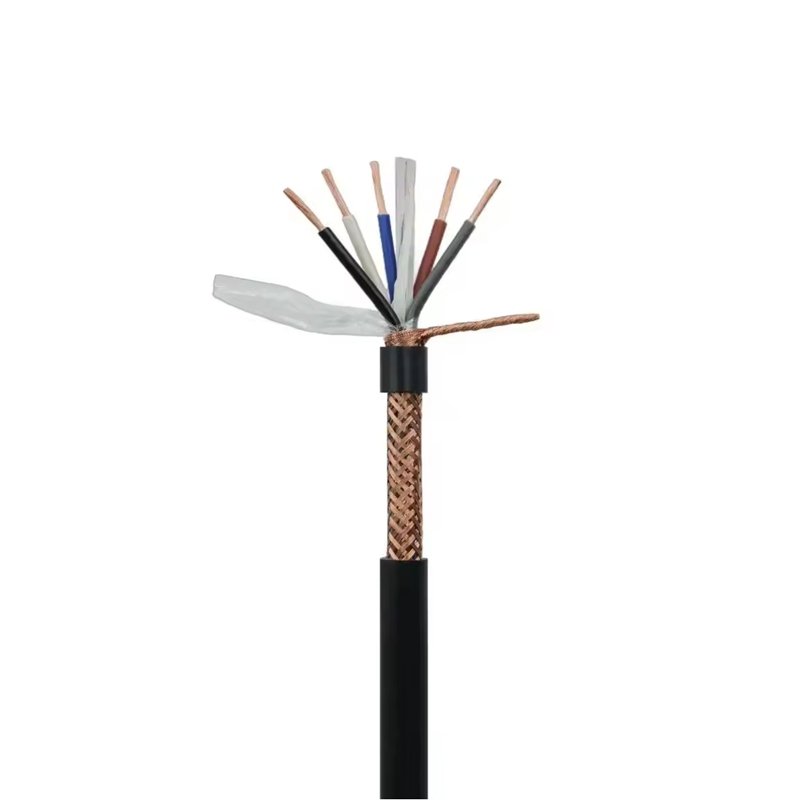
A properly designed shielded cable eliminates these issues by maintaining signal integrity, which is especially vital for:
- High-speed data transmission (USB, HDMI, Ethernet)
- Sensitive instrumentation (medical, lab equipment)
- Power and control lines near motors or transformers
How the Shield Fits into Cable Construction
To understand where the shield fits, visualize a cable cross-section:
- Conductor: The core metal wire carrying current or signal.
- Insulation: Non-conductive material isolating each conductor.
- Shielding Layer: Conductive barrier (foil, braid, or both).
- Jacket: Protective outer layer against abrasion, oil, or UV exposure.
| Layer | Function | Common Material |
|---|---|---|
| Conductor | Carries electrical signal | Copper / Tinned Copper |
| Insulation | Electrically isolates conductors | PVC / XLPE / PTFE |
| Shield | Blocks EMI/RFI | Aluminum Foil / Copper Braid / Combination |
| Outer Jacket | Provides mechanical & environmental protection | PVC / TPE / PUR |
The shielding layer sits just below the jacket, forming a continuous enclosure around the inner conductors. When correctly grounded, it creates a closed loop that drains interference safely away from the signal path.
Practical Example: The Role of Shielded Cables in Industry
Imagine a factory floor where robotic arms and servo motors operate beside sensor and communication lines. Each motor generates electromagnetic noise. Unshielded cables in this environment can pick up that interference, leading to erratic sensor behavior or dropped data packets.
By replacing them with braided or foil-shielded cables, these disturbances are eliminated — production runs smoothly, sensors remain accurate, and equipment life extends.
Shielded vs. Unshielded
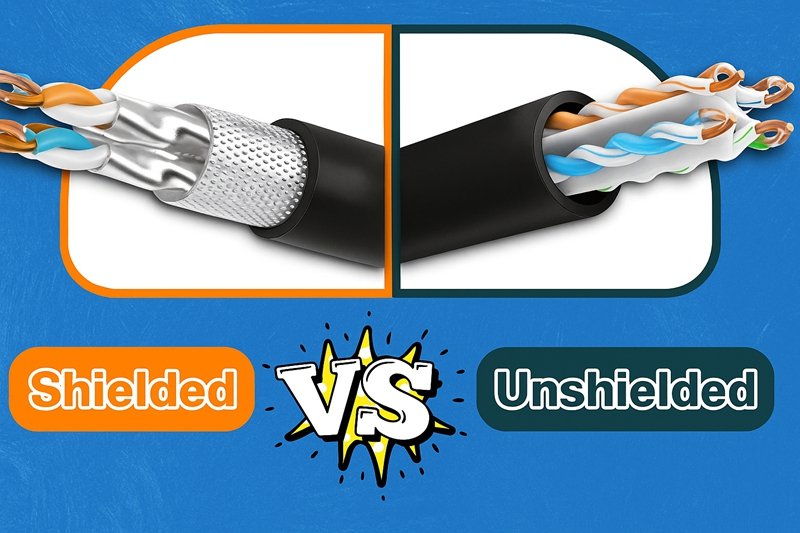
| Feature | Shielded Cable | Unshielded Cable |
|---|---|---|
| EMI Protection | Excellent | Limited |
| Cost | Higher | Lower |
| Flexibility | Moderate | High |
| Grounding Required | Yes | No |
| Ideal For | Industrial, Medical, Automotive | Office, Low-noise Environments |
What Are the Disadvantages of Shielded Cables?
While they deliver superior performance, shielded cables come with trade-offs:
- Higher Cost: More materials and complex manufacturing.
- Reduced Flexibility: Braids add stiffness.
- Grounding Complexity: Improper grounding can even worsen EMI.
- Heavier Weight: Especially in multi-core designs.
What Types of Shielded Cables Exist?
Not all shielded cables are created equal. The shielding design and material determine how well a cable resists electromagnetic interference (EMI), how flexible it is, and what environments it performs best in. Choosing the right type is about understanding the trade-off between coverage, mechanical strength, flexibility, and cost.
Shielded cables are available in four main types — foil, braided, spiral (serve), and combination shields. Each offers different levels of EMI protection, flexibility, and cost efficiency depending on the application and frequency range.
1. Foil Shielded Cable
Foil shielded cables use a thin layer of aluminum (sometimes copper) laminated to a polyester or Mylar backing. This metallic foil wraps around the conductors or twisted pairs, providing 100% coverage from external interference.
Technical Strengths:
- High-frequency protection: Excellent attenuation for EMI and RFI, especially above 1 MHz.
- Compact design: Minimal thickness makes it ideal for space-constrained assemblies.
- Cost-efficient: The simplest and least expensive shield structure.
Limitations:
- Lower flexibility: The foil can tear or fatigue under repeated bending.
- Difficult termination: Requires careful grounding via drain wire or connector clamp.
Applications:
Foil shields are widely used in data transmission, audio/video cables, control cables, and instrumentation lines — wherever static installations dominate.
| Foil Shield Advantages | Typical Applications |
|---|---|
| 100% coverage for high-frequency EMI | Ethernet Cat6a, USB, HDMI |
| Lightweight and low cost | Audio cables, microphones |
| Excellent signal isolation | Control panels, PLC wiring |
Example:
A factory’s automated conveyor system uses long data cables connecting sensors to controllers. By specifying aluminum-foil shielded twisted-pair cables, Sino-Conn engineers reduced data error rates by 97% compared to unshielded equivalents.
2. Braided Shielded Cable
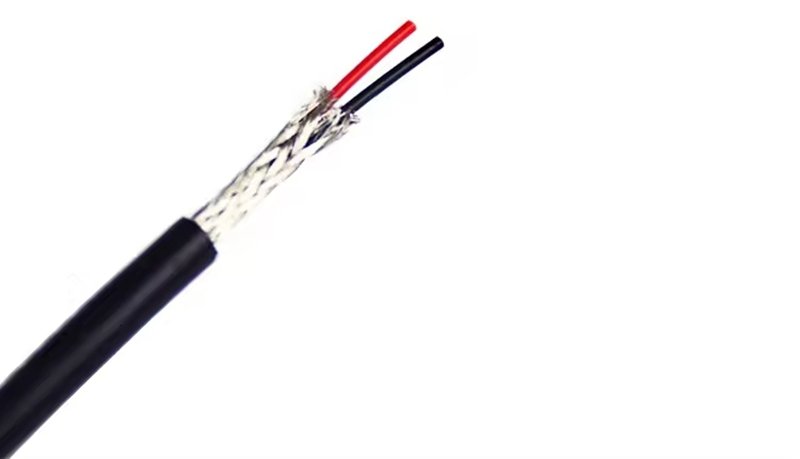
Braided shield cables employ interwoven strands of tinned, bare, or silver-plated copper that form a mesh surrounding the insulated conductors. Coverage typically ranges from 70%–95%, depending on braid density and strand count.
Technical Strengths:
- Low-frequency protection: Ideal for frequencies below 1 MHz (power line noise).
- Mechanical durability: Provides strong tensile strength and excellent flex resistance.
- Low transfer impedance: Ensures effective current grounding and minimal signal leakage.
Limitations:
- Heavier and costlier than foil due to metal content.
- Partial coverage: May not block extremely high-frequency interference unless combined with foil.
Applications:
Common in industrial control, audio engineering, robotics, and automotive environments — wherever both electrical stability and mechanical robustness matter.
| Braid Material | Best Use Case |
|---|---|
| Bare Copper | High-flex power cables |
| Tinned Copper | Corrosion-resistant environments |
| Silver-Plated Copper | Aerospace, high-temperature systems |
3. Spiral (Serve) Shielded Cable
A spiral shield — also called a “serve shield” — consists of copper wires wrapped helically around the cable core, similar to the threads of a screw. It’s easier to manufacture than a full braid and offers superior flexibility.
Technical Strengths:
- Exceptional flexibility: Perfect for cables under constant motion.
- Low DC resistance: Maintains good grounding conductivity.
- Lightweight: Ideal for portable or dynamic devices.
Limitations:
- Reduced coverage consistency: Gaps between spiral turns can allow EMI leakage at high frequencies.
- Less mechanical strength: Not suited for harsh mechanical stress or outdoor environments.
Applications:
Spiral shields are found in test equipment, audio cables, medical probes, and handheld instruments where cables must bend, twist, or retract freely.
| Spiral Shield Strengths | Typical Applications |
|---|---|
| Maximum flexibility | Microphone and instrument cables |
| Easy termination | Lab testing cables |
| Lightweight, compact design | Wearable electronics |
Example (Field case):
A German OEM producing surgical diagnostic tools adopted Sino-Conn spiral-shielded miniature cables to ensure stable signal output during constant hand movement, achieving superior ergonomic performance without sacrificing EMI control.
4. Combination Shielded Cable (Foil + Braid)
The most advanced structure combines foil and braided shields for dual-layer protection — the foil blocks high-frequency EMI, while the braid reinforces low-frequency defense and mechanical durability.
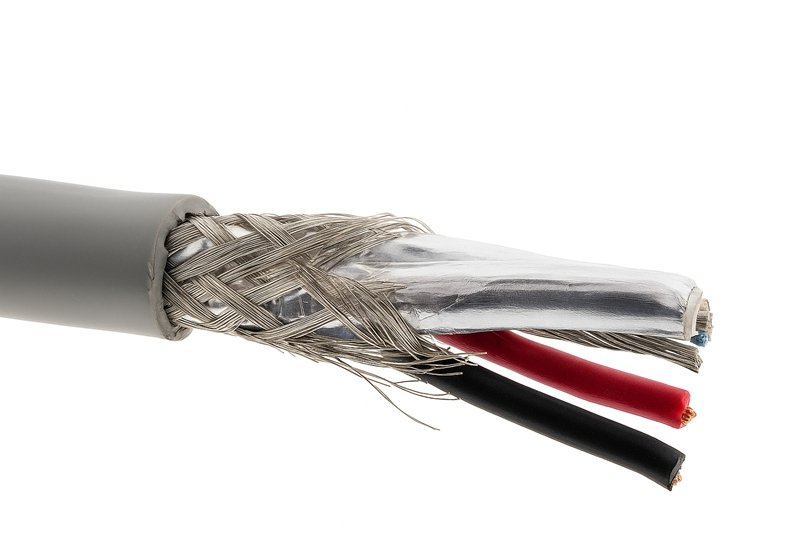
Technical Strengths:
- Comprehensive EMI coverage (up to 100 dB attenuation).
- Excellent mechanical strength and longevity.
- Superior grounding stability.
Limitations:
- Higher cost and stiffness.
- Complex termination: Requires careful bonding between both shields and drain wires.
Applications:
Used in aerospace, military, high-speed data, and automotive ECU systems, where reliability is non-negotiable.
| Shield Configuration | Coverage (%) | Flexibility | Typical Application |
|---|---|---|---|
| Foil + Braid | 100 | Moderate | Automotive ECU, aerospace avionics |
| Foil + Spiral | 100 | High | Portable medical electronics |
| Braid + Conductive Polymer | 95 | High | EV charging systems |
Example (Sino-Conn design solution):
A European EV manufacturer required shielded signal cables for motor control units. Sino-Conn engineered a foil-plus-braid shielded assembly rated for -40 °C to 125 °C, delivering 98 dB EMI attenuation and exceeding ISO 11452-2 EMC test standards.
5. Multi-Layer or Hybrid Shielded Cable
Modern industries increasingly require cables that combine shielding with mechanical or environmental reinforcement — for example, double-braid, braid-plus-foil-plus-drain, or conductive polymer over-shielding.
Advantages:
- Enhanced noise isolation across wide frequency ranges
- Redundant shielding layers for mission-critical applications
- Added protection against oil, moisture, and chemical exposure
Common in: Aerospace, rail transit, defense communication, and industrial automation where failure is unacceptable.
Performance Snapshot:
| Shield Type | Frequency Protection Range | Typical EMI Reduction (dB) |
|---|---|---|
| Foil Only | >1 MHz | 60–80 dB |
| Braid Only | <1 MHz | 40–60 dB |
| Foil + Braid | Broad Spectrum | 85–100 dB |
| Multi-Layer | Broad + Redundant | 95–110 dB |
Choosing the Right Shield Type
Selecting the appropriate shielding depends on three main design priorities:
- Frequency Range – Foil for high frequency, braid for low frequency, combination for full spectrum.
- Mechanical Dynamics – Spiral for flexibility, braid for strength, hybrid for both.
- Environmental Exposure – Tinned or silvered braid for corrosion-resistant or high-temperature use.
In real-world practice, no single shield suits every case. That’s why Sino-Conn offers custom shielding assemblies — from fine-pitch foil-wrapped FFCs to double-braid control cables — designed specifically for each customer’s electrical, mechanical, and regulatory requirements.
How Does Shielding Work to Prevent Interference?
A shield works by providing a conductive path that diverts unwanted signals away from the core conductors.
The Science Behind EMI and Crosstalk
Electromagnetic interference is caused by rapidly changing electrical currents or fields. These fields can couple into neighboring circuits, introducing noise or voltage spikes. Crosstalk occurs when signal lines interfere with each other, especially in high-speed data cables.
How Shielding Redirects or Absorbs Noise
Foil and braid shields either reflect high-frequency interference or absorb low-frequency noise, channeling it to ground through a drain wire or connector shell. The effectiveness depends on coverage percentage and grounding integrity — areas where Sino-Conn’s design engineers pay close attention.
Shield Coverage and Effectiveness
Shield effectiveness is measured in decibels (dB) of attenuation.
| Shield Type | EMI Attenuation (dB) |
|---|---|
| Foil | 60–80 |
| Braid | 40–60 |
| Foil + Braid | 85–100 |
Coverage above 90% can reduce EMI by 99.9%, but requires careful grounding and termination.
The Importance of Proper Grounding
An improperly grounded shield can amplify noise instead of reducing it. Professional manufacturers like Sino-Conn ensure grounding continuity from shield to connector, verifying through impedance and leakage testing.
What Are the Key Materials and Construction Options?
The materials and construction of a shielded cable determine how it performs — from its electrical conductivity and EMI suppression to its flexibility, temperature resistance, and lifespan. In high-performance applications, choosing the right shielding type, conductor metal, and jacket compound is as critical as the signal itself.
Shielded cable construction combines conductive cores, insulation, shielding layers, and protective jackets. Materials such as copper, aluminum, PET, PVC, and TPE are used to balance conductivity, EMI protection, flexibility, and environmental resistance for specific industrial or electronic applications.
Core Components of Shielded Cable Construction
A shielded cable generally consists of four key layers — each engineered to fulfill a specific function within the system:
| Layer | Material Options | Primary Function |
|---|---|---|
| Conductor | Copper, Tinned Copper, Silver-plated Copper, Aluminum | Carries signal or power |
| Insulation | PVC, PE, PTFE, FEP, XLPE, TPE | Electrically isolates conductors |
| Shielding Layer | Aluminum foil, Braided copper, Spiral shield, Conductive polymer | Blocks EMI/RFI interference |
| Outer Jacket | PVC, PUR, LSZH, Silicone, TPE | Provides mechanical, thermal, and chemical protection |
Each layer must work together — mechanically, electrically, and thermally — to maintain signal integrity under the target operating conditions.
1. Conductor Materials — The Heart of the Cable
Bare Copper
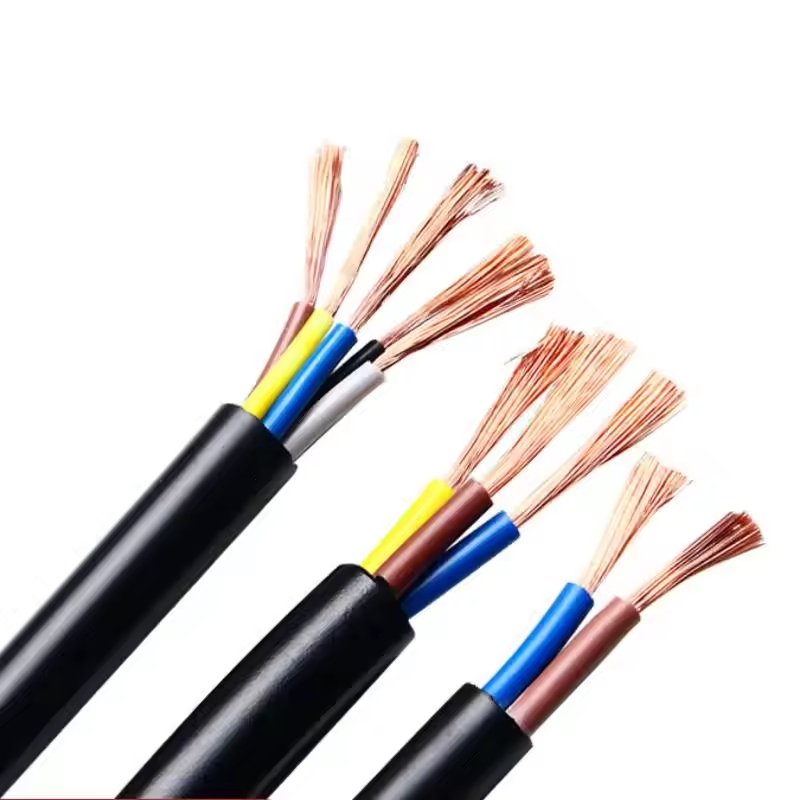
- Most common conductor due to its superior electrical conductivity (58 MS/m).
- Ideal for signal transmission, audio, and control cables.
- Cost-effective and easy to terminate.
Tinned Copper

- Copper coated with a thin layer of tin.
- Provides oxidation resistance in humid or corrosive environments.
- Suitable for marine, automotive, and outdoor wiring.
Silver-Plated Copper
- Combines copper’s conductivity with silver’s high-frequency performance.
- Used in aerospace, RF, and military applications due to thermal stability up to 200°C.
Aluminum or Copper-Clad Aluminum (CCA)
- Lightweight and economical alternative.
- Suitable for fixed installations where cost optimization matters more than flexibility.
| Conductor Type | Conductivity | Corrosion Resistance | Temperature Rating | Typical Application |
|---|---|---|---|---|
| Bare Copper | Excellent | Moderate | -40°C to +90°C | Data and control cables |
| Tinned Copper | Very Good | High | -40°C to +105°C | Marine, automotive |
| Silver-Plated Copper | Excellent | Excellent | Up to +200°C | Aerospace, defense |
| Aluminum / CCA | Moderate | Low | -20°C to +80°C | Low-cost consumer electronics |
2. Insulation Materials — Electrical Isolation and Dielectric Strength
The insulation layer keeps conductors separate while preserving electrical performance. The choice of insulation affects voltage rating, flexibility, and temperature endurance.
PVC (Polyvinyl Chloride)
- Most common, cost-effective, and easy to extrude.
- Offers moderate heat and flame resistance.
- Operating temperature: 20°C to +80°C.
- Common in power cords and control cables.
PE (Polyethylene)
- Low dielectric constant → excellent signal clarity.
- Ideal for RF and data cables.
- Temperature range: 65°C to +85°C.
PTFE (Teflon) / FEP
- Outstanding thermal, chemical, and dielectric properties.
- Retains flexibility in extreme heat (up to +250°C).
- Used in aerospace, defense, and medical-grade cables.
XLPE (Cross-Linked Polyethylene)
- Enhanced thermal stability and mechanical strength.
- Ideal for industrial power and instrumentation.
TPE (Thermoplastic Elastomer)
- High flexibility and excellent abrasion, oil, and cold resistance.
- Used in robotic, motion control, and automotive harnesses.
| Insulation Material | Dielectric Strength | Flexibility | Temperature Range (°C) | Best For |
|---|---|---|---|---|
| PVC | Moderate | Medium | -20 to +80 | Power, general wiring |
| PE | High | Low | -65 to +85 | RF, coaxial cables |
| PTFE / FEP | Very High | High | -65 to +250 | Aerospace, medical |
| XLPE | High | Medium | -40 to +125 | Industrial power |
| TPE | Moderate | Excellent | -50 to +125 | Robotics, motion systems |
Sino-Conn Advantage:
Sino-Conn’s insulation process uses precision extrusion lines and in-line capacitance testing to ensure perfect concentricity and consistent dielectric strength for every batch.
3. Shielding Materials — The Core of EMI Protection
The shielding layer defines how effectively the cable resists interference.
Aluminum Foil Shield
- Thin, flexible foil bonded to polyester.
- 100% coverage and excellent high-frequency EMI protection.
- Common in Ethernet, HDMI, and signal cables.
Braided Copper Shield
- Interwoven mesh of copper strands (70–95% coverage).
- Superior low-frequency EMI protection and mechanical strength.
- Used in industrial control and automation systems.
Spiral (Serve) Shield
- Helical copper wrapping around conductors.
- High flexibility, ideal for moving cables.
- Used in medical probes and audio lines.
Combination Shield (Foil + Braid)
- Delivers broadband EMI/RFI protection.
- Common in aerospace, automotive, and high-speed data systems.
Conductive Polymer or Tape Shield
- Lightweight composite used for miniaturized or flexible PCBs.
- Found in wearables, sensors, and smart electronics.
| Shield Type | Coverage (%) | Flexibility | Frequency Range | Applications |
|---|---|---|---|---|
| Foil | 100 | Moderate | High-frequency | Data, communication |
| Braided | 70–95 | Low–Medium | Low-frequency | Power, industrial |
| Spiral | 80–90 | High | Low–Mid frequency | Robotics, medical |
| Foil + Braid | 100 | Medium | Wideband | Automotive, aerospace |
4. Outer Jacket Materials — Mechanical and Environmental Protection
The jacket serves as the first line of defense against abrasion, oil, UV, temperature, and chemicals.
PVC
- Affordable, flame-retardant, and easy to strip.
- Not ideal for high-flex or outdoor use.
PUR (Polyurethane)
- Superior oil and abrasion resistance.
- Excellent for dynamic or robotic cables.
LSZH (Low Smoke Zero Halogen)
- Emits minimal toxic gas during combustion.
- Used in public infrastructure, transportation, and enclosed spaces.
Silicone
- Extremely flexible and heat resistant up to 200°C.
- Excellent dielectric and weathering properties.
TPE
- Combines flexibility and resistance to oil, UV, and cold.
- Perfect for portable electronics, automotive harnesses, and outdoor sensors.
| Jacket Material | Abrasion Resistance | Temperature Range (°C) | Oil/UV Resistance | Typical Industry |
|---|---|---|---|---|
| PVC | Moderate | -20 to +80 | Fair | General electronics |
| PUR | Excellent | -40 to +125 | Excellent | Industrial, robotics |
| LSZH | High (safe smoke rating) | -30 to +90 | Good | Rail, public spaces |
| Silicone | Excellent | -60 to +200 | Excellent | Medical, aerospace |
| TPE | Excellent | -50 to +125 | Excellent | Automotive, outdoor |
5. Advanced Construction Enhancements
Modern shielded cables often integrate additional structural features to improve performance and durability:
- Drain Wire: Provides a direct, low-impedance path to ground for EMI current.
- Filler Materials: Maintain roundness and prevent conductor deformation.
- Separator Tape: Prevents friction between shield and insulation.
- Armor Layer (optional): Adds crush and rodent protection using steel or aluminum braid.
- Rip Cord: Simplifies jacket stripping during assembly.
Example — Sino-Conn Industrial Automation Cable:
- Conductor: 26AWG tinned copper
- Insulation: XLPE
- Shield: 90% tinned copper braid + aluminum foil
- Drain Wire: Tinned copper 0.5mm²
- Jacket: PUR (oil-resistant, halogen-free)
- Performance: 95 dB EMI attenuation @ 1 MHz, 10 million flex cycles
Material Selection Based on Industry Requirements
| Industry | Preferred Conductor | Insulation Material | Shield Type | Jacket |
|---|---|---|---|---|
| Industrial Automation | Tinned Copper | XLPE / TPE | Braid + Foil | PUR |
| Automotive | Bare or Tinned Copper | XLPE | Foil | PVC / TPE |
| Aerospace | Silver-Plated Copper | PTFE / FEP | Foil + Braid | Silicone |
| Medical | Silver-Plated Copper | FEP / Silicone | Spiral | Silicone |
| Consumer Electronics | Bare Copper | PVC | Foil | PVC / TPE |
How to Choose the Right Shielded Cable for Your Application
Selecting the right shielded cable is about balancing electrical performance, mechanical strength, and environmental resilience. The correct choice ensures reliable data transmission, safety compliance, and long-term durability — while the wrong one can lead to EMI issues, premature failure, or costly downtime.
1. Industrial Automation and Robotics
Industrial environments are filled with motors, drives, solenoids, and relays — all major sources of electromagnetic noise. Here, shielding isn’t optional; it’s a necessity for maintaining accurate control and communication signals between sensors, PLCs, and actuators.
- Recommended Shield Type: Combination foil + braided shield to block both low- and high-frequency interference.
- Conductor: Tinned copper for corrosion resistance and stable conductivity.
- Insulation: XLPE or TPE for durability and dielectric stability.
- Jacket: PUR (polyurethane) for superior oil, abrasion, and chemical resistance.
- Performance Target: Shielding effectiveness ≥90 dB at 1 MHz; Flex life ≥10 million cycles.
Example:
Sino-Conn developed a 4-core shielded servo cable for a German robotics manufacturer. The dual-layer foil and braid structure achieved consistent signal integrity over 5 million repetitive motion cycles, even when installed beside 480V power lines.
Tip:
If your cable moves continuously (robotic arm, drag chain), prioritize spiral or fine-braid shielding for flexibility — standard foil shields may crack under constant bending.
2. Automotive and Electric Vehicles (EVs)
In automotive and EV systems, cables face simultaneous challenges: high temperatures, vibration, oil exposure, and strict EMI regulations for safety and compliance.
- Recommended Shield Type: Foil + braid shield for high-frequency EMI (inverters, ECU data lines).
- Conductor: Bare or tinned copper; silver-plated copper for high-temperature zones.
- Insulation: XLPE for temperature stability up to 125°C.
- Jacket: TPE or cross-linked PVC for oil and UV resistance.
- Performance Target: Shield attenuation ≥85 dB across 1–100 MHz; Thermal endurance up to 125°C.
Example:
For a European EV OEM, Sino-Conn engineered a shielded signal cable connecting the motor inverter to the BMS (Battery Management System). The cable’s dual-layer foil-braid shield reduced conducted emissions by 98%, meeting ISO 11452-2 automotive EMC standards.
Tip:
If your application involves CAN bus, LIN bus, or HV power systems, use cables with low transfer impedance (below 10 mΩ/m) to ensure compliance with vehicle EMI directives.
3. Aerospace and Defense Systems
Aerospace applications demand cables that survive extreme vibration, wide temperature swings (-55°C to +200°C), and high EMI levels from avionics and radar systems. Reliability outweighs cost — a signal failure at altitude is never acceptable.
- Recommended Shield Type: Double-braided silver-plated copper shield for maximum EMI suppression.
- Conductor: Silver-plated copper (high conductivity, corrosion resistance).
- Insulation: PTFE or FEP (fluoropolymers with excellent dielectric strength).
- Jacket: Silicone or ETFE for thermal endurance and low outgassing.
- Performance Target: EMI attenuation ≥100 dB; Temperature rating ≥200°C.
Example:
Sino-Conn supplied multi-conductor shielded cables for an avionics instrumentation company. The cables maintained zero signal loss during altitude simulation tests from -65°C to +180°C while resisting 20G vibration forces.
Tip:
When sourcing for aerospace, always request certifications like UL, REACH, and AS9100-compatible documentation, as well as test data for EMI attenuation across multiple frequencies.
4. Medical Equipment and Healthcare Devices
In medical technology, signal accuracy is directly tied to diagnostic reliability and patient safety. Shielded cables prevent interference from hospital machinery (MRI, defibrillators) that could distort sensitive sensor readings or imaging data.
- Recommended Shield Type: Spiral (serve) shield or foil + drain wire for lightweight flexibility.
- Conductor: Silver-plated or tinned copper for stable resistance and sterilization compatibility.
- Insulation: FEP or silicone for biocompatibility and sterilization tolerance.
- Jacket: Medical-grade silicone (soft, flexible, resistant to disinfectants).
- Performance Target: EMI attenuation ≥80 dB; Flexibility retention ≥95% after sterilization cycles.
Example:
Sino-Conn designed a micro-shielded cable assembly for an endoscopic imaging device. Using a spiral silver-plated shield and silicone jacket, it achieved near-zero image noise even in proximity to electrosurgical tools.
Tip:
If your device undergoes autoclaving or UV sterilization, select fluoropolymer or silicone insulation — PVC or standard PE can degrade under heat or chemicals.
5. Telecommunications and Data Centers
Telecom and data systems depend on high-frequency transmission integrity, where even minor EMI can corrupt gigabit-level signals. Shielding ensures consistent bandwidth, low latency, and error-free data transfer.
- Recommended Shield Type: Aluminum foil or foil + braid for wideband EMI and crosstalk protection.
- Conductor: Solid or stranded bare copper.
- Insulation: PE (for low dielectric constant) or FEP (for high-speed data).
- Jacket: LSZH (Low Smoke Zero Halogen) for safety in enclosed environments.
- Performance Target: Attenuation ≤0.3 dB/m @ 100 MHz; Shielding ≥80 dB.
Example:
Sino-Conn’s Cat7 shielded Ethernet cables (S/FTP) deliver stable 10 Gbps data transfer across 100 meters, ensuring zero data packet loss in high-EMI server environments.
Tip:
For structured cabling, look for Category 6A or 7 S/FTP designs with individual pair foil shielding — essential for modern PoE and high-speed data standards.
6. Consumer Electronics and Multimedia
While home and commercial electronics face lower EMI levels, shielded cables enhance signal quality, especially for audio, video, and USB interfaces. The goal here is not just protection, but clarity and noise-free performance.
- Recommended Shield Type: Foil shield for compactness, or foil + braid for premium audio applications.
- Conductor: Bare copper or oxygen-free copper (OFC).
- Insulation: PVC or PE.
- Jacket: Flexible PVC or TPE for ease of handling.
- Performance Target: Shielding effectiveness ≥75 dB @ 10 MHz; Signal-to-noise ratio ≥100 dB (for audio lines).
Example:
Sino-Conn produces custom HDMI and USB cables with foil-braided shielding, providing interference-free high-definition transmission even near Wi-Fi routers and Bluetooth devices.
Tip:
For audiophile or studio-grade cables, opt for braided shielding with a low impedance drain path — this minimizes hum, buzz, or signal coloration.
7. Marine, Energy, and Harsh-Environment Applications
Cables used offshore, in renewable energy systems, or outdoor industrial sites must endure moisture, UV, salt, and mechanical stress while maintaining EMI immunity.
- Recommended Shield Type: Tinned copper braid with aluminum foil.
- Conductor: Tinned copper for saltwater resistance.
- Insulation: XLPE or EPR (Ethylene Propylene Rubber).
- Jacket: PUR or thermoset rubber for oil and weather resistance.
- Performance Target: Shielding ≥85 dB; IP67/IP68 ingress protection; Flame retardancy per IEC 60332-1.
Example:
Sino-Conn supplied hybrid power-and-signal shielded cables for offshore wind turbine monitoring. The cables maintained stable data integrity and mechanical durability after 36 months of continuous salt spray testing.
Tip:
When designing for marine or outdoor applications, always specify tinned copper conductors, PUR jackets, and double shielding — this ensures both EMI protection and long-term corrosion resistance.
8. Laboratory and Test Equipment
Precision testing environments require low-noise shielded cables that deliver stable analog or digital signals without distortion. Even minor interference can compromise calibration or analytical results.
- Recommended Shield Type: Foil + drain wire or double-braided copper.
- Conductor: Silver-plated copper for high-frequency consistency.
- Insulation: PTFE or FEP for low dielectric loss.
- Jacket: PVC or silicone, depending on flexibility needs.
- Performance Target: EMI attenuation ≥95 dB; Signal phase stability ≤1° per meter.
Example:
A Sino-Conn customer manufacturing signal analyzers adopted a PTFE-insulated double-shielded coaxial design that maintained 0.2% phase stability from 10 MHz to 1 GHz, outperforming standard lab-grade cables.
Tip:
For precision test setups, focus on shield transfer impedance (Zt ≤ 5 mΩ/m) and phase stability, not just frequency rating.
Quick Reference Guide
| Industry / Application | Ideal Shield Type | Insulation Material | Jacket | Performance Focus |
|---|---|---|---|---|
| Industrial Automation | Foil + Braid | XLPE / TPE | PUR | EMI resistance, flex life |
| Automotive / EV | Foil + Braid | XLPE | PVC / TPE | EMI suppression, heat endurance |
| Aerospace / Defense | Double Braid | PTFE / FEP | Silicone / ETFE | Reliability, vibration tolerance |
| Medical Equipment | Spiral / Foil | FEP / Silicone | Silicone | Flexibility, sterilization |
| Telecom / Data Center | Foil / Foil + Braid | PE / FEP | LSZH | High-speed signal clarity |
| Consumer Electronics | Foil / Foil + Braid | PVC / PE | PVC / TPE | Noise-free transmission |
| Marine / Outdoor | Tinned Braid + Foil | XLPE / EPR | PUR | Corrosion, UV protection |
| Lab / Test Equipment | Foil + Braid | PTFE / FEP | PVC / Silicone | Phase stability, low noise |
Conclusion
Shielded cables are not just about blocking noise — they’re about protecting precision. They ensure your systems work flawlessly in real-world conditions filled with EMI, vibration, and heat.
Whether you’re an engineer designing next-generation devices or a sourcing manager seeking stable supply — Sino-Conn delivers reliable, high-performance shielded cables built to your exact specifications.
Contact Sino-Conn today to request your drawing, quotation, or technical consultation — and ensure your next project is protected from the inside out.