Skip to content
Why Choose Ribbon Cables and Connectors for Modern Electronics
- andy
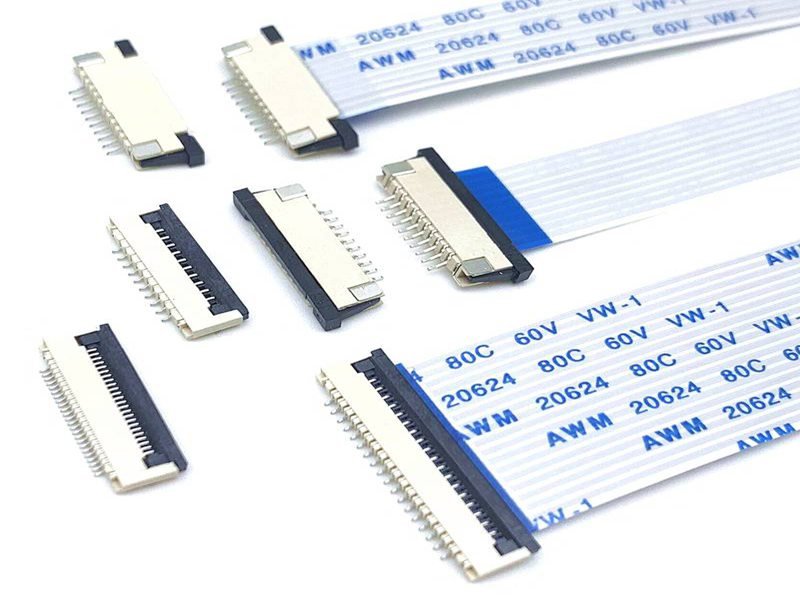
In the world of electronics, the smallest components often carry the biggest responsibilities. While most people focus on processors, batteries, or screens, it’s the wiring systems that quietly make everything work. Among them, ribbon cables and connectors have become the invisible backbone of computers, displays, printers, and industrial systems. Their slim, flat design not only saves space but also ensures reliable, high-speed communication in compact devices.
Ribbon cables and connectors are essential in electronics because they simplify wiring, save space, improve reliability, and reduce costs. They provide flexible and modular connections between PCBs, displays, drives, and modules, making them ideal for both consumer electronics and industrial applications.
Think about how laptops can be thinner each year without sacrificing performance, or how printers manage dozens of signals in a small frame. Much of that magic is possible because of ribbon cables and their carefully matched connectors. At Sino-conn, we see ribbon cables not just as passive wires, but as design enablers—unlocking new possibilities for engineers, OEMs, and end users alike. In fact, many of our customers first approach us looking for a quick replacement cable, but they stay with us once they realize how the right assembly can solve deeper challenges in design, compliance, and production efficiency.
So, let’s dive deeper into why ribbon cables and connectors deserve a closer look—and why they might be the quiet hero your next electronic project needs.
What Are Ribbon Cables and Connectors?
Ribbon cables and connectors are flat, multi-conductor wiring systems paired with standardized or custom terminals that connect circuit boards, displays, and devices in a compact, flexible, and reliable way.
Ribbon cables are essentially multiple conductors laid out in parallel and molded into a flat strip, making them highly organized compared to traditional loose wires. They come in several forms: IDC cables for computers, FFC cables for laptops and printers, FPC circuits for mobile devices, and shielded versions for environments with electromagnetic interference.

The connectors that pair with these cables are equally diverse—IDC press-fit connectors, ZIF (Zero Insertion Force) sockets for FFCs, and even waterproof locking connectors for industrial systems. Each is designed to optimize ease of assembly, long-term durability, and performance stability.
The reason they are so widely used is simple: they provide modularity and scalability. Instead of hand-soldering dozens of wires, engineers can use a single ribbon cable and connector set, reducing error rates and manufacturing costs.
A quick comparison:
| Feature | Ribbon Cables & Connectors | Traditional Wires |
|---|---|---|
| Space Efficiency | High | Low |
| Ease of Assembly | Plug-and-play | Manual soldering |
| Signal Organization | Structured & parallel | Randomized |
| Cost Over Time | Lower (less labor) | Higher |
Which Electronic Applications Use Ribbon Cables the Most?
Ribbon cables are most used in computers, printers, displays, cameras, and industrial control systems because they allow compact, organized, and reliable wiring.
Computers and servers rely on IDC ribbon cables to link motherboards, drives, and peripheral cards. Printers and scanners use FFC ribbons to manage countless signals across moving parts. Displays—from laptops to large industrial screens—depend on FPC assemblies for their ultra-thin connections.
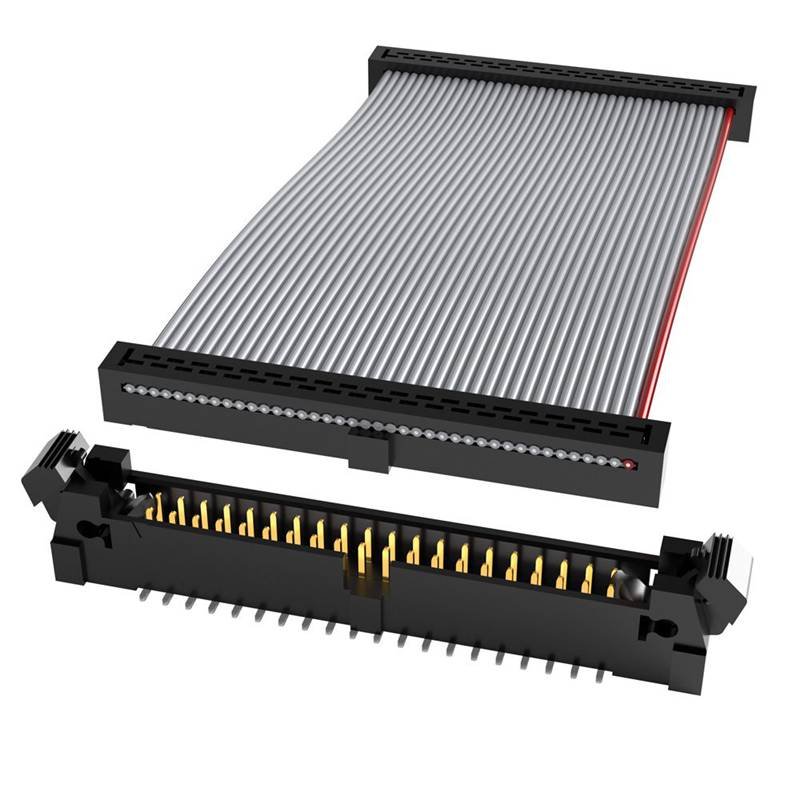
In consumer electronics, cameras, drones, and tablets use ribbon connectors because of their lightweight, flexible, and high-density design. In the automotive sector, ribbon assemblies transmit signals in infotainment systems and dashboard controls. Industrial automation benefits from their modularity—quick connections speed up both production and maintenance.
The diversity of applications shows one truth: whenever there’s a demand for space-efficient, multi-signal wiring, ribbon cables are the answer.
Why Are Ribbon Cables Better Than Traditional Wires?
Ribbon cables are superior to traditional round wires because they maximize space efficiency, streamline installation, maintain better signal integrity, and significantly reduce long-term costs for both engineers and manufacturers.
When evaluating wiring solutions for modern electronics, the choice often comes down to ribbon cables vs. traditional wires. While traditional wires still have their place in simple, low-signal systems, ribbon cables provide a host of advantages that make them the preferred choice for compact, high-performance devices.
Space Efficiency for Modern Electronics
Ribbon cables are flat and slim, making them perfect for laptops, tablets, and other devices where every millimeter matters. Compared to a bundle of round wires, ribbon assemblies can reduce wiring space by up to 60%, enabling thinner device profiles and more efficient PCB layouts.
Faster and Error-Free Installation
Traditional wires require manual soldering or crimping, which increases labor time and the risk of wiring errors. Ribbon cables, on the other hand, come pre-terminated with connectors, making them plug-and-play. Many OEMs report assembly time reductions of 25–30%, directly improving factory throughput.
Superior Signal Integrity
The parallel conductor layout of ribbon cables minimizes crosstalk and maintains consistent impedance. For high-speed applications like data transmission in servers or 5G devices, shielded ribbon cables offer far better EMI protection compared to unshielded round wires. This ensures data accuracy and reduces downtime caused by interference.
Customization for Diverse Needs
Ribbon assemblies can be tailored with different lengths, pin-outs, insulation materials, and connector types. This flexibility means engineers can design solutions for industries as varied as consumer electronics, automotive infotainment, and industrial robotics—all while using the same base technology.
Cost-Effectiveness Over Time
While initial material costs may be similar, ribbon cables save money through faster installation, lower defect rates, and reduced maintenance. In bulk OEM production, switching to ribbon assemblies can lower total wiring costs by 15–20% compared to traditional harnesses.
Comparative Overview
| Feature | Ribbon Cables & Connectors | Traditional Wires |
|---|---|---|
| Space Efficiency | High – flat, compact design | Low – bulky, round bundle |
| Installation Speed | Plug-and-play, fast | Manual, labor-intensive |
| Error Rate | Low (pre-terminated) | Higher (manual errors) |
| Signal Integrity | Strong (parallel + shield) | Weaker, prone to noise |
| Customization | High – flexible options | Limited |
| Long-Term Cost | Lower (efficient & scalable) | Higher (labor + repairs) |
Real-World Example
A European OEM in the automotive display sector recently replaced traditional wiring with customized Sino-conn ribbon assemblies. The result:
- Reduced wiring bulk by 45% in dashboard units.
- Improved assembly line efficiency, cutting wiring time from 20 minutes to 12 minutes per unit.
- Achieved better EMI protection, ensuring screen stability under heavy in-car wireless usage.
This case shows that ribbon cables are not just about wiring convenience—they directly influence production efficiency, reliability, and end-user experience.
How Do Materials and Specifications Affect Performance?
Materials and specs determine the durability, flexibility, and performance of ribbon cables—choosing the right copper, insulation, and shielding directly impacts lifespan and reliability.
Conductors: Copper or tinned copper ensures stable conductivity.
Insulation: PVC for cost efficiency, PET for flexibility, PI for high-temperature environments.
Shielding: Aluminum foil or braided copper shields are critical in high-noise environments like 5G systems or industrial robotics.
Certifications: UL, RoHS, REACH, ISO—necessary for compliance in Europe and North America.
For example, an FFC cable using PI insulation can survive temperatures up to 200°C, making it suitable for automotive or aerospace. Meanwhile, a shielded IDC ribbon ensures signal integrity in 10G networking devices.

Are Ribbon Cable Assemblies Customizable for Unique Projects?
Yes, ribbon cable assemblies can be customized in length, pin-out, connector type, shielding, and materials to meet unique electronic project requirements.
Sino-conn offers complete customization:
- Length & shape: From 1cm test leads to 2m industrial harnesses.
- Connector choice: Original brands or cost-effective alternatives.
- Pin-out & wiring: Adjusted per schematic for plug-and-play integration.
- Design support: CAD-to-PDF drawings within 30 minutes to 3 days.
- No MOQ: Even 1 piece can be produced for prototyping.
This flexibility is why engineers, OEMs, and even traders rely on Sino-conn—not only for standard parts but also for solving complex, non-standard design challenges.
How Much Do Ribbon Cables and Connectors Cost?
The cost depends on materials, connector type, customization, and order size. OEMs get lower unit pricing, while end users pay more for small batches or branded connectors.
Factors That Shape Cost
- Material quality: Gold-plated contacts vs. standard tin.
- Connector choice: Original brand vs. replacement part.
- Customization level: Custom pin-outs, shielding, or special insulation.
- Volume: Bulk orders reduce per-unit costs by 20–40%.
Typical Price Ranges
| Customer Type | Order Size & Features | Price Range (USD) | Notes |
|---|---|---|---|
| End User / R&D | Small batches, prototypes, branded parts | $15 – $25 each | Higher cost due to low volume and brand demand |
| OEM Factory | Bulk orders, custom specs, flexible brands | $1.5 – $5 each | Lowest unit cost, benefits from volume pricing |
| Trader / Reseller | Mid-volume, quick turnover | Margin 5–10% | Slim margins but steady business flow |
Example Breakdown
- End-user prototype: $15–$25 each, usually small runs for testing or urgent replacements.
- OEM bulk order: $1.5–$5 each depending on specifications, insulation material, and connector type.
- Trader margin: Typically slim (5–10%) but competitive due to faster lead times and stock availability.
Sino-conn’s Advantage
Sino-conn’s strength lies in pricing flexibility. We can supply premium branded assemblies to meet strict compliance requirements, while also offering cost-effective alternatives that give OEMs shorter lead times and lower costs without sacrificing performance. This allows customers to balance budget, lead time, and technical needs effectively.
In short: whether you are a trader, OEM, or end-user, Sino-conn provides the right pricing model for your project.
Conclusion:
Ribbon cables and connectors may be small, but their impact on modern electronics is massive. They make devices slimmer, faster, and more reliable—all while reducing costs. From laptops and printers to industrial controls and automotive systems, these assemblies are everywhere.
At Sino-conn, we don’t just supply cables—we engineer solutions. Whether you need a single prototype in 3 days or a bulk shipment in 2 weeks, we’ve got you covered with no MOQ, full customization, and certified quality. If you are working on a new project and need reliable wiring solutions, Sino-conn can support you with customized ribbon cables and connectors tailored to your requirements. Our team provides quick design feedback, flexible order quantities, and certified quality to help you move from concept to production smoothly. Contact Sino-conn to discuss the best solution for your application.
Related Keywords :ribbon cables, ribbon cable connectors, cable assemblies, FFC cables, FPC connectors, IDC ribbon cable, flexible flat cables, custom cable assembly, electronics wiring, Sino-conn

With over 18 years of OEM/ODM cable assemblies industry experience, I would be happy to share with you the valuable knowledge related to leather products from the perspective of a leading supplier in China.
manufacturer catalogue
Custom Micro Coaxial Cable →
Custom RF Coaxial Cable Assembly →
Custom FFC(Flat Flexible Cable) →
Custom Patch Cable →
Custom Circular Connector Cables →
Custom D-Sub Analog Cable →
Custom Power Cord →
Custom Fiber Optical Transceiver →
Custom Receptacle Connectors →
Get A Sample Now From Factory→
Latest blogs


Here, developing your OEM/ODM custom cable assemblies collection is no longer a challenge—it’s an excellent opportunity to bring your creative vision to life.