Skip to content
What Are the Different Wire Connector Types and Uses
- andy
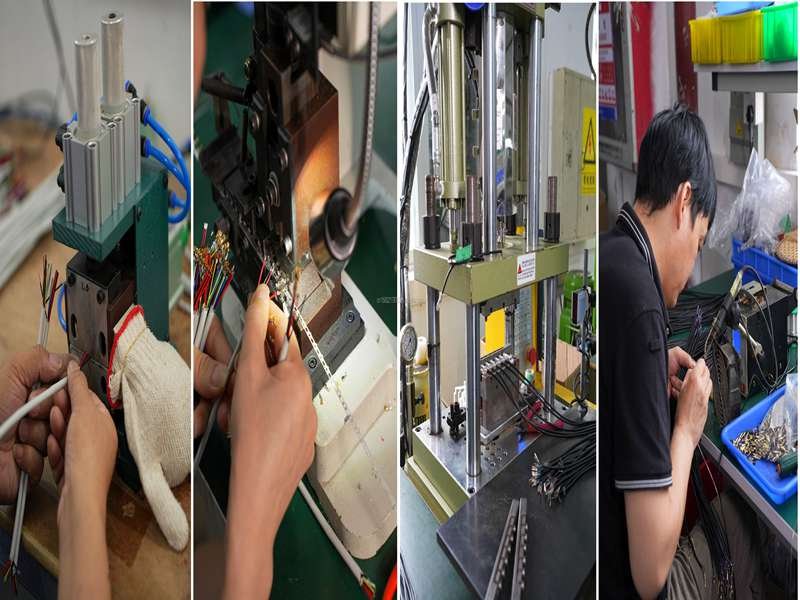
When you switch on your car, power your laptop, or charge your phone, chances are you rarely think about the invisible heroes making those actions possible: wire connectors. These small but powerful components are the building blocks of modern electronics, quietly ensuring that electricity flows safely and reliably across devices, vehicles, and entire industries. From home appliances to aerospace systems, the right wire connector type can make the difference between flawless performance and complete failure.
Wire connector types are electrical components designed to securely join two or more wires together, ensuring stable current or signal flow. They come in different forms—twist-on, crimp, screw, IDC, plug-and-socket, and waterproof connectors—each solving specific problems like safety, cost efficiency, environmental resistance, and signal integrity.
Think about it: without connectors, every single device would require permanent soldering. Repairs would be slow, upgrades nearly impossible, and safety risks much higher. Instead, connectors give us modularity, speed, and adaptability. And here’s the best part—behind every connector is a story of design evolution, balancing materials, performance, and customer demands. To see how these little heroes work, let’s dive deeper into their types, materials, and applications.
What Are Wire Connector Types?
Wire connector types are devices that join electrical wires, providing a safe, secure, and removable method of creating electrical circuits. Unlike soldering, they simplify assembly, repairs, and upgrades.
At the most basic level, a wire connector is nothing more than a link between two conductive paths. Yet, this simplicity hides the sophistication required to handle diverse environments—from high-heat automotive engines to sterile medical labs. Wire connectors ensure:
- Safety: By preventing short circuits, overheating, or accidental contact.
- Reliability: Through stable current flow and consistent contact pressure.
- Flexibility: Allowing quick replacements and modular upgrades.
For industries like automotive or aerospace, this reliability isn’t optional—it’s mandatory. A faulty connector in an aircraft or EV battery pack can have catastrophic results. On the other hand, in consumer electronics, connectors must also prioritize cost and convenience. This duality—balancing safety and efficiency—defines why different connector types exist.
Which Materials Are Commonly Used for Wire Connectors?
Most wire connectors use copper or brass as conductive materials and nylon, PVC, or PBT as insulation, with metal or rubber housings for protection. These choices balance conductivity, durability, and safety.
The conductive core is the lifeline of a connector:
- Copper offers excellent conductivity but needs plating (tin, nickel, or gold) to resist corrosion.
- Brass balances strength and cost, making it common in automotive connectors.
- Phosphor bronze delivers elasticity, ideal for connectors requiring frequent insertion.
The insulating shell ensures safety:
- Nylon (PA66) is heat-resistant and durable, perfect for industrial use.
- PVC is affordable, commonly found in household electronics.
- PBT/PEEK withstand high heat and chemicals, essential for medical and aerospace.
The outer housing provides defense:
- Aluminum/stainless steel ensures mechanical strength.
- Rubber or silicone adds waterproofing and outdoor resistance.
Table: Common Connector Materials and Applications
| Material | Function | Typical Use Case |
|---|---|---|
| Copper | High conductivity | Power connectors, telecom |
| Brass | Cost & strength | Automotive systems |
| Phosphor Bronze | Elastic contacts | Plug-and-socket connectors |
| Nylon (PA66) | Heat resistance | Industrial harnesses |
| PBT/PEEK | Chemical stability | Aerospace, medical devices |
The right mix of materials is not about cost alone—it’s about ensuring long-term performance under specific conditions.
How Many Types of Wire Connectors Exist?
There are several wire connector types, including twist-on, crimp, screw, IDC, plug-and-socket, waterproof, and specialty connectors. Each type is designed for a specific environment, ensuring the right balance of cost, durability, safety, and performance.
When we ask how many connector types exist, the answer isn’t just a number—it’s about functionality and application. Every connector is created to solve a unique problem, whether it’s vibration resistance in cars, quick assembly in telecom, or sterility in medical devices. Let’s break down the most important categories:
- Twist-on Connectors
- Use case: Common in residential wiring.
- Advantages: Low-cost, tool-free, quick to install.
- Limitations: Not suitable for high-vibration or industrial settings.
- Example: Household light fixtures and switches.
- Crimp Connectors
- Use case: Automotive, aerospace, and consumer electronics.
- Advantages: Excellent vibration resistance, consistent electrical performance, affordable for mass production.
- Limitations: Requires crimping tools and quality control.

- Example: Car engine harnesses, battery connections.
- Screw Connectors
- Use case: Industrial machinery, control panels, distribution boxes.
- Advantages: Strong mechanical hold, easy inspection, reusable.
- Limitations: Can loosen under vibration if not properly secured.
- Example: Power distribution panels, industrial robotics.
- IDC (Insulation Displacement Connectors)
- Use case: Computers, telecom, data centers.
- Advantages: Rapid wire termination without stripping insulation, perfect for ribbon cables.
- Limitations: Mainly for low-voltage applications.
- Example: Hard drive ribbon cables, networking equipment.
- Plug-and-Socket Connectors
- Use case: Everyday electronics like laptops, chargers, appliances.
- Advantages: Modular, user-friendly, standardized for global compatibility.
- Limitations: Wear and tear from frequent plugging/unplugging.
- Example: USB, Molex, DC barrel connectors.
- Waterproof Connectors
- Use case: Automotive, marine, outdoor equipment.
- Advantages: IP67/IP68 protection against water and dust, rugged housing.
- Limitations: Slightly bulkier and more expensive.
- Example: Boat navigation systems, outdoor surveillance cameras.
- Specialty Connectors
- Use case: High-frequency telecom, aerospace, medical systems.
- Advantages: Designed for niche requirements such as GHz-level signal transmission, sterility, or radiation resistance.
- Limitations: Higher cost, limited suppliers.
- Example: RF coaxial connectors, fiber optic connectors, sterilizable connectors for surgical devices.
Comparison Table: Wire Connector Types
| Connector Type | Best For | Key Advantages | Example Applications |
|---|---|---|---|
| Twist-on | Home wiring | Cheap, fast, tool-free | Household lights, outlets |
| Crimp | Automotive, aerospace | Vibration resistant, reliable | Car harness, EV batteries |
| Screw | Industrial equipment | Reusable, strong hold | Control panels, machinery |
| IDC | Telecom, computing | Fast assembly, low-voltage | Ribbon cables, servers |
| Plug-and-Socket | Consumer electronics | Modular, user-friendly | USB, laptops, chargers |
| Waterproof | Outdoor/marine/automotive | IP-rated, rugged | Boats, CCTV, solar systems |
| Specialty | Telecom, medical, defense | High precision, unique performance | RF, fiber optic, medical |
With this expanded breakdown, your article shows clear authority and depth. It helps customers understand not only “how many” types exist but also which type is right for them, guiding them toward consulting Sino-conn for tailored solutions.
Do Wire Connector Types Solve Specific Problems?
Yes. Different wire connector types reduce assembly costs, improve safety, add modularity, enhance environmental resistance, and maintain signal integrity across industries.
Let’s break down the problems they address:
- Cost & Time: Crimp connectors save labor hours versus soldering. IDC connectors streamline telecom manufacturing by enabling mass wire terminations in seconds.
- Safety & Reliability: Screw connectors provide secure clamping in power distribution panels, reducing loose wire risks.
- Flexibility: Plug-and-socket designs let consumers replace chargers without rewiring.
- Environmental Resistance: Waterproof connectors protect critical equipment in marine or outdoor use.

- Signal Quality: Specialty RF connectors maintain GHz-level transmission with minimal loss.
These aren’t just technical details—they are business enablers. For an OEM, shaving 20% off assembly time with crimp connectors translates to significant cost savings. For an end customer, a waterproof connector ensures uninterrupted outdoor use, boosting brand reliability.
Are Wire Connectors Used in Different Industries?
Wire connectors are widely used in automotive, industrial machinery, medical devices, military and aerospace, consumer electronics, and telecom applications, each with unique performance demands.
- Automotive: Wire harnesses rely on crimp and waterproof connectors to handle vibration, heat, and moisture.

- Industrial: Screw and plug connectors dominate machinery, ensuring fast replacements during maintenance.
- Medical: Sterile and high-precision connectors guarantee reliable patient monitoring and imaging.
- Military & Aerospace: MIL-SPEC connectors resist extreme environments, from high-altitude to underwater.
- Consumer Electronics: Plug-and-socket and IDC connectors enable small, cost-effective devices.
- Telecom: IDC and specialty connectors provide high-speed data and signal transmission with minimal interference.
Table: Industry-Specific Connector Types
| Industry | Connector Types Commonly Used | Key Requirements |
|---|---|---|
| Automotive | Crimp, Waterproof | Heat, vibration resistance |
| Industrial | Screw, Plug-and-socket | Durability, easy maintenance |
| Medical | Specialty, PBT/PEEK-based | Sterility, precision |
| Military/Aerospace | MIL-SPEC, RF, waterproof | Extreme durability |
| Consumer Electronics | IDC, Plug-and-socket | Compact size, affordability |
| Telecom | IDC, RF, Fiber optic | High-speed, low interference |
These examples show why customization matters. No single connector fits every application, and that’s exactly where Sino-conn adds value.
Conclusion:
Wire connector types may look small, but their impact is huge—affecting safety, cost, performance, and innovation across industries. Choosing the right type isn’t just about materials or styles; it’s about aligning your needs with a partner who can deliver custom, reliable, and certified solutions.
At Sino-conn, we don’t just supply connectors—we co-create solutions with you. Whether you need a waterproof automotive connector, a high-frequency RF connector, or a specialized harness for medical or aerospace, our team provides:
- No MOQ (starting from 1 pcs)
- Rapid prototyping (3 days for drawings, 2 weeks for bulk)
- 100% inspection and international certifications (UL, ISO, RoHS, REACH)
- Flexible options between original and replacement components
- Competitive pricing for both OEMs and distributors
Ready to find the right wire connector type for your project? Contact Sino-conn today for a custom consultation and quotation.
Related Keywords :wire connector types, electrical connectors, crimp connectors, waterproof connectors, IDC connectors, plug and socket, connector materials, cable assemblies, custom wire harness, Sino-conn

With over 18 years of OEM/ODM cable assemblies industry experience, I would be happy to share with you the valuable knowledge related to leather products from the perspective of a leading supplier in China.
manufacturer catalogue
Custom Micro Coaxial Cable →
Custom RF Coaxial Cable Assembly →
Custom FFC(Flat Flexible Cable) →
Custom Patch Cable →
Custom Circular Connector Cables →
Custom D-Sub Analog Cable →
Custom Power Cord →
Custom Fiber Optical Transceiver →
Custom Receptacle Connectors →
Get A Sample Now From Factory→
Latest blogs


Here, developing your OEM/ODM custom cable assemblies collection is no longer a challenge—it’s an excellent opportunity to bring your creative vision to life.