Skip to content
Which Cable Harness Assemblies Fit the Automotive Industry Needs
- andy

Cars today are more than machines—they’re rolling computers on wheels. From electric vehicles that demand high-voltage harnesses to self-driving cars filled with sensors and communication modules, the modern automotive industry relies heavily on cable harness assemblies to make everything work seamlessly. Yet, not all harnesses are built the same, and choosing the right ones is critical for safety, reliability, and performance.
Cable harness assemblies that fit the automotive industry include engine wiring harnesses, chassis harnesses, lighting harnesses, high-voltage harnesses for EVs, and infotainment harnesses. They are designed with durable materials, EMI shielding, and automotive-grade standards to ensure safe, reliable, and efficient performance under harsh vehicle conditions.
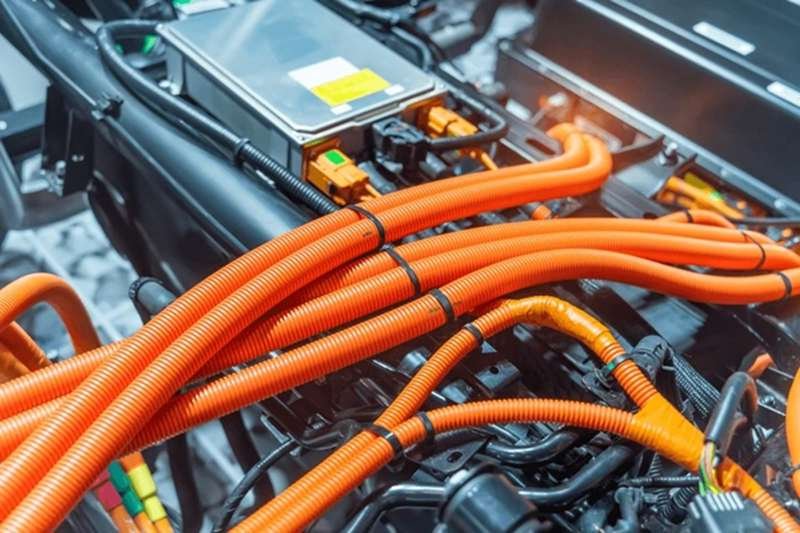
Just imagine: a single car can contain up to 3,000 different wires stretched over several kilometers. Without harness assemblies, this wiring would be an unmanageable mess, prone to damage, short circuits, and costly failures. In this article, we’ll explore which cable harness assemblies are best suited for automotive applications, what problems they solve, what materials go into them, and how to choose the right manufacturer. Stick around—because if you’re in the automotive supply chain, these insights could make or break your next project.
Key Problems Automotive Harness Assemblies Solve
Automotive cable harness assemblies solve problems like messy wiring, poor safety, space inefficiency, and low reliability. They ensure organized layouts, resist vibration and heat, improve electrical performance, and make installation and maintenance faster.
The automotive sector is under constant pressure: tighter safety regulations, higher consumer expectations, and the rapid electrification of vehicles. Harness assemblies directly address these pain points.
Space Optimization & Weight Reduction
Cars are shrinking in weight but growing in complexity. A well-designed harness reduces space usage by up to 30% compared to loose wiring, helping manufacturers meet fuel efficiency and EV range targets.
Improving Electrical Safety & Signal Reliability
Automotive harnesses are built to withstand surges, EMI, and extreme temperature variations. Without them, sensitive modules like ADAS sensors or infotainment systems could face frequent malfunctions.
Durability Under Harsh Conditions
Vehicles face constant vibration, high heat near engines, exposure to oil, and sometimes even road salt. Harnesses with TPU or XLPE jackets and proper overmolding last 2–3x longer than unprotected wiring.

Installation & Maintenance Efficiency
For OEMs, time is money. Modular harness designs reduce assembly time by 20–25% on production lines and make later maintenance far simpler.
| Problem | Harness Solution | Benefit |
|---|---|---|
| Messy wiring | Organized harness design | Neat, space-saving |
| EMI & noise | Shielded conductors | Reliable signal |
| Vibration & heat | Overmolded jackets | Longer lifespan |
| Long install times | Modular harnesses | Faster production |
In short, automotive harness assemblies are not just convenient—they’re mission-critical.
Types of Automotive Cable Harness Assemblies
Automotive wiring needs vary depending on where the harness is installed. To better understand, the table below compares the main harness types, their functions, challenges, and design trends in the automotive industry.
| Harness Type | Function & Location | Key Challenges | Design Features & Materials | Automotive Trends |
|---|---|---|---|---|
| Engine Wiring Harness | Connects ECU, ignition, sensors in engine bay | Extreme heat (>125°C), oil, vibration | XLPE insulation, sealed connectors, corrugated tubing | Integration with more sensors for ADAS & emission control |
| Chassis Harness | Links brakes, airbags, suspension, safety systems | Abrasion, flexing, road debris | Rugged jackets, abrasion-resistant sheathing, redundancy design | Compliance with stricter global safety regulations |
| Lighting Harness | Powers headlights, taillights, fog lamps, interior lighting | Waterproofing, EMI interference, CAN bus data | IP67 connectors, EMI shielding, LED driver integration | Smart & adaptive lighting systems |
| High-Voltage EV Harness | Transfers 400–800V power in EV/HEV battery systems | High voltage safety, EMI, weight reduction | Multi-layer insulation, triple shielding, aluminum conductors | Lightweight designs to extend EV range |
| Infotainment & Communication Harness | Supports GPS, audio, cameras, connectivity modules | High-speed data transfer, EMI, stable bandwidth | Low-loss coax, twisted pairs, impedance-matched connectors | Growth of connected & autonomous vehicles |
Each harness type plays a unique role in ensuring safety, performance, and comfort in modern vehicles. But choosing the right type is only half the story—what truly determines reliability is the materials and design behind these harnesses. From conductor metals to insulation and shielding, every choice affects performance, cost, and longevity.

Materials and Design Considerations for Automotive Harnesses
Automotive harnesses use copper or tinned copper conductors, PVC or XLPE insulation, TPU or nylon jackets, and EMI shielding. Overmolding ensures durability, while compliance with ISO, UL, and RoHS standards guarantees reliability.
The materials chosen directly decide how long a harness will last and how well it performs.
- Conductors: Copper is the gold standard due to its high conductivity, while tinned copper resists corrosion better in humid climates.
- Insulation: PVC works for general use, but XLPE is heat-resistant, and PTFE suits military-grade automotive harnesses.
- Jackets: TPU and nylon offer abrasion resistance critical for EVs with tighter battery pack spaces.
- Shielding: Aluminum foil or copper braiding minimizes EMI, crucial for ADAS sensors and GPS modules.
- Overmolding & Waterproofing: Protects against oil, salt spray, and mechanical stress.
- Certifications: Harnesses must meet ISO 9001, IATF 16949, RoHS, REACH, and in some cases UL.
The lesson is clear: cheap materials might save cents upfront but cost thousands in recalls. Sino-conn insists on using certified, tested materials for every automotive project.
How to Choose the Right Automotive Cable Harness Manufacturer
The right automotive cable harness manufacturer isn’t just a supplier—they’re a long-term partner who ensures your projects run smoothly, safely, and cost-effectively. A reliable partner must combine technical expertise, certified processes, flexible customization, and strong after-sales support.
To choose the right automotive cable harness manufacturer, look for certifications like IATF 16949 and ISO, strong customization capabilities, rapid prototyping, proven quality control, and pricing flexibility. Sino-conn stands out with fast lead times, CAD-to-PDF drawings, and 100% product inspection, ensuring reliable, cost-effective, and custom-tailored solutions.
1. Experience & Certifications
Not all manufacturers are equal. The automotive industry demands IATF 16949 as a baseline for quality management, along with ISO 9001, UL, RoHS, and REACH compliance. These certifications guarantee traceability, consistent quality, and global acceptance.
- Why it matters: OEMs and Tier 1 suppliers reject uncertified products outright.
- Sino-conn’s advantage: Our harnesses meet ISO, UL, RoHS, REACH, and IATF 16949 requirements, making them suitable for global automotive markets.
2. Customization Ability
Every vehicle model has unique wiring needs. Manufacturers must offer flexible customization on:
- Pin configuration and connector type
- Cable length, shape, and overmolding design
- Material selection (for heat, oil, EMI protection)
Sino-conn provides CAD-to-PDF drawings in as little as 30 minutes for urgent projects, and normally within 3 days. This ensures every detail is approved by the client before production begins.
3. Lead Times & Prototyping
In fast-moving automotive projects, time-to-market is everything. Typical averages:
- Samples: 2 weeks
- Mass production: 3–4 weeks
Sino-conn outperforms this standard by delivering:
Rush samples in 2–3 days
Bulk orders in 2 weeks or less
This speed allows OEMs and R&D teams to stay ahead of schedule without compromising quality.
4. Pricing Flexibility
The cost of harnesses varies depending on end-user vs. OEM vs. distributor requirements.
- End customers: Higher cost per piece due to low volume.
- OEM factories: Lower unit cost for large-scale production.
- Distributors: Competitive pricing for resale.
Sino-conn offers tiered pricing models, ensuring both cost-efficiency and profitability across different customer categories.
5. Quality Assurance
A failed harness can ground production lines or cause costly recalls. That’s why Sino-conn practices:
- 100% inspection at three stages: in-process, final assembly, and pre-shipment.
- Full electrical testing for continuity, insulation resistance, and EMI performance.
- Real-world simulations for vibration, heat, and environmental stress.
This ensures zero-defect deliveries and peace of mind for automotive partners.
Quick Comparison Table: Sino-conn vs. Typical Market Supplier
| Criteria | Typical Supplier | Sino-conn |
|---|---|---|
| Certifications | ISO 9001 only | ISO, UL, RoHS, REACH, IATF 16949 |
| Drawing Support | 5–7 days | 30 minutes – 3 days |
| Lead Time (Samples) | 2 weeks | 2–3 days |
| Lead Time (Mass Orders) | 3–4 weeks | 2 weeks |
| MOQ | 100 pcs | No MOQ, 1 pc accepted |
| Quality Check | Random inspection | 100% full inspection |
| Pricing | Fixed | Flexible by customer type |
Bottom line: The right manufacturer should not just deliver wires, but deliver solutions. Sino-conn combines speed, certification, flexibility, and rigorous testing, making us a trusted partner for global automotive clients.
Conclusion
The automotive industry is in a rapid transition—EVs, autonomous driving, and smart connectivity are redefining wiring needs. Cable harness assemblies are the silent backbone of these advancements, solving real problems and keeping vehicles reliable on the road.
If you’re searching for a trusted supplier who understands automotive challenges and can deliver custom, certified, and flexible harness solutions, Sino-conn is ready to help. If you are exploring reliable solutions for automotive cable harness assemblies, our team at Sino-conn would be glad to share ideas, provide drawings, or prepare prototypes based on your needs. Whether it’s for a new EV project, safety system, or custom design, we’ll work with you to find the right fit for your goals and schedule.
Related Keywords :cable harness assemblies, automotive wiring, custom cable assembly, wire harness manufacturers, EV cable harness, overmolded cables, military spec cables, fiber optic assemblies, industrial cable assembly, Sino-conn

With over 18 years of OEM/ODM cable assemblies industry experience, I would be happy to share with you the valuable knowledge related to leather products from the perspective of a leading supplier in China.
manufacturer catalogue
Custom Micro Coaxial Cable →
Custom RF Coaxial Cable Assembly →
Custom FFC(Flat Flexible Cable) →
Custom Patch Cable →
Custom Circular Connector Cables →
Custom D-Sub Analog Cable →
Custom Power Cord →
Custom Fiber Optical Transceiver →
Custom Receptacle Connectors →
Get A Sample Now From Factory→
Latest blogs


Here, developing your OEM/ODM custom cable assemblies collection is no longer a challenge—it’s an excellent opportunity to bring your creative vision to life.