Skip to content
Which Semi Rigid Cable Size Should I Choose
- andy

Choosing the right cable in high-frequency design is a bit like picking the right tires for your car—you may get by with a generic option, but performance, safety, and reliability all hinge on making the right choice. Engineers and buyers who work with semi rigid cables face this dilemma often. These cables are critical in microwave, aerospa ce, satellite, and 5G applications, yet the sheer number of size options—0.020″, 0.034″, 0.047″, 0.085″, 0.141″, and more—can be overwhelming.
The best semi rigid cable size depends on frequency range, power handling, and installation constraints. Smaller sizes like 0.047″ suit compact, high-frequency designs, while larger sizes like 0.141″ offer lower loss and higher durability. Choosing the right cable requires balancing performance, shielding, connector compatibility, and cost. Sino-conn provides full-size ranges with customization to meet industry-specific requirements.
Think of it this way: a satellite designer may need a thin, lightweight cable to save space, while a defense contractor may demand a rugged, high-power version. One choice secures signal integrity; the other ensures mission-critical reliability. In the next sections, let’s break down how to make that choice with confidence.
Common Semi Rigid Cable Sizes and Specifications
Semi rigid cables come in sizes from 0.020″ to 0.141″, each offering different trade-offs between space, loss, and handling. Smaller sizes suit high-frequency or compact devices, while larger sizes reduce attenuation and provide stronger shielding.

Semi rigid cable sizes are defined mainly by their outer diameter (OD). Below is a quick comparison chart:
| Cable Size | OD (inch/mm) | Typical Use | Attenuation @ 10 GHz (dB/m) | Notes |
|---|---|---|---|---|
| 0.020″ | 0.51 mm | Ultra-compact circuits | ~5.2 dB | Limited power handling |
| 0.034″ | 0.86 mm | Test equipment | ~4.5 dB | Balance between size and loss |
| 0.047″ | 1.19 mm | Microwave modules | ~3.8 dB | Common in aerospace |
| 0.085″ | 2.16 mm | Satcom, radar | ~2.5 dB | Best all-rounder |
| 0.141″ | 3.58 mm | Military, high power | ~1.7 dB | Strong, lowest loss |
Why this matters: a 0.141″ cable will outperform a 0.047″ cable in terms of loss, but it also weighs more and bends less easily. Engineers must decide whether compactness or performance is the top priority. For buyers, knowing these specs helps avoid over- or under-engineering the solution.
How to Choose the Right Semi Rigid Cable Size
Selecting the right semi rigid cable size means balancing frequency, power, EMI shielding, connector compatibility, and installation space. Smaller diameters work best for compact, high-frequency modules, while larger diameters minimize loss and provide higher durability. Sino-conn helps customers evaluate these factors and offers both standard and customized solutions.
Choosing a semi rigid cable size is one of the most critical decisions in RF system design. Unlike flexible coaxial cables, semi rigid cables lock into shape once bent, making their size selection even more consequential. Below are the five main factors engineers and buyers must consider:
Frequency Range and Signal Integrity
The higher the frequency, the more sensitive the signal becomes to cable imperfections.
- High-frequency (18–40 GHz): Smaller cables like 0.034″ and 0.047″ are designed for microwave modules, radar front-ends, and aerospace payloads. Their reduced dimensions minimize unwanted inductance and capacitance effects.
- Lower frequency (<10 GHz): Larger cables such as 0.085″ or 0.141″ offer significantly lower attenuation, ensuring long-distance transmission without amplifiers.
Example: At 10 GHz, a 1-meter run of 0.047″ cable might lose ~3.8 dB, while 0.141″ cable loses only ~1.7 dB. That difference could determine whether a base station meets or fails its link budget.
Power Handling and EMI Shielding
Size directly influences how much current and heat a cable can handle.
- 0.141″ cables are built for high-power radar, base stations, and defense systems. Their thicker copper sheath dissipates heat and resists EMI better.
- 0.020″ and 0.034″ cables are lightweight but unsuitable for transmitting high power. They excel in signal routing inside compact devices.
Shielding is equally important. Larger copper tubes offer superior protection against electromagnetic interference (EMI), which is crucial in military, aerospace, and high-density telecom environments.
Connector Compatibility
Connectors are often the limiting factor in cable choice.
- 0.085″ and 0.141″: Compatible with common SMA, N-type, SMP connectors. They are widely available and easier to source.
- 0.020″ and 0.034″: Often require SSMA or custom connectors, which increase cost and lead time.
From a supply chain perspective, choosing a rare cable/connector combination may create long-term risks. Sino-conn helps clients by cross-referencing connector availability before finalizing a design.
Space and Mechanical Constraints
Semi rigid cables don’t tolerate repeated bending. Once bent, they retain shape.
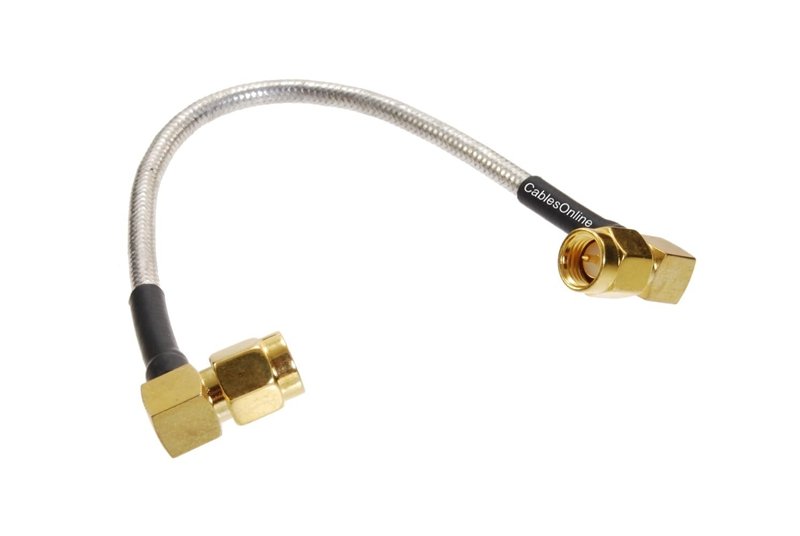
- Compact layouts: Designers of satellite modules or avionics often prefer 0.047″ cables, which can be routed around tight corners.
- Rugged installations: For outdoor radar trucks or naval systems, 0.141″ is preferred because it withstands vibration, shock, and environmental stress.
Case study: An aerospace OEM saved 12% total weight by replacing multiple 0.085″ runs with 0.047″, without sacrificing signal quality at 20 GHz. Conversely, a defense project opted for 0.141″ to survive extreme vibration tests.
Cost vs. Performance Trade-Offs
Cost is not just about the cable itself. It’s about system-level savings.
- Smaller cables may look cheaper but often need special connectors, offsetting savings.
- Larger cables may cost more upfront but reduce system loss, eliminating the need for additional amplifiers.
OEM factories and integrators typically evaluate total cost of ownership (TCO) rather than unit price. Sino-conn supports both strategies by offering genuine and compatible connectors, fast lead times, and no MOQ.
Quick Recommendations by Use Case
| Application | Recommended Size | Why It Works |
|---|---|---|
| Test & Measurement | 0.034″ / 0.047″ | High repeatability, compact |
| 5G Base Stations | 0.085″ | Balance of cost, loss, and routing |
| Satellite Payloads | 0.047″ | Lightweight, high-frequency stable |
| Military Radar/Aerospace | 0.141″ | Rugged, high-power, EMI resistant |
| OEM Prototyping | 0.085″ flexible | Hand-formable for quick design cycles |
Sino-conn Advantage in Cable Selection
Unlike catalog-only suppliers, Sino-conn works closely with customers:
- Free drawings in 30 minutes (CAD to PDF for approval)
- Connector flexibility: genuine or cost-effective compatible options
- Lead times: 2–3 days (urgent samples), 2 weeks (standard samples), 3–4 weeks (bulk)
- No MOQ: from 1 piece to mass production
- Quality: 100% inspection (process + finished + pre-shipment)
With Sino-conn’s engineering support, clients avoid mismatched designs and get a cable that fits perfectly, both technically and commercially.
In short: The right semi rigid cable size is the one that balances frequency, power, shielding, and space for your unique application. Sino-conn helps engineers and buyers make that choice with confidence, speed, and cost efficiency.
Semi Rigid Cable Size Selection for Different Applications
Applications drive cable choice: 0.047″ for aerospace modules, 0.085″ for radar and 5G, and 0.141″ for military or high-reliability systems. OEMs often customize lengths and connectors to fit.

- Test & Measurement: Precision demands repeatability. 0.034″ and 0.047″ cables provide flexibility without sacrificing accuracy.
- 5G, Radar, Satellite: 0.085″ cables balance performance and bend radius, widely adopted in infrastructure.
- Military & Aerospace: 0.141″ cables withstand vibration, temperature swings, and high EMI.
- OEM Prototyping: Flexible semi rigid variants allow engineers to tweak designs rapidly before scaling up.
These differences highlight why cable selection isn’t “one-size-fits-all.” Sino-conn provides drawings in as fast as 30 minutes, helping engineers validate fit before mass production.
Cost, Lead Time, and Customization Factors
Cost and delivery vary by size, connector choice, and customization. Smaller sizes may be cheaper, but bulk OEM orders for larger cables reduce cost per unit. Sino-conn offers lead times from 2 days for samples to 4 weeks for volume.
- Standard vs. Custom Sizes: While standard 0.085″ and 0.141″ dominate, customers often ask for unique lengths or connector pairings.
- Connector Options: Original-brand connectors cost more and have longer lead times, while compatible alternatives cut cost and speed up supply.
- Delivery: Typical samples: 2 weeks; urgent: 2–3 days. Bulk: 3–4 weeks, or 2 weeks for expedited runs.
- Cost Drivers:
- Genuine vs. alternative connectors
- MOQ (Sino-conn accepts 1pc)
- Special requirements (halogen-free, EMI shielding, extreme temperature resistance)
| Order Type | Lead Time (Standard) | Lead Time (Urgent) | Cost Impact | Notes |
|---|---|---|---|---|
| Sample (1–5 pcs) | ~2 weeks | 2–3 days | Higher per-unit | Fast prototyping |
| Small Batch (50–200 pcs) | 3–4 weeks | 2 weeks | Medium | OEM pilot runs |
| Mass Production (>1000 pcs) | 4–6 weeks | 3–4 weeks | Lowest per-unit | Long-term projects |
For buyers, the real value lies in balancing upfront cost with lifetime reliability. A cheaper cable that fails in service may cost far more than investing in the right semi rigid cable upfront.
What is a semi-rigid cable?
A semi-rigid cable is a type of coaxial cable with a solid metal outer conductor (usually copper) and PTFE dielectric. It holds its shape after bending, provides excellent shielding, and ensures stable electrical performance at microwave frequencies.
What is the difference between semi rigid and flexible cable?
Semi rigid cables maintain shape and offer lower loss with higher shielding. Flexible cables allow repeated bending but suffer from slightly higher attenuation and less consistent performance in high-frequency applications.
Are there different grades of coaxial cable?
Yes. Grades vary by frequency performance, shielding effectiveness, material durability, and compliance with standards (UL, RoHS, MIL-spec). Semi rigid cables represent a premium grade used in aerospace, military, and telecom.
Is coaxial cable being phased out?
No, coaxial cable remains critical in RF and microwave systems. While fiber optics replaces coax in some data transmission, semi rigid and flexible coax cables are irreplaceable in high-frequency, shielded applications.
Conclusion:
Choosing the right semi rigid cable size is more than a technical decision—it’s a business-critical one. The wrong choice can lead to higher loss, delayed projects, or compliance issues. With Sino-conn, you gain:
- Expertise in every cable size (0.020″–0.141″)
- Drawings in as little as 30 minutes
- No MOQ, from 1pc to mass production
- Customization in connectors, lengths, and materials
- Competitive pricing with both genuine and compatible connector options
- Strict quality control with 100% inspection
If you’re planning your next RF or microwave project, don’t leave cable choice to chance. Contact Sino-conn today for custom semi rigid cable solutions that match your exact specifications.
Related Keywords :semi rigid cable, RF cable, coaxial cable, cable size,RF applications, microwave cable, flexible cable, cable customization, cable manufacturers, Sino-conn

With over 18 years of OEM/ODM cable assemblies industry experience, I would be happy to share with you the valuable knowledge related to leather products from the perspective of a leading supplier in China.
manufacturer catalogue
Custom Micro Coaxial Cable →
Custom RF Coaxial Cable Assembly →
Custom FFC(Flat Flexible Cable) →
Custom Patch Cable →
Custom Circular Connector Cables →
Custom D-Sub Analog Cable →
Custom Power Cord →
Custom Fiber Optical Transceiver →
Custom Receptacle Connectors →
Get A Sample Now From Factory→
Latest blogs


Here, developing your OEM/ODM custom cable assemblies collection is no longer a challenge—it’s an excellent opportunity to bring your creative vision to life.