 Skip to content
Custom Dental Equipment Cable Assembly Manufacturer
Stable Signal & Reliable Power for Precision Dental Systems
Dental equipment requires cable assemblies that maintain stable signal transmission, precise control, and long-term durability within compact and frequently used environments.
From dental imaging systems to treatment units, cable assemblies directly influence signal accuracy, device responsiveness, and operational reliability.
SINO-CONN develops custom dental cable assemblies based on real system integration requirements, supporting applications such as imaging, handpieces, control units, and chair systems.
- Micro coaxial processing down to 50 AWG
- Multi-signal integration (power + control + data)
- Compact cable design for limited installation space
- High-flex structures for repeated movement
- Shielding optimized for low-noise environments
- Drawing support in 30 minutes – 3 days
- Sample delivery in 2–3 days (urgent)
- No MOQ — from 1 piece to volume production
About SINO-CONN
Engineering-Driven Cable Assembly Manufacturer for Dental Equipment
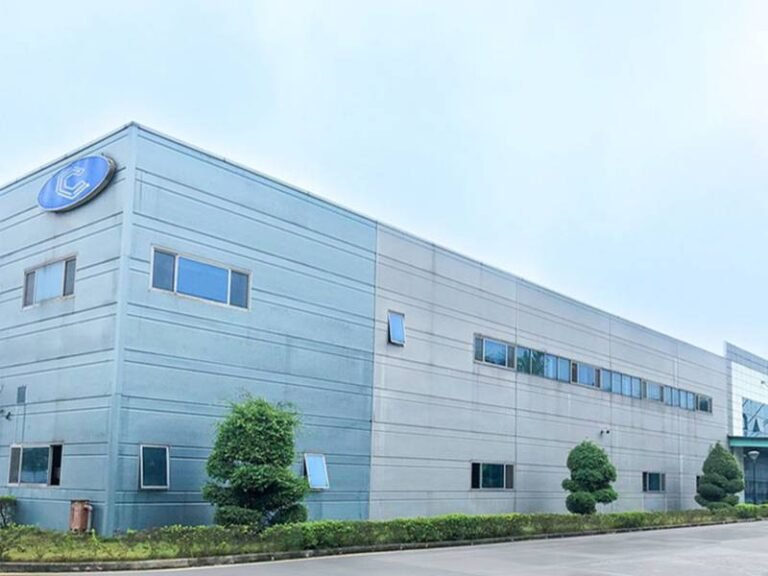
SINO-CONN is a Shenzhen-based manufacturer specializing in custom wire harnesses and cable assemblies for medical and high-reliability applications. Since 2007, the company has supported dental equipment manufacturers through engineering design, rapid prototyping, and controlled mass production.
Unlike suppliers focused on standard cable products, SINO-CONN develops cable assemblies based on system-level requirements, where signal transmission, mechanical constraints, and long-term reliability must be considered together. In dental equipment, cable performance directly affects imaging accuracy, control response, and operational stability, especially in compact and frequently used devices.
Cable Development Based on Real Dental System Conditions
Dental cable assemblies are often required to integrate power supply, control signals, and data transmission within a limited space. At the same time, cables must withstand repeated movement, handling, and long operating cycles.
SINO-CONN defines cable structure based on actual device layout and usage conditions, rather than standard configurations. Typical projects involve:
- Multi-signal integration within a single cable
- High-density conductor arrangements (20 to 512+ signal paths)
- Compact structures with controlled outer diameter (2.0–6.0 mm)
- Flexible designs for continuous movement applications
This approach ensures that cable assemblies match real system requirements and perform reliably in dental equipment.
Integrated Engineering and Manufacturing Capability
SINO-CONN combines engineering and manufacturing into a single workflow, allowing faster and more controlled development.
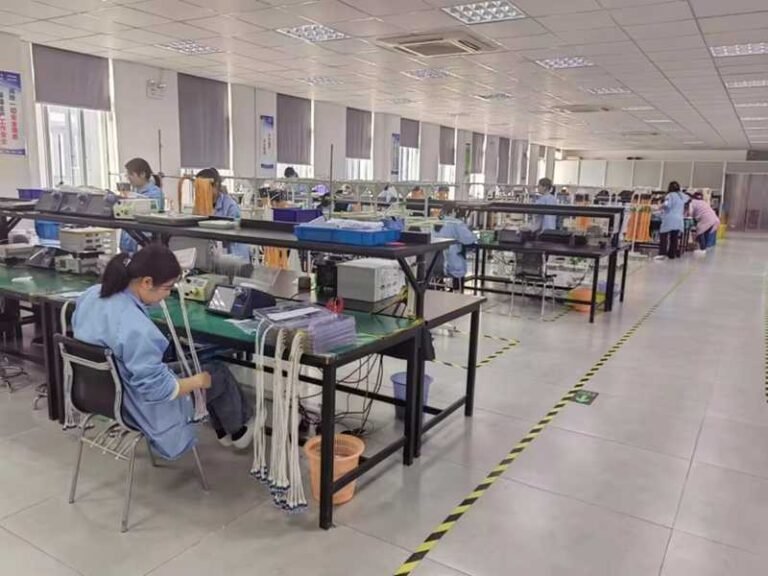
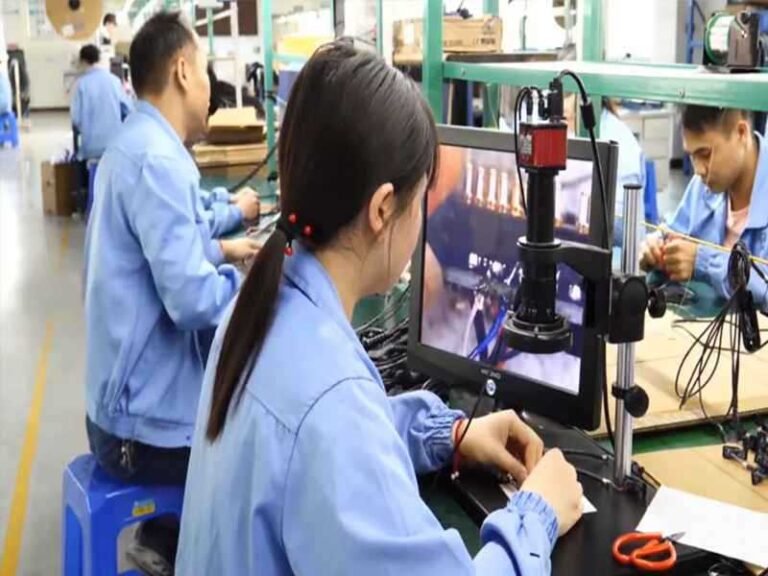
An in-house engineering team defines wiring logic, shielding structure, and cable geometry, while a dedicated sample workshop supports rapid prototyping and validation. Production is carried out on multiple assembly lines with standardized processes and full inspection.
Typical response capability:
- Drawing support: 30 minutes to 3 days
- Sample lead time: 2–3 days (urgent), ~2 weeks standard
- Production lead time: 3–4 weeks typical
This integrated setup allows smooth transition from concept to validated sample and then to stable production.
Connector Integration and Supply Flexibility
Dental equipment often requires specialized connectors within compact structures. Connector selection affects both electrical performance and mechanical compatibility.
SINO-CONN supports a wide range of connector systems, including Molex, TE, Amphenol, JST, LEMO, I-PEX, HRS, JAE, KEL, and Samtec.
Both original and equivalent connectors are available, allowing flexibility in balancing performance requirements, lead time, and cost control. Connector type, orientation, and termination method are defined together with cable structure, reducing assembly risk during system integration.
Production Capacity and Quality Foundation
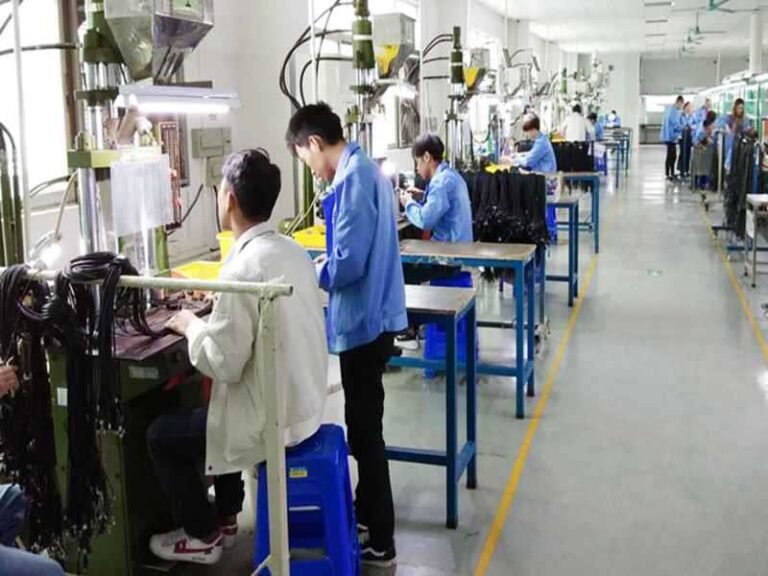
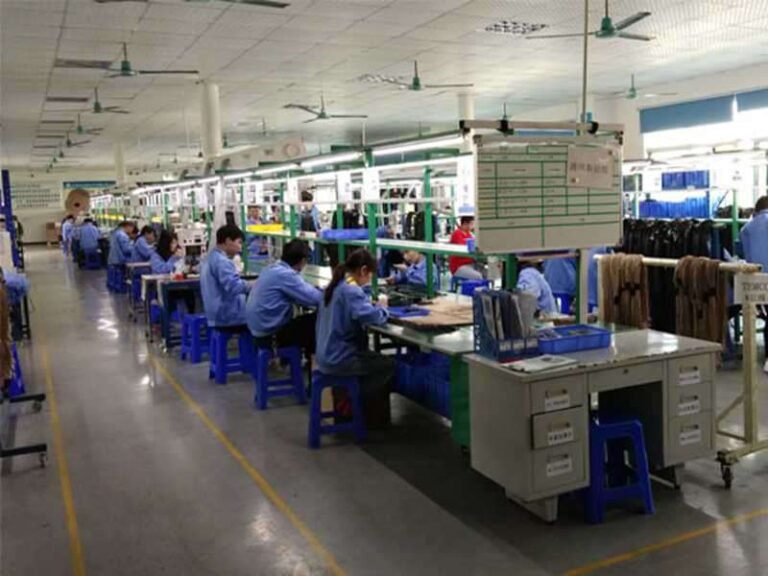
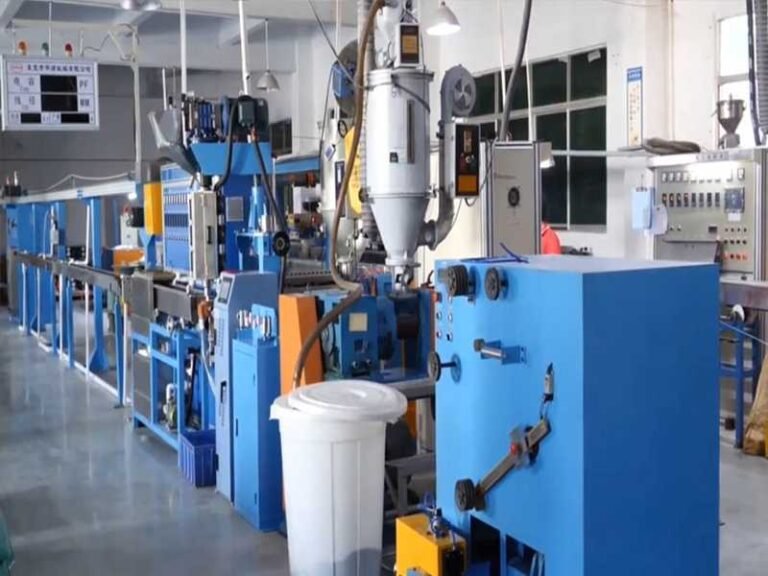
SINO-CONN operates with an integrated production setup including engineering, prototyping, and manufacturing teams. The factory is equipped with multiple assembly lines and supports a wide range of cable structures, from micro coaxial cables to multi-core harnesses.
Each cable assembly undergoes 100% electrical testing, including continuity, insulation resistance, and pinout verification, ensuring that every product matches the validated design.
With established quality systems and experience in medical-related applications, SINO-CONN supports projects that require consistent performance, traceability, and long-term reliability.
Common Challenges in Dental Cable Projects
Where Dental Cable Assemblies Typically Fail
Dental cable assemblies must operate reliably in environments where signal transmission, mechanical movement, and compact integration all occur simultaneously.
In many projects handled by SINO-CONN, issues did not appear during initial design or basic electrical testing. They became visible during system validation, repeated bending tests, or final assembly inside dental equipment.
Most failures are not caused by a single material issue. They are typically related to how the cable is defined as a complete system, including conductor layout, shielding structure, connector integration, and routing constraints.

Signal Instability in Imaging and Control Systems
Dental imaging systems such as intraoral cameras and digital X-ray units require stable signal transmission. When signal density increases within a compact cable, problems such as noise, attenuation, and cross-talk become more likely.
In several SINO-CONN projects, early testing showed signal variation of 10–20%, especially in multi-channel imaging systems. These issues affected image clarity and system response.
Instead of changing materials alone, SINO-CONN addressed this by optimizing conductor grouping, shielding coverage, and grounding paths, improving signal stability under real operating conditions.
Flexibility vs. Durability in Repetitive Use
Dental equipment often involves continuous movement and frequent handling, particularly in handpieces, adjustable arms, and chair systems.
A cable that meets flexibility requirements in design may still fail under long-term use due to conductor fatigue, jacket wear, or internal structure degradation.
SINO-CONN addresses this by selecting fine stranded conductors, flexible insulation, and reinforced structures based on bending cycles and usage patterns. This helps maintain both flexibility and durability over extended operation.
Space Constraints and High-Density Integration
Dental devices are typically compact, requiring cable assemblies to fit within tight internal routing paths. At the same time, cables often need to carry multiple signals and power lines.
Outer diameter is frequently limited to 2.0–6.0 mm, while maintaining shielding effectiveness and electrical performance.
SINO-CONN defines cable structure based on actual device layout, optimizing internal conductor arrangement and layering to achieve compact size without compromising signal stability.
Connector Integration and Assembly Issues
Dental systems use a wide range of connectors, often in limited space and with specific orientation requirements.
Common issues include misalignment, unstable termination, and incompatibility between connector and cable structure, which may not be detected until final assembly.
SINO-CONN integrates connector selection at the early design stage, evaluating electrical compatibility, mechanical fit, and sourcing conditions, reducing risk during system validation and production.
Delays Caused by Iteration and Lead Time
Development delays are often caused by incomplete inputs, repeated drawing revisions, and long sample lead times.
For dental equipment manufacturers, this directly affects testing schedules and product launch timelines.
SINO-CONN reduces these delays by providing:
- Drawing support within 30 minutes to 3 days
- Urgent sample delivery in 2–3 days
- Fast iteration cycles based on test feedback
This allows engineering teams to move more efficiently from concept to validation.
Inconsistency Between Sample and Production
Even after successful validation, some projects face issues when moving into production. Differences in structure, materials, or process control can lead to inconsistent performance.
SINO-CONN addresses this by maintaining the same engineering definition, controlled processes, and full inspection standards from prototype to mass production, ensuring that production cables match validated samples.
Why Engineers Choose SINO-CONN
Why Dental Cable Projects Progress More Efficiently
Dental cable assemblies are not defined by part numbers. Their performance depends on how signal behavior, wiring logic, and mechanical integration are implemented inside real equipment.
In many projects, initial designs cannot be directly used for production. They require clarification, validation, and structural adjustment before stable performance is achieved.
SINO-CONN is often selected in these situations, where projects require practical engineering support and fast iteration, rather than standard cable supply.

Engineering Support Starts Before Design Is Complete
In dental equipment development, it is common that drawings or specifications are incomplete at the early stage.
SINO-CONN works with engineering teams to define key parameters such as pinout, shielding structure, cable routing, and connector selection, even when initial information is limited.
Drawings can be provided within 30 minutes to 3 days, allowing projects to move forward without waiting for complete documentation.
This early involvement helps reduce uncertainty and avoids repeated revisions later in the process.
Experience with Multi-Signal Dental Systems
Dental equipment often integrates power, control, and signal transmission within a single cable assembly.
SINO-CONN has experience handling complex multi-signal configurations, including high-density wiring structures with 20 to 512+ signal paths.
Instead of using standard layouts, wiring is defined based on signal interaction and system architecture, improving validation success and reducing interference between different signal types.
Signal Stability Improved Through Structural Design
In many dental imaging and control systems, signal performance issues are caused by structure rather than material.
SINO-CONN improves signal stability through:
- Conductor grouping and spacing optimization
- Shielding structure definition (foil, braided, or combined)
- Grounding path design integrated into the cable
In multiple projects, these optimizations reduced signal variation from 10–15% to below 5%, improving imaging clarity and system response.
Flexible Connector Strategy for Real Projects
Connector availability and compatibility often affect project timelines.
SINO-CONN supports a wide range of connector systems, including Molex, TE, Amphenol, JST, LEMO, I-PEX, HRS, JAE, KEL, and Samtec.
Both original and equivalent connectors are available, allowing flexibility in balancing performance, lead time, and cost.
This is particularly useful in dental equipment projects where fast iteration and supply stability are required.
Fast Iteration Reduces Development Risk
Cable performance is typically validated through testing and refined through iteration.
SINO-CONN supports rapid iteration cycles with:
- Fast drawing updates
- In-house prototyping
- Quick response to testing feedback
Most projects reach stable performance within 1–2 iterations, helping engineering teams reduce development time and move faster toward production.
Stable Transition from Sample to Production
Moving from validated samples to mass production requires consistency in both structure and process.
SINO-CONN ensures this transition through:
- In-house sample workshop
- Standardized manufacturing processes
- Controlled material sourcing
Typical transition time from approved sample to production is 3–5 weeks, depending on complexity.
Cable Assemblies Developed for Dental Equipment Applications
Dental cable assemblies are designed based on specific system requirements, rather than standard product models.
SINO-CONN develops cable solutions for a wide range of dental equipment, including imaging systems, treatment units, and handheld instruments. Each cable assembly is defined by signal type, routing constraints, connector interface, and mechanical usage conditions.
Below are typical cable types developed for dental applications, reflecting real project structures rather than catalog products.

Intraoral Imaging Cable Assemblies
Used in intraoral cameras and digital imaging systems, these cables require stable high-speed signal transmission within compact and flexible structures.
Typical characteristics include:
- Micro coaxial or multi-core structures for high-resolution imaging
- Outer diameter typically controlled within 2.0–6.0 mm
- Shielding designed to reduce signal noise and cross-talk
- Flexible construction for handheld operation
SINO-CONN has supported multiple imaging projects where signal stability was improved through optimized conductor layout and shielding design, reducing variation during system testing.

Dental Chair Control Cable Assemblies
Dental chair systems integrate motors, sensors, and control modules, requiring reliable transmission of power and control signals.
These cable assemblies typically involve:
- Hybrid structures combining power and signal conductors
- Reinforced insulation and jackets for long-term movement
- Stable connector integration for repeated use
SINO-CONN defines cable structure based on actual movement paths and installation conditions, improving durability and reducing failure during operation.

Handpiece & Tool Cable Assemblies
Handpieces and dental tools operate under continuous bending and frequent handling, requiring cables that maintain both flexibility and electrical performance.
Typical features include:
- Fine stranded conductors for improved bending resistance
- Flexible materials such as TPU or silicone
- Compact structure for ergonomic integration
In several projects, SINO-CONN improved cable lifespan by optimizing conductor structure and outer jacket materials, ensuring stable performance under repeated use.

X-Ray and Imaging System Cable Assemblies
Dental X-ray systems require cables capable of handling sensitive signal transmission with low interference, often within shielded environments.
These assemblies typically include:
- High-performance shielding structures (foil + braided)
- Controlled conductor spacing for stable signal transmission
- Defined grounding paths for noise reduction
SINO-CONN designs shielding based on signal sensitivity and system layout, rather than standard configurations, ensuring consistent imaging performance.

Sterilization Equipment Cable Assemblies
Sterilization systems involve high temperature, humidity, and chemical exposure, requiring durable and resistant cable materials.
Typical solutions include:
- High-temperature resistant insulation materials
- Protective outer jackets for chemical resistance
- Sealed or reinforced connector interfaces
SINO-CONN selects materials based on actual operating conditions, ensuring long-term reliability in sterilization environments.

Custom Hybrid Cable Assemblies
Many dental systems require integration of multiple functions within a single cable, including signal, power, and control.
These hybrid assemblies are defined by:
- Complex internal conductor arrangement
- Separation of different signal types
- Compact outer diameter with high signal density
SINO-CONN supports hybrid cable designs with 20–512+ signal paths, optimizing structure based on system architecture and routing constraints.
Cable Solutions Across Dental Equipment Systems
Dental cable assemblies are used across a wide range of equipment, where signal stability, mechanical flexibility, and compact integration must be achieved at the same time.
In many projects handled by SINO-CONN, cables are not standalone components. They are part of a larger system involving imaging, motion control, power delivery, and real-time signal processing.
The following applications reflect typical scenarios where cable performance directly affects system reliability and user experience.

Intraoral Imaging Systems
Intraoral cameras and digital scanners require stable transmission of high-resolution image signals within compact handheld devices.
Cables must maintain performance under frequent movement while minimizing signal noise.
SINO-CONN develops cable structures using micro coaxial conductors, optimized shielding, and controlled conductor spacing, helping maintain signal stability in high-density imaging environments.

Dental Chair and Treatment Unit Systems
Dental chairs integrate motors, sensors, and control systems that rely on stable communication between multiple modules.
Cable assemblies in these systems must handle combined power and control signals, while adapting to continuous movement and limited internal routing space.
SINO-CONN defines cable structures based on actual movement paths and installation constraints, improving long-term reliability and reducing mechanical stress during operation.

Handpieces and Precision Dental Tools
Dental handpieces operate under constant bending, rotation, and frequent handling, making cable durability a critical factor.
Cables must remain flexible while maintaining stable electrical performance over extended use.
SINO-CONN uses fine stranded conductors and flexible jacket materials, combined with reinforced structural design, to improve fatigue resistance and ensure consistent performance in dynamic environments.

Dental X-Ray and Imaging Equipment
X-ray and imaging systems require low-noise signal transmission, where interference can directly affect diagnostic accuracy.
Cable assemblies must provide effective shielding and stable grounding within compact system layouts.
SINO-CONN designs shielding structures based on signal sensitivity and system configuration, helping reduce noise and maintain consistent imaging performance.

Sterilization and Cleaning Equipment
Sterilization systems expose cables to high temperature, humidity, and chemical environments, which can affect both materials and long-term performance.
Cable assemblies must resist degradation while maintaining electrical reliability.
SINO-CONN selects materials such as high-temperature insulation and protective outer jackets, ensuring durability under repeated sterilization cycles.

Integrated Dental Modules and Compact Devices
Modern dental equipment often combines multiple functions within compact modules, requiring cable assemblies to support high signal density within limited space.
These applications demand precise control of outer diameter, conductor arrangement, and routing flexibility.
SINO-CONN develops compact cable structures with OD typically controlled within 2.0–6.0 mm, ensuring compatibility with tight installation environments while maintaining signal stability.
Sample Development Process
How Dental Cable Assemblies Are Developed and Validated
Dental cable assemblies must perform reliably within real equipment, not just in isolated electrical tests. Signal stability, routing compatibility, connector integration, and long-term mechanical behavior all need to be verified together.
SINO-CONN manages sample development as a structured engineering process that connects requirement definition, rapid prototyping, and system-level validation, ensuring that each design is ready for real application before moving into production. With an in-house engineering team and dedicated sample workshop, development cycles are controlled with both speed and consistency.

Requirement Clarification
Projects usually begin with drawings, samples, or application descriptions, but key details such as shielding requirements, pinout logic, or routing constraints are often incomplete.
SINO-CONN works directly with engineering teams to define:
- Signal paths and channel distribution
- Connector types and interface conditions
- Cable routing inside the equipment
This early-stage clarification helps reduce uncertainty and avoids repeated revisions during validation.
Drawing & Structure Definition
Based on confirmed requirements, SINO-CONN develops CAD drawings that define the complete cable structure, including pinout mapping, conductor grouping, shielding layout, and connector orientation.
Typical response time:
- Simple cable assemblies: within 30 minutes
- Complex multi-signal designs: 1–3 days
All drawings are reviewed and confirmed before production, ensuring alignment between engineering and manufacturing.
In-House Prototype Assembly
Samples are built in-house using defined materials and controlled processes. This allows SINO-CONN to manage:
- Precision wire processing (including micro coax down to 50 AWG)
- Shielding integration (foil, braided, or combined)
- Connector termination and assembly quality
Lead time is kept flexible:
- 2–3 days for urgent samples
- Around 2 weeks for standard development
In-house production enables faster response to design changes and reduces dependency on external suppliers.
Electrical Testing & Signal Evaluation
Each prototype undergoes full electrical verification, including continuity testing, insulation resistance, and pinout validation.
For dental imaging and control systems, signal behavior is further evaluated under real operating conditions. In multiple SINO-CONN projects, initial designs showed signal variation of 10–15%, which was reduced to below 5% through adjustments in shielding structure and conductor layout.
This ensures that performance is validated based on actual system requirements, not theoretical assumptions.
Iteration & Engineering Optimization
Based on testing results and system feedback, SINO-CONN refines the cable design by adjusting:
- Conductor arrangement and spacing
- Shielding structure and grounding paths
- Cable geometry and flexibility
Most dental cable assemblies reach stable performance within 1–2 iterations, allowing faster development cycles and reducing overall project risk.
System Validation & Production Readiness
Final samples are integrated into the actual dental equipment for validation. This step confirms compatibility with device layout, movement conditions, and connector interfaces.
Once approved, the design is transferred directly into production using the same:
- Drawings and wiring definitions
- Material specifications
- Process controls and inspection standards
SINO-CONN ensures a consistent transition from prototype to batch production, typically within 3–5 weeks, depending on project complexity.
Dental Cable Projects Delivered by SINO-CONN
Dental cable assemblies are validated through real system performance, not only drawings or specifications.
In many projects, initial cable designs required adjustments in shielding structure, conductor layout, or mechanical flexibility before stable results were achieved.
The following cases reflect how SINO-CONN works with engineering teams to resolve practical issues and move designs into production.

Germany: High-Speed Intraoral Imaging Cable (EMI & Signal Integrity)
In this project, a German dental equipment manufacturer faced critical signal instability in their 4K intraoral camera system. The core challenge was achieving zero-frame-loss transmission within a cable diameter restricted to under 3.5mm. Initial tests showed a Signal-to-Noise Ratio (SNR) of less than 15dB due to high-frequency crosstalk and external EMI. SINO-CONN’s engineering team redesigned the internal structure by implementing a dual-layer shielding system—combining aluminum foil with tinned copper braiding for 92% coverage. We utilized high-speed FEP insulation to keep signal attenuation below 0.8dB/m at 3GHz and optimized the differential pair twisting with a precise 12.5mm pitch. As a result, the SNR improved significantly to 28dB, and the product passed all EMC certifications, shortening the client’s validation cycle by 25 days.
USA: Ultra-Flexible Dental Handpiece Cable (Fatigue & Durability)
A leading U.S. dental tool brand required a specialized cable for a high-speed brushless motor handpiece that undergoes constant movement. Their existing design suffered from conductor fatigue, failing after only 50,000 bending cycles. SINO-CONN optimized the assembly by using super-fine 44AWG stranded copper alloy conductors (7/0.05mm structure) and a high-strength Kevlar 200D central core to handle tensile forces exceeding 100N. We replaced standard materials with medical-grade TPU (Shore A 80) to ensure a low-friction, biocompatible exterior. This technical upgrade increased the cable’s flex life tenfold—reaching over 500,000 cycles without signal degradation. The prototype was delivered in just 5 working days, helping the client reduce their overall maintenance and RMA rates by approximately 30%.
Japan: 50AWG Micro-Coaxial Assembly (Space Optimization)
A Japanese OEM developing a next-generation dental control module faced extreme space constraints, with only a 2.5mm routing channel available for 20 individual signal paths. Traditional wiring was too bulky for the system’s high-density docking station. SINO-CONN leveraged our advanced 50AWG micro-coaxial technology, featuring center conductors with an outer diameter of just 0.03mm. By using ultra-thin PTFE insulation and precision laser-stripping for 0.4mm pitch connector termination, we reduced the total cable volume by 35%, achieving a final OD of only 2.15mm. Our team provided full CAD and 3D STEP files within 45 minutes of the initial inquiry, allowing the client to finalize their mechanical design ahead of schedule. The solution improved the client’s assembly efficiency by 20% while maintaining 100% signal precision.
Engineering Capability for Dental Cable Assemblies
Dental cable assemblies are defined by how signal transmission, mechanical flexibility, and system integration are achieved within compact and frequently used equipment.
In many projects, initial inputs such as drawings or part numbers are not sufficient for direct production. Stable performance can only be achieved after cable structure, shielding strategy, and wiring logic are clearly defined.
SINO-CONN supports this process with an in-house engineering team covering design definition, sample validation, and production feasibility, ensuring that each solution is aligned with real operating conditions.

Integrated System Architecture & Signal Routing
Dental cable assemblies must act as the “nervous system” of the equipment, often integrating power, high-speed data, and sensitive control signals into a single, high-density harness. At SINO-CONN, our engineering team does not just follow pinout diagrams; we analyze the system architecture to optimize signal grouping and routing. Supporting complex configurations from 20 to 512+ signal paths, we ensure that cross-talk is minimized and wiring accuracy is 100% verified. Whether you are dealing with a simple dental chair control or a high-bitrate intraoral 3D scanner, our logic-driven design approach prevents integration failures before they reach the assembly line.
Advanced Shielding & Signal Integrity Engineering
ln the electromagnetically sensitive environment of a dental clinic, signal stability is non-negotiable. SINO-CONN specializes in advanced shielding strategies, utilizing aluminum foil, tinned copper braiding, or spiral-wrapped structures to achieve 85% to 95%+ coverage. For imaging and diagnostic systems, we fine-tune impedance control (e.g., $90\Omega$ or $100\Omega \pm 5\%$) and shielding layouts to reduce signal noise from 15% to below 5%, ensuring crystal-clear diagnostic imaging and precise motor control even in high-EMI environments.
Micro-Coaxial Technology & Ultra-Compact Design
Space is the ultimate luxury in dental handpieces and handheld sensors. SINO-CONN excels in ultra-compact cable design, leveraging our capability to process micro-coaxial wires as fine as 50AWG and enamel wires with an OD of just 0.01mm. We meticulously calculate internal conductor arrangements and layering to control the final outer diameter (OD) between 2.0 mm and 6.0 mm without sacrificing mechanical strength. This allows for maximum routing flexibility in tight dental modules, ensuring that the cable remains lightweight and “invisible” to the practitioner during long clinical procedures.
Global Connector Integration & Alternative Solutions
Reliable connectivity starts with the right interface. SINO-CONN supports a vast ecosystem of global connector brands, including LEMO, I-PEX, HRS (Hirose), Samtec, JST, and Molex. Beyond standard integration, we provide high-level engineering advice on connector orientation and termination methods. For clients facing budget or lead-time constraints, we offer validated Equivalent (Alternative) connector solutions that match the performance of original brands but with 50% faster delivery and significant cost savings. This flexibility ensures that your dental equipment remains serviceable and cost-effective across global markets.
Rapid Technical Drawing & "No MOQ" Prototyping
Time-to-market is a critical factor for dental R&D engineers. SINO-CONN bridges the gap between concept and reality with high-speed engineering support, providing detailed CAD and PDF drawings within 30 minutes to 3 days. We understand the iterative nature of medical device development, which is why we offer a No MOQ (1 Piece Starts) policy for prototypes. Our “Sample-to-Production” workflow ensures that every production run is based on a customer-approved drawing, with rapid 3-to-5-day turnarounds for urgent sample requirements, all backed by our ISO 13485-certified quality management system.
Rigorous Validation & 100% Testing Protocols
At SINO-CONN, engineering excellence is finalized through a “Three-Stage Full Inspection” protocol. Every dental cable assembly undergoes 100% testing—including process inspection, final electrical performance testing, and pre-shipment visual audits—to ensure zero defects. We validate mechanical durability through bending, torsion, and pull-force tests to meet the high-cycle demands of dental environments. By combining IPC-WHMA-A-620 Class 3 standards with our internal rigorous SOPs, we guarantee that every delivered product is fully compliant with the safety and reliability requirements of the global dental industry.
Materials and Technologies Behind Stable Dental Cable Performance
In dental systems, cable performance is determined by how conductors, shielding, insulation, and structure work together under real operating conditions.
Signal stability, durability, and long-term reliability depend not only on material selection, but also on how materials are integrated through engineering design and controlled manufacturing processes.
SINO-CONN combines these factors to ensure consistent performance from prototype validation to batch production.

High-Flex Conductor Metallurgy & Micro-Coaxial Core
The foundation of a reliable dental cable lies in its conductive core. SINO-CONN utilizes high-purity, oxygen-free stranded copper conductors to ensure maximum conductivity and fatigue resistance. We specialize in ultra-fine wire processing, supporting micro-coaxial conductors down to 50AWG and specialized enamel wire winding with a diameter of just 0.01mm. By optimizing the strand count and lay length, we create cables that can withstand millions of flex cycles without conductor work-hardening or signal attenuation, making them ideal for high-precision intraoral sensors and handheld dental tools.
Advanced EMI/EMC Shielding Architectures
To maintain signal integrity in the electrically “noisy” environment of a dental clinic, SINO-CONN implements sophisticated multi-layer shielding strategies. Depending on the application, we deploy aluminum-mylar foil for 100% high-frequency coverage, tinned copper braiding for low-frequency interference, or spiral-wrap shielding for maximum flexibility. Our optimized shielding designs typically achieve 85% to 95%+ coverage, which has been proven in past projects to reduce signal variation by over 50%. This ensures that high-definition 4K imaging and sensitive control signals remain crystal clear and free from external crosstalk.
Precision Dielectrics & Impedance Management
Electrical performance is heavily influenced by the insulation material’s dielectric constant. SINO-CONN selects high-performance dielectrics such as FEP, PTFE, and PFA for high-frequency imaging applications to minimize signal loss and capacitance. Our engineering process includes precise control over insulation thickness and concentricity, allowing us to maintain characteristic impedance at $90\Omega$ or $100\Omega \pm 5\%$. This level of precision is critical for dental systems that require high-speed data protocols, ensuring that the electrical “footprint” of the cable remains stable throughout its entire service life.
Medical-Grade Jacket Materials & Bio-Compatibility
The exterior of a dental cable must be durable enough to withstand frequent handling, chemical disinfection, and physical abrasion. SINO-CONN offers a diverse portfolio of jacket materials tailored to specific clinical needs: Medical-Grade TPU for superior abrasion resistance and a “silky” tactile feel; Silicone for extreme flexibility and heat resistance; and specialized Low-Friction PVC for standard applications. Our materials are selected for their resistance to oils, UV, and common dental disinfectants, ensuring the cable remains flexible and safe for both the practitioner and the patient over years of use.
Internal Geometry & Structural Integrity
Beyond individual wires, the internal “architecture” of a cable determines its long-term reliability. SINO-CONN engineers the internal layout by strategically grouping signal pairs, power lines, and ground wires. We utilize specialized fillers, strength members like Kevlar, and PTFE separator tapes to reduce internal friction and mechanical stress. This meticulous structural design ensures that power and signal paths do not interfere with each other and that the cable maintains its circular profile and performance even under the tight bending radii required in compact dental equipment.
Precision Termination & Overmolding Technologies
Consistent performance from prototype to mass production is guaranteed by our advanced manufacturing technologies. SINO-CONN utilizes automated precision stripping and laser-welding for high-density connectors (such as I-PEX or Hirose) to ensure zero-defect terminations. Additionally, our custom overmolding capabilities provide robust strain relief and IP-rated sealing (up to IP67/68) at the connector-cable interface. This integration of high-performance materials and controlled assembly processes ensures that every production batch meets the same rigorous standards as the initial engineering sample.
Engineering-Driven Customization for Dental Cable Assemblies
Dental cable assemblies are defined by system requirements rather than standard specifications. In real equipment, cable design must align with signal behavior, mechanical constraints, and installation conditions inside compact dental devices.
Even small changes in conductor layout, shielding configuration, or connector integration can directly affect signal stability, flexibility, and long-term reliability.
SINO-CONN approaches customization as a structured engineering process, combining design definition, in-house prototyping, and controlled manufacturing, ensuring that each cable solution is practical, manufacturable, and stable in real applications.

Cable Length Defined by Equipment Layout
Cable length is determined based on actual routing paths and installation geometry, rather than nominal values.
SINO-CONN supports cable lengths from 30 mm to over 10 meters, with tolerance typically controlled within ±2–5 mm, depending on installation requirements and connector type.
Length control is achieved through standardized cutting and process control, ensuring consistency between prototype validation and batch production. Accurate length definition helps reduce connector stress, simplifies installation, and improves long-term reliability in moving systems.
Connector Integration Based on Application Needs
Connector selection is evaluated as part of the overall cable design, considering electrical compatibility, mechanical fit, locking method, and sourcing conditions.
SINO-CONN supports a wide range of connector systems including Molex, TE, Amphenol, JST, LEMO, I-PEX, HRS, JAE, KEL, and Samtec, covering both standard and high-density interfaces used in dental equipment.
- Original connectors are used for certified or specified systems
- Equivalent connectors are available for faster delivery and cost flexibility
Connector orientation, pin assignment, and termination structure are defined together with the cable design, reducing risks such as misalignment, assembly difficulty, or unstable connection during operation.
Pinout and Wiring Architecture
Dental systems often require integration of power supply, control signals, and data transmission within a single cable assembly.
SINO-CONN defines pinout based on system interface logic and signal interaction, rather than simple one-to-one mapping. This includes conductor grouping, cross wiring, and separation of different signal types where necessary.
All wiring configurations are documented and verified through drawings before production, ensuring that the cable matches system requirements and reducing validation errors during testing.
Cable Structure and Outer Diameter Control
Cable structure is designed to meet both electrical performance and mechanical constraints, especially in compact dental equipment where routing space is limited.
SINO-CONN defines internal conductor arrangement, insulation layers, and shielding structure based on actual device layout. Outer diameter is typically controlled within 2.0–6.0 mm, depending on signal density and application conditions.
This approach ensures that the cable fits within tight spaces while maintaining stable signal transmission and mechanical flexibility.
Shielding and Grounding Design
Shielding is defined based on signal sensitivity, frequency characteristics, and surrounding interference conditions, rather than using fixed configurations.
SINO-CONN applies:
- Aluminum foil shielding for full coverage
- Braided shielding for mechanical strength
- Combined structures for complex environments
Shielding coverage is typically designed at 80–90%+, with grounding paths defined during the engineering stage to ensure effective noise reduction without unnecessary increase in cable size or stiffness.
Material Selection for Real Use Conditions
Material selection is based on actual operating conditions in dental environments, where cables are exposed to frequent movement, cleaning processes, and varying temperatures.
SINO-CONN selects materials such as:
- PVC for standard applications
- TPU for improved abrasion resistance and durability
- Silicone for high flexibility and repeated bending
Material choice is aligned with bending cycles, handling frequency, and environmental conditions, ensuring stable performance over long-term use.
Overmolding and Mechanical Protection
Overmolding is treated as an integral part of the cable design, improving both durability and usability.
SINO-CONN defines overmolding geometry based on connector type, bending direction, and handling conditions, providing:
- Built-in strain relief at connector interfaces
- Protection against repeated bending and pulling
- Optional sealing for moisture or environmental exposure
This helps extend cable lifespan and maintain stable performance in demanding dental applications.
Manufacturing Process
Controlled Manufacturing for Dental Cable Assemblies
Dental cable assemblies must deliver consistent performance from prototype validation to long-term clinical use. In dental systems, even small variations in stripping accuracy, crimp quality, or shielding structure can lead to signal instability, intermittent connection, or reduced service life under repeated operation.
SINO-CONN controls manufacturing through a combination of engineering-defined processes, in-house production, and full inspection, ensuring that every cable assembly delivered matches the validated design and performs reliably in real equipment.

Engineering Review Before Production
Before any production begins, SINO-CONN conducts a detailed internal review based on approved drawings and project requirements. This includes verification of pinout definition, connector models, cable structure, and critical signal paths.
For dental systems that integrate imaging, control, and power signals, this step is essential to ensure that wiring logic and shielding strategy are fully aligned with system behavior, reducing the risk of rework during production or validation.
Material Preparation and Verification
All materials are checked before entering production. This includes cable specifications, conductor structure, connector quality, and shielding components.
SINO-CONN works with long-term qualified suppliers, ensuring stable availability of materials and consistent quality across batches. Incoming inspection helps prevent variation at the source, which is critical for maintaining performance consistency in dental equipment.
Precision Wire Processing
Wire cutting and stripping are performed using controlled processes to maintain accuracy and avoid conductor damage. Length is controlled within ±2–5 mm tolerance, depending on application requirements.
For micro coaxial structures down to 50 AWG, precision is especially critical. Improper handling at this stage can affect impedance stability and signal transmission, particularly in high-frequency dental imaging systems.
Crimping and Terminal Assembly
Crimping is carried out based on connector specifications and verified through process control. Parameters such as crimp height, pull force, and contact integrity are monitored to ensure stable electrical connection.
In dental equipment where cables are frequently connected and moved, reliable crimping directly impacts long-term durability and signal consistency. SINO-CONN applies standardized crimping processes to maintain repeatability across production batches.
Cable Assembly and Shielding Integration
Cable assembly follows the defined wiring layout, including conductor grouping, signal routing, and shielding structure. Shielding materials such as foil or braided layers are integrated according to engineering design.
Separation of signal and power paths is controlled during assembly to reduce interference. This is particularly important in dental systems where compact structure and multi-signal integration are required within limited space.
Overmolding and Reinforcement
Overmolding is applied to reinforce connector interfaces and provide strain relief under repeated use. In dental applications where cables are subject to frequent bending and handling, mechanical protection is essential.
SINO-CONN defines overmolding geometry based on actual usage conditions, improving durability without increasing unnecessary bulk, ensuring both reliability and ease of operation.
In-Process Inspection
Quality control is integrated throughout the production process. During assembly, SINO-CONN verifies wiring accuracy, connector positioning, and shielding consistency.
This in-process inspection allows early detection of potential issues, reducing production risk and ensuring that each cable continues to meet design specifications as it moves through manufacturing.
Final Testing and Verification
Every cable assembly undergoes full electrical testing before shipment. This includes 100% continuity testing, insulation resistance verification, and pinout validation based on approved drawings.
For projects involving sensitive signals, additional checks may be applied to ensure that performance remains consistent with the validated prototype.
SINO-CONN ensures that all delivered products match both engineering definition and system requirements, not just basic electrical standards.
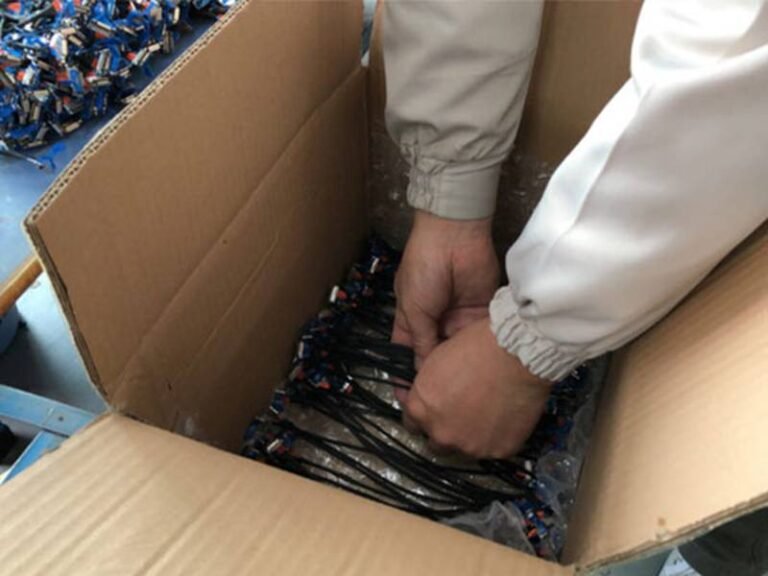
Packaging and Shipment Preparation
After final inspection, products are prepared for shipment with appropriate packaging, labeling, and documentation based on customer requirements.
Packaging is designed to protect cable structure and connectors during transportation, ensuring that products arrive ready for direct integration into dental equipment without additional handling or adjustment.
Quality Control System for Dental Cable Assemblies
Dental equipment requires consistent cable performance over long periods of use. Even small deviations can affect system reliability.
SINO-CONN ensures quality through process control, full inspection, and standardized testing.
Incoming Material Verification
All materials are verified before entering production:
- Cable type, conductor specification, and structure
- Connector, terminal, and contact quality
- Shielding materials and insulation components
Each batch is checked against approved drawings and specifications, ensuring stable input quality and reducing variation between production runs.
Controlled Assembly Process
Quality is controlled during manufacturing, not only after completion.
- Monitoring of stripping to prevent conductor damage
- Crimping control based on connector specifications
- Verification of wiring accuracy during assembly
For high-density endoscope cables, process control is critical to ensure consistent performance across all signal paths.
In-Process Inspection
Inspection is carried out at key stages of production:
- Real-time verification of pin-to-pin connections
- Connector alignment and positioning checks
- Monitoring of shielding integration and grounding points
Early detection allows issues to be corrected before moving to the next stage, reducing rework and improving efficiency.
Electrical Testing for Every Cable
Each cable assembly undergoes full electrical testing:
- 100% continuity testing across all circuits
- Insulation resistance verification
- Pinout validation based on approved drawings
SINO-CONN ensures that every cable delivered matches the validated design used during system testing.
Signal Stability Control
Signal performance is verified through structural and process control:
- Shielding effectiveness and coverage verification
- Conductor layout and spacing control
- Separation of signal and power paths
In multiple SINO-CONN projects, optimization reduced signal variation from 10–15% to below 5%, improving performance in imaging systems.
Final Inspection & Shipment Control
Before shipment, each batch undergoes final verification:
- Visual inspection of cable structure and connectors
- Confirmation of labeling and documentation
- Packaging check for transportation safety
Products are delivered ready for direct integration into endoscope systems, without additional adjustments.
Standards & Compliance
SINO-CONN aligns its quality system with international standards required for medical and high-reliability applications:
- IPC-WHMA-A-620 for cable and wire harness assembly quality
- ISO 9001 / ISO 14001 / ISO 13485 for quality and environmental management
- ISO 10993 for material safety in medical-related applications
- UL-recognized materials for safety compliance
- RoHS / REACH / PFAS for material and environmental requirements
- COC / COO documentation for international shipment







Logistics & Trade
Delivery and Trade Support for Dental Cable Projects
In dental equipment cable projects, delays often come from unclear timelines or slow response between sampling and production. At SINO-CONN, lead time and shipping are planned together with the project schedule, so each stage can move forward without unnecessary waiting.

Lead time is defined clearly before order confirmation:
- Prototype lead time Standard: about 2 weeks Urgent projects: 2–3 days (depending on structure and materials)
- Mass production lead time Standard: 3–4 weeks Urgent production: within 2 weeks when schedule requires
During production, progress updates are provided so timing remains predictable.
Shipping methods are selected based on urgency and cost:
- Express shipping (DHL / FedEx) Typically 3–7 days transit time, commonly used for samples and urgent orders
- Air freight Around 5–10 days, used for medium-volume shipments when time is still critical
- Sea freight Around 18–30 days, used for larger orders where cost efficiency is the priority
Trade terms can be arranged based on your logistics setup, including EXW, FOB, or delivery with duties included.
For ongoing OEM projects, more flexible arrangements such as scheduled shipments or extended payment terms (30–90 days) can also be discussed.
The goal is simple — align production and delivery with your actual project timeline, so testing, validation, and product launch are not delayed by avoidable logistics issues.
Frequently Asked Questions on Dental Cable Assemblies
1. Can you manufacture based on drawings or samples?
Yes. Most SINO-CONN projects start from drawings, samples, or application descriptions.
If key details are missing, the engineering team defines pinout, cable structure, and shielding, ensuring the design matches actual dental equipment requirements.
2. What information is needed for quotation?
Typical inputs include connector model, cable length, wiring definition, and application details.
Providing system information helps define structure more accurately and reduces revision time.
3. How fast can drawings be prepared?
Simple designs are completed within 30 minutes, while complex assemblies typically require 1–3 days.
All drawings are confirmed before sample production.
4. What is the sample lead time?
- Urgent samples: 2–3 days
- Standard samples: around 2 weeks
All samples are produced in-house, ensuring better control over structure and quality.
5. Can you support multi-signal cable assemblies?
Yes. SINO-CONN supports integration of power, control, and signal transmission within a single cable.
Multi-core and hybrid structures are commonly used in dental systems.
6. How is signal stability ensured?
Signal stability is achieved through conductor layout, shielding design, and grounding definition.
In multiple projects, signal variation has been reduced from 10–15% to below 5%.
7. Do you provide original or equivalent connectors?
Both options are available.
Original connectors are used for certified systems, while equivalent connectors provide faster lead time and cost flexibility.
8. Can cable size be customized for compact equipment?
Yes. Cable structure is defined based on routing constraints, with outer diameter typically controlled within 2.0–6.0 mm.
9. How do you ensure consistency from sample to production?
Production follows approved drawings, supported by in-process inspection and 100% electrical testing, ensuring consistency across batches.
10. Do you support international delivery?
Yes. SINO-CONN supports global shipment with complete documentation and logistics coordination.

Start Your Dental Cable Assembly Project with SINO-CONN
Start with What You Have — We’ll Help You Move It Forward
Dental cable assemblies require reliable performance under real operating conditions. From design to production, SINO-CONN provides engineering support and stable manufacturing to ensure consistent results.
Send Available Information
Projects can start with partial details:
- Drawing, sample, or connector reference
- Cable length or wiring requirement
- Application description
Incomplete information is sufficient to begin engineering evaluation.
What to Expect
- Technical feedback within 24 hours
- Drawings in 30 minutes to 3 days
- Samples in 2–3 days (urgent)
- Verified design before production

