Skip to content
High-Durability Control Cables for Heavy Machinery: Reliable Custom Solutions
- andy

In the world of heavy machinery—where a single breakdown can halt production and cost thousands of dollars—every component matters. While engines, hydraulics, and frames get most of the attention, control cables quietly do the heavy lifting behind the scenes. These flexible mechanical lifelines transmit force and motion between operator controls and critical machine functions, often in extreme environments filled with dust, vibration, and moisture.
Unlike rigid linkages, control cables can navigate complex routing paths without needing perfect alignment
A control cable is a flexible mechanical device consisting of an inner cable core inside a protective sheath, designed to transmit push, pull, or rotary motion between two points. In heavy machinery, it allows precise remote control of functions such as throttle, brake, and gear shifting, even around bends or through confined spaces, while protecting the mechanism from environmental damage.
But here’s the kicker—most machine downtime caused by control cables isn’t due to catastrophic breakage, but gradual wear: corrosion, fraying, loss of flexibility. The good news? With the right materials, design, and customization, a control cable can last years longer, even in the toughest construction site or mining pit.
In this guide, we’ll break down everything you need to know: from understanding the basics of control cables to the critical design choices that make them last, plus real-world applications, and how Sino-conn can tailor a solution for your exact needs. And yes—there’s a story about a mining company in Australia that saved $120,000 a year by upgrading their cables… stick around to hear it.
What is the control cable?
A control cable is a mechanical assembly that uses a flexible inner cable inside a protective outer housing to transfer motion or force from one point to another, enabling remote control of machine functions.
Control cables are often overlooked, but they are indispensable for transferring operator input to machinery components. In a bulldozer, for example, the operator’s throttle lever movement is transmitted via a push-pull control cable to adjust engine speed. Unlike rigid linkages, control cables can navigate complex routing paths without needing perfect alignment.
They consist of three main elements:
- Inner Cable (Core): Typically made of stranded steel or stainless steel wire for strength and flexibility.
- Outer Housing (Sheath): Protects the inner cable from abrasion, moisture, and contamination.
- End Fittings: Connect the cable to the lever, pedal, or actuator.

Why it matters: in heavy machinery, these cables face constant movement, high loads, and environmental hazards. Poorly specified cables may work at first, but degrade quickly—leading to operational delays.
A 2023 industry survey found that over 35% of mechanical control failures in construction equipment were linked to inadequate cable durability. This is where Sino-conn’s engineering approach—choosing the right materials, coatings, and internal liners—translates into fewer breakdowns and better long-term performance.
What are the different types of control cable?
The main types of control cables are push-pull cables (which can transmit both pushing and pulling forces) and pull-only cables. Variations include braided conduit, spiral-wound conduit, and specialty designs with custom end fittings.
Understanding cable types helps you match performance to application:
| Type | Force Direction | Typical Use | Durability Level |
|---|---|---|---|
| Push-Pull Cable | Push + Pull | Throttle, clutch, gear shift | High |
| Pull-Only Cable | Pull only | Brake, hood release | Medium |
| Rotary Control Cable | Rotational | Valve actuation | Variable |
Push-Pull Cables are the most versatile for heavy machinery. They can transmit force in both directions, making them ideal for gear shift controls or hydraulic actuators.
Pull-Only Cables are simpler and lighter, used where only tensile force is needed, such as parking brakes.
Specialized Cables may feature PTFE liners, heat-resistant coatings, or high-flex cores for extreme environments.
Sino-conn offers all these types, but what sets them apart is custom tailoring—from 1-piece prototypes to high-volume OEM runs, with zero minimum order quantities.
How do control cables work?
A control cable works by converting linear or rotary motion at one end into the same motion at the other end, using a flexible inner cable that slides within a protective sheath.
At its core, the working principle is simple:
- The operator moves a lever, pedal, or handle.
- This motion pulls or pushes the inner cable.
- The movement is transmitted through the cable to an actuator or mechanism.
The challenge in heavy machinery is maintaining smooth motion under load, over long distances, and around tight bends. Friction, cable stretch, and sheath deformation can degrade performance. Sino-conn addresses this with:
- PTFE or nylon liners to minimize friction.
- High-tensile stainless steel for the inner core.
- Spiral-wound or braided steel sheaths for strength and flexibility.
Think of it like a bicycle brake cable—scaled up, armored, and designed to survive in mud, dust, and rain, moving thousands of times without failure.
Key Design Criteria for Heavy-Duty Control Cables
The key design criteria for heavy-duty control cables include load capacity, bend radius, friction control, and environmental resistance. These factors determine how much force the cable can handle, how tightly it can be routed, and how well it withstands harsh operating conditions such as corrosion, abrasion, and extreme temperatures. Choosing cables with higher safety margins in these areas ensures longer life and fewer failures in heavy machinery.

Load & Push-Pull Capacity
- Push loads up to 225 lbs (1,000 N) without buckling.
- Pull loads up to 250 lbs without exceeding elongation limits (<1%).
- Sino-conn designs with 20–30% safety margin above expected load to prevent overstrain in peak situations.
Bend Radius & Friction Control
- Industry standard: minimum bend radius = 10× outer diameter for long-term reliability.
- Sino-conn integrates PTFE or nylon liners in conduits, cutting friction by up to 50% and tripling lubrication life.
Environmental Resistance
- Inner Core: Multi-stranded stainless steel for tensile strength and corrosion resistance.
- Conduit: Spiral-wound galvanized steel with UV-stable PVC or cross-linked polyethylene sheath for abrasion and weather protection.
- Sealed End Fittings: Prevents water and dust ingress, cutting internal rust risk by >80%.
- Operating Temperature: -40°C to +120°C for extreme environments.
Comparative Specification Table
| Parameter | Standard Cable | Sino-conn Heavy-Duty Cable | Improvement |
|---|---|---|---|
| Push Load Capacity | 80 lbs | 225 lbs | +181% |
| Pull Load Capacity | 100 lbs | 250 lbs | +150% |
| Min. Bend Radius | 6× OD | 10× OD | Longer life under bends |
| Friction Coefficient | 0.35 | 0.18 | -49% |
| Temp Range | -20°C to 70°C | -40°C to 120°C | Wider environment adaptability |
Case Study
A mining company in Western Australia extended haul truck cable life from 6 months to 3 years by switching to Sino-conn’s heavy-duty stainless steel/PTFE-lined, sealed cables—reducing downtime by 72% and saving $120,000 annually in maintenance costs.
Buyer’s Tip
When sourcing heavy-duty control cables:
- Always request engineering drawings showing bend radius and load limits.
- Ask for material certifications (UL, ISO, RoHS).
- Consider safety margin above your machine’s maximum load.
Sino-conn not only provides these documents within 30 minutes to 3 days, but also supports custom lengths, connector types, and sheath materials with zero MOQ—ideal for both OEMs and urgent repair needs.
Material & Structural Solutions That Ensure Longevity
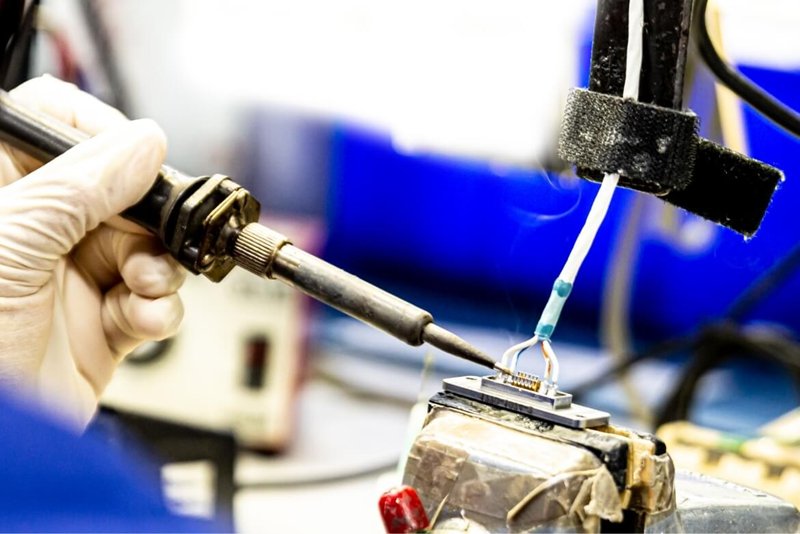
Sino-conn uses multi-stranded stainless steel for maximum tensile strength, spiral-wound galvanized steel conduits with UV-stable PVC coatings, and PTFE liners for low friction. Custom end fittings—from threaded studs to ball joints—ensure compatibility with your machinery’s control levers and actuators.Applications in Heavy Machinery & Rugged Environments
Related Keywords :control cables, heavy machinery cables, durable push-pull cables, industrial cable assemblies, custom cable solutions, Sino-conn, cable for construction equipment, high-strength control cable, marine control cable, cable assembly manufacturer
From excavators and bulldozers to offshore cranes, Sino-conn control cables operate reliably in mud, saltwater, heat, and freezing conditions. Whether for throttle, clutch, or hydraulic actuation, each cable is built for the specific stress profile of its application.
Customization Advantages with Sino-conn
With zero MOQ, fast prototyping (as quick as 3 days), and 100% inspection at three stages, Sino-conn delivers both performance and flexibility. Pricing options cover OEM, branded, and budget-friendly equivalents, with full certifications including UL, ISO, and RoHS.
Is a control cable the same as a power cable?
No—control cables transmit mechanical motion, not electrical power. They are for mechanical control, while power cables carry electrical current.
Conclusion
If your heavy machinery depends on precision, reliability, and uptime, your control cables are not the place to compromise. Sino-conn specializes in designing and manufacturing custom high-durability control cables to match your exact needs—fast turnaround, zero MOQ, and engineering expertise included.
Contact Sino-conn today to discuss your requirements and request a custom drawing or sample. Your machine deserves the best—so let’s build it together.

With over 18 years of OEM/ODM cable assemblies industry experience, I would be happy to share with you the valuable knowledge related to leather products from the perspective of a leading supplier in China.
manufacturer catalogue
Custom Micro Coaxial Cable →
Custom RF Coaxial Cable Assembly →
Custom FFC(Flat Flexible Cable) →
Custom Patch Cable →
Custom Circular Connector Cables →
Custom D-Sub Analog Cable →
Custom Power Cord →
Custom Fiber Optical Transceiver →
Custom Receptacle Connectors →
Get A Sample Now From Factory→
Latest blogs


Here, developing your OEM/ODM custom cable assemblies collection is no longer a challenge—it’s an excellent opportunity to bring your creative vision to life.