Skip to content
Industrial Cable vs Control Cable: Key Differences and Applications
- andy

When it comes to powering machines and connecting automated systems, cables are more than just wires—they are the backbone of industrial performance. Choosing the wrong type of cable can lead to downtime, costly repairs, or even safety hazards. Yet many professionals still wonder: what exactly makes an industrial cable different from a control cable? Understanding these differences is crucial for engineers, OEMs, and distributors who want reliable performance without overpaying.
Industrial cables are designed for heavy-duty power and data transmission in harsh environments, while control cables specialize in transmitting low-voltage signals that manage automation and equipment functions. The key differences lie in their material composition, durability, shielding, and compliance with certifications. Knowing when to use each type ensures equipment runs safely, efficiently, and cost-effectively in industrial applications.
Imagine standing on a factory floor: one cable powers a robotic arm, another tells it when to stop and start. Both are essential, but not interchangeable. Let’s break down their differences in a practical way, so you can make the right choice for your project.
Key Functional Differences Between Industrial and Control Cables
Industrial cables are engineered for high-power transmission and long-distance durability in harsh environments, while control cables are built for low-voltage signal precision and interference-free automation. Industrial cables prioritize toughness and stability, whereas control cables emphasize accuracy and shielding.
When comparing industrial cables to control cables, the most critical difference lies in their core function: one is about power and endurance, the other about precision and communication.
Purpose and Role in Systems
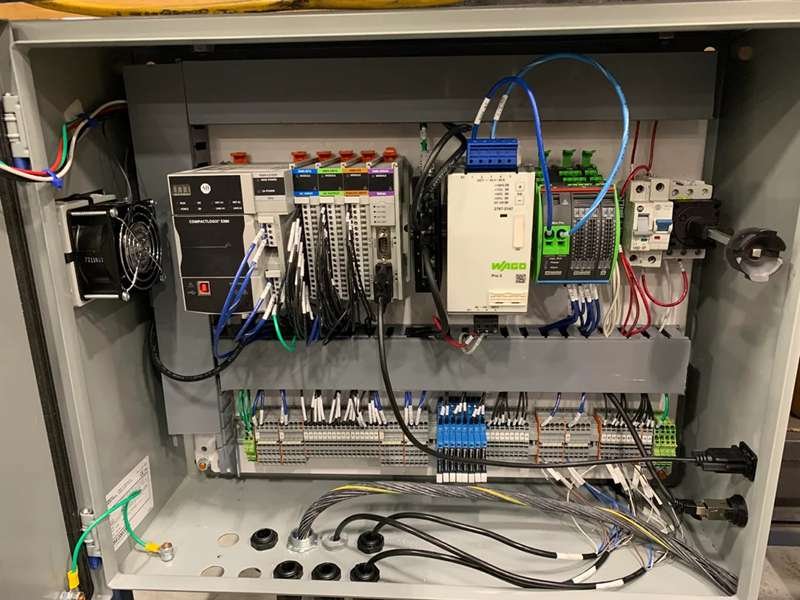
- Industrial cables act like the bloodstream of a factory—they deliver the essential power and sometimes high-bandwidth data required to keep large machinery and infrastructure running. Think conveyors, pumps, turbines, or mining trucks.
- Control cables, on the other hand, are the nervous system. They carry low-voltage signals from PLCs, sensors, and controllers to tell machines when to start, stop, accelerate, or switch modes. Without them, automation simply doesn’t function.
Power vs Signal Transmission
- Industrial cables must handle high voltages (up to several kilovolts) and currents without overheating, while remaining safe under continuous load.
- Control cables typically operate at 300V–600V, focusing instead on signal fidelity. Their main challenge is resisting interference from neighboring high-power lines, welding machines, or motors.
Voltage and Transmission Capacity Overview:
| Parameter | Industrial Cable | Control Cable |
|---|---|---|
| Voltage Range | Up to several kV | 300–600V |
| Current Load | High (motors, pumps, conveyors) | Low (signals, sensors, PLCs) |
| Transmission Distance | Long (hundreds of meters) | Short to medium (within equipment/panels) |
| Data Capability | Power + optional data | Primarily control signals |
Durability vs Accuracy
- Industrial cables are thicker, with multi-layer jackets that resist abrasion, UV, oil, and even rodents. They are expected to last 10–20 years in outdoor or underground conditions.
- Control cables don’t always need extreme ruggedness, but they do need stable impedance and low capacitance to preserve delicate signals. Shielding is a must, even when power capacity is low.
Flexibility in Motion Applications
- In robotics and drag-chain systems, industrial cables are chosen for mechanical strength and bend life—some can endure over 10 million flex cycles.
- Control cables are also flexible, but more for installation convenience in control panels, switchboards, or tight enclosures. Their bends are not as extreme as industrial drag-chain cables.
Industry-Specific Use Cases
Here’s a quick side-by-side comparison:
| Scenario | Industrial Cable Role | Control Cable Role |
|---|---|---|
| CNC Machine | Powers spindle motors & drives | Sends commands for speed/position |
| Automotive Line | Delivers energy to robotic arms | Controls arm movement & timing |
| Mining Conveyor | Powers belts over long distances | Monitors sensors & emergency stops |
| Renewable Energy | Transmits solar/wind energy to grid | Supervises monitoring devices & relays |
Why This Matters for Customers
According to Siemens’ 2022 automation report, nearly 70% of cable failures come from using the wrong cable type in the wrong role. This leads to downtime, loss of production hours, and replacement costs. For OEMs and engineers, knowing these functional differences upfront means fewer redesigns, faster certification, and better long-term reliability.
In short:
- Use industrial cables when power and endurance are critical.
- Use control cables when precision and communication are essential.
Both must work together, like muscle and nerve, to keep industrial systems running smoothly.
Material Composition and Design Differences
Industrial cables use heavy-duty copper or aluminum conductors, XLPE or PUR insulation, and rugged jackets to withstand extreme conditions. Control cables focus on copper conductors with PVC or PE insulation, plus shielding (braid or foil) for signal stability.
The heart of a cable is its material. Each layer—the conductor, insulation, shielding, and jacket—serves a purpose.
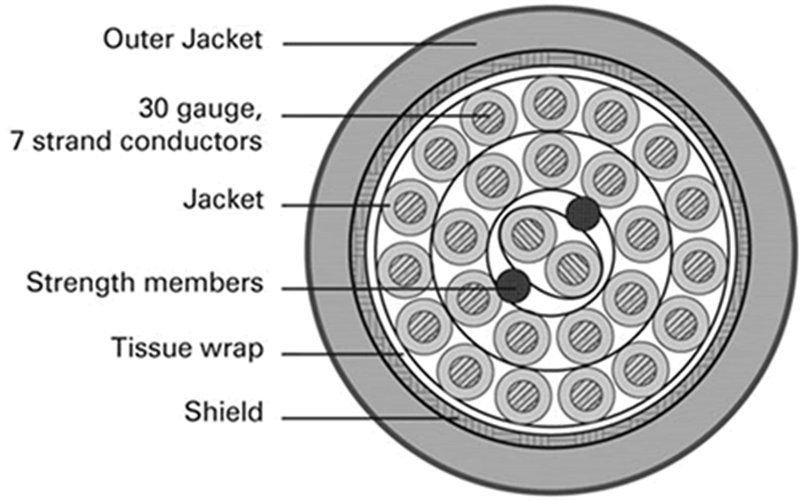
| Layer | Industrial Cable Focus | Control Cable Focus |
|---|---|---|
| Conductor | Copper (high conductivity), Aluminum (cost) | Copper (signal reliability) |
| Insulation | XLPE, PUR (high temp, chemical resistance) | PVC, PE (signal clarity, flexibility) |
| Shielding | Optional, heavy-duty for EMI resistance | Standard, foil/braid for stable signals |
| Jacket | Rubber, PUR, fluoropolymer (durability) | PVC, LSZH (lightweight, indoor use) |
Industrial cables are engineered to withstand physical stress—think abrasion, oil exposure, or bending thousands of times in robotic arms. For instance, Sino-conn offers PUR jackets that last 5x longer than standard PVC in drag-chain tests.
Control cables, on the other hand, prioritize signal integrity. Shielding is standard, ensuring that sensitive signals aren’t disrupted by motors or welding machines nearby. Flexibility is also key, since control cables often run inside control panels or tight machinery.
In practice, an industrial cable might be overkill for a control panel, while a control cable would fail quickly in a mining conveyor system. Knowing the right materials helps prevent both overspending and premature failure.
Certifications, Standards, and Safety Requirements
Industrial and control cables must meet safety standards like UL, ISO, RoHS, and REACH. Industrial cables often require flame resistance, oil resistance, and high-voltage compliance, while control cables emphasize EMI shielding and low-voltage safety.
No matter how strong a cable is, without certifications it won’t pass inspection. Compliance assures customers that a product is safe, durable, and environmentally responsible.
For industrial cables, standards focus on fire resistance, high voltage tolerance, and environmental durability. Certifications like UL Flame Test, ISO 9001, and RoHS compliance are often mandatory in energy, transportation, and manufacturing industries.
Control cables usually require signal safety and EMI standards. A RoHS-compliant control cable ensures no hazardous substances are present, while REACH compliance guarantees adherence to EU chemical safety laws.
Here’s a quick breakdown:
| Certification | Why It Matters for Industrial Cables | Why It Matters for Control Cables |
|---|---|---|
| UL | Fire safety, voltage performance | Signal safety, panel compliance |
| ISO | Quality assurance in production | Consistency for OEM applications |
| RoHS | Environmental compliance | Non-toxic materials for workers |
| REACH | Chemical safety in harsh use cases | EU compliance for electronics |
For many global clients, certifications are non-negotiable. A German OEM, for example, might refuse delivery without full RoHS and REACH documentation. Sino-conn not only provides these certificates but also offers CoC and COO documents to simplify customs clearance.
In short, certifications are not just red tape—they are trust signals that open doors to global markets.
Choosing the Right Cable for Your Application
Choose industrial cables for heavy-duty power and durability in harsh environments, and control cables for precise signal transmission in automation. Consider cost, customization, certifications, and environment.
The right choice depends on your application, environment, and priorities.
- Environment – If cables will face oil, UV, or high heat, industrial-grade PUR or XLPE jackets are essential. For indoor panels, flexible PVC control cables may suffice.
- Performance – Motors, pumps, and conveyors demand industrial cables. PLCs, sensors, and switches need control cables.
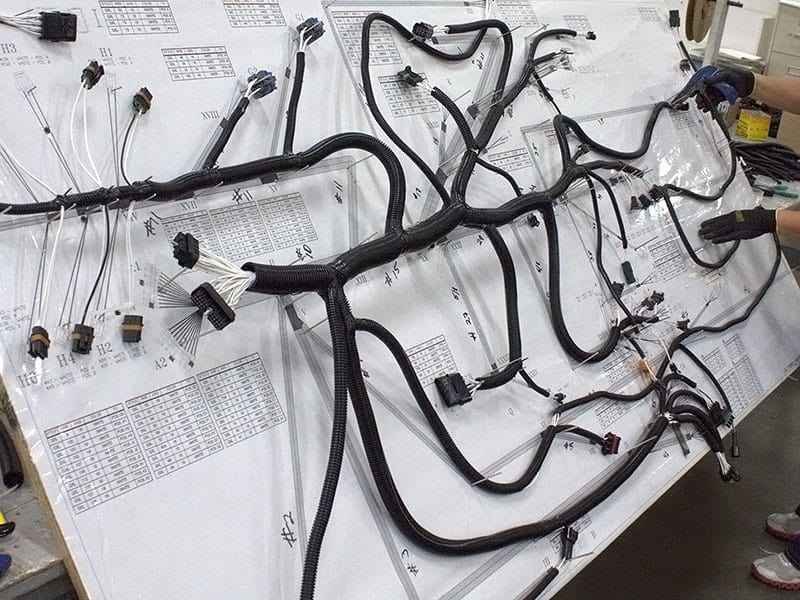
- Customization – Sino-conn offers customization in length, shielding, connectors, and pin-outs. This is vital when OEMs design non-standard layouts.
- Cost – Industrial cables cost more, but may save money long-term by preventing downtime. Control cables are cheaper, but misusing them in tough environments leads to failure.
Customer FAQs we often handle at Sino-conn:
- Can you provide drawings? → Yes, within 30 minutes–3 days depending on complexity.
- What about lead times? → Samples in 2 weeks, mass orders in 3–4 weeks (rush orders faster).
- MOQ? → No MOQ. Even 1 piece can be supplied.
- Original vs replacement connectors? → Both available, with price and lead-time trade-offs.
Ultimately, choosing the right cable isn’t about guessing—it’s about matching function with environment, supported by a supplier who can deliver flexibility, certifications, and technical support. To make the decision-making process clearer, here’s a quick parameter comparison between a typical industrial cable and a control cable from Sino-conn. This gives you a reference point when evaluating which type best fits your project:
| Parameter | Industrial Cable Example | Control Cable Example |
|---|---|---|
| Conductor Material | Tinned Copper | Bare Copper |
| Size Range | 0.5–240 mm² | 0.14–2.5 mm² |
| Insulation | XLPE / PUR | PVC / PE |
| Jacket | PUR / Rubber / FEP | PVC / LSZH |
| Certifications | UL, ISO, RoHS, REACH | UL, RoHS, REACH |
| Typical Lead Time | 2–4 weeks | 1–3 weeks |
Conclusion
Industrial and control cables serve different but complementary roles: one powers machines, the other guides them. Understanding their differences in function, material, standards, and application ensures your systems run safely and efficiently.
At Sino-conn, we specialize in tailoring cable solutions to fit your exact needs—whether you’re an OEM, engineer, or distributor. From quick drawings and prototypes to certified mass production, our team ensures speed, quality, and flexibility.
Ready to find the right cable for your project? Contact Sino-conn today for a custom quote and technical consultation.
Related Keywords :industrial cable, control cable, industrial cable vs control cable, cable materials, cable certifications, cable standards, cable applications, custom cable solutions, Sino-conn, industrial wiring

With over 18 years of OEM/ODM cable assemblies industry experience, I would be happy to share with you the valuable knowledge related to leather products from the perspective of a leading supplier in China.
manufacturer catalogue
Custom Micro Coaxial Cable →
Custom RF Coaxial Cable Assembly →
Custom FFC(Flat Flexible Cable) →
Custom Patch Cable →
Custom Circular Connector Cables →
Custom D-Sub Analog Cable →
Custom Power Cord →
Custom Fiber Optical Transceiver →
Custom Receptacle Connectors →
Get A Sample Now From Factory→
Latest blogs


Here, developing your OEM/ODM custom cable assemblies collection is no longer a challenge—it’s an excellent opportunity to bring your creative vision to life.