Skip to content
Best Materials for LVDS Cables: A Complete Buyer’s Guide
- andy
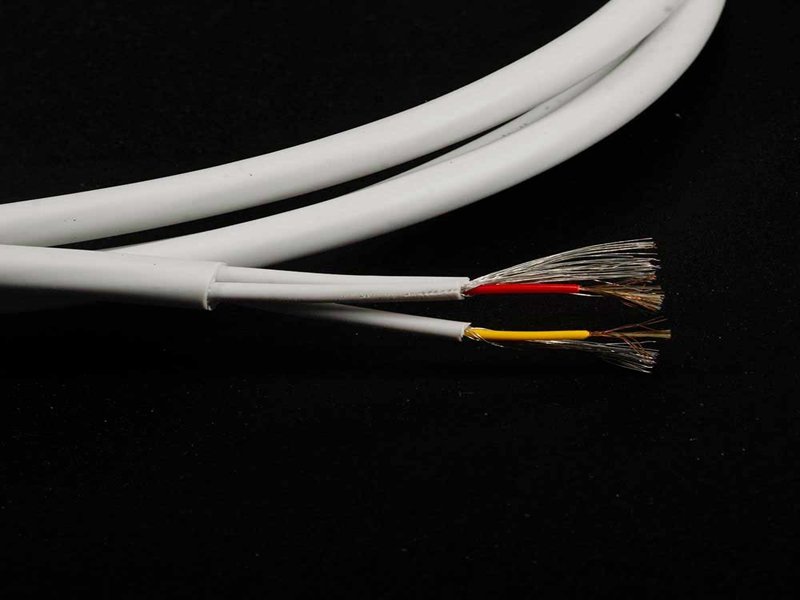
Choosing the right materials for an LVDS (Low‑Voltage Differential Signaling) cable can make the difference between a crystal‑clear display and a glitchy, unreliable connection. Whether you’re designing a high‑resolution medical monitor, an automotive infotainment system, or an industrial touch panel, the conductor, insulation, shielding, and connectors you choose will directly affect performance, durability, and compliance.
The best LVDS cables use high‑conductivity copper conductors (bare or tinned), high‑grade insulation like PVC, PE, or PTFE, robust EMI shielding with aluminum foil and braided copper, and durable jackets such as TPU or TPE. Quality connectors like JST, Hirose, Molex, or I‑PEX ensure signal integrity. The ideal material combination depends on your application’s speed, environment, and compliance needs.
Now, picture this: an OEM engineer orders LVDS cables for a new fleet of display panels. The cables arrive, but signal noise and EMI cause flickering. Production halts, costs mount, deadlines slip. This nightmare often traces back to poor material selection. Stick with me — in the next sections, you’ll learn exactly how to avoid these pitfalls and choose materials like a pro.
Why Material Choice Matters for LVDS Cables
Material choice in LVDS cables impacts signal quality, power efficiency, EMI resistance, and lifespan. Using the right conductors, insulation, shielding, and connectors ensures reliable high‑speed data transmission over long distances with minimal interference.
LVDS cables aren’t just “wires” — they’re precision‑engineered assemblies where every component serves a purpose. The low voltage swing (~350 mV) means even minor material flaws can degrade performance. For example, a sub‑par shielding layer can let in EMI from nearby motors, while low‑grade insulation can crack under repeated flexing, exposing conductors and causing shorts.
Sino‑conn designs LVDS cables with specific materials for each use case:
- Medical Imaging → PTFE insulation for sterilization resistance, full copper braid shielding for low noise.
- Automotive Displays → TPU jackets for abrasion resistance, tinned copper to prevent corrosion.
- Industrial Robotics → Hybrid shielding and halogen‑free materials for safety compliance.
The wrong material can shorten a cable’s life from years to months. That’s why material selection is a core part of Sino‑conn’s engineering process — not an afterthought.
What is an LVDS Cable?
An LVDS cable is a specialized cable used to transmit high‑speed digital data over relatively long distances with low power consumption and minimal electromagnetic interference.
LVDS cables carry differential signals — a pair of opposite‑phase voltages — to cancel noise. This makes them ideal for environments with high EMI, like factories or vehicles. You’ll find them in laptops, LCD monitors, factory automation equipment, automotive infotainment, and medical displays. Unlike HDMI or USB, LVDS is often used internally between a controller board and a display, where signal integrity over a fixed distance is critical.What Does LVDS Do?
LVDS transmits high‑speed digital signals using low voltage differences, enabling efficient, noise‑resistant communication between devices like display panels and control boards
Think of LVDS as a high‑speed whisper between two devices. It uses a voltage difference of only a few hundred millivolts, reducing power use and heat generation. At the same time, its differential nature cancels out most environmental noise. This combination makes LVDS cables perfect for streaming pixel‑perfect video from a motherboard to a display — without interference from nearby electronics.
What is the LVDS Cable Used For?
LVDS cables are used to connect display panels to control boards, transmit video from cameras to processors, and link high‑speed sensors in automotive, industrial, and medical equipment.
Typical LVDS cable applications include:
- Laptops and LCD Monitors: Motherboard to screen pixel data transmission.
- Industrial Screens: Control system to touch panel communication.
- Automotive Systems: Navigation head unit to dashboard display.
- Medical Devices: High‑resolution imaging and monitoring displays.
In each case, the cable must maintain signal clarity over varying distances while withstanding environmental stress — hence the need for tailored materials.
Core Conductors: Copper Variants and Their Impact
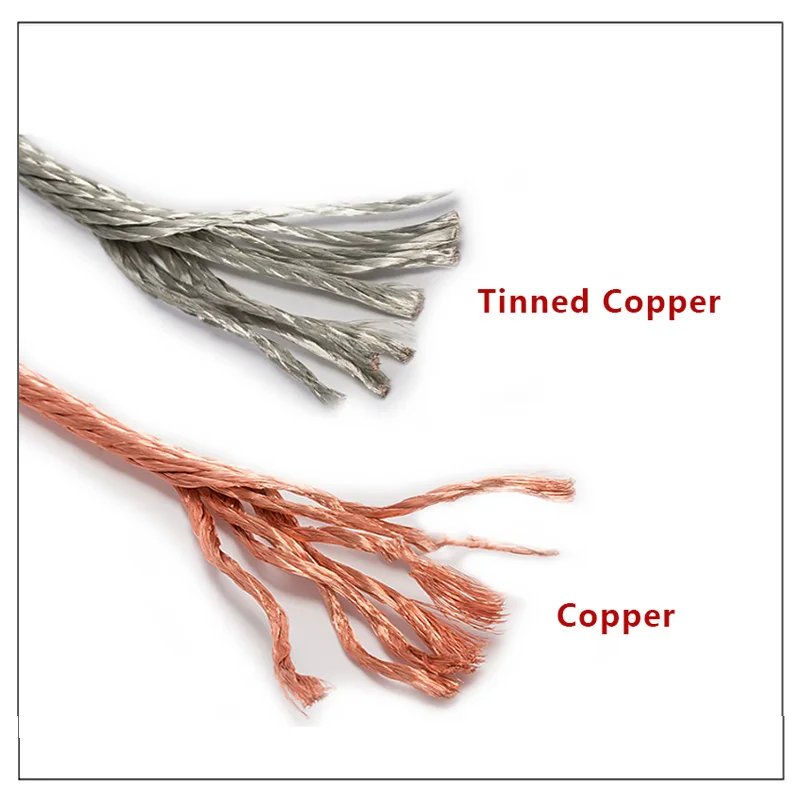
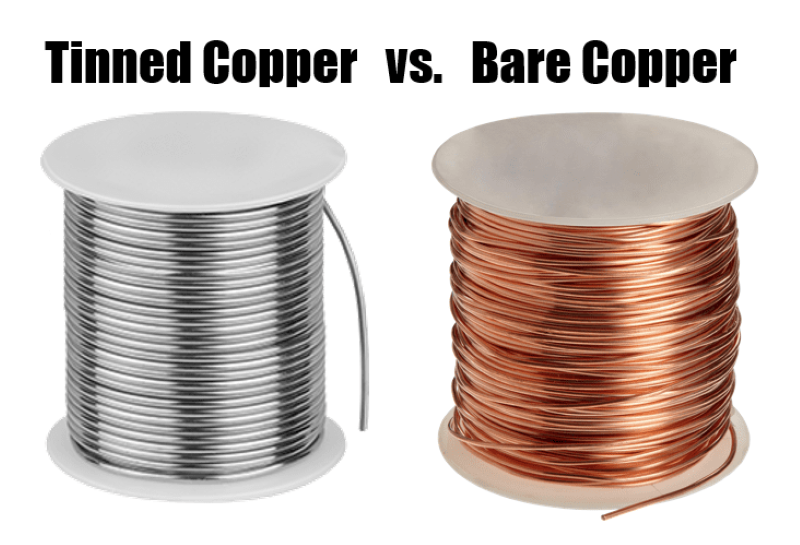
The conductor is the signal highway of an LVDS cable. Bare copper offers unmatched conductivity for crystal‑clear data transfer, while tinned copper adds a protective coating to resist corrosion in harsh conditions. The right choice depends on your application’s environment, required signal integrity, and service life expectations.
In LVDS cables, the conductor is not just metal — it’s the core of performance. The data rate, transmission distance, and stability all begin here.
1. Electrical Performance
- Bare Copper (Oxygen‑Free Copper – OFC):
- Conductivity: Up to 101% IACS (International Annealed Copper Standard).
- Ideal for short‑to‑medium cable runs where ultimate signal clarity is needed (e.g., medical imaging monitors, lab‑grade instruments).
- Lower resistance means less signal loss over distance, reducing the need for signal boosting.
- Tinned Copper:
- Conductivity: ~98% IACS, slightly lower than bare copper.
- Tin coating protects against oxidation, maintaining performance in automotive dashboards, marine displays, outdoor kiosks.
- Excellent solderability, making assembly faster and more reliable.
2. Environmental Resistance
- Bare Copper: Vulnerable to corrosion in humid, salty, or chemical‑rich environments.
- Tinned Copper: Resistant to moisture, salt spray, and industrial pollutants — extending service life in challenging conditions.
3. Mechanical Flexibility
Sino‑conn tailors strand thickness and strand count:
- Fine‑strand designs for robotic arms or applications needing extreme flexibility.
- Thicker strands for stationary industrial screens where durability is prioritized over bending radius.
Copper Variant Comparison:
| Feature | Bare Copper (OFC) | Tinned Copper |
|---|---|---|
| Conductivity | ★★★★★ | ★★★★☆ |
| Corrosion Resistance | ★★☆☆☆ | ★★★★★ |
| Solderability | ★★★☆☆ | ★★★★★ |
| Flexibility | Customizable | Customizable |
| Best Use Case | Indoor high‑precision | Automotive, outdoor |
Sino‑conn Advantage: Every conductor batch is purity‑tested and certified (UL, RoHS, REACH). We can also design mixed‑conductor assemblies where specific signal pairs use different copper types for cost/performance balance.
Insulation Materials: Balancing Flexibility and Protection
PVC, PE, and PTFE are common LVDS insulation materials. PVC is cost‑effective, PE offers low capacitance, and PTFE withstands high temperatures and chemicals.
- PVC: Affordable, flexible, flame‑retardant — but can stiffen in cold climates.
- PE: Lower dielectric constant, ideal for long‑distance, high‑speed signals.
- PTFE: Exceptional chemical and heat resistance, but more expensive.
Sino‑conn can supply halogen‑free insulation to meet RoHS and REACH compliance — essential for European markets.
Shielding Materials: Controlling EMI for High‑Speed Signals
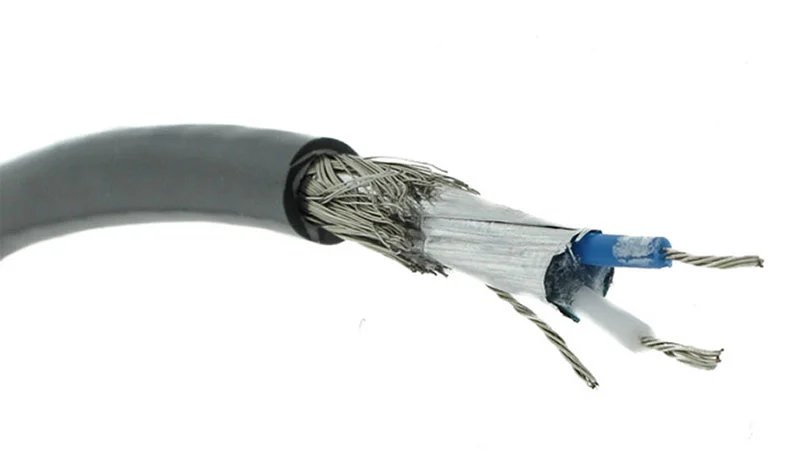
Aluminum foil offers full coverage, braided copper adds mechanical strength, and hybrid shielding combines both for maximum EMI protection.
In high‑speed LVDS transmission, EMI is the enemy. A 1% signal error rate can cause visible flicker on displays. Sino‑conn often uses aluminum foil for 100% coverage plus a 90% copper braid overlay — a hybrid that delivers both noise rejection and durability.
Shielding Effectiveness by Frequency:
| Shield Type | Coverage (%) | Flexibility Rating | Shielding Effectiveness @ 10 MHz (dB) | @ 100 MHz (dB) | @ 1 GHz (dB) | Typical Applications |
|---|---|---|---|---|---|---|
| Aluminum Foil | 100 | ★★★☆☆ | 60 | 50 | 35 | Consumer LCD, low EMI areas |
| Braided Copper | 85–95 | ★★★★☆ | 50 | 45 | 30 | Automotive, light industrial |
| Hybrid (Foil+Braid) | 100+90 | ★★★★☆ | 85 | 80 | 65 | Medical, high EMI zones, aerospace |
Outer Jacket Materials: Durability Under Real‑World Conditions
PVC, TPU, and TPE jackets protect LVDS cables from abrasion, chemicals, and UV. TPU offers the best flexibility and wear resistance.
If your LVDS cable will live in a car dashboard in Arizona or a wind turbine in Norway, jacket choice matters. Sino‑conn’s TPU jackets resist oil, abrasion, and extreme temperatures from ‑40°C to +105°C. TPE is favored for robotics where repeated flexing is common.
What are the Different Types of LVDS Connectors?
LVDS connectors come in several types, including JST, Hirose, Molex, and I‑PEX. They vary in pin count, pitch size, locking method, and compatibility with specific display and board designs. The choice impacts fit, reliability, and lead time.
The connector is where your LVDS cable meets your device — a poor choice here can undo even the best cable design. Connector type influences mechanical fit, electrical contact quality, and overall system reliability.
Common LVDS Connector Types
- JST: Compact, cost‑effective, widely available; common in laptops and consumer LCDs.
- Hirose: Precision‑engineered with excellent retention force; popular in industrial and medical equipment.
- Molex: Broad range of pin counts and pitches; robust mechanical design for long service life.
- I‑PEX: Ultra‑low profile for space‑constrained applications, such as slim automotive displays and portable medical devices.
Original vs. Compatible Connectors
- Original (OEM) Connectors:
- Perfect mechanical fit and guaranteed compatibility.
- Longer lead times and higher costs.
- Limited flexibility for custom pinouts.
- Compatible Connectors:
- Lower cost, faster lead times.
- Allows custom modifications to suit non‑standard designs.
- Electrical performance comparable to originals when sourced from high‑quality manufacturers (like Sino‑conn’s vetted suppliers).
Key Selection Factors
- Pin Pitch & Count: Match the display panel and control board exactly to avoid fit issues.
- Locking Mechanism: Secure connections for high‑vibration environments (e.g., vehicles, robotics).
- Plating Material: Gold‑plated contacts resist oxidation and ensure consistent low‑resistance connections.
- Thermal Range: Choose connectors rated for your application’s temperature extremes.
Sino‑conn Advantage:
- 3D CAD drawings delivered in as little as 30 minutes for connector‑specific assemblies.
- Stock availability on both OEM and compatible types.
- Engineering consultation to recommend the optimal connector for performance, cost, and availability.
Are All LVDS Cables the Same?
No. LVDS cables differ in conductor quality, insulation, shielding, connector type, and jacket material, all of which affect performance and lifespan.
Two cables might look identical but behave very differently in the field. A cheaper cable with thin shielding might work in a lab but fail in a car dashboard. That’s why Sino‑conn customizes every LVDS assembly based on the exact environmental, electrical, and mechanical requirements of the application.
Matching Material Selection to Your Application
Choosing the best LVDS cable materials isn’t guesswork — it’s a calculated process based on performance, environment, compliance, and budget. With Sino‑conn’s expertise, you get more than a cable: you get a tailored solution engineered for your success.
Ready to design the perfect LVDS cable? Contact Sino‑conn today for a custom quote, free consultation, and engineering drawings within 24 hours.
Related Keywords :LVDS cable materials, LVDS cable guide, best LVDS connectors, LVDS cable shielding, LVDS cable insulation, custom LVDS cable, Sino‑conn LVDS, LVDS applications, high‑speed cable materials, EMI shielding LVDS

With over 18 years of OEM/ODM cable assemblies industry experience, I would be happy to share with you the valuable knowledge related to leather products from the perspective of a leading supplier in China.
manufacturer catalogue
Custom Micro Coaxial Cable →
Custom RF Coaxial Cable Assembly →
Custom FFC(Flat Flexible Cable) →
Custom Patch Cable →
Custom Circular Connector Cables →
Custom D-Sub Analog Cable →
Custom Power Cord →
Custom Fiber Optical Transceiver →
Custom Receptacle Connectors →
Get A Sample Now From Factory→
Latest blogs


Here, developing your OEM/ODM custom cable assemblies collection is no longer a challenge—it’s an excellent opportunity to bring your creative vision to life.